office record
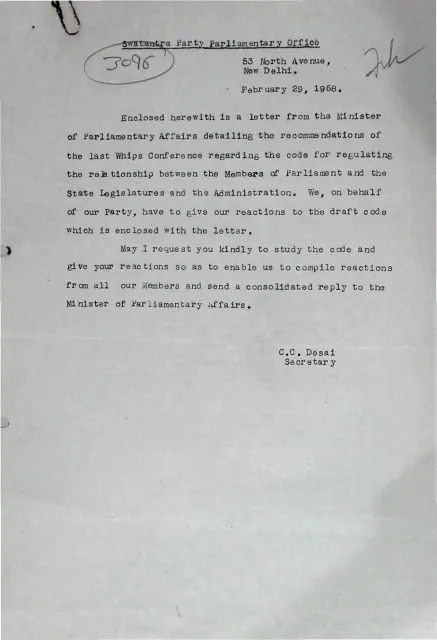
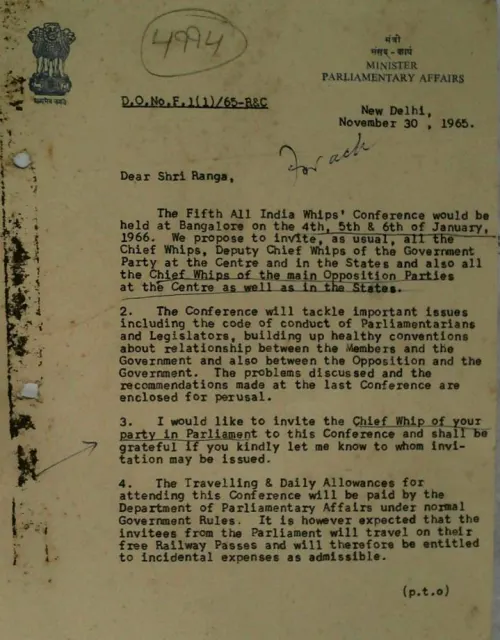
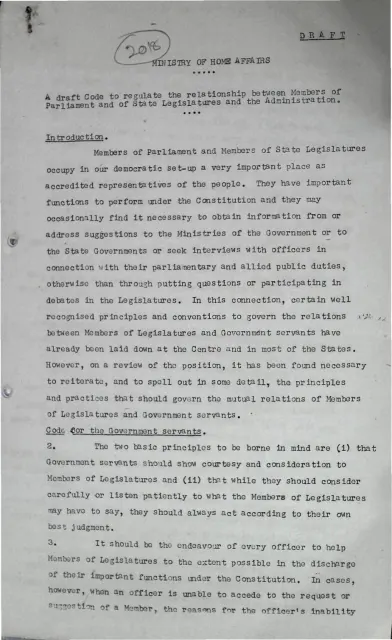
A draft Code to regulate the relationship between Members of Parliament and of State Legislatures and the Administration.
MINISTRY OF HOME AFFAIRS
15 pages
Summary
This draft issued by the Ministry of Home Affairs proposes a code governing relations between Members of Parliament, Members of State Legislatures, and government servants. Its opening provisions frame legislators as accredited representatives of the people and instruct officials to combine courtesy and assistance with independent judgment. Government servants are asked to make time for legislators, give them priority in official dealings, acknowledge and answer their letters, provide non-confidential information, and explain promptly when requests cannot be met. The draft also addresses ceremonial precedence, seating arrangements, and the limits imposed by the Government Servants Conduct Rules on political influence and sponsorship of individual cases.
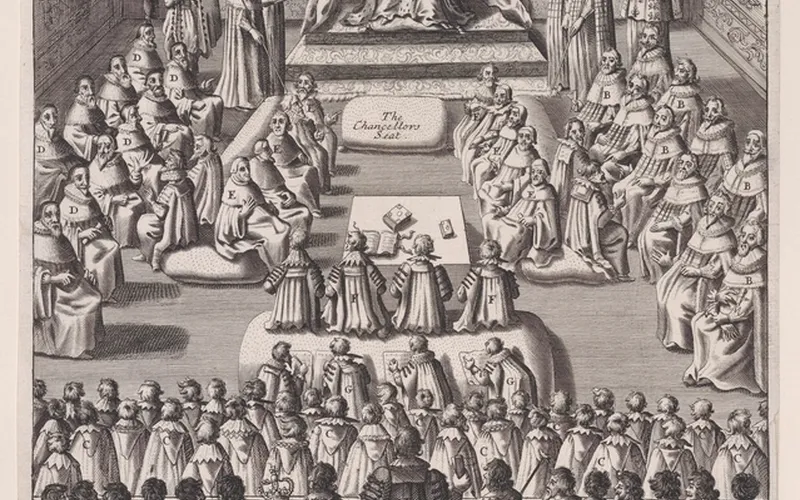
The code then sets out corresponding expectations for legislators. They should seek information only for public or national purposes, avoid using official information or parliamentary approaches to advance private interests, address routine requests through the proper departmental channels, and refrain from seeking intervention in criminal investigations, licensing, recruitment, transfers, promotions, or disciplinary matters. The comparative material examines rules and conventions concerning parliamentary conduct in the United Kingdom, the United States, Canada, Australia, the Union of South Africa, New Zealand, and India, especially disqualification, pecuniary interests, bribery, corruption, and conflicts of interest. The annexures add selected British and Indian cases and reproduce an extract from John F. Kennedy’s 1961 message on government ethics.
Key points
- The draft seeks to regulate reciprocal relations between legislators and government servants.
- Officials are instructed to show courtesy, provide reasonable assistance, and preserve independent administrative judgment.
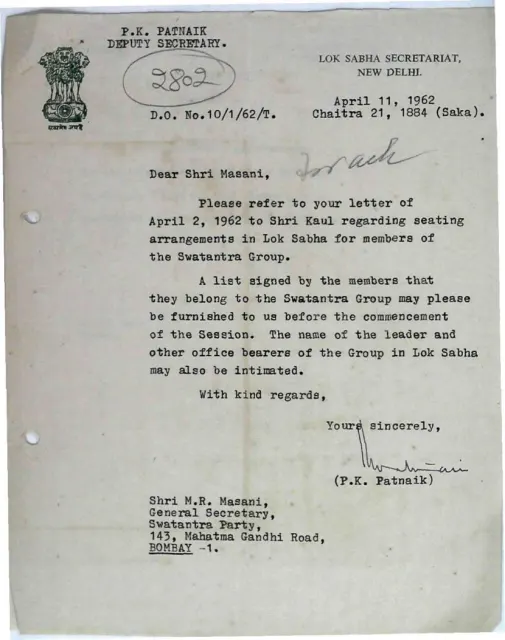
- The document establishes practical protocols for access, appointments, correspondence, information requests, precedence, and public-function seating.
- Legislators are warned against using parliamentary influence to advance private cases or obtain improper administrative decisions.
- The proposed code distinguishes legitimate scrutiny of maladministration from pressure for a predetermined decision.
- Comparative sections survey parliamentary safeguards against pecuniary interests, bribery, corruption, and conflicts of interest in several Commonwealth legislatures and the United States.
- The Indian material combines statutory provisions, Lok Sabha procedure, and emerging conventions on Members’ conduct, including confidentiality, financial influence, hospitality, and recommendation letters.
Metadata and summary are AI-extracted from the source PDF and reviewed for editorial accuracy. The original work is available via the Read PDF tab above (where present); paragraph-level citation inside the PDF is deferred to a future engagement.