essay
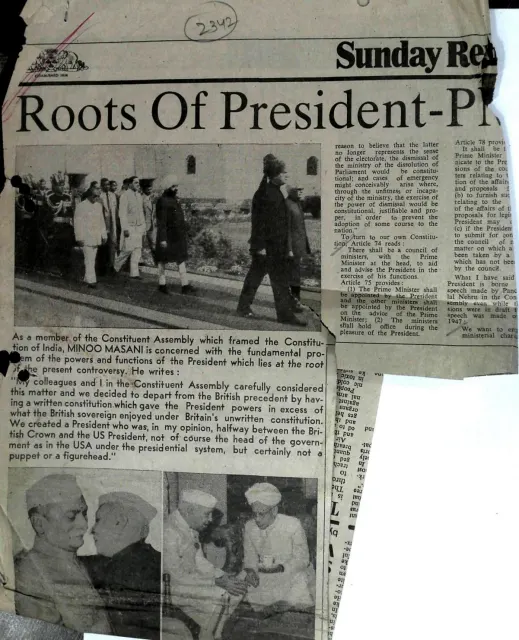
Roots Of President-PM Clash
THE TIMES OF INDIA · 1987
4 pages
Summary
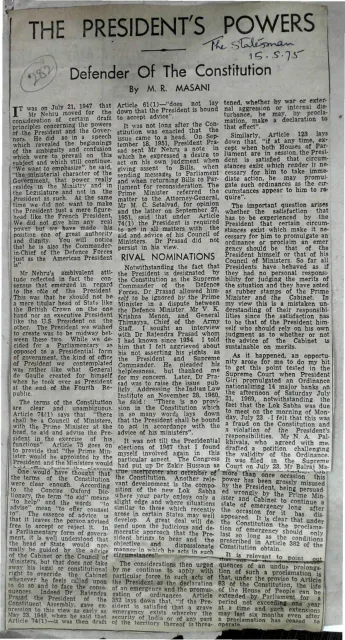
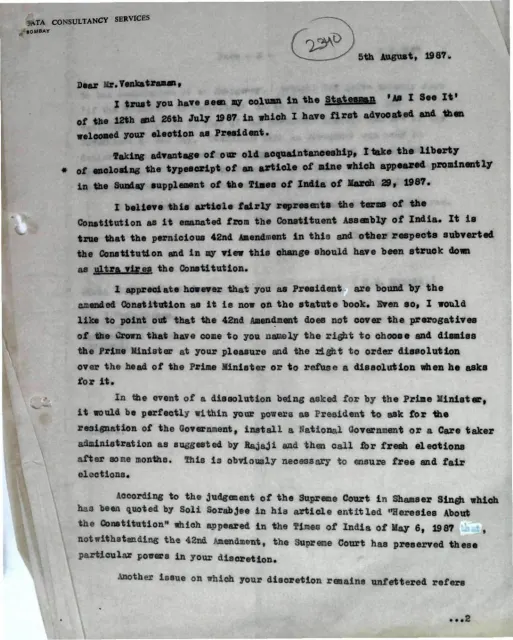
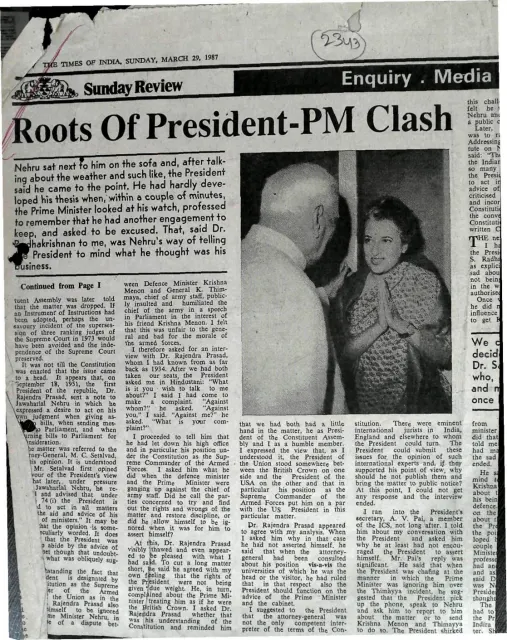
In the rendered pages, the article traces recurring conflicts between Indian Presidents and Prime Ministers to a constitutional imbalance that leaves the President formally responsible for important matters but politically vulnerable to the Prime Minister and cabinet. It recounts disputes involving Dr. Rajendra Prasad and Jawaharlal Nehru, including disagreements over presidential discretion, ministerial advice, the Supreme Court, and the President’s position as head of the Union and former head of the Constituent Assembly. The article presents Prasad as arguing that the President should not be reduced to a ceremonial figure or treated as subordinate to the Prime Minister.
Key points
- The article attributes President–Prime Minister clashes to unresolved constitutional questions about presidential discretion.
- It recounts Rajendra Prasad’s disagreements with Nehru over ministerial advice, the President’s powers, and the treatment of Defence Minister Krishna Menon.
- Prasad is described as defending the President’s independent constitutional position, while Nehru is portrayed as expecting the President to follow cabinet advice.
- The article argues that later Presidents became increasingly dependent on Prime Ministers and were repeatedly selected for pliability.
- It criticises the succession of presidents whom the article characterises as ‘rubber stamps’, including V. V. Giri and Fakhruddin Ali Ahmed.
- The conclusion asks whether Indian democracy can elect an independent President rather than continue the cult of personality and cabinet dominance.
Metadata and summary are AI-extracted from the source PDF and reviewed for editorial accuracy. The original work is available via the Read PDF tab above (where present); paragraph-level citation inside the PDF is deferred to a future engagement.