
letter
Letter to N G Ranga
GOVERNMENT OF INDIA MINISTRY OF HOME AFFAIRS · NEW DELHI · 1968
9 pages
Summary
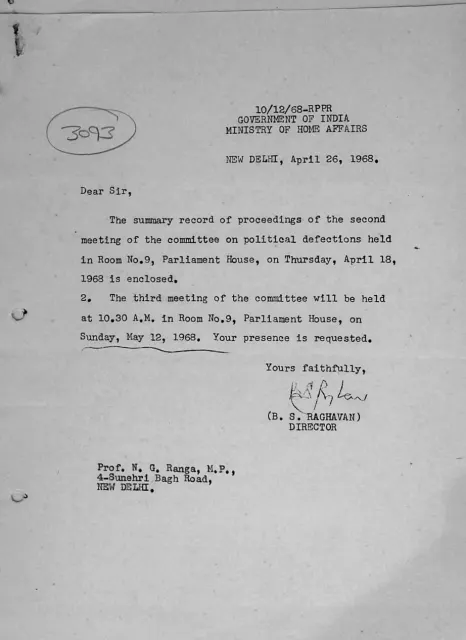
This Government of India covering letter, dated April 26, 1968, forwards to Prof. N. G. Ranga the summary record of the second meeting of the Committee on Defections, held in Parliament House on April 18. The record identifies the committee’s members and attendees and documents an initial discussion about whether members were speaking for their parties or in their individual capacities, alongside concern that only an authorised version of proceedings should be released to the press.
The recorded discussion considers how to define and curb political defection without unduly subordinating legislators to party leaders. Proposals include regulating movement between government and opposition, requiring independents to declare their position, allowing constituents to recall defecting legislators, limiting the Council of Ministers to 10 per cent of the House or 30 members, restricting ministerial inducements, and relying on conventions concerning dissolution. Participants differ over whether moral sanctions and codes of conduct would suffice, with P. Ramamurti arguing that legislation was the only effective solution. The meeting concludes with agreement on giving the Council of Ministers a conventional right to dissolution, limiting the size of the ministry, and denying office or other inducements to defectors; a third meeting was scheduled for May 12, 1968.
Key points
- A covering letter from B. S. Raghavan encloses the record of the committee’s second meeting on political defections.
- The committee debated whether members were expressing party positions or individual views and stressed controlled press briefings.
- Participants considered definitions of individual and group defection and the relationship between party discipline and legislators’ consciences.
- Proposals included constituent recall, declarations by independents, restrictions on the size of ministries, and denial of office or perks to defectors.
- The record discusses the Chief Minister’s or Prime Minister’s power to seek dissolution and the role of the Governor or President.
- The meeting records disagreement over constitutional amendment, conventions, legislation, and moral sanctions as tools against defection.
- The committee identified three emerging areas of agreement: dissolution by convention, a limit on the Council of Ministers, and removal of inducements to defectors.
Metadata and summary are AI-extracted from the source PDF and reviewed for editorial accuracy. The original work is available via the Read PDF tab above (where present); paragraph-level citation inside the PDF is deferred to a future engagement.
Related across the archive
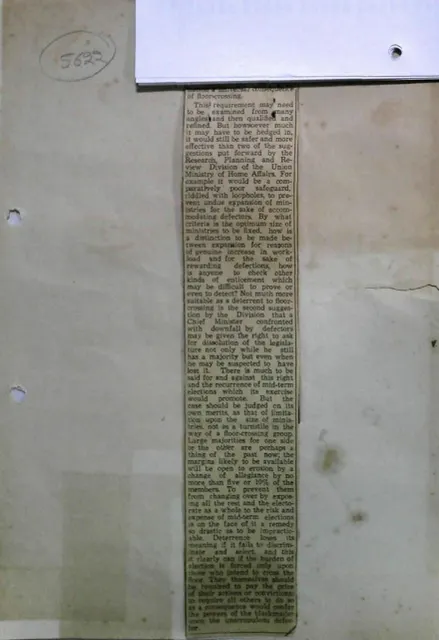 Primary workBeing Treated by Government
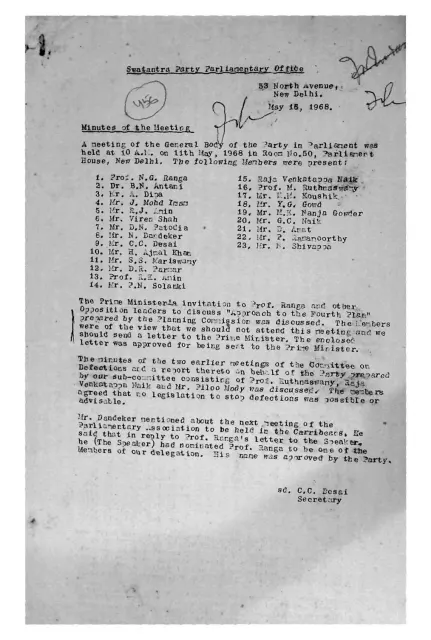 Primary workMinutes of the Meeting
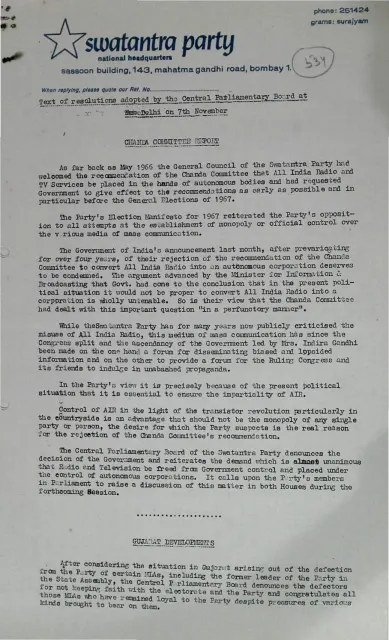 Primary workText of resolutions adopted by the Central Parliamentary Board at New Delhi on 7th November
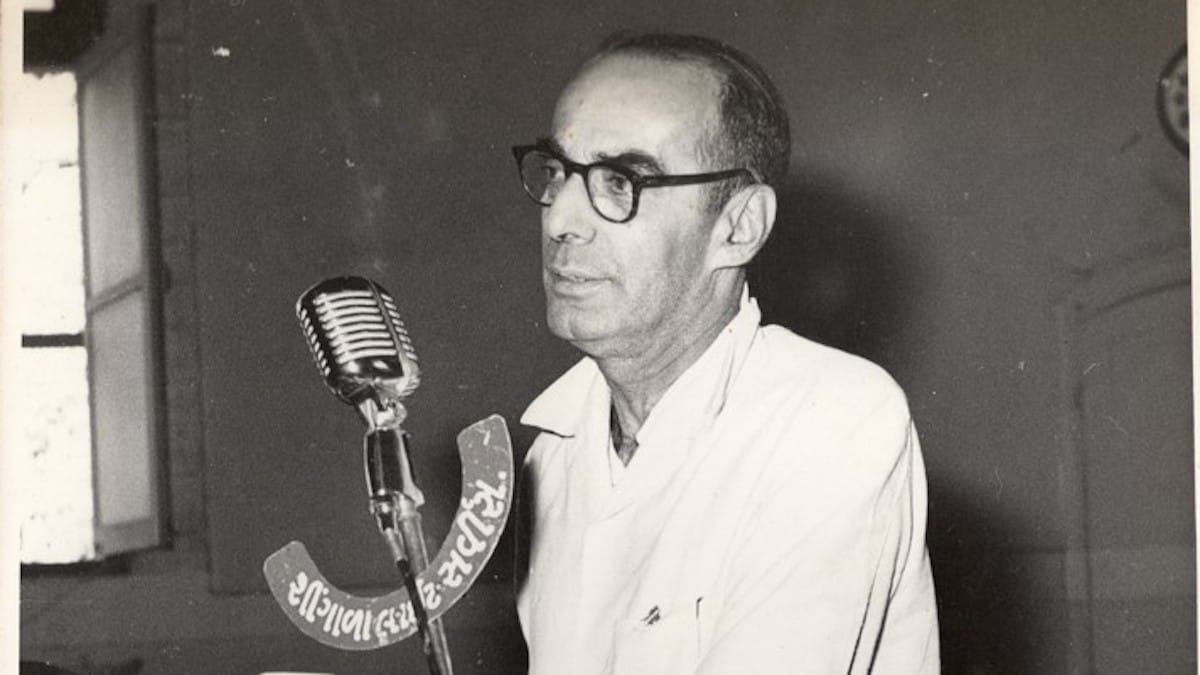 ThePrintPrices, like water, will find their own level. Controls breed vested interests: Minoo Masani
 ExcerptTowards Party-less Democracy