pamphlet
JAN SANGH AND COMMUNISTS
12 pages
Summary
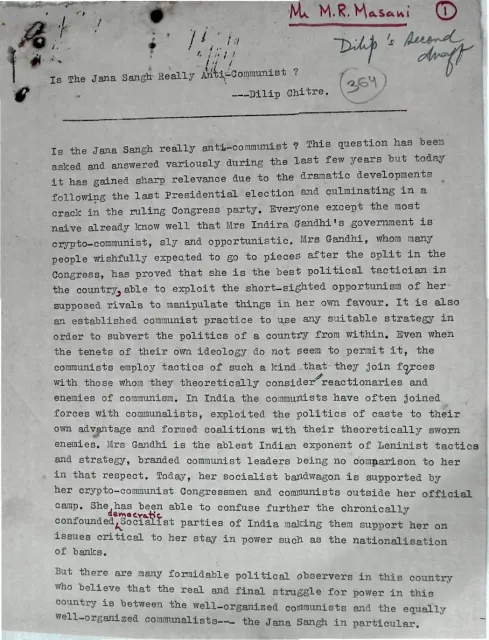
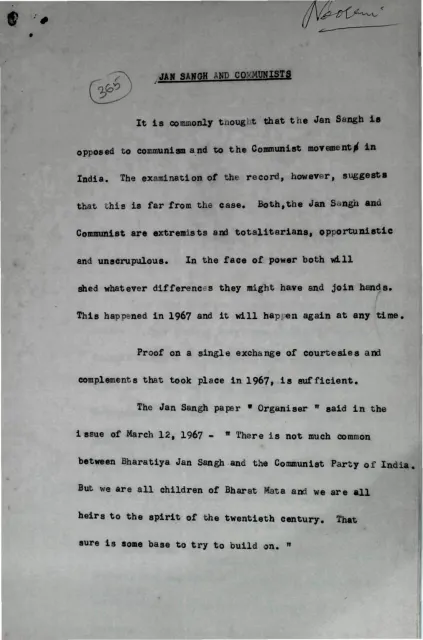
In the rendered pages, the author argues that the Bharatiya Jana Sangh’s public opposition to communism concealed a pattern of tactical cooperation. Drawing on statements in Organiser, Link, Patriot, and other newspapers, the text presents both the Jana Sangh and the Communist parties as extremist, opportunistic, and willing to abandon ideological differences when political power was at stake. The central evidence is the post-1967 formation of coalition governments, especially in Bihar and other states, in which the Jana Sangh and the CPI worked together despite their declared antagonism.
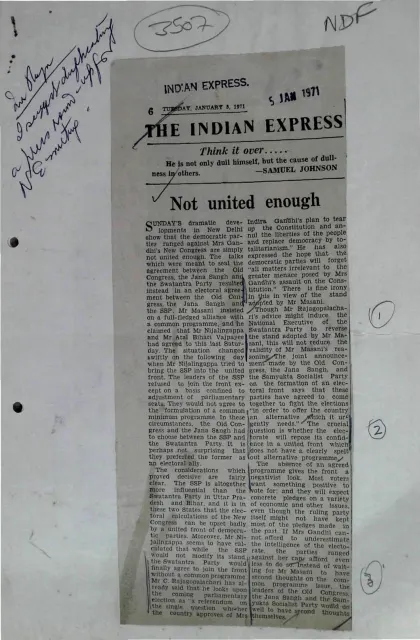
In the rendered pages, the author traces this accommodation through electoral adjustments, cooperation with Left parties, support for selected socialist measures such as partial state trading and transport nationalisation, and the Jana Sangh’s conduct during the 1969 bank-nationalisation and presidential-election controversies. The discussion also criticises Jana Sangh leaders for presenting tactical alliances as pragmatism while retaining occasional anti-communist rhetoric. Minoo Masani’s criticism of these shifts is used to argue that the party sacrificed political judgement, consistency, and democratic-nationalist principles for office and influence. The pages end by portraying the Jana Sangh’s cooperation with communists as an opportunistic effort to acquire respectability and share power.
Key points
- The author disputes the common view that the Jana Sangh was consistently opposed to communism.
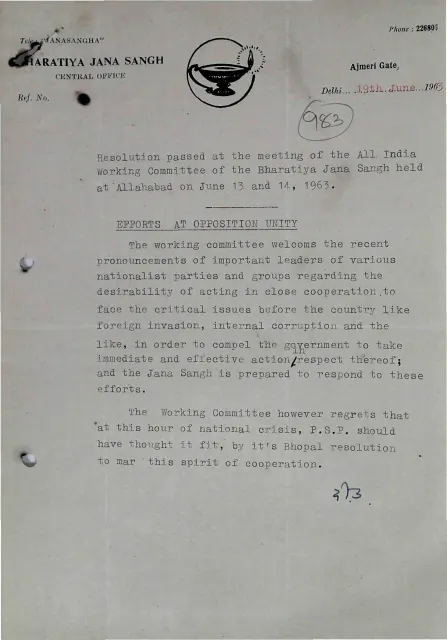
- Statements from Organiser and Communist publications are presented as evidence of mutual political accommodation after the 1967 elections.
- The Jana Sangh and CPI formed governments together in Bihar and other states despite their proclaimed ideological opposition.
- The text describes cooperation on electoral adjustments, state trading, transport nationalisation, and coalition formation.
- Minoo Masani is cited as a critic of the Jana Sangh’s opportunism and its failure to make firm political decisions.
- The Jana Sangh’s positions on bank nationalisation and the 1969 presidential election are used to illustrate tactical inconsistency.
- The author argues that anti-communist statements continued rhetorically while practical collaboration with communist parties expanded.
Metadata and summary are AI-extracted from the source PDF and reviewed for editorial accuracy. The original work is available via the Read PDF tab above (where present); paragraph-level citation inside the PDF is deferred to a future engagement.