letter
Recalling the Swatantra Party
Pune · 2003
14 pages
Summary
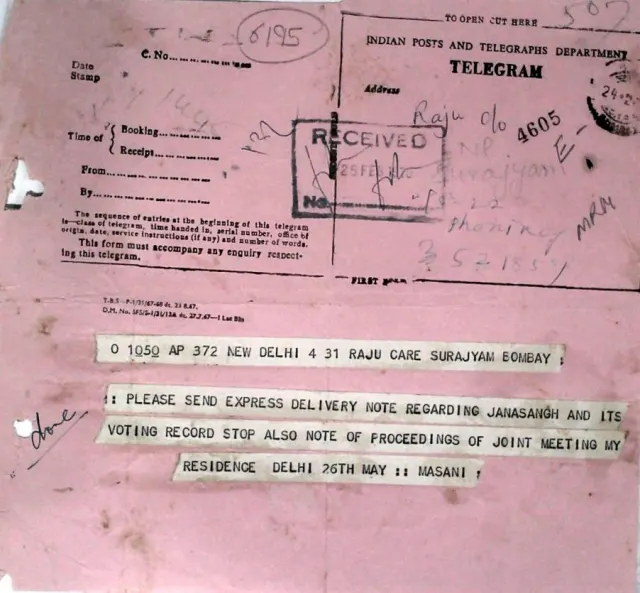
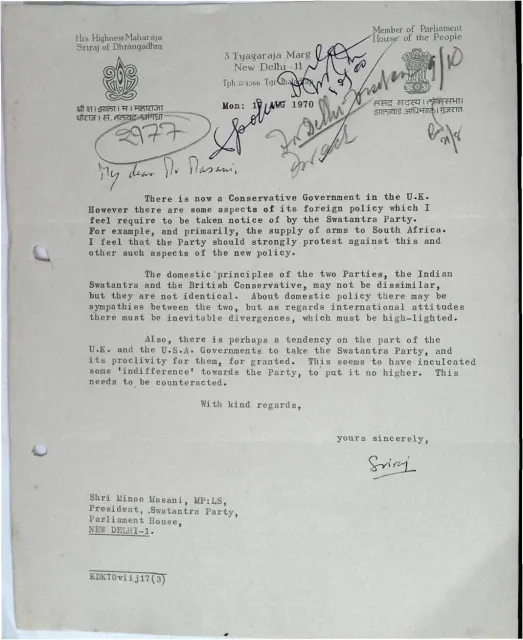
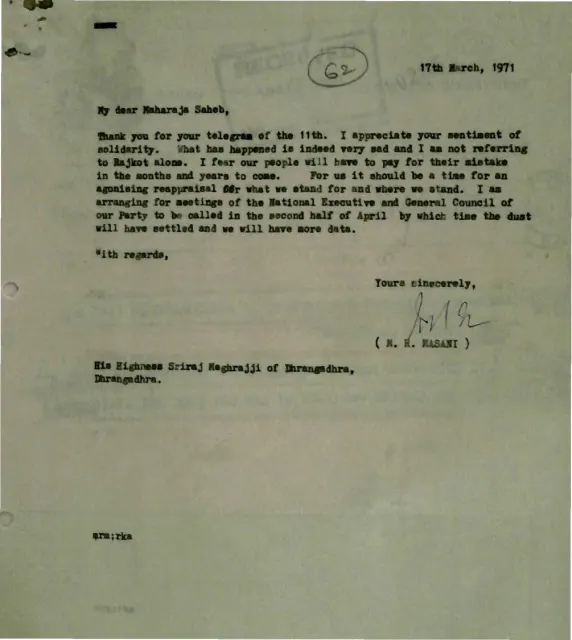
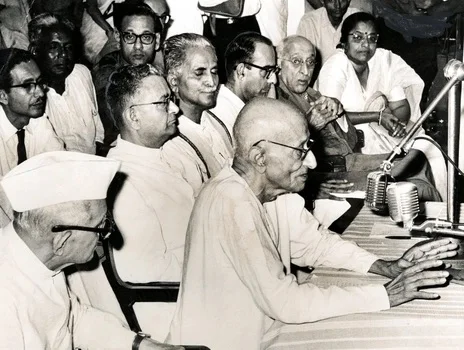
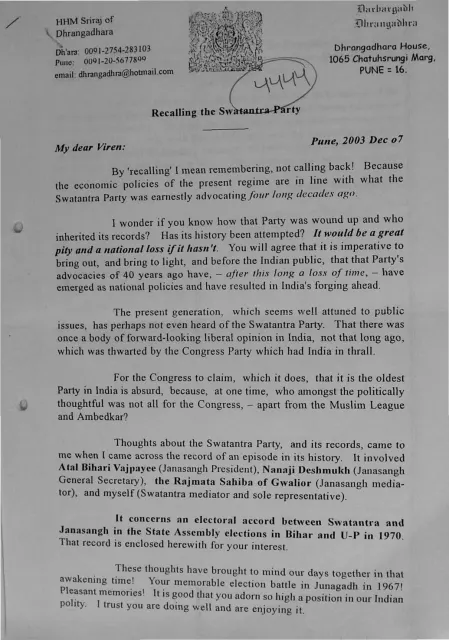
In the rendered pages, Siraj of Dhrangadhara writes to Viren Shah from Pune on 7 December 2003 to recover the Swatantra Party’s political record and argue that many of its economic positions, advocated four decades earlier, had since become national policy. He fears that the party’s history may have been lost and presents its liberal opposition to Congress dominance as an important but neglected part of India’s political development. He also recalls a 1970 electoral accord between Swatantra and Janasangh in Bihar and Uttar Pradesh, enclosing a conference record as evidence.
The enclosed records document negotiations held on 31 December 1968 and 2 January 1969 over a Swatantra–Janasangh electoral understanding in Bihar. The discussions classify constituencies as “unitary,” “neutral,” “binary,” “accordable,” or “open,” while disagreements emerge over whether previously settled constituencies can be reopened and how much authority local party organisations should have. The appendix records detailed constituency-level outcomes: Swatantra initially claimed an interest in 77 of Bihar’s 318 constituencies, while the negotiations eventually reduced its recorded interest to 39. The second conference ended with disappointment but in a cordial atmosphere; the pages shown do not establish whether the broader accord was ultimately signed or implemented.
Key points
- Siraj presents the Swatantra Party’s economic advocacy as an early source of policies adopted by later governments.
- The letter calls for the party’s records and history to be brought before the Indian public.
- Siraj recalls a 1970 Swatantra–Janasangh electoral accord in Bihar and Uttar Pradesh.
- The enclosed 1968–69 conference records show negotiations over constituency allocation in Bihar.
- The parties distinguish between sole-contest, jointly contestable, negotiable, and unresolved constituencies.
- The negotiations expose tensions between central party commitments and local consultation.
- The appendix reports that Swatantra’s claimed Bihar constituencies fell from 77 to 39.
- The rendered pages do not show the final execution or political consequences of the proposed pact.
Metadata and summary are AI-extracted from the source PDF and reviewed for editorial accuracy. The original work is available via the Read PDF tab above (where present); paragraph-level citation inside the PDF is deferred to a future engagement.