essay
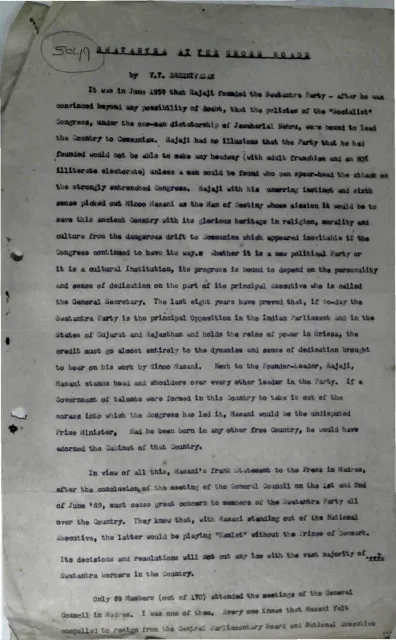
SWATANTRA AT THE CROSS ROADS
2 pages
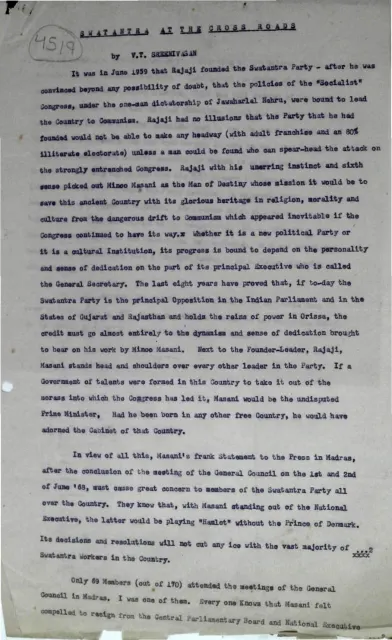
Summary
In the rendered pages, V. T. Sreenivasan presents the Swatantra Party as having reached a decisive leadership crisis. He attributes the party’s creation in June 1959 to C. Rajagopalachari’s conviction that the Congress’s socialist policies under Jawaharlal Nehru would lead India toward communism. The essay argues that Rajaji recognized Minoo Masani as the figure capable of opposing the deeply entrenched Congress, and credits Masani’s energy and dedication with the party’s subsequent electoral and organisational advances.
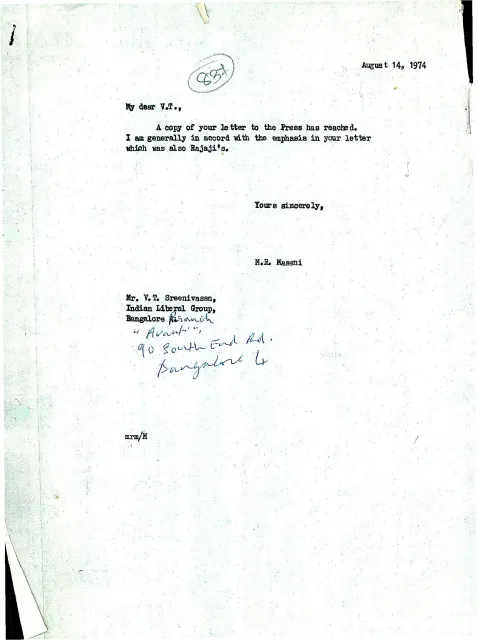
In the rendered pages, Sreenivasan focuses especially on Masani’s resignation from the party’s central leadership after disputes within the Gujarat organisation and among Swatantra legislators. He criticises Rajaji’s failure to support resolutions intended to reform the Gujarat party machinery, while insisting that Masani was indispensable to any future effort to remove Congress from power at the Centre. The visible text ends with a categorical endorsement of Masani as the party’s only leader capable of achieving that objective.
Key points
- The essay dates the founding of the Swatantra Party to June 1959 and links it to opposition to Congress socialism under Jawaharlal Nehru.
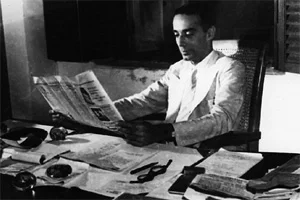
- Rajaji is portrayed as having selected Minoo Masani to lead the political opposition to Congress.
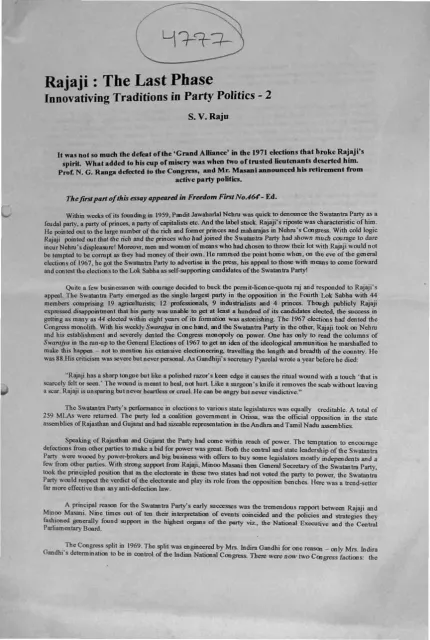
- The author credits Masani with the Swatantra Party’s growth as a major parliamentary and state-level opposition force.
- Masani’s withdrawal from the National Executive is presented as a serious organisational and political crisis.
- The essay criticises Rajaji for not supporting resolutions intended to clean up the party machinery in Gujarat.
- The author concludes that Masani was the only Swatantra Party leader capable of defeating Congress at the Centre in 1972.
Metadata and summary are AI-extracted from the source PDF and reviewed for editorial accuracy. The original work is available via the Read PDF tab above (where present); paragraph-level citation inside the PDF is deferred to a future engagement.