
office record · report
Defeat of the Party's candidate in the Biennial Election to Rajya Sabha (March 1968) in Gujarat
By N. Dandekar
SWATANTRA PARTY Central Office. · New Delhi · 1968
7 pages
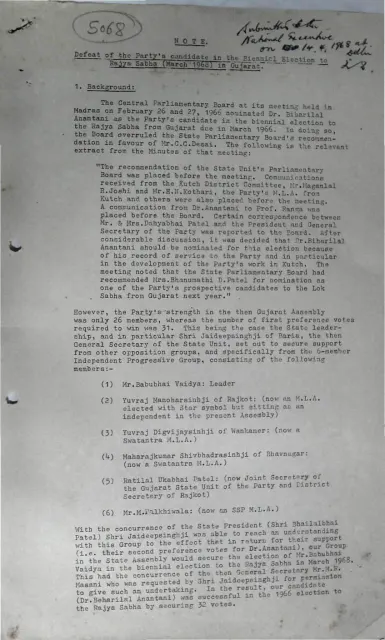
Summary
This seven-page Swatantra Party office note, signed by General Secretary N. Dandeker, examines the party’s defeat in the March 1968 biennial Rajya Sabha election in Gujarat. It reconstructs the Central Parliamentary Board’s earlier decision to nominate Dr. Biharlal Anantani in 1966, the informal understanding that the party would support Babubhai Vaidya for a future Rajya Sabha seat, and the negotiations with the Independent Progressive Group and other opposition figures that helped secure Anantani’s election.
Key points
- The Gujarat State Parliamentary Board originally recommended Babubhai Vaidya as the party’s first-preference candidate for the 1968 Rajya Sabha election.
- The party’s reduced effective strength in the Gujarat Assembly meant it could ensure the election of only one candidate.
- The Central Parliamentary Board rejected competing candidacies by U. N. Mahida and B. R. Shenoy and instructed the Gujarat unit to support Vaidya alone.
- Mahida continued his candidacy despite requests to withdraw, while Shenoy eventually withdrew.
- Mahida won the election with 47 votes, while Vaidya received 27 and lost.
- The post-mortem proposed disciplinary action against Mahida and considered whether charges should also be brought against his sponsors and polling agent.
- The enclosed 13 March 1968 letter defended the decision to honour the party’s prior commitment to Vaidya as a matter of political obligation and party reputation.
Metadata and summary are AI-extracted from the source PDF and reviewed for editorial accuracy. The original work is available via the Read PDF tab above (where present); paragraph-level citation inside the PDF is deferred to a future engagement.
People in this work
Related across the archive
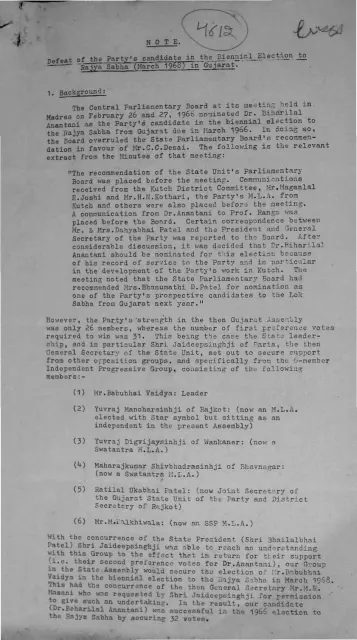 Primary workDefeat of the Party's candidate in the Biennial Election to Rajya Sabha (March 1968) in Gujarat.
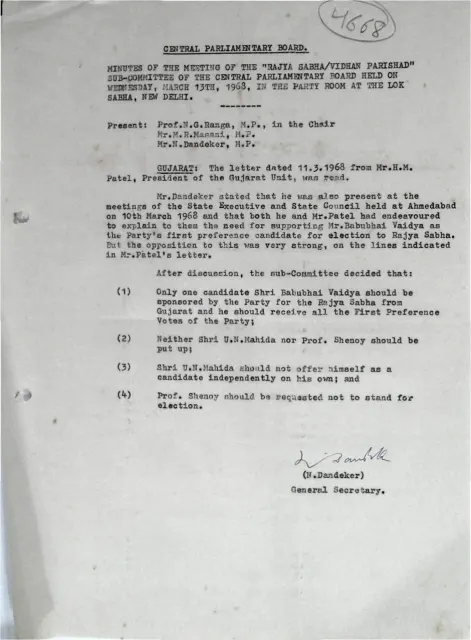 Primary workMINUTES OF THE MEETING OF THE \"RAJYA SABHA/VIDHAN PARISHAD\" SUB-COMMITTEE OF THE CENTRAL PARLIAMENTARY BOARD HELD ON WEDNESDAY, MARCH 13TH, 1968, IN THE PARTY ROOM AT THE LOK SABHA, NEW DELHI.
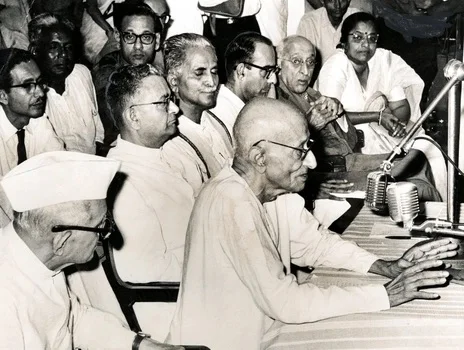 OpinionThe Swatantra Way for Forging a Formidable Coalition
 ThePrintSocial injustice is inevitable under socialist economic systems: BR Shenoy