report · report
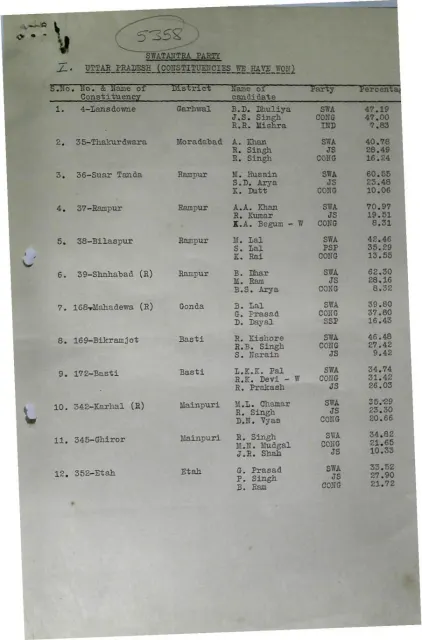
UTTAR PRADESH (CONSTITUENCIES WE HAVE WON)
SWATANTRA PARTY
3 pages
Summary
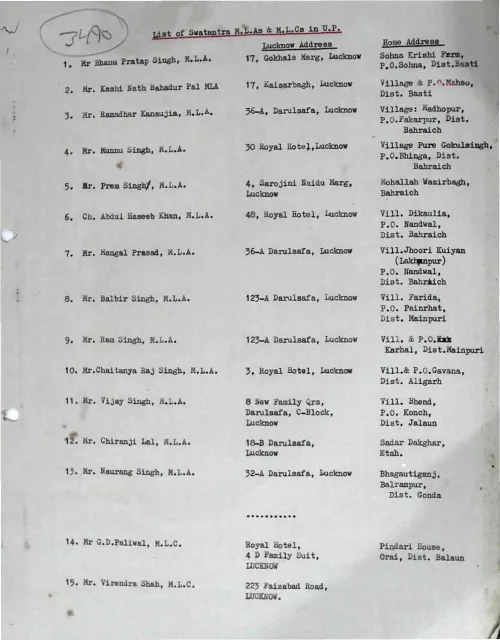
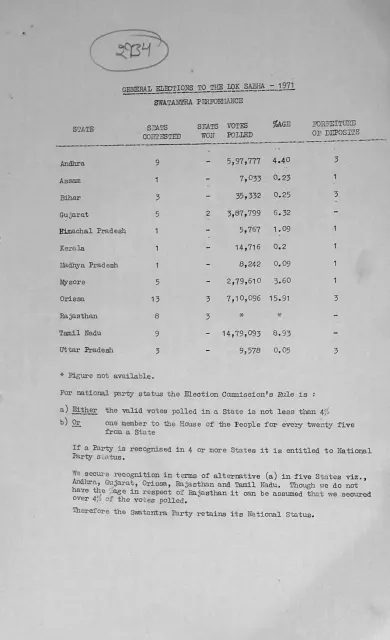
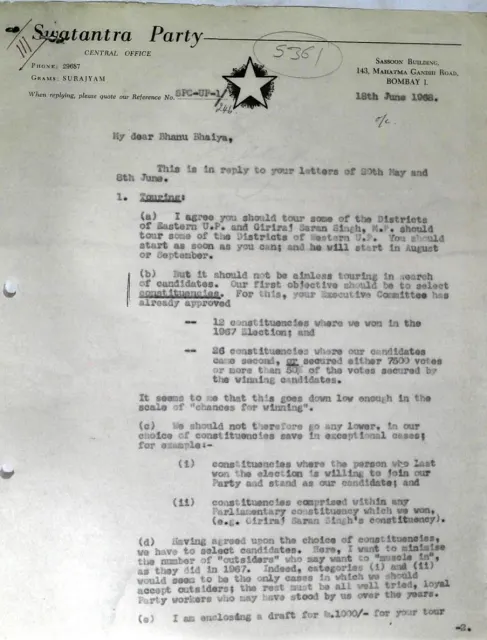
This three-page Swatantra Party report records Uttar Pradesh constituencies in which the party either won or performed strongly. Section I lists twelve constituencies described as seats the party had won, including Lansdowne, Thakurdwara, Suar Tanda, Rampur, Bilaspur, Shahabad, Mahadewa, Bikramjot, Basti, Karhal, Ghiror, and Etah. For each seat, it gives the district, candidate names, party affiliations, and vote percentages. The reported Swatantra Party shares range from 33.52 percent in Etah to 70.97 percent in Rampur.
Section II lists twenty-six further constituencies where the party’s candidates secured either more than 50 percent of the winning vote or more than 7,500 votes. These entries cover districts across Uttar Pradesh, including Bijnor, Moradabad, Shahjahanpur, Sitapur, Barabanki, Bahraich, Gonda, Basti, Ballia, Ghazipur, Etawah, Mainpuri, Etah, Agra, Aligarh, and Meerut. Section III identifies two “Other Possible Constituencies”—Ekeshwar and Shikohabad—and names prospective candidates or notes prior electoral experience. The document is an internal electoral inventory rather than an argument about policy or political theory; no publication year or individual author is printed.
Key points
- The report is headed “SWATANTRA PARTY” and concerns Uttar Pradesh electoral constituencies.
- Section I identifies twelve constituencies the party states it has won.
- The tables record constituency number and name, district, candidate, party, and vote percentage.
- The listed Swatantra Party vote shares in the first section range from 33.52 percent to 70.97 percent.
- Section II identifies twenty-six constituencies where party candidates met the stated performance threshold.
- The performance threshold is more than 50 percent of the winning votes or more than 7,500 votes.
- Section III names Ekeshwar and Shikohabad as other possible constituencies and identifies potential candidates.
- The document contains no named author, publication year, formal table of contents, or policy discussion.
Metadata and summary are AI-extracted from the source PDF and reviewed for editorial accuracy. The original work is available via the Read PDF tab above (where present); paragraph-level citation inside the PDF is deferred to a future engagement.