essay
Swatantra MPs fail to resolve Gujarat crisis
NEW DELHI · 1968
1 pages
Summary
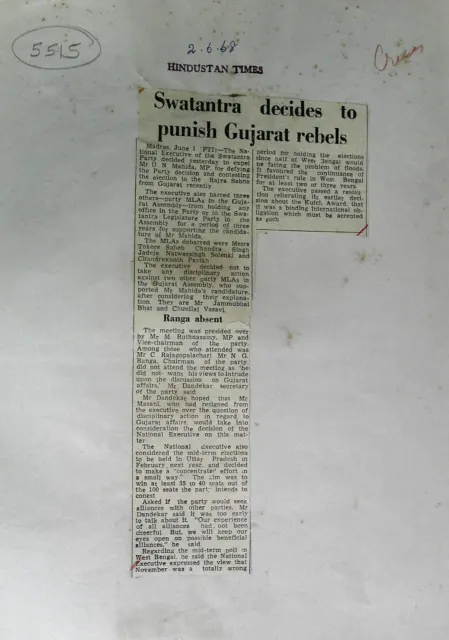
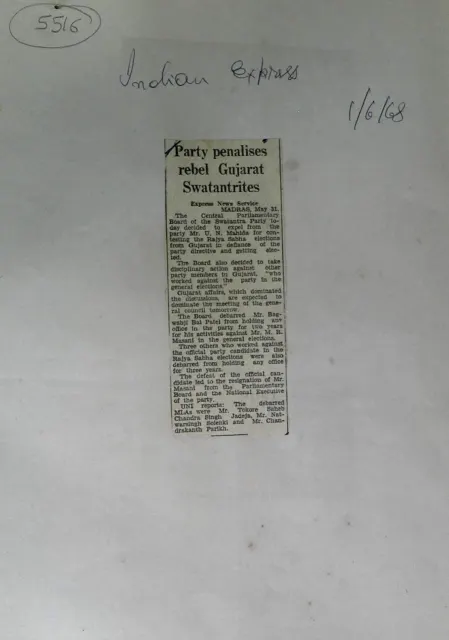
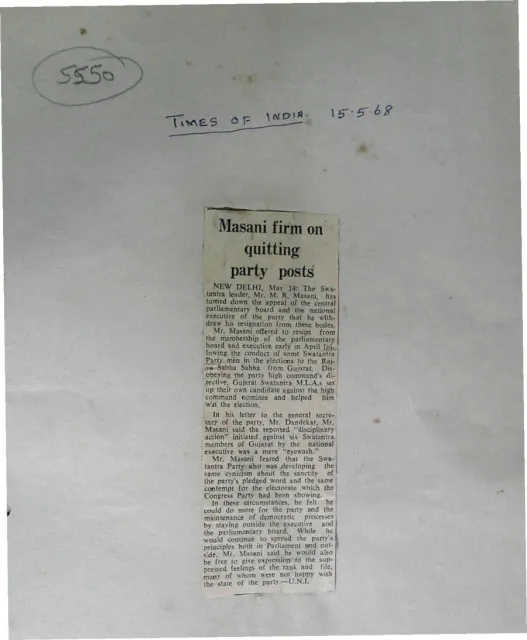
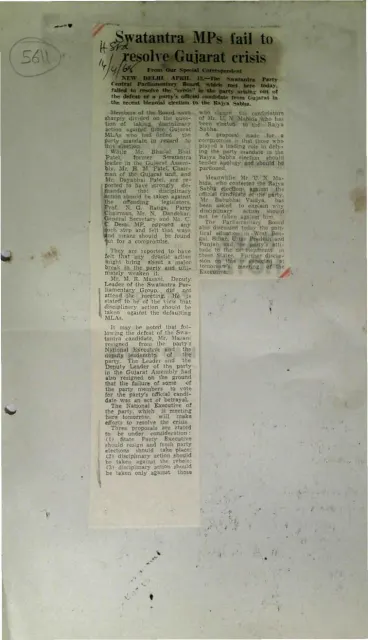
This newspaper report, dated New Delhi, April 13, 1968, describes an unresolved internal crisis in the Swatantra Party following the defeat of its official candidate from Gujarat in a recent Rajya Sabha election. Members of the party’s Central Parliamentary Board are divided over whether disciplinary action should be taken against Gujarat MLAs accused of defying the party mandate. Several leaders, including H. M. Patel and Dayabhai Patel, argue that the offending legislators should face discipline, while others oppose immediate action and seek a compromise.
The report identifies three proposals under consideration: requiring the State Parliamentary Executive to resign and fresh party elections to be held; taking disciplinary action against the rebels; or limiting such action to those who supported the opposing candidate, M. N. Mahida, rather than the party nominee. Mahida’s position is that those who defied the party mandate should apologise before being pardoned. The Parliamentary Board is also reported to be considering the wider political situation in West Bengal, Bihar, Uttar Pradesh and Punjab. The clipping carries the generic credit “From Our Special Correspondent”; no newspaper title or named byline is visible.
Key points
- The Swatantra Party’s Central Parliamentary Board met in New Delhi to address a Gujarat electoral crisis.
- The crisis followed the defeat of the party’s official Rajya Sabha candidate from Gujarat.
- Party leaders disagreed over disciplinary action against Gujarat MLAs who allegedly violated the party mandate.
- M. R. Masani opposed immediate disciplinary action and urged compromise.
- Three proposals included resignation and fresh state elections, disciplinary action against rebels, or action only against those who supported M. N. Mahida.
- Mahida reportedly demanded an apology from legislators who defied the party mandate before they could be pardoned.
- The Board was also considering political developments in West Bengal, Bihar, Uttar Pradesh and Punjab.
Metadata and summary are AI-extracted from the source PDF and reviewed for editorial accuracy. The original work is available via the Read PDF tab above (where present); paragraph-level citation inside the PDF is deferred to a future engagement.