legal filing
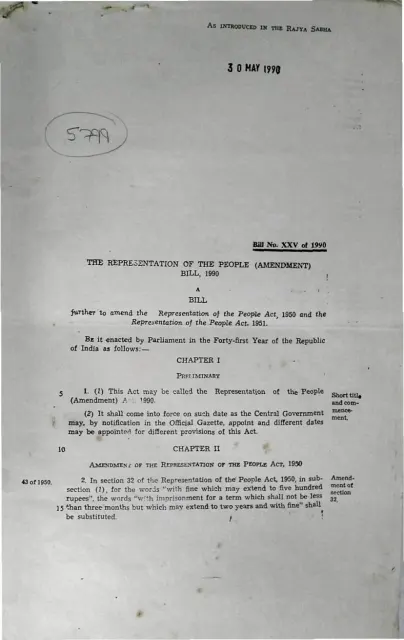
THE REPRESENTATION OF THE PEOPLE (AMENDMENT) BILL, 1990
New Delhi · 1990
23 pages
Summary
The Representation of the People (Amendment) Bill, 1990 proposes wide-ranging changes to India’s election law. The visible clauses amend the Representation of the People Acts of 1950 and 1951 by strengthening penalties for electoral offences, introducing Election Commission observers with powers to halt counting in cases such as booth capturing, restricting multiple nominations, revising candidate deposits, and providing procedures when a recognised-party candidate dies before polling. The Bill also empowers the Election Commission to issue instructions and make recommendations concerning investigation, prosecution, and special courts.
The Bill further proposes limited forms of state support for recognised political parties, including electoral-roll copies, fuel, microphones, and elector identity slips, alongside controls on campaign expenditure. It inserts provisions against the misuse of official machinery, public resources, government accommodation, official media, discretionary funds, and public announcements during elections. Other measures address the forty-eight-hour silence period, election-day liquor restrictions, paid holidays for voters, the carrying of arms near polling stations, and the filling of vacancies within six months. The Statement of Objects and Reasons presents these measures as responses to recommendations of a Committee on Electoral Reforms constituted in January 1990; the rendered pages also include financial and delegated-legislation memoranda and extracts from the principal Acts.
Key points
- The Bill amends the Representation of the People Acts, 1950 and 1951.
- The Election Commission may nominate observers empowered to stop counting or withhold declaration of results in specified cases of booth capturing or compromised ballot materials.
- Candidates may be barred from contesting simultaneously in more than one constituency, and candidate deposits are increased.
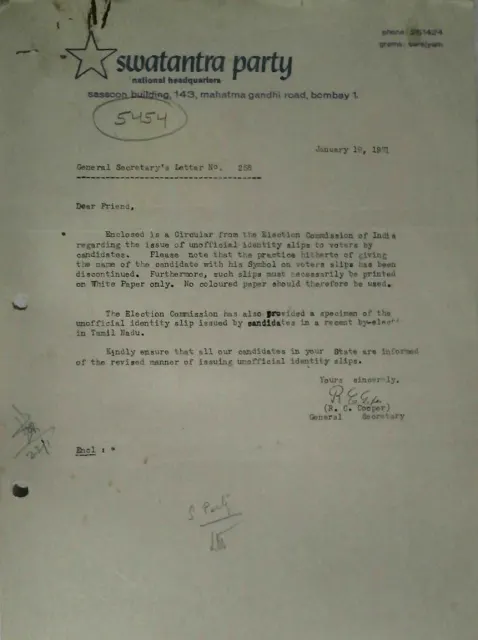
- Recognised political parties receive proposed government support in the form of electoral rolls, fuel, microphone-hire payments, and elector identity slips.
- The Bill codifies restrictions on the use of government machinery, public resources, official media, grants, accommodation, and appointments for electoral advantage.
- It introduces a forty-eight-hour prohibition on public meetings and election-related publicity before the close of polling, with criminal penalties.
- It adds measures concerning paid polling-day leave, prohibition of liquor distribution, arms near polling stations, six-month deadlines for by-elections, and expanded Election Commission powers.
Metadata and summary are AI-extracted from the source PDF and reviewed for editorial accuracy. The original work is available via the Read PDF tab above (where present); paragraph-level citation inside the PDF is deferred to a future engagement.