essay
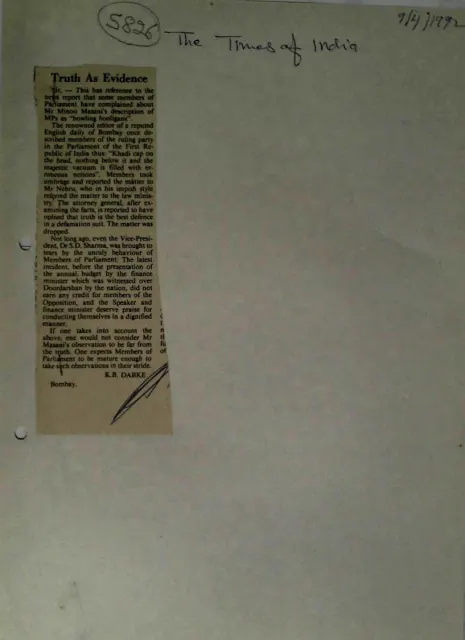
Truth As Evidence
The Times of India · Bombay · 1992
1 pages
Summary
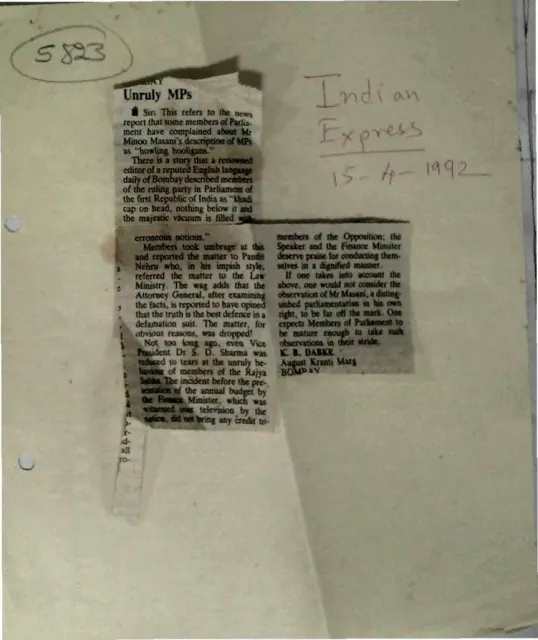
In the rendered page, K. B. Dabke responds to criticism of parliamentary conduct attributed to Minoo Masani, who had reportedly described some Members of Parliament as “howling hooligans.” The article argues that the allegation was based on a newspaper report that distorted an incident in the First Rajya Sabha, and that the newspaper’s subsequent reliance on “truth” as a defence in a defamation case was itself undermined when the matter was dropped.
The rendered page also discusses an incident involving Vice-President Dr S. D. Sharma and parliamentary behaviour during the presentation of the Finance Minister’s budget. Dabke argues that the conduct of both Opposition members and the Speaker deserved criticism, and concludes that Parliament must become sufficiently mature to examine evidence before accepting allegations about its members.
Key points
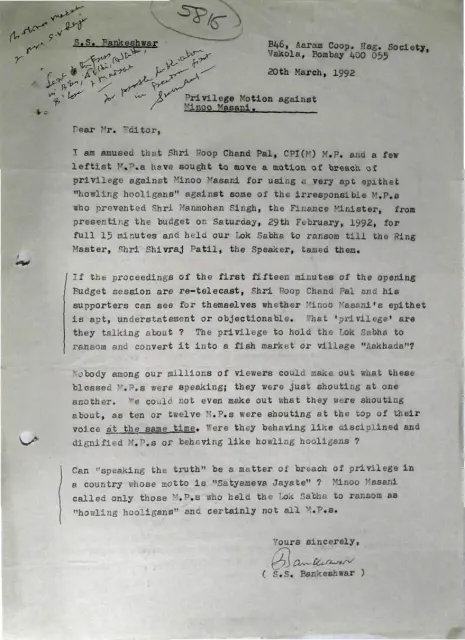
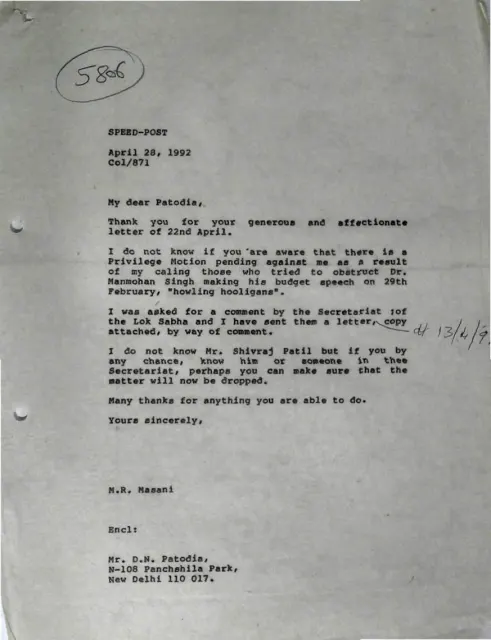
- The article challenges a report alleging that some MPs behaved as “howling hooligans.”
- It attributes the criticism to Minoo Masani and contests the factual basis of the allegation.
- It describes a newspaper’s claim that truth was the best defence in a defamation case, followed by the dropping of the case.
- It cites a separate incident involving Vice-President Dr S. D. Sharma and conduct during the Finance Minister’s budget presentation.
- It criticises both Opposition members and the Speaker for their conduct in Parliament.
- It calls for greater parliamentary maturity and closer attention to evidence before allegations are accepted.
Metadata and summary are AI-extracted from the source PDF and reviewed for editorial accuracy. The original work is available via the Read PDF tab above (where present); paragraph-level citation inside the PDF is deferred to a future engagement.