Summary
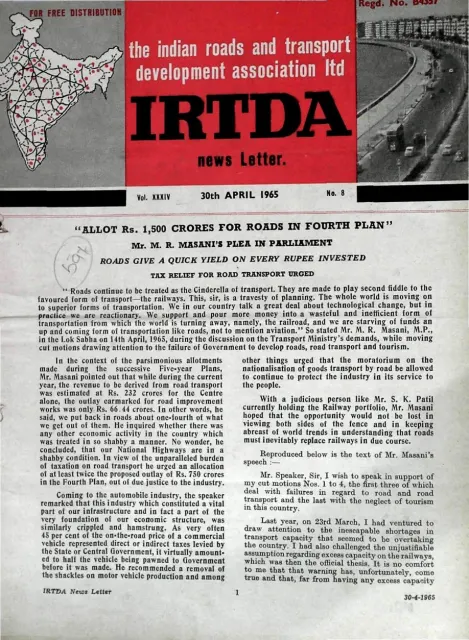
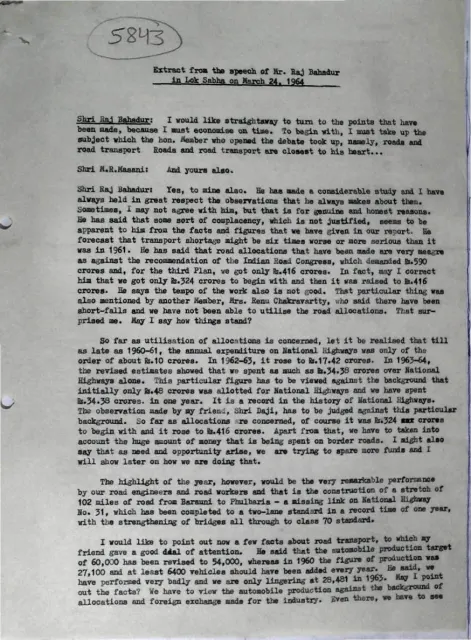
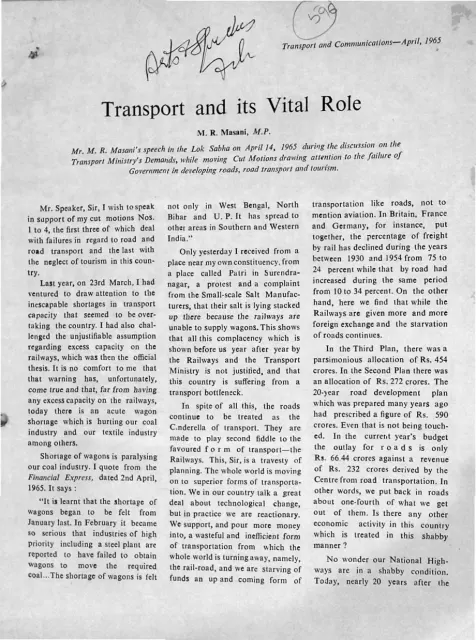
In the rendered pages, M. R. Masani argues that India’s transport policy is producing a damaging bottleneck. He points to acute railway-wagon shortages affecting coal, textiles, and salt manufacturers; inadequate road investment; delayed highway projects; and planning allocations that do not match the economic importance of roads. He contrasts India’s preference for railways with the growing use of road transport elsewhere, and criticizes taxation, import restrictions, licensing, and shortages of components for holding back automobile and truck production. He presents road transport and automobile manufacturing as essential infrastructure rather than luxuries, and opposes the expansion of state monopolies and the nationalisation of goods transport.
Key points
- Masani links railway-wagon shortages to disruptions in coal, textile, and other industries.
- He criticizes the treatment of roads as the neglected ‘Cinderella’ of transport and cites slow progress on major highway projects.
- He argues that Fourth Plan road allocations are inadequate and questions the principles by which transport funds are distributed.
- He attributes high vehicle prices and low production partly to excise and import duties, licensing restrictions, and denied foreign exchange for essential parts.
- He defends private road carriers and warns that state control of goods transport could become a monopoly that crowds out small entrepreneurs.
- He presents tourism as a major potential source of foreign exchange and criticizes travel restrictions, poor facilities, airport procedures, inadequate hotels, and weak promotion.
- He supports measures including more charter flights, investment in Air India, improved hotel construction, and a stronger national priority for tourism.
Metadata and summary are AI-extracted from the source PDF and reviewed for editorial accuracy. The original work is available via the Read PDF tab above (where present); paragraph-level citation inside the PDF is deferred to a future engagement.