book
Free Your Mind
A Beginner's Guide to Political Economy
40 pages

Free Your Mind
Summary
These opening five chapters of A Beginner’s Guide to Political Economy lay out a polemical, free-market primer aimed at young or lay readers, illustrated with line drawings, verse insets and ‘Points to Ponder’ question boxes. Chapter 1 (‘Know Thyself’) argues that the capacity to trade is what makes humans uniquely ‘economic’ (Homo Economicus) and wealth-generating; Chapter 2 (‘Population Causes Prosperity’) inverts the standard Indian-economics claim that India’s population causes poverty, contending instead that dense, urbanised places are rich precisely because they permit a deeper division of labour. The author treats self-sufficiency as ‘economic suicide’ and roads/urbanisation as the real engines of prosperity, blaming India’s urban squalor on an undersupply of roads rather than on overcrowding.
Chapters 3 through 5 turn to why the state mishandles the economy. Chapter 3 (‘Why Political Markets Don’t Work’) introduces public-choice reasoning: private choices self-correct because consumers bear their consequences, whereas political markets reward re-election-seeking politicians, budget-maximising bureaucrats, and rent-seeking interest groups (free water, subsidised rice, protective import duties). Chapter 4 (‘Public Goods and Market Failure’) concedes the classical case for state-supplied public goods like roads and policing, while Chapter 5 (‘The Case for Free Trade’) opens an attack on swadeshi/self-reliance and the half-century of Indian trade restriction lifted only under WTO pressure. The text also gestures at ‘predatory states’ and ‘kleptocracies’ as a frame for governance failure in India and the Third World.
Key points
-
Frames the human capacity to trade as the defining ‘economic’ trait, coining the book’s refrain that humans are Homo Economicus, ‘born to be rich’.
-
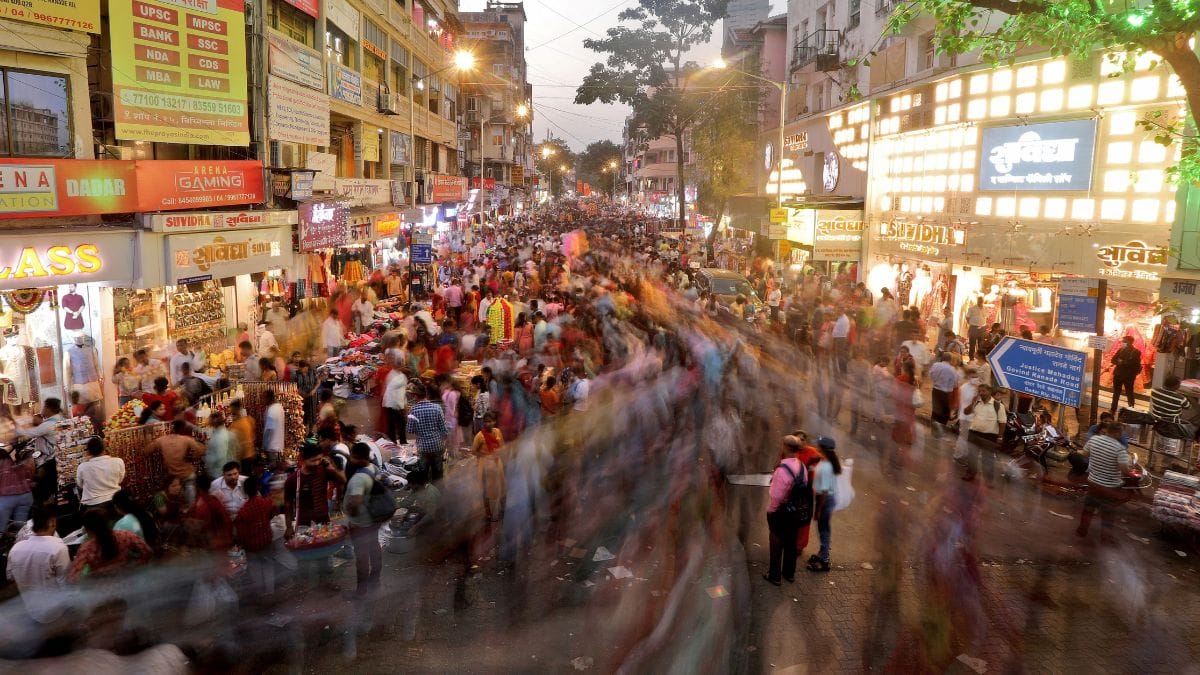
Argues population is a resource, not a burden: dense cities are rich because they enable a deeper division of labour (‘Population Causes Prosperity’).
-
Treats self-sufficiency/swadeshi as ‘economic suicide’ for individuals and nations alike.
-
Blames Indian urban squalor on an undersupply of roads and poor transport links, not on overpopulation, citing lower densities than Japan/Germany/Holland/Belgium.
-
Deploys public-choice theory: politicians chase re-election, bureaucrats maximise budgets, interest groups seek ‘free lunches’ at other taxpayers’ expense.
-
Concedes a classical-liberal case for genuine public goods (roads, police) funded from the ‘collective kitty’.
-
Opens a case for free trade, framing India’s 50 years of import restriction as ended only by WTO pressure.
-
Introduces ‘predatory state’ and ‘kleptocracy’ framing for governance failure, invoking Sher Shah Suri and contemporary extortion of street vendors.
Generated by the v1.5 extraction pipeline. Awaiting editorial review.
Metadata and summary are AI-extracted from the source PDF and reviewed for editorial accuracy. The original work is available via the Read PDF tab above (where present); paragraph-level citation inside the PDF is deferred to a future engagement.