
Summary
This IL Explainer episode revisits Rabindranath Tagore's 1914 epistolary short story Streer Potro (A Wife's Letter), framed as a tribute on Rabindra Jayanti. The discussion follows Mrinal, the narrator, who writes a letter to her husband articulating her selfhood and refusing to be defined solely as mother, wife, or sister. The hosts trace the parallel plight of Bindu, a young widow taken in as a near-servant by Mrinal's in-laws, married off to a violent man, and ultimately driven to suicide despite Mrinal's attempts to defend her.
The conversation situates the story in the legal-historical context of widow remarriage, noting that although remarriage had been a legal right for decades by 1914, social attitudes lagged far behind. Through Mrinal's hidden poetry and her eventual assertion of an identity beyond domestic roles, Tagore is positioned as a liberal voice whose women protagonists challenged patriarchal norms and demanded individuality.
Key points
- Streer Potro (1914) is an epistolary story told as a letter from Mrinal to her husband.
- Bindu, a young widow and distant relative, is treated as an unpaid servant in the household.
- Mrinal tries to protect Bindu but cannot prevent her marriage to a violent man or her eventual suicide.
- Mrinal hides her poetry from her husband, treating her writing as a hidden identity she finally claims.
- She rejects identification solely as mother, wife, or sister and asserts her own selfhood.
- Although widow remarriage was legally permitted decades before 1914, social treatment of widows remained harsh.
- Tagore's women protagonists, like Mrinal, repeatedly challenge patriarchal norms.
Transcript
IL Explainer - Ep 3 | Streer Potro by Rabindranath Tagore
Source: https://www.youtube.com/watch?v=vg9gKnFIY-U Duration: 410.5s
Speaker 1 (00:00): Today, we’ll be discussing Streer Potro, the wife’s letter, by Rabindranath Tagore. It’s a 1914 epistolary, and Tagore is, as we know, he’s a poet, thinker, writer, and, of course, an Indian liberal. And and it’s very interesting to me that she’s she just treated like an unpaid servant. She’s not, and especially because she is a relative of the sister-in-law, she’s not directly related to them. She’s, you know, she’s she’s just an outsider who’s seeking refuge, and she, and a widowed young widow at that. And she, you know, it’s it’s really poor treatment for her. And then Mrinal grows fond of her. She tries to stand up for her. But, eventually, nothing’s come, nothing comes of that that as well. She’s just married off to to an unstable violent man. When she, when she runs away from that, she, you know, she’s again, she’s the one who’s seen shown in poor light for running away from from. And eventually, she succumbs, and she, you know, she commits suicide, and Mrinal is not able to stand up for her, save her despite her desperate attempts. I think I think that brings us to something very interesting. This was written in 1914, so widow remarriage was a legal right for a few decades now. But despite that legal right existing,
Speaker 2 (04:09): in front of the vast ocean, and she’s talking about freedom. She writes the letter to her husband, and that’s the treatment of the story. Right? It’s in the form of the letter that Mrinal writes to her husband. And the way she that she mentions that, you know, she just wants to be herself. She does not want to be identified as a mother, as a wife, as a sister. She just wants to be herself, and, you know, writing poetry or expressing herself through words is not done in, you know, confined space where she’s not hiding that poetry or that, you know, that that form of expression anymore. And and and I think she mentions it also in the story that she, you know, mentions it to her husband saying that you never realize that I write poetry. It was a well hidden fact from you. And when that fact was hidden, it was also my identity that I was, you know, hiding away from you. So even though she stood up for Bindu from time to time, even when Bindu’s own sister did, she not, was lacking in her personal life where she was not treated as an equal an equal
Notable passages
"It's a 1914 epistolary, and Tagore is, as we know, he's a poet, thinker, writer, and, of course, an Indian liberal."
"She does not want to be identified as a mother, as a wife, as a sister. She just wants to be herself"
Metadata and summary are AI-extracted from the source PDF and reviewed for editorial accuracy. The original work is available via the Read PDF tab above (where present); paragraph-level citation inside the PDF is deferred to a future engagement.
People in this work
Related across the archive
- Primary workOn Nehru's Cult-Like Personality — In Conversation With Zareer Masani
- Primary workThe Case for Liberalism in Indian History
- Primary workDeepak Lal on Grameen Bank and Microfinance Institutions
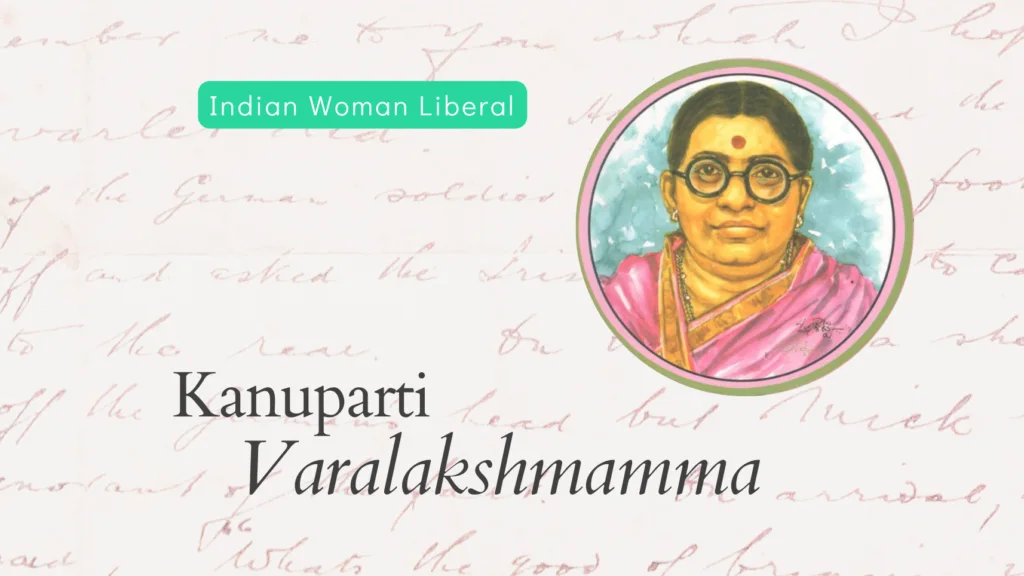 OpinionKanuparti Varalakshmamma: A Feminist Writer And Social Activist
 ExcerptNational Priorities for 1970