Summary
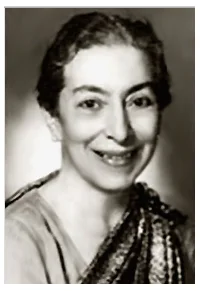
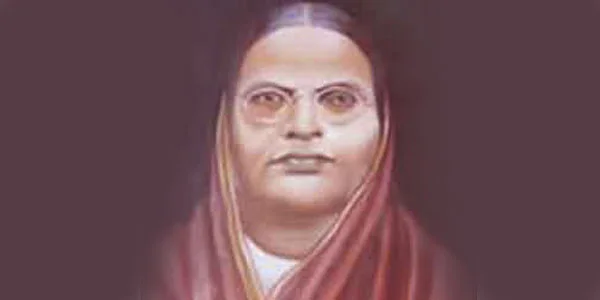
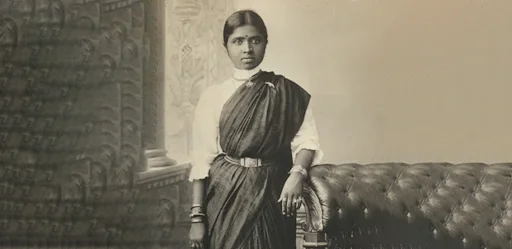
This short documentary profiles Mithan Tata Lam (1898–1981), a Parsi-born barrister, suffragist, and social reformer who became the first Indian woman called to the Bar in the United Kingdom and the first woman permitted to practice before the Bombay High Court. Raised in Bombay by a progressive father, Ardeshir Tata, and the women's-rights activist Herabai Tata, she earned the Cobden Club Medal in economics at Elphinstone College before traveling to London with her mother in 1919 to lobby British parliamentarians on the Government of India Bill and the case for female enfranchisement.
The video traces her admission to Lincoln's Inn in 1920, her call to the bar in January 1923, her pupillage with Bhulabhai Desai, and her appointment as India's first woman professor of law at the Government Law College in Mumbai. It outlines the incremental provincial victories for women's suffrage (Madras 1921, Bengal 1925, Punjab 1926) that her campaigns helped secure, her role in shaping the Parsi Marriage and Divorce Act of 1936, and her appointment as the first woman Sheriff of Bombay in 1947.
It closes by describing her post-legal career in social work — chairing the women's rehabilitation committee for Partition refugees, leading the Maharashtra State Women's Council, organising slum-improvement work in the Matunga Labour Camp, and campaigning against child labour and hunger — culminating in her Padma Bhushan in 1962.
Key points
- First Indian woman called to the Bar in the UK (Lincoln's Inn, 26 January 1923) and first woman to practice before the Bombay High Court at age 25.
- Lobbied the British Parliament in 1919 alongside Annie Besant, Sarojini Naidu, and Major Graham Pole for Indian women's franchise during debate on the Government of India Bill.
- Daughter of activist Herabai Tata; both were radicalised toward suffrage after meeting Princess Sophia Duleep Singh in Kashmir in 1911.
- Became India's first woman professor of law at the Government Law College, Mumbai, after joining Bhulabhai Desai's chambers in 1923.
- Helped shape the Parsi Marriage and Divorce Act of 1936 as a member of the committee revising the 1865 Act.
- Appointed first woman Sheriff of the Bombay High Court (1947) and chaired the government's women's committee for relief and rehabilitation of Partition refugees.
- Awarded the Padma Bhushan in 1962 for her contributions to law, women's rights, and social work.
Transcript
Mithan Tata Lam - An Indian Lawyer & Suffragist
Source: https://www.youtube.com/watch?v=FRXCo8XWgXQ Duration: 494.5s
Narrator (00:04): India’s 2014 general elections saw a women’s voter turnout of 65.3%. The total voter turnout for the 1957 general election was 63.73%. The women’s suffrage movement has been a topic of great interest for scholars across the globe. Between New Zealand enfranchising its female citizens in 1893 and Saudi Arabia granting women equal voting rights in 2015, we have come a long way in formally introducing universal adult franchise in electoral politics. Today, we would like you to meet someone who along with her fellow suffragettes appealed, convinced, and ensured equal voting rights for women in India. At 25, Mithan Tata became the first woman allowed to practice law before the Bombay High Court. Mithan was born in a Parsi family to Ardeshir Tata, a textile mill employee, and women’s rights activist Herabai Tata in 1898. Having a progressive and encouraging father who helped her focus on education, Mithan grew up with strong support since childhood. Her mother, Herabai Tata, was a passionate advocate of women’s rights who tried to elevate the condition of rural Indian women. Mithan pursued her bachelor’s in economics from Elphinstone College in Bombay. She was the first woman awarded the Cobden Club Medal for securing the highest marks in economics. In 1911, while on holiday in Kashmir, Herabai Tata met Princess Sophia Duleep Singh. Princess Sophia was active in the British suffrage movement, and her influence led to both Herabai and Mithan taking up the cause of women’s votes in India. Mithan Tata saw no contradiction between the two demands, branding men’s reservations against women’s voting rights as soap bubble material.
Mithan Tata Lam (01:49): Men say Home Rule is our birthright. We say the right to vote is our birthright, and we want it.
Narrator (01:57): In 1919, Mithan toured around Britain with her mother and other women to present a memorandum on the women’s franchise while the 1919 Government of India Bill was under discussion.
Mithan Tata Lam (02:08): Why should India lag behind others in this respect and create a barrier where one does not exist and thus brand Indian women as inferior to their sisters in other countries.
Narrator (02:19): On behalf of the Bombay Women’s Committee of Social Workers, Mithan toured England and Scotland lecturing on the need for equal voting rights for Indian women. She was one of the speakers in the House of Commons along with Annie Besant, Sarojini Naidu, and Major Graham Pole to speak for women’s right to vote in India. The effort resulted in the first Indian reform bill passed as an act of parliament. The only one to let women vote immediately was Madras in 1921. While in London, she decided to pursue a legal education and a master’s degree in economics from the London School of Economics. On 04/13/1920, Miss Tata got admitted to Lincoln’s Inn only one year after the 1919 Sex Disqualification Removal Act had allowed women to enter public office. In 1933, Mithan married Jamshed Sorab Lam, a lawyer and registrar who encouraged her in her work and activism. In her early days, Mithan stated how grateful she was to have a supportive father who encouraged his wife and daughter’s education.
Mithan Tata Lam (03:21): I have been greatly lucky in my menfolk, a liberal father of very advanced views, a loving and generous husband, and a fine son.
Narrator (03:31): During her stay in London, she associated with several other women leaders such as Sarojini Naidu and Annie Besant, who helped her liberate her thoughts and were also active in campaigning for women’s rights in India. She was called to the bar on 01/26/1923, less than a year after Ivy Williams, the first woman to be called to the English bar. In the winter of 1923, Mithan Tata joined the chambers of legendary Bhulabhai Desai at the Bombay High Court and became a professor of law at the Government Law College in Mumbai, the first woman professor of law in India. Mithan bagged her first legal case from a client who wanted to inflict upon the opponent the humiliation of being defeated by a woman. She recalls appearing in court, arousing the curiosity of men who peep through the doorways to catch a glimpse of this unique species. In 1925, Lady Meherbai Tata, wife of Sir Dorab Tata, established the National Council of Women in India. President Tata led the legislative committee to improve women’s status. As a sign of their first victory, the Bengal presidency passed the bill for women’s suffrage in 1925, and Punjab approved it in 1926. The same year, the British parliament allowed the government of India to amend the electoral rules, granting women the right to become legislative members. Madras immediately granted women the right to contest elections from the provincial legislative council. Mithan wrote in her journal to educate the public about women’s empowerment and the need for education, which should be equal for both men and women. When Mithan was called to the bar in London, she stated
Mithan Tata Lam (05:21): The history of India holds witness to the women rulers and philosophers who fought for their territory and that they should receive the right to vote and be considered equal.
Narrator (05:31): She was appointed as a justice of peace and executive magistrate as well as a member of the committee of the Parsi Marriage Act of 1865, which helped her to contribute to the amendment of the act that came to be known as the Parsi Marriage and Divorce Act of 1936. In 1947, the government of India appointed Mithan as the women’s committee’s chairman for the relief and rehabilitation of refugees from Pakistan. The same year, she was appointed the first woman sheriff to the Bombay High Court. From their headquarters, Mithan with other women workers visited the camps at Mulund, Kalyan, and other parts of the state, traveling extensively to bring comfort and help to the uprooted women and children who had been victims of the partition of India. Later, Mithan retired from the legal profession of her own will and devoted her time to social work. She joined the Maharashtra State Women’s Council and was elected chairman of its labor subcommittee. Along with other committee members, she started to work in the Matunga Labor Camp, which was one of the slums in Bombay. She advocated for democratic rights, otherwise deprived to women, especially voting rights. As part of her work, she also succeeded in providing them with some basic facilities like electricity, water, a dispensary, a nursery school, and sewing classes for women. Later, she became the president of the Maharashtra State Women’s Council. But her activism was not restricted to only women’s issues. She also spearheaded hunger eradication programs, anti child labor advocacy, and slum improvement projects in India. In 1928, she joined protests with the Bombay Youths League about a proposed school fee hike for secondary education in India. The Bombay Chronicle noted In 1962, the government recognized her contribution to Indian society, and she became a recipient of the Padma Bhushan.
Notable passages
"Men say Home Rule is our birthright. We say the right to vote is our birthright, and we want it."
"Why should India lag behind others in this respect and create a barrier where one does not exist and thus brand Indian women as inferior to their sisters in other countries."
"I have been greatly lucky in my menfolk, a liberal father of very advanced views, a loving and generous husband, and a fine son."
"The history of India holds witness to the women rulers and philosophers who fought for their territory and that they should receive the right to vote and be considered equal."
"She was one of the speakers in the House of Commons along with Annie Besant, Sarojini Naidu, and Major Graham Pole to speak for women's right to vote in India."
"Princess Sophia was active in the British suffrage movement, and her influence led to both Herabai and Mithan taking up the cause of women's votes in India."
"She was one of the speakers in the House of Commons along with Annie Besant, Sarojini Naidu, and Major Graham Pole to speak for women's right to vote in India."
"In the winter of 1923, Mithan Tata joined the chambers of legendary Bhulabhai Desai at the Bombay High Court and became a professor of law at the Government Law College in Mumbai, the first woman professor of law in India."
Metadata and summary are AI-extracted from the source PDF and reviewed for editorial accuracy. The original work is available via the Read PDF tab above (where present); paragraph-level citation inside the PDF is deferred to a future engagement.