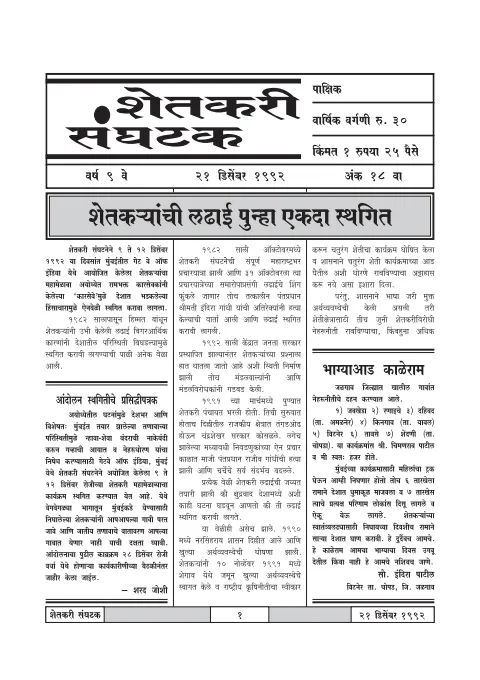
periodical issue
शेतकरी संघटक
Shetkari Sanghatak
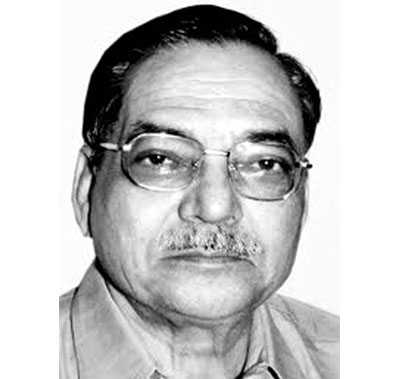
By sharad-joshi, जॉर्ज ऑरवेल
संपादक, मुद्रक, प्रकाशक : सुरेशचंद्र म्हात्रे; पाक्षिक शेतकरी संघटक — मालक : मोहन विशालीलाल पारेदी; मुद्रण स्थळ : गणेश प्रिंटर्स, १९३, बुधवार पेठ, पुणे - २; प्रकाशन स्थळ व पत्रव्यवहाराचा पत्ता : अंगारमळा, मु. पो. आंबेठाण (४१० ५०१), ता. खेड, जि. पुणे. (Posted at Market Yard, PSO, Pune 37; SHETKARI SANGHATAK (Marathi Fortnightly) Regd. No. 39926/83) · Ambethan (Tal. Khed, Dist. Pune) · 1995
8 pages
शेतकरी संघटक
Summary
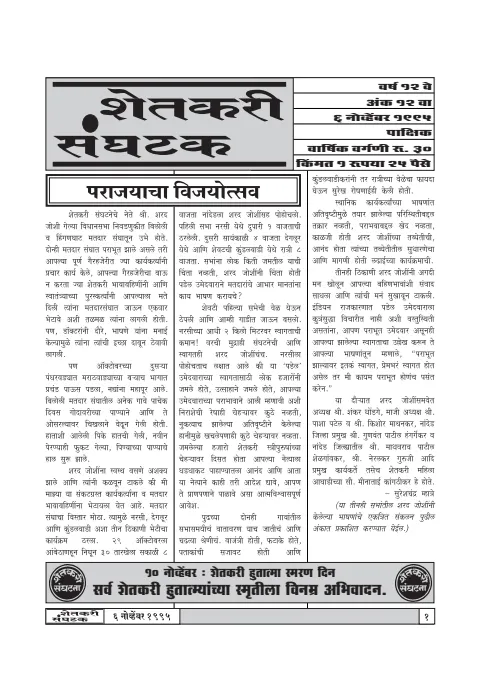
This is the 6 November 1995 fortnightly issue (Year 12, No. 12) of Shetkari Sanghatak, the Marathi organ of Sharad Joshi’s Shetkari Sanghatana. The lead editorial, ‘पराजयाचा विजयोत्सव’ (A Victory Celebration of Defeat), reports on a rally Joshi addressed after his loss in a recent Vidhan Sabha by-election; the piece frames the electoral defeat as a moral victory for the agitation, and the issue announces 10 November as ‘शेतकरी हुतात्मा स्मरण दिन’ (Farmer Martyr Memorial Day) for slain Sangathana activists.
The centre of the issue is the text of four resolutions passed by the Karyakarini (executive committee) at Nagpur on 1 November 1995: on the disappointing pace of economic reform; on the sugarcane crisis caused by Congress-era zonal restriction (झोनबंदी) laws and the proposed forced takeover of sick cooperative sugar mills, which the Sangathana protests with a ‘हातोडा मोर्चा’ (hammer march) at Ambajogai on 15 November; on the खरेदी कर (purchase tax) charged by agricultural produce market committees, which the resolution demands be lifted; and on the renewed extension of the state cotton monopoly-procurement scheme, which the resolution attacks as a vehicle of corruption sustained by deposed Congress politicians and central ministers, paying farmers less than the open market.
The paper then runs an instalment of ‘जनावरांचे शिवार’ — Mahesh Mupedekar’s 1956 Marathi adaptation of George Orwell’s Animal Farm — under the running heading ‘पवनचक्कीचे राजकारण’ (Politics of the Windmill). The narrative follows the rebellion of the farm animals against the human farmer, the building of the windmill, and the rise of the pigs as a new ruling class — used as a transparent parable for the Sangathana’s anti-statist critique of post-Independence agrarian policy.
The issue closes with a signed reply by Joshi himself, ‘आपण विचार स्वच्छ ठेवावा’ (Keep One’s Thinking Clean), dated 24 October 1995 and addressed to Dr. Harnarao Deshmukh, a Sangathana-sympathetic Vidhan Sabha candidate from Buldhana. Joshi argues that the Sangathana inaugurated the most important Indian agitation against the socialist economic order, that this order was sustained by holding down farm-gate prices, and that disappointment with allied politicians must not blur the movement’s analytical clarity. The back cover repeats the Ambajogai hammer march call and announces a ‘स्वातंत्र्य यात्रा’ on 12 December 1995 (Hutatma Babu Genu memorial day) in which Maharashtra farmers will carry cotton bags across the state border into Madhya Pradesh and sell them there.
Key points
-
Lead editorial reframes Sharad Joshi’s recent Vidhan Sabha by-election defeat as a ‘victory celebration’, and the issue declares 10 November as Farmer Martyr Memorial Day (शेतकरी हुतात्मा स्मरण दिन).
-
Four resolutions of the Sangathana’s Karyakarini (Nagpur, 1 November 1995) are reproduced verbatim: on the stalled pace of economic reform, on the sugarcane / sugar-mill crisis, on the market-committee purchase tax, and on the cotton monopoly procurement scheme.
-
Resolution 4 condemns the extension of the cotton monopoly procurement scheme as the product of collusion between Maharashtra’s deposed Congress leadership and corrupt central ministers, and as a system that pays farmers less than the open market.
-
A ‘Hatoda Morcha’ (hammer march) is called for 15 November 1995 at Ambajogai against the forced state takeover of sick cooperative sugar mills.
-
The issue serialises Mahesh Mupedekar’s 1956 Marathi rendering of George Orwell’s Animal Farm as ‘जनावरांचे शिवार’, running under the title ‘पवनचक्कीचे राजकारण’ — used as an allegory for the Congress-era agrarian order.
-
Sharad Joshi’s signed essay ‘आपण विचार स्वच्छ ठेवावा’ is a reply letter to Vidhan Sabha candidate Dr. Harnarao Deshmukh, arguing the Sangathana was the first major Indian movement against the socialist economic system because that system was sustained by suppressing agricultural prices.
-
The back cover announces a Swatantra Yatra on 12 December 1995 (Hutatma Babu Genu Smritidin) in which farmers will physically carry cotton across the Maharashtra border into Madhya Pradesh to sell it, defying state procurement monopoly.
Generated by the v1.5 extraction pipeline. Awaiting editorial review.
Metadata and summary are AI-extracted from the source PDF and reviewed for editorial accuracy. The original work is available via the Read PDF tab above (where present); paragraph-level citation inside the PDF is deferred to a future engagement.