occasional paper · report
The A. D. Shroff Memorial Trust
A report on first five years 1967-1972
The A. D. Shroff Memorial Trust, Sohrab House, 3rd Floor, Dr. D. N. Road, Bombay 400 001 · Bombay · 1972
16 pages
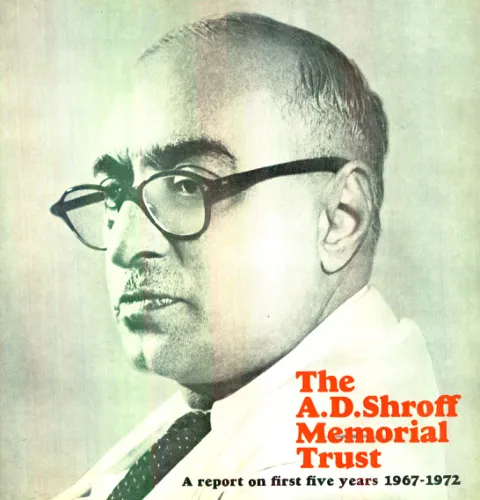
The A. D. Shroff Memorial Trust
Summary
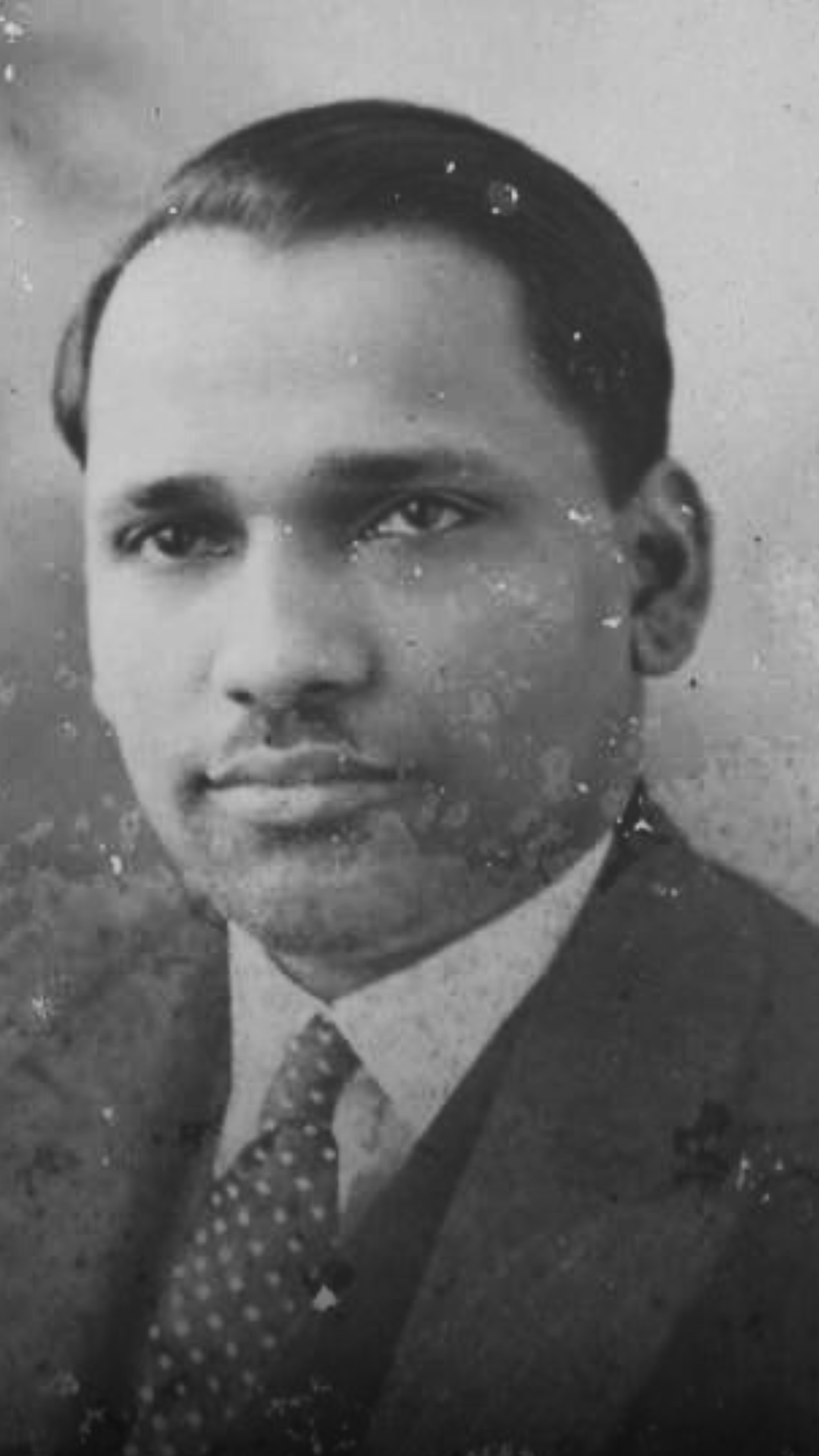
The A. D. Shroff Memorial Trust: A report on the first five years 1967-1972 is a commemorative booklet issued by the Trust under the chairmanship of N. A. Palkhivala. It opens with a life-sketch of A. D. Shroff (1899-1965) — a Sydenham College and London School of Economics man who apprenticed at the Chase Bank in London, became a Bombay sharebroker and director of leading Tata enterprises, sat on the National Planning Committee chaired by Jawaharlal Nehru, co-authored the 1944 Bombay Plan, attended the Bretton Woods Conference as an unofficial delegate, chaired the Reserve Bank’s Shroff Committee on Finance for the Private Sector, and in 1956 founded the Forum of Free Enterprise to popularise the case for private enterprise and a Code of Conduct for business.
Palkhivala’s foreword and the History chapter together trace how a tribute paid by J. R. D. Tata at the Sheriff’s condolence meeting of 14th December 1965 catalysed the formation of the Trust, registered on 23rd December 1966, with the House of Tatas pledging 25 per cent of the collection up to a ceiling of Rs. 1 lakh and the Forum of Free Enterprise offering office facilities so that income could be directed entirely to activities. The Activities section reports five annual A. D. Shroff Memorial Lectures, each later published as a booklet and distributed free to colleges, libraries, MPs and MLAs — H. V. R. Iengar on central banking (1968), P. S. Lokanathan on the changing structure of industrial finance (1969), C. N. Vakil on insurance (1970), B. N. Adarkar on commercial banks after nationalisation (1971), and G. L. Mehta on industrial finance in a mixed economy (1972). The Trust also ran the A. D. Shroff Memorial Inter-Collegiate Elocution Competitions across Bombay, Delhi, Madras, Calcutta and Bangalore, on subjects such as ‘Poverty in India and its solution’, ‘Is right to property fundamental?’, ‘Land Reforms in India’, ‘Place of rail and road transport in Indian Economy’ and ‘International Monetary Crisis’, alongside cash awards to Banking & Finance and Finance Group toppers at Sydenham College and donations of economics books to institutions including the Dadar School for the Blind, the Gokhale Institute of Public Affairs, the Tata Agricultural and Rural Training Centre for the Blind, and the Sardar Patel Institute of Administration.
The remainder of the booklet lists donors — headed by the Tata Group, Tarapore & Company, Dena Bank, an array of textile mills, insurance and banking houses, and individual benefactors — prints brief biographical sketches of the seven trustees (N. A. Palkhivala, B. M. Ghia, Jaykrishna Harivallabhdas, Sir Cowasji Jehangir Bart, Tulsidas Kilachand, J. H. Tarapore, K. M. D. Thackersey), and reproduces letters of appreciation for the Trust’s published lectures, including notes from Paul Pierre Schweitzer of the International Monetary Fund and from college principals, the Banking Commission, and the Centre of South Asian Studies at Cambridge. The volume thus doubles as institutional record and as a snapshot of mid-century Bombay’s liberal business establishment organising around economic education.
Key points
-
A 16-page commemorative report covering the Trust’s first five years (1967-68 through 1971-72), signed off by Chairman N. A. Palkhivala in Bombay on 25th September 1972.
-
Frames A. D. Shroff (1899-1965) as a champion of free enterprise: Chase Bank apprentice, Tata director, member of the Nehru-chaired 1938 National Planning Committee, co-author of the 1944 Bombay Plan, Bretton Woods delegate, chair of the Reserve Bank’s Shroff Committee, and founder-President of the Forum of Free Enterprise.
-
Trust deed registered 23rd December 1966 after a tribute by J. R. D. Tata at the Sheriff’s condolence meeting of 14th December 1965; the House of Tatas anchored funding with a 25 per cent matching offer capped at Rs. 1 lakh and the Forum of Free Enterprise donated office facilities.
-
Five annual A. D. Shroff Memorial Lectures delivered by H. V. R. Iengar, P. S. Lokanathan, C. N. Vakil, B. N. Adarkar and G. L. Mehta, each later published as a booklet and circulated free to colleges, libraries, MPs and MLAs.
-
The A. D. Shroff Memorial Inter-Collegiate Elocution Competitions ran in Bombay, Delhi, Madras, Calcutta and Bangalore, with prescribed subjects on poverty, property rights, land reform, transport and the international monetary crisis, growing from 19 participating Bombay colleges in 1967-68 to 40 in 1971-72.
-
Cash awards endowed at the Sydenham College of Commerce and Economics for the toppers of M.Com. Finance Group and B.Com. Banking & Finance papers, plus a new Rs. 300 prize for the top student in Taxation Laws at the Government Law College, Bombay.
-
Donor list is dominated by Bombay business: the Tata Group, Dena Bank, New India Assurance, Associated Cement Companies, Bank of India, Godrej Trust, Kilachand Devchand, Ceat Tyres, Bilimoria & Sons and dozens of mills, alongside individual contributors such as M. R. Pai and P. A. Narielwala.
-
Trustees profiled are N. A. Palkhivala (Chairman), B. M. Ghia, Jaykrishna Harivallabhdas, Sir Cowasji Jehangir Bart, Tulsidas Kilachand, J. H. Tarapore and K. M. D. Thackersey — a cross-section of Bombay, Gujarat and Madras business leaders linked to Tata Sons, ICICI, the Bombay Chamber of Commerce and a wide spread of industrial directorships.
-
Letters of appreciation come from Paul Pierre Schweitzer (Managing Director of the IMF), R. G. Saraiya of the Banking Commission, MP P. S. Patil, college principals from Bhuj to Bombay, and the Centre of South Asian Studies at Cambridge.
Generated by the v1.5 extraction pipeline. Awaiting editorial review.
Metadata and summary are AI-extracted from the source PDF and reviewed for editorial accuracy. The original work is available via the Read PDF tab above (where present); paragraph-level citation inside the PDF is deferred to a future engagement.