Summary
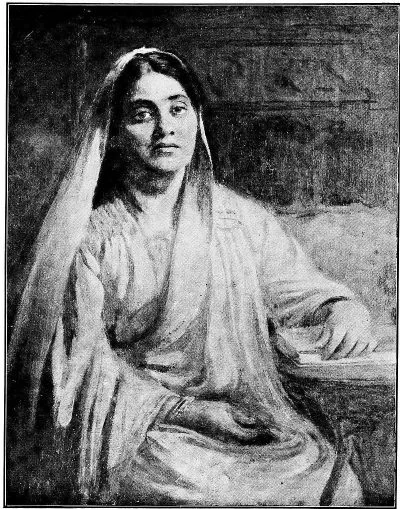
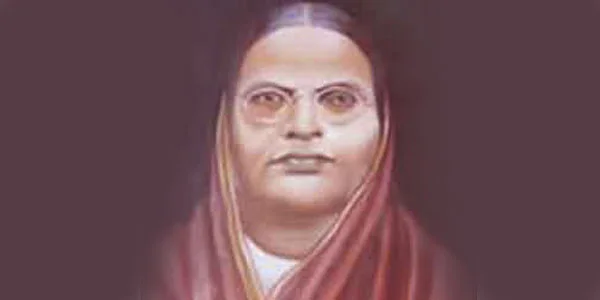
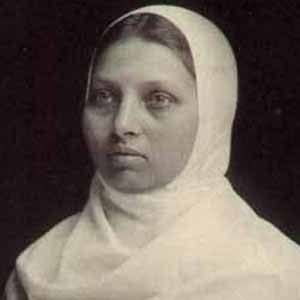
This narrated video biography traces the life of Lady Abala Bose (1865-1951), a suffragist, educationist, and social reformer born in Barisal to Brahmo reformer Durga Mohan Das and Brahmamoyee Devi. Ostracized as a child for her family's advocacy of widow remarriage, Abala studied at Bethune School for Girls, became one of the first women at Calcutta University, pursued medicine in Madras, and married the physicist Jagadish Chandra Bose, gaining the title Lady Bose after his 1916 knighthood. Her travels to England, Italy, America, and Japan — recorded in Bengali travelogues like England Bhraman, Italy Bhraman, and Japan Bhraman — shaped her conviction that Indian women deserved liberated, educated lives comparable to what she witnessed abroad, especially in Japan.
Inspired by Japanese women's education, she founded the Nari Shiksha Samiti in 1919, pressing for female representation in educational bodies and gender-sensitive curricula. She set up roughly 275 primary schools and 32 adult education centers in undivided Bengal, established the Vidyasagar Bani Bhavan (1925) to train primary teachers and educate widows, the Mahila Shilpa Bhavan (1926) for women's entrepreneurship, and the Women's Industrial Cooperative Home (1935) which later rehabilitated refugees from Bangladesh. As secretary of the Brahmo Balika Shikshalaya she introduced the Montessori method and self-defense into the curriculum.
Abala was also a pioneer of the Indian suffragist movement, joining a 1917 delegation — alongside Sarojini Naidu, Margaret Cousins, and Ramabai Ranade — that met Edwin Montagu during the Montagu-Chelmsford reforms negotiations. Her writings argued that women were entitled to education not for marital value but because, like men, they were first of all minds.
Key points
- Born 1865 in Barisal to Brahmo reformer parents who were ostracized for advocating widow remarriage.
- Among the first women to attend Calcutta University and pursued medicine in Madras before marrying Jagadish Chandra Bose.
- Published Bengali travelogues from England, Italy, and Japan under the pseudonym Srimati Abala Bose, comparing zenana confinement with foreign women's liberty.
- Founded the Nari Shiksha Samiti in 1919 to expand women's education and aid widows after witnessing Japan's schooling system in 1914.
- Established around 275 primary schools, 32 adult education centers, the Vidyasagar Bani Bhavan (1925), Mahila Shilpa Bhavan (1926), and Women's Industrial Cooperative Home (1935).
- Introduced Montessori methods and self-defense to the Brahmo Balika Shikshalaya curriculum as its secretary from 1910.
- Joined the 1917 suffragist delegation to Edwin Montagu alongside Sarojini Naidu, Margaret Cousins, and Ramabai Ranade during the Montagu-Chelmsford reforms.
Transcript
The Life & Legacy of Lady Abala Bose
Source: https://www.youtube.com/watch?v=d5Iak1JY59Y Duration: 437.7s
Narrator (00:00): A renowned suffragist, social reformer, and an Indian liberal. Born on 08/08/1865 in the river bound district of Barisal in South Central Bangladesh, Abala devoted her entire life to break the oppressive shackles of a society that engulfed the lives of women. Inheriting reformist instinct from her parents, Durga Mohan Das, a renowned Brahmo reformer and one of the founders of Bethune College School for Girls, and Brahmamoyee Devi, who devoted all her short lived life to the betterment of the conditions of the widows. Bose devoted her life advocating for women’s rights and education. When Abala Bose was five, her family was ostracized by the community for advocating the remarriage of widows. Abala and her sister, Sarala, received their education from Bethune School for Girls. The sisters went on to become two of the first women to attend Calcutta University, after which Abala pursued medicine in Madras. Post college, Abala married Jagadish Chandra Bose, who went on to be known as the father of radio science. In 1916, he received his knighthood, and Abala subsequently came to be known as Lady Bose. Accompanying her celebrated husband, she was one of the few women in nineteenth century Bengal who traveled abroad. Articulated her travel experiences in the narratives, which trace her personal growth and adventures in foreign lands. Bose recorded her travel experiences in England, Italy, America, and Japan. England Bhraman, traveled to England, written in three parts in 1897 to 1898. Italy Bhraman, traveled to Italy, written in 1901. In 1915, her traveler called Japan Bhraman, traveled to Japan, published in famous Bengali periodical Mukul, she wrote how the birth of a child, irrespective of its gender identity, was an occasion of merriment there. She recollected how women are liberated there without feeling ashamed. They freely roam on the roads. If the maidservant is not available, the housewives take the children out. As the practice of veiling does not exist here, the women here are healthy and strong. Men and women traveling together in rails and trams is a familiar sight there. Japanese women are educated, hardworking, and adept housekeepers. Bose presented herself as an informed discriminatory observer and acute commentator under the pseudonym Srimati Abala Bose. Her insightful female gaze found a similarity between the gender based discrimination in the zenana of Lucknow and the apparently liberated space of the English parliament. Her voyage to Japan played an instrumental role in shaping up her subjectivity and journey towards self fulfillment. In her essay, Nari Shiksha Samiti, women’s education committee in Modern Review, she recollected how she was inspired by the Japanese women. On witnessing the development of education in Japan during my visit there in 1914, I became conscious of the deplorable state of education in my country. It triggered me to set up the Nari Shiksha Samiti. In 1919, she established the Nari Shiksha Samiti to promote the spread of education for women and provide financial assistance to widows. The organization worked hard to ensure female representation in educational bodies and pressed for gender sensitive syllabus in schools. Bose’s travel writings presented a fine arrangement between the traditional culture and foreign culture, highlighting the inner conflict to fit in with the modern colonial mannerisms while keeping alive one’s traditional upbringing. She published her travel writings in Mukul and Prabasi. Abala was appointed as secretary of the Brahmo Balika Shikshalaya in 1910 and became an educational innovator, broadening the curriculum to include self defense and introducing new methods such as the Maria Montessori system. In her lifetime, Abala set up around 275 primary schools and 32 adult education centers in different parts of undivided Bengal. Abala and her husband were close friends with Swami Vivekananda and Sister Nivedita, his disciple. With her help, Abala was able to train teachers at the kindergarten level, and the two revolutionized the educational system. In 1925, Abala established the Vidyasagar Bani Bhavan, the first institution in Bengal that trained primary and preprimary teachers. It provided teachers trainings as well as education to widows. These women would then be employed by schools that came under the jurisdiction of the Nari Shiksha Samiti. Abala’s exposure to the contemporary education system in Europe proved to be helpful in setting up the training system. In 1926, Lady Bose set up the Mahila Shilpa Bhavan in Kolkata and Jhargram to encourage distressed women and widows to take up entrepreneurship and ensure financial independence. These women were trained in different arts and crafts, and the institute would then help them set up their own business. In 1935, she opened the Women’s Industrial Cooperative Home in Kolkata, which later became a relief and rehabilitation center for women from Bangladesh. Abala Bose did not limit herself to education. She was amongst the earliest trailblazers of the Indian suffragist movement. In 1917, she was part of a delegation that met with Edwin Montagu, the then secretary of state during the negotiations of the Montagu-Chelmsford reforms, which included suffragists such as Sarojini Naidu, Margaret Cousins, and Ramabai Ranade. In a piece, the present state of primary education in Bengal, she wrote for Modern Review in March 1927. Women were entitled to better education not so they can get better matches in terms of marriage and not even so they become more valuable as daughters in law in their new homes, but because a woman like a man is first of all a mind and only in the second place physical and a body.
Notable passages
"On witnessing the development of education in Japan during my visit there in 1914, I became conscious of the deplorable state of education in my country. It triggered me to set up the Nari Shiksha Samiti."
"Women were entitled to better education not so they can get better matches in terms of marriage and not even so they become more valuable as daughters in law in their new homes, but because a woman like a man is first of all a mind and only in the second place physical and a body."
"Her insightful female gaze found a similarity between the gender based discrimination in the zenana of Lucknow and the apparently liberated space of the English parliament."
"In 1926, Lady Bose set up the Mahila Shilpa Bhavan in Kolkata and Jhargram to encourage distressed women and widows to take up entrepreneurship and ensure financial independence."
"Abala was appointed as secretary of the Brahmo Balika Shikshalaya in 1910 and became an educational innovator, broadening the curriculum to include self defense and introducing new methods such as the Maria Montessori system."
"which included suffragists such as Sarojini Naidu, Margaret Cousins, and Ramabai Ranade."
"which included suffragists such as Sarojini Naidu, Margaret Cousins, and Ramabai Ranade."
"In 1925, Abala established the Vidyasagar Bani Bhavan, the first institution in Bengal that trained primary and preprimary teachers. It provided teachers trainings as well as education to widows."
Metadata and summary are AI-extracted from the source PDF and reviewed for editorial accuracy. The original work is available via the Read PDF tab above (where present); paragraph-level citation inside the PDF is deferred to a future engagement.