pamphlet
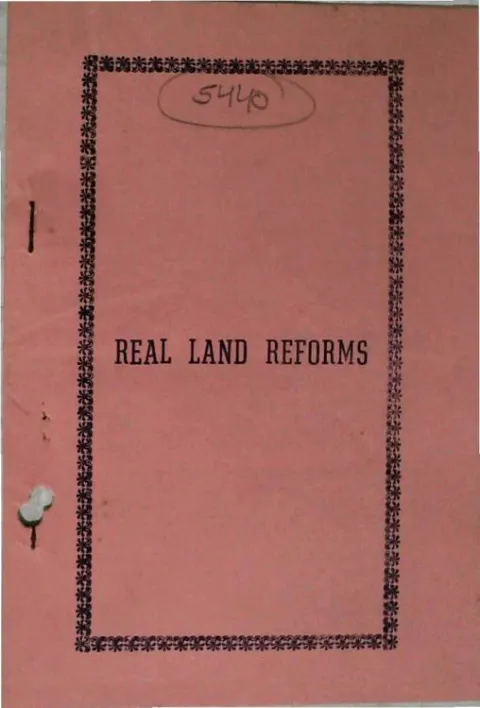
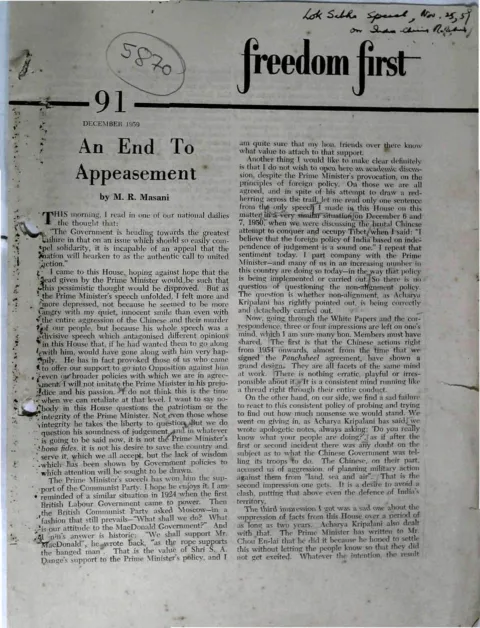
What the Swatantra Party Stands For
By Minoo Masani
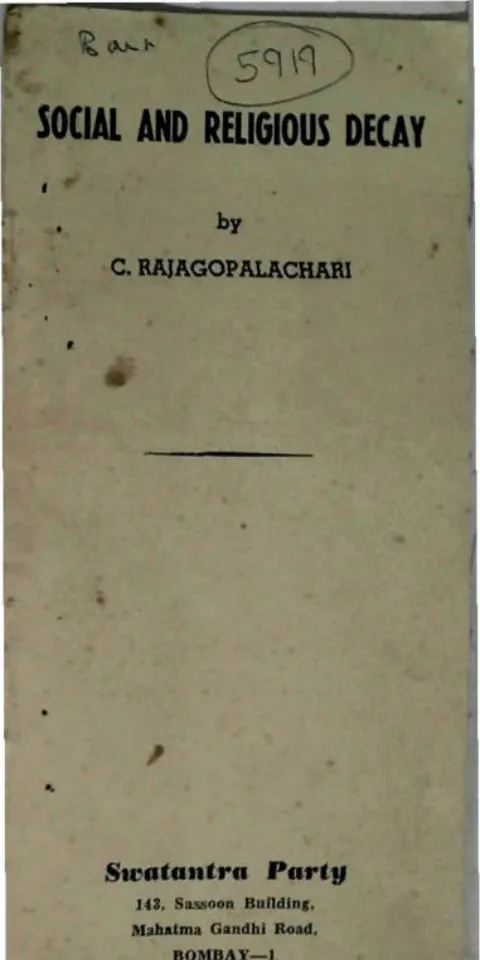
Swatantra Party
9 pages
Part of Swatantra Party
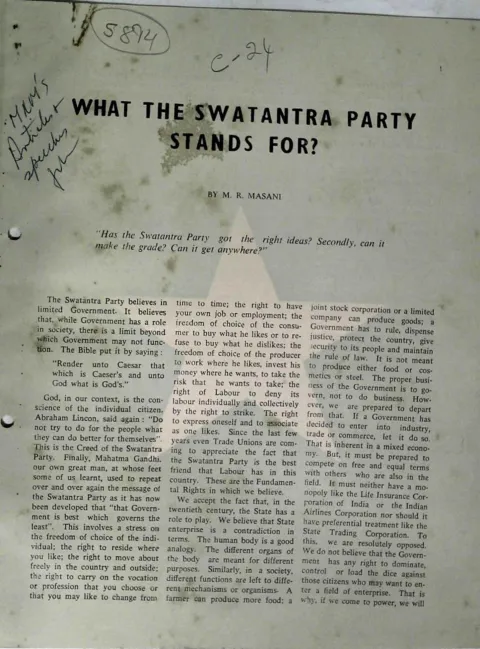
What the Swatantra Party Stands For
By M. R. Masani
Summary
What the Swatantra Party Stands For is a short statement by M. R. Masani setting out the founding creed of the Swatantra Party — the classical-liberal opposition party he helped found in 1959 with C. Rajagopalachari and N. G. Ranga. It answers, in plain terms, the questions a voter might ask: what does the party believe, and can it deliver?
The pamphlet restates the party’s core commitments: a limited government that renders unto the State what is the State’s but no more; the defence of individual freedom and property against the encroachments of the licence-permit-quota Raj; a market economy in which enterprise, not the bureaucracy, allocates resources; and opposition to the statism and creeping collectivism the party saw in Congress policy.
NOTE: this record is based on an image-only scan without a usable text layer; the summary reflects the legible cover matter and the documented Swatantra programme, and awaits editorial review against a clean transcription.
Key points
- A short statement by M. R. Masani of the founding creed of the Swatantra Party (founded 1959).
- Argues for limited government — rendering unto the State only what is properly the State’s.
- Defends individual freedom and private property against the licence-permit-quota Raj.
- Backs a market economy in which enterprise, not bureaucracy, allocates resources.
- Frames Swatantra as the liberal alternative to Congress statism and collectivism.
Ingested 2026-07-21 from the CCS source archive. AI-drafted summary awaiting editorial review (image-only scan).
Metadata and summary are AI-extracted from the source PDF and reviewed for editorial accuracy. The original work is available via the Read PDF tab above (where present); paragraph-level citation inside the PDF is deferred to a future engagement.