letter
Letter to SV Raju
New Delhi · 1977
2 pages
Summary
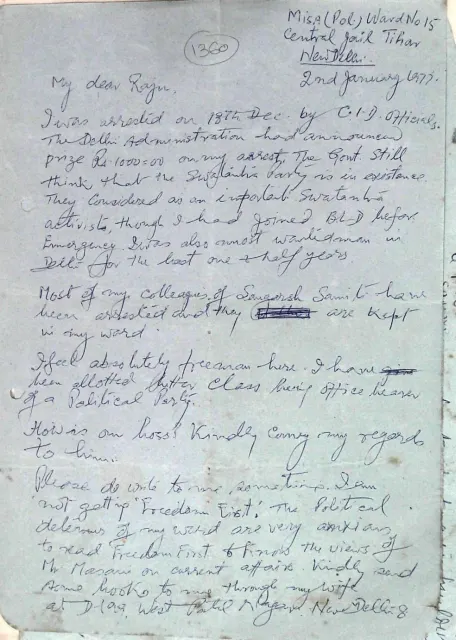
This handwritten letter, dated 2 January 1977 and written from MISA (Political) Ward No. 15, Central Jail, Tihar, New Delhi, is addressed to S. V. Raju in Bombay. The unidentified sender says he was arrested on 18 December by C.I.D. officials after the Delhi administration announced a reward of Rs. 1,000 for his arrest. He reports that the government still believed the Swatantra Party existed and describes himself as having been treated as an “important Swatantra activist,” despite having formally joined the BLD before the Emergency.
The letter describes the detention of many of the sender’s colleagues and asks Raju about their welfare. The sender says he has been given “B class” facilities because he held office in a political party, but insists that he wants freedom first. He asks Raju to send Freedom First, particularly to learn Minoo Masani’s views on current affairs, and requests that issues be sent through his wife at the address written on the letter. The second rendered page shows the inland-letter-card address and handwritten postal directions; no sender name is legible.
Key points
- The letter is dated 2 January 1977 and originates from MISA Political Ward No. 15, Central Jail, Tihar, New Delhi.
- The unidentified sender says he was arrested on 18 December by C.I.D. officials after a Rs. 1,000 reward was announced.
- The sender says officials treated him as an important Swatantra Party activist, although he had joined the BLD before the Emergency.
- He reports that many of his colleagues from the Swatantra movement were arrested and asks after their welfare.
- He says he has been allotted B-class facilities because he held office in a political party.
- The letter requests copies of Freedom First and specifically seeks Minoo Masani’s views on current affairs.
- The visible second page consists primarily of the inland-letter-card address and postal annotations; the sender’s name is not legible.
Metadata and summary are AI-extracted from the source PDF and reviewed for editorial accuracy. The original work is available via the Read PDF tab above (where present); paragraph-level citation inside the PDF is deferred to a future engagement.