Summary
In the rendered pages, Minoo Masani introduces an Indian development plan prepared in 1943 by eight relatively prosperous and educated Indians concerned about poverty, hunger, disease, ignorance, and India’s lag behind other countries. In the rendered pages, he presents the plan as a fifteen-year picture of what a free India might become, while distinguishing the planners’ facts and figures from his own explanatory judgments. In the rendered pages, freedom is treated as requiring public understanding and practical knowledge of how living conditions can be improved.
In the rendered pages, Masani frames the plan around the minimum needs of the population: food, clothing, housing, public health, and education. In the rendered pages, he uses nutritional estimates, comparative figures, diagrams, and city-level housing data to show the scale of deprivation. In the rendered pages, India is said to produce only slightly under 2,000 calories per person per day against a requirement of 2,800, to provide substantially less clothing than several comparator countries, and to suffer severe overcrowding and poor health provision. In the rendered pages, the discussion of education identifies literacy and the three Rs as foundations both of economic improvement and of democratic citizenship. The supplied pages stop during the first section, before the later sections on the fifteen-year objective, resources, distribution, and implementation.
Key points
- The rendered pages describe the origins of a fifteen-year development plan for a future free India.
- The plan is presented as an attempt to address poverty, hunger, disease, ignorance, and inadequate living conditions.
- The opening section defines minimum national needs in food, clothing, housing, public health, and education.
- The rendered pages compare India’s food supply with a proposed balanced diet and estimate an average shortfall of 800 calories per person per day.
- The rendered pages use international comparisons to highlight India’s low per-capita clothing consumption and life expectancy.
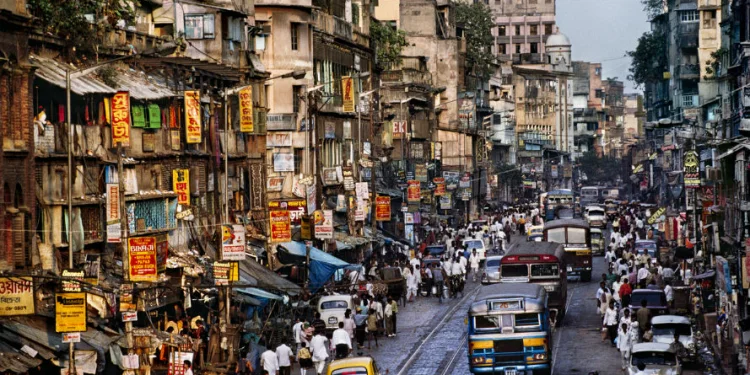
- The housing discussion emphasizes overcrowding, slums, inadequate floor space, water, sanitation, lighting, privacy, and village planning.
- The health discussion covers prevention, sanitation, maternal and infant mortality, protected water supplies, hospitals, doctors, and nurses.
- The education discussion presents literacy as necessary for economic development and for producing capable democratic citizens.
Metadata and summary are AI-extracted from the source PDF and reviewed for editorial accuracy. The original work is available via the Read PDF tab above (where present); paragraph-level citation inside the PDF is deferred to a future engagement.