
pamphlet
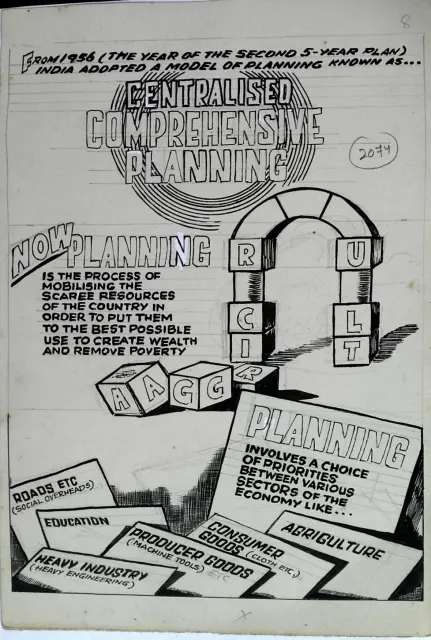
CENTRALISED COMPREHENSIVE PLANNING
1 pages
Summary
This one-page illustrated sheet explains centralised comprehensive planning as the model India adopted from 1956, identified as the year of the Second Five-Year Plan. It defines planning as mobilising the country’s scarce resources to create wealth and remove poverty, while presenting it as a process of choosing priorities among sectors of the economy.
The illustration frames these choices through competing economic sectors and public investments. It names agriculture, consumer goods, producer goods, heavy industry, education, and roads or other social overheads, suggesting that centralised planning requires authorities to decide how resources should be distributed among them. No author, publisher, issuing organisation, or publication date is visible.
Key points
- The page identifies 1956, the year of the Second Five-Year Plan, as the point when India adopted centralised comprehensive planning.
- Planning is defined as mobilising the country’s scarce resources.
- The stated objectives are to create wealth and remove poverty.
- Planning involves choosing priorities among different sectors of the economy.
- The sectors shown include agriculture, consumer goods, producer goods, heavy industry, education, and roads or other social overheads.
- The page uses a graphic illustration of blocks and sectoral choices to explain the allocation of resources.
Metadata and summary are AI-extracted from the source PDF and reviewed for editorial accuracy. The original work is available via the Read PDF tab above (where present); paragraph-level citation inside the PDF is deferred to a future engagement.
Related across the archive
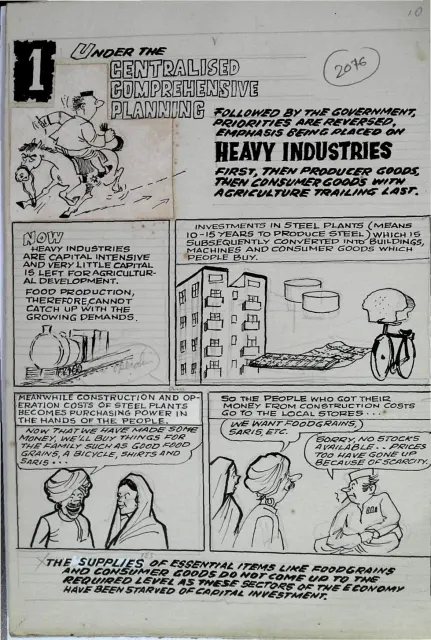 Primary workUnder the Centralised Comprehensive Planning
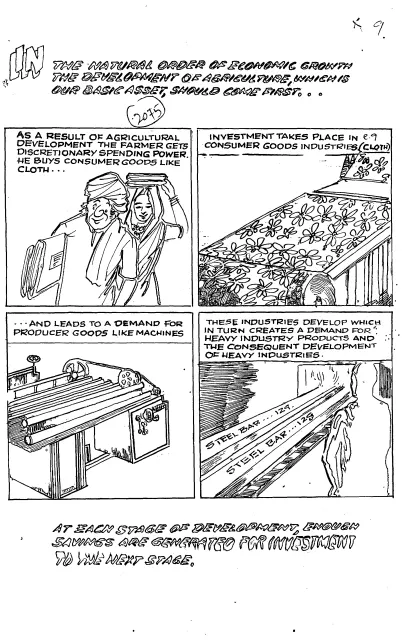 Primary workTHE NATURAL ORDER OF ECONOMIC GROWTH
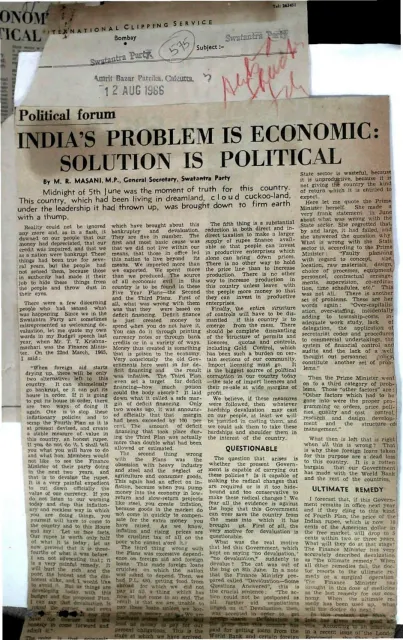 Primary workINDIA'S PROBLEM IS ECONOMIC: SOLUTION IS POLITICAL
 ExcerptCONSUMER SOVEREIGNTY LEADS TO RAPID ECONOMIC DEVELOPMENT
 ThePrintPlanning for the free market, not state control, will lift India out of poverty: BR Shenoy