essay · position paper
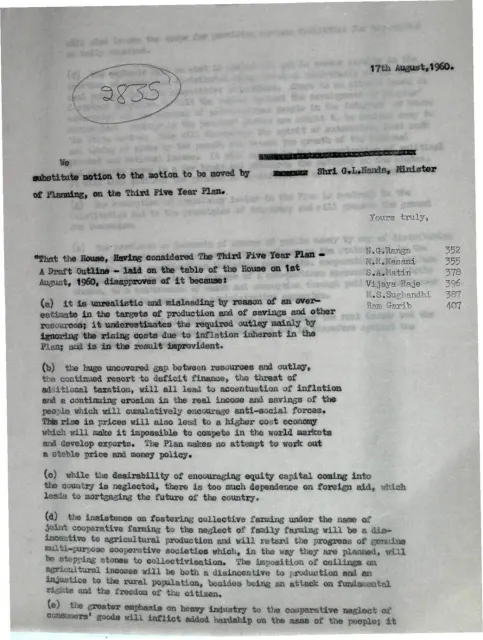
Substitute Motion to the Motion to be Moved by of Planning
1960
2 pages
Summary
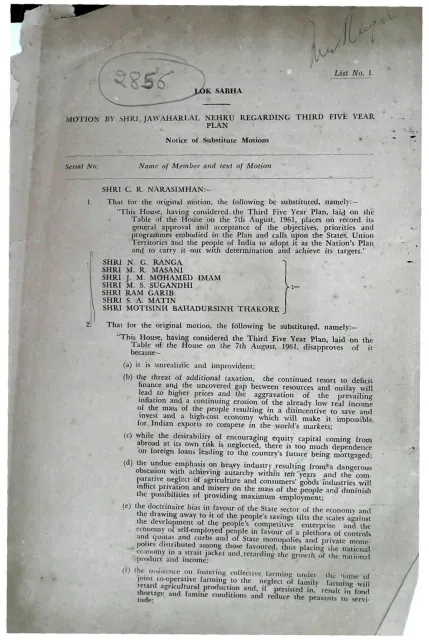
Dated 17 August 1960, this two-page parliamentary substitute motion rejects the draft outline of India’s Third Five Year Plan. It argues that the Plan is unrealistic and improvident because it overestimates production and savings, understates expenditure amid inflation, leaves a large gap between resources and outlay, and relies on deficit finance and additional taxation without establishing a stable price and monetary policy.
The motion also objects to the Plan’s dependence on foreign aid, its proposed joint cooperative farming, its emphasis on heavy industry over consumers’ goods, and its expansion of the public sector. It warns that state monopolies, compulsory labour, excessive taxation of agricultural incomes, and politically distributed grants would weaken private enterprise, agricultural production, individual freedom, administrative impartiality, and the autonomy of the states. The document concludes that the Plan would reduce real incomes and living standards and work against the interests of the people.
Key points
- The motion disapproves of the Third Five Year Plan because its production and savings estimates are considered unrealistic.
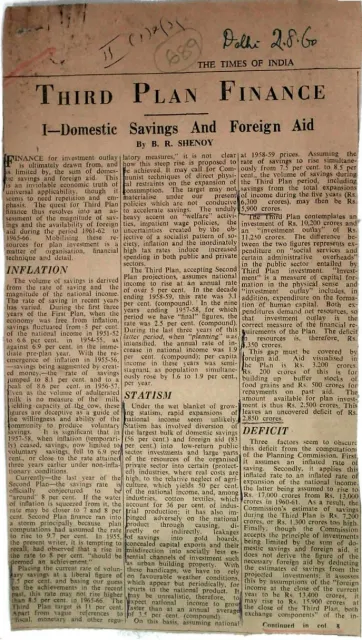
- It warns that the resource-outlay gap, deficit finance, and additional taxation would intensify inflation and erode real incomes and savings.
- It calls for a stable price and monetary policy, which it says the Plan does not attempt to provide.
- It criticises reliance on foreign aid and argues that joint cooperative farming would undermine family farming and agricultural incentives.
- It opposes the emphasis on heavy industry at the expense of consumers’ goods and employment-generating facilities.
- It argues that public-sector expansion would create state monopolies, suppress competitive enterprise, concentrate political and economic power, and expand bureaucracy.
- It condemns compulsory labour as contrary to the Constitution and democratic principles and warns that grants and aid could encourage waste and corruption.
Metadata and summary are AI-extracted from the source PDF and reviewed for editorial accuracy. The original work is available via the Read PDF tab above (where present); paragraph-level citation inside the PDF is deferred to a future engagement.