
notice
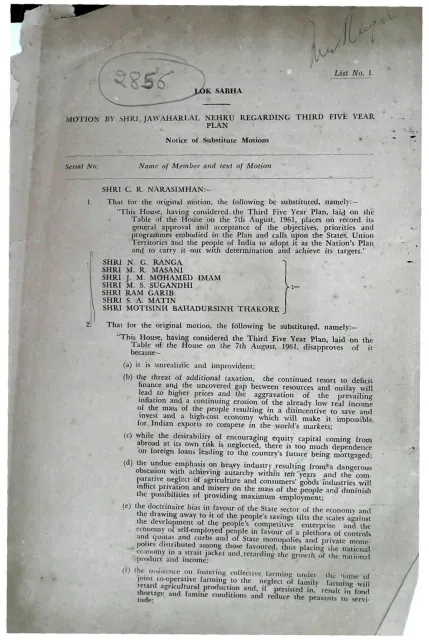
MOTION BY SHRI JAWAHARLAL NEHRU REGARDING THIRD FIVE YEAR PLAN
Notice of Substitute Motions
New Delhi · 1961
2 pages
Summary
This two-page Lok Sabha notice, dated New Delhi, August 19, 1961, presents substitute motions concerning Jawaharlal Nehru’s motion on the Third Five Year Plan. The first substitute motion, introduced by C. R. Narasimhan and supported by several members, expresses approval of the Plan’s objectives, priorities, and programmes and calls on the Union, the States, Union Territories, and the people of India to implement it with determination.
A second, much longer substitute motion sets out a comprehensive critique of the Plan. Its objections include unrealistic planning, deficit finance, additional taxation, inflation, dependence on foreign loans, excessive emphasis on heavy industry, inadequate attention to agriculture and consumer goods, collective farming, regional disparities, corruption, centralisation, weakened States’ rights, restrictions on workers’ collective action, and the erosion of constitutional rights. The notice also records Indrajit Gupta’s criticism that economic development would place a disproportionate burden on lower-income groups, and a further motion calling for reappraisal of export objectives in light of Britain’s prospective entry into the European Common Market. The rendered document contains the complete two-page notice; it does not include the parliamentary debate or the outcome of the motions.
Key points
- The notice records substitute motions relating to the Third Five Year Plan placed before the Lok Sabha on August 7, 1961.
- One motion supports the Plan’s objectives, priorities, and programmes and calls for determined implementation.
- The principal critical motion objects to deficit finance, taxation, inflation, foreign borrowing, and a high-cost economic structure.
- It criticises heavy-industry priorities, collective farming, insufficient agricultural development, and inadequate provision for consumer goods.
- It links centralised public spending with political influence, administrative waste, and corruption.
- It argues that the Plan threatens States’ rights, workers’ collective bargaining, parliamentary democracy, and constitutional fundamental rights.
- Indrajit Gupta’s motion focuses on the burden imposed on lower-income groups and the disproportionate gains available to domestic and foreign monopolies.
- A separate motion calls for reassessment of export objectives following Britain’s prospective entry into the European Common Market.
Metadata and summary are AI-extracted from the source PDF and reviewed for editorial accuracy. The original work is available via the Read PDF tab above (where present); paragraph-level citation inside the PDF is deferred to a future engagement.
People in this work
Related across the archive
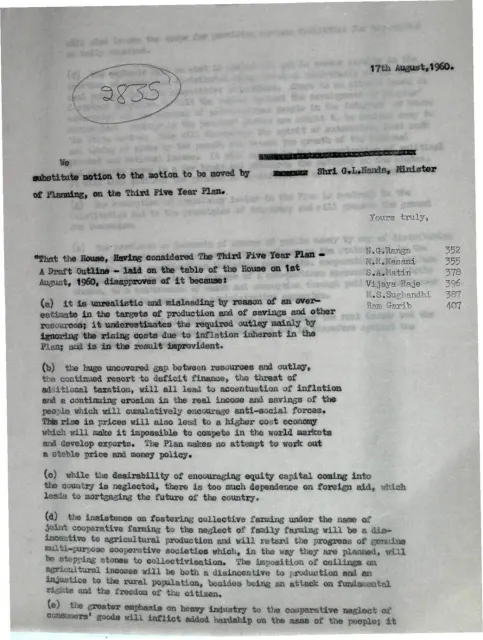 Primary workSubstitute Motion to the Motion to be Moved by of Planning
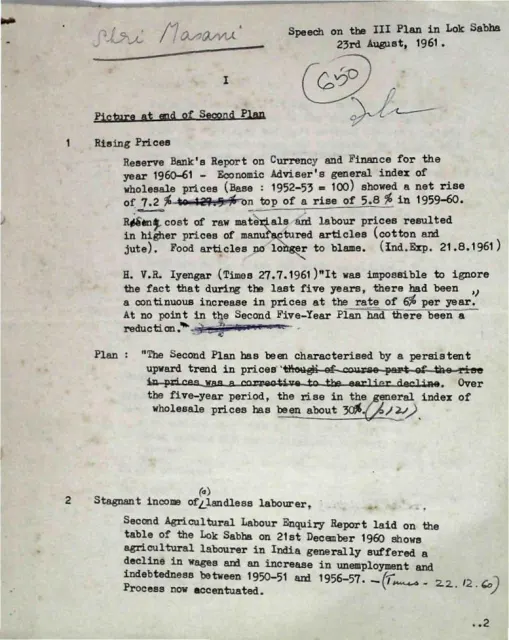 Primary workSpeech on the III Plan in Lok Sabha
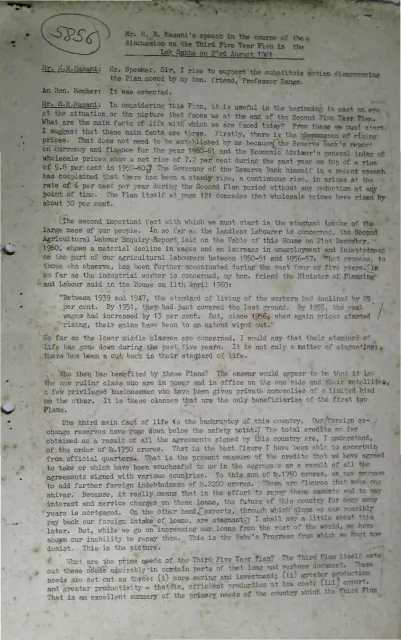 Primary workMr. M. R. Masani's speech in the course of the discussion on the Third Five Year Plan in the Lok Sabha on 2nd August 1961
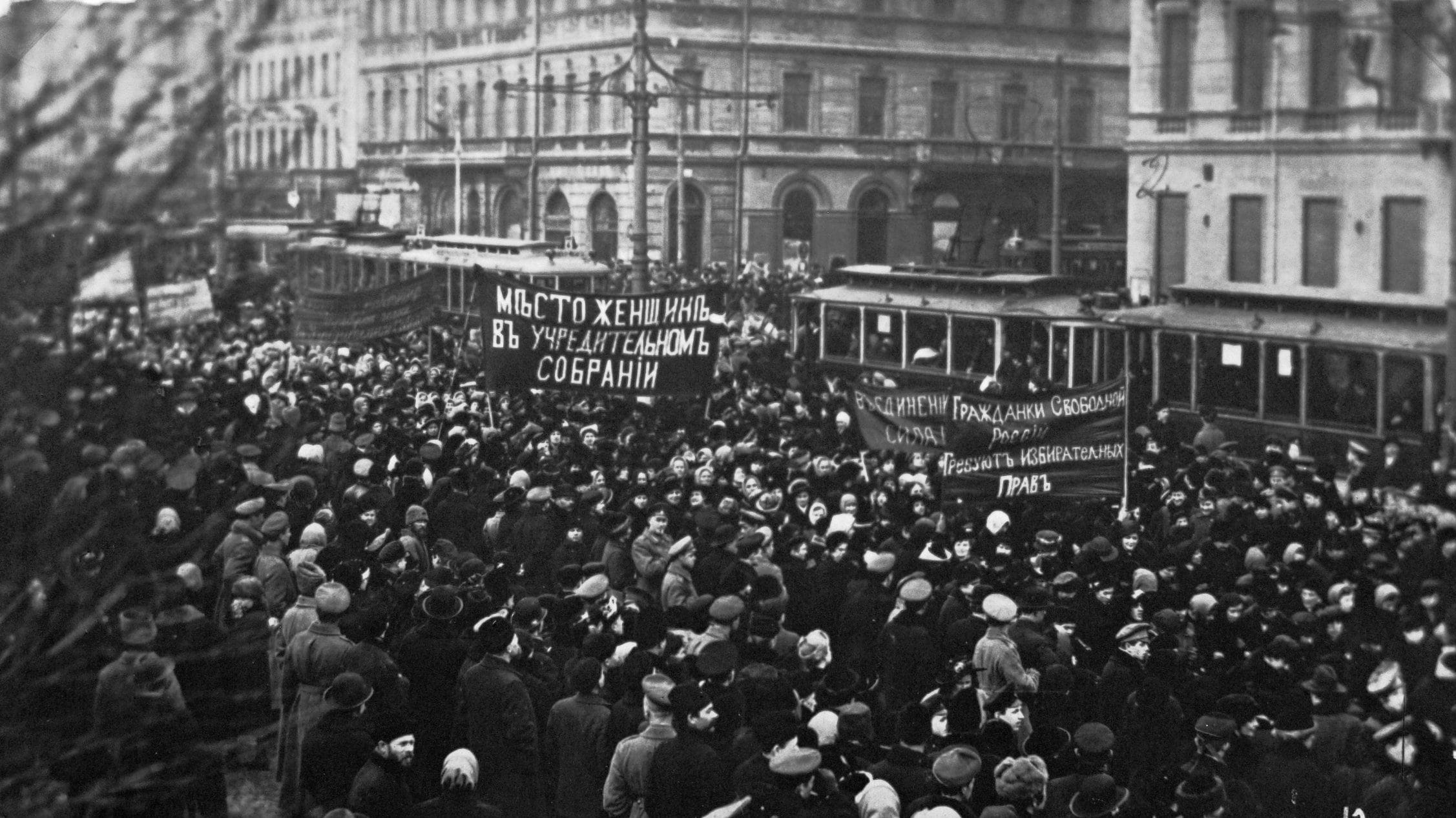 ThePrintFree-enterprise features are reshaping Russia’s socialist institutions: AD Shroff
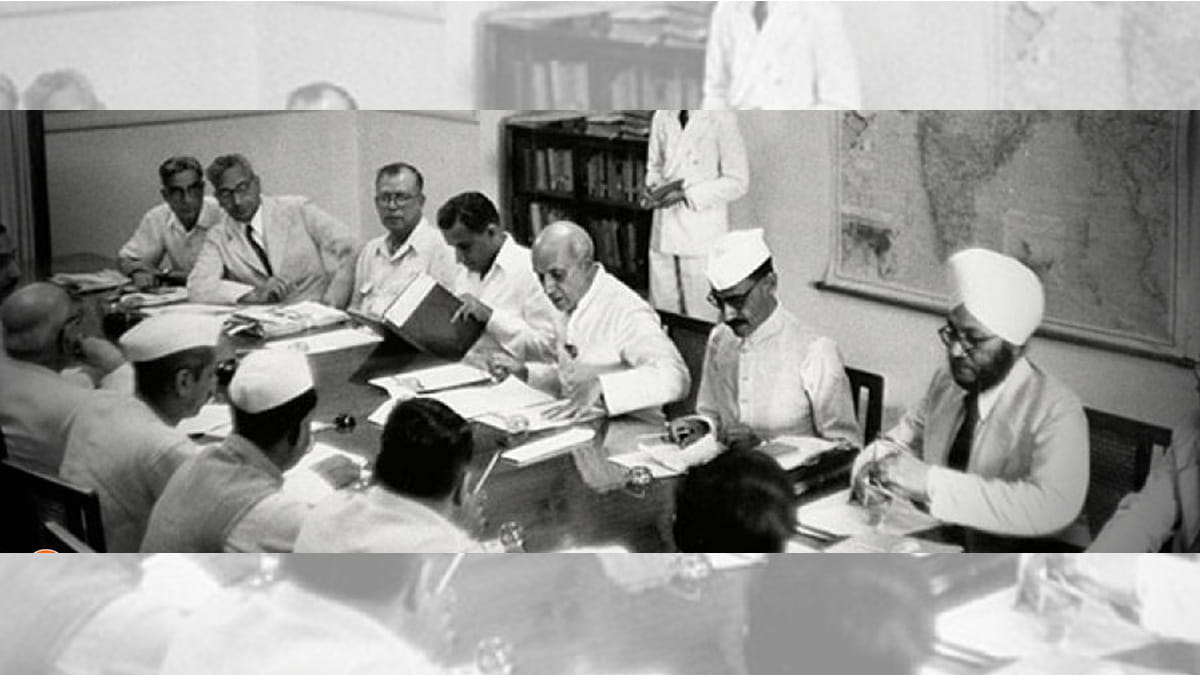 ThePrintSocialist planners aggravated unemployment problem