
speech · parliamentary
Mr. M. R. Masani's speech in the course of the discussion on the Third Five Year Plan in the Lok Sabha on 2nd August 1961
By Minoo Masani
1961
16 pages
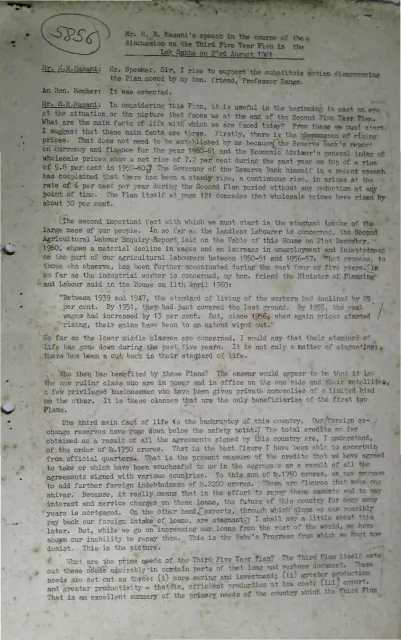
Summary
In this Lok Sabha speech, M. R. Masani supports a substitute motion disapproving the Third Five Year Plan. He begins by identifying three conditions facing India: rising prices, stagnant incomes and worsening unemployment among agricultural and industrial workers, and a precarious external-financial position marked by declining foreign-exchange reserves and growing debt. Although he accepts the Plan’s stated objectives—greater saving and investment, more efficient low-cost production, and exports—he argues that its actual policies undermine those objectives and benefit the ruling class and privileged monopolists rather than the wider population.
Key points
- Masani presents inflation, stagnant incomes and unemployment, and foreign indebtedness as the central facts confronting India.
- He argues that excessive taxation, deficit financing, forced industrialisation, and high-cost heavy-industry projects make the Plan self-defeating.
- He criticises the expansion of the State sector and the displacement of private enterprise, claiming that production is being directed toward costly industries instead of food, raw materials, and consumer goods.
- He predicts further inflation, increased unemployment, reduced consumption, and a high-cost economy if the Plan is implemented.
- He attacks the Plan’s pursuit of autarky and self-sufficiency, contrasting India’s position with that of the Soviet Union and advocating continuing engagement with foreign capital and trade.
- He frames the Plan as a form of State capitalism rather than genuinely socialist economic development, because it may widen inequality and reduce popular consumption.
- He warns that collectivisation of land could threaten the peasantry and that excessive economic concentration could endanger constitutional and labour rights.
- He closes by describing the Plan as a threat to workers, peasants, and the middle class, and calls for educating the public about both living standards and economic freedom.
Metadata and summary are AI-extracted from the source PDF and reviewed for editorial accuracy. The original work is available via the Read PDF tab above (where present); paragraph-level citation inside the PDF is deferred to a future engagement.
People in this work
Related across the archive
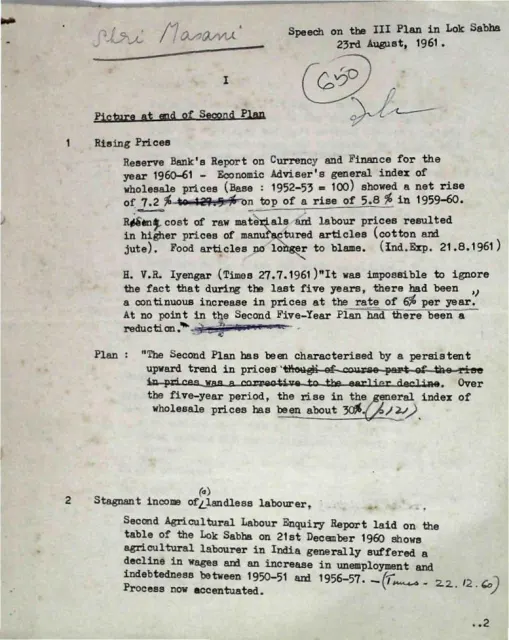 Primary workSpeech on the III Plan in Lok Sabha
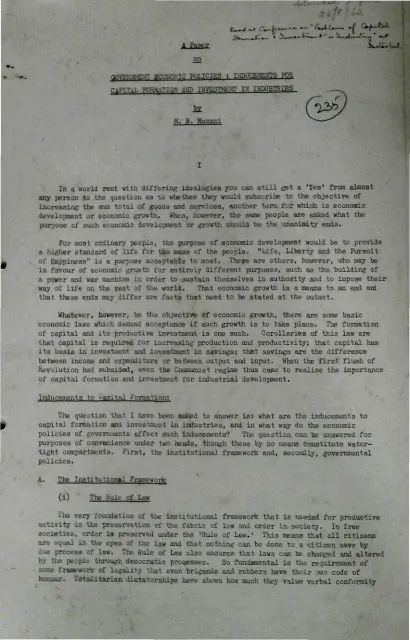 Primary workGOVERNMENT ECONOMIC POLICIES : INDUCEMENTS FOR CAPITAL FORMATION AND INVESTMENT IN INDUSTRIES
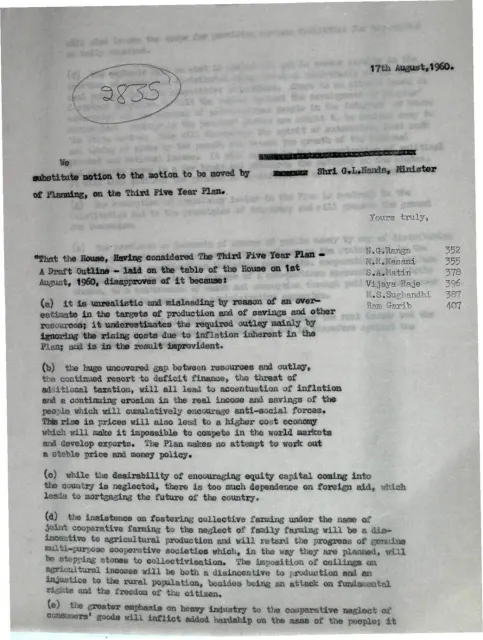 Primary workSubstitute Motion to the Motion to be Moved by of Planning
 ExcerptFifteen Years of Indian Planning
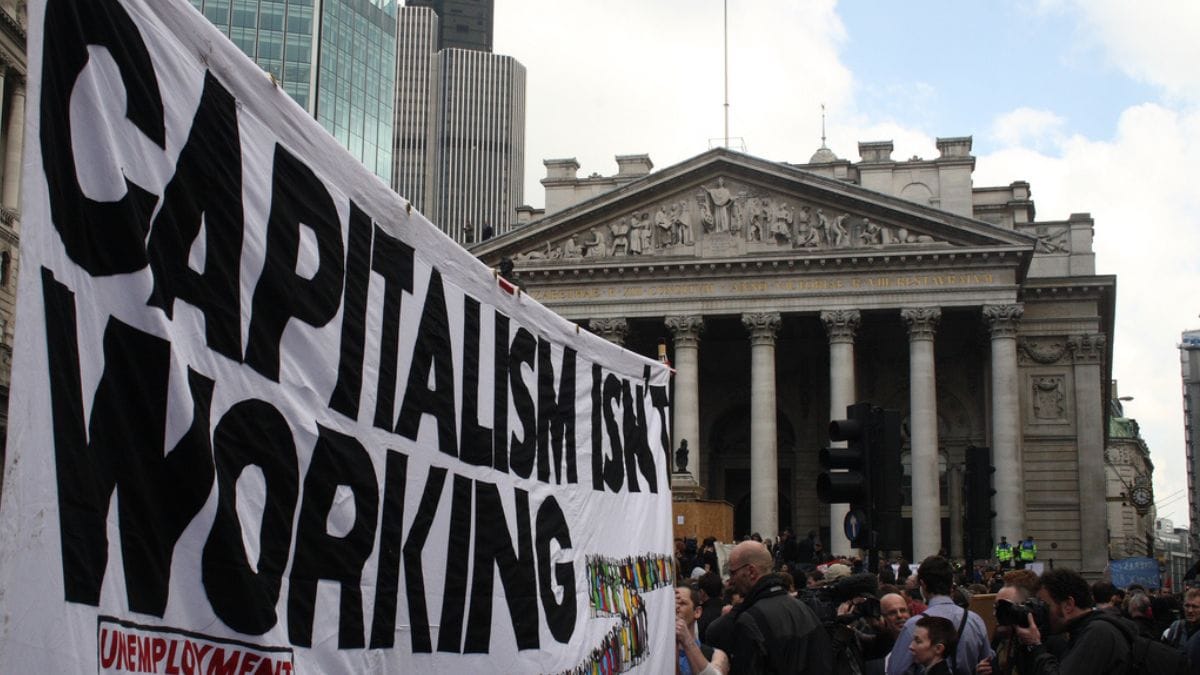 ThePrintCapitalism isn’t responsible for mass unemployment. Look at Japan, Singapore: BS Iyer