non liberal
Jawaharlal Nehru
1889–1964
Also known as: Nehru, Pandit Nehru, जवाहरलाल नेहरू, पंडित नेहरू
How Jawaharlal Nehru is discussed in this archive
Authored 3 works in the archive.
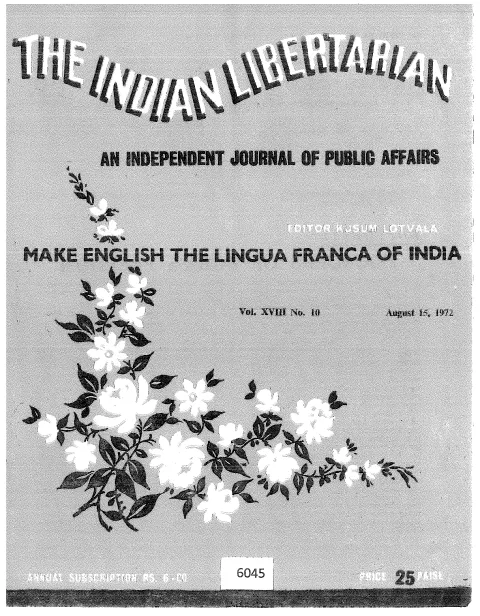
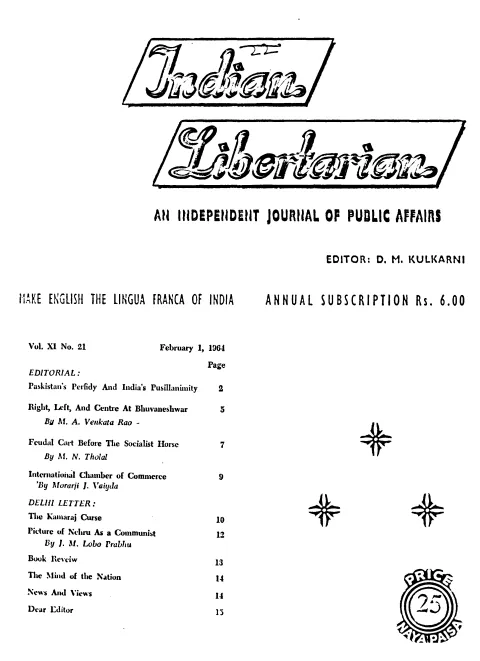
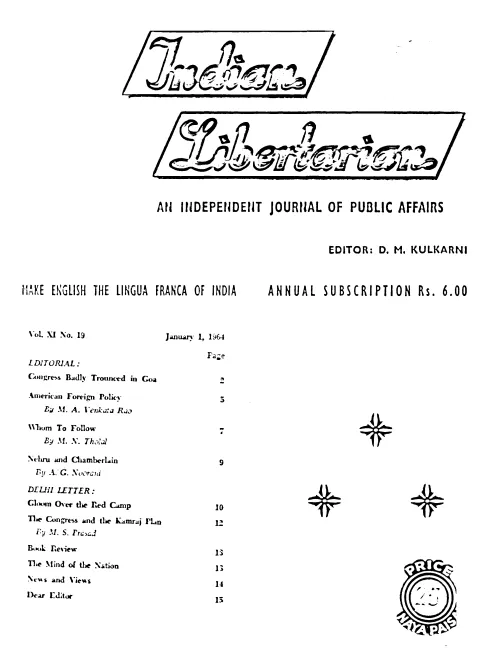
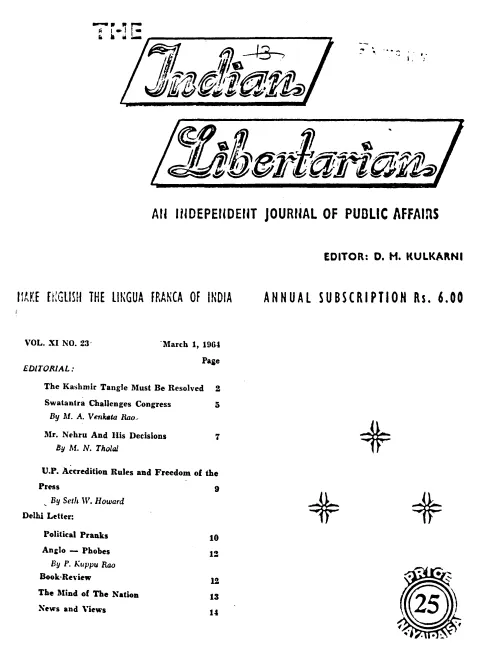
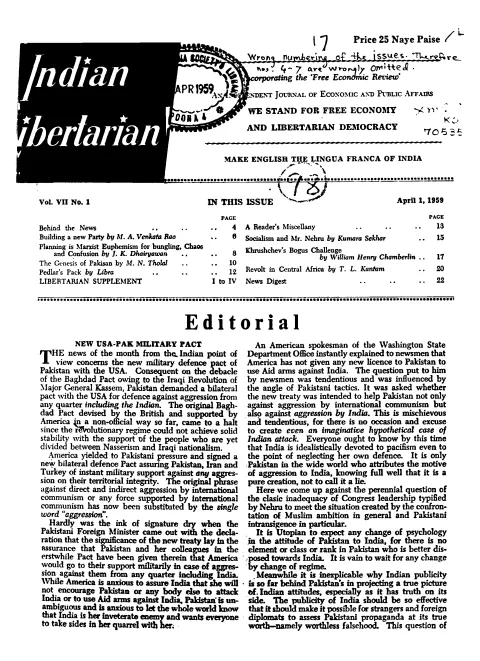
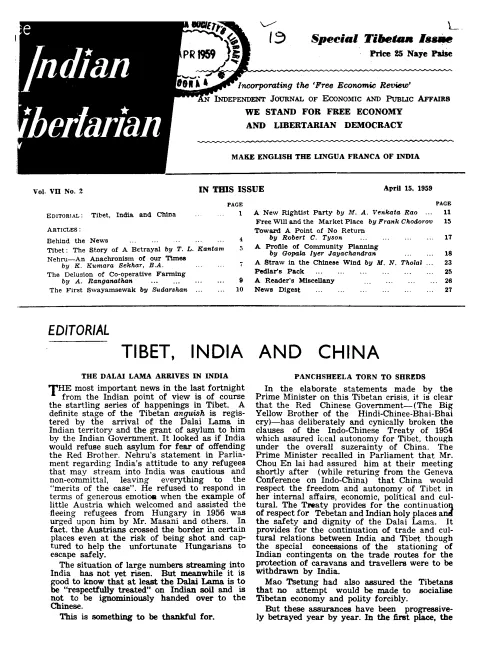
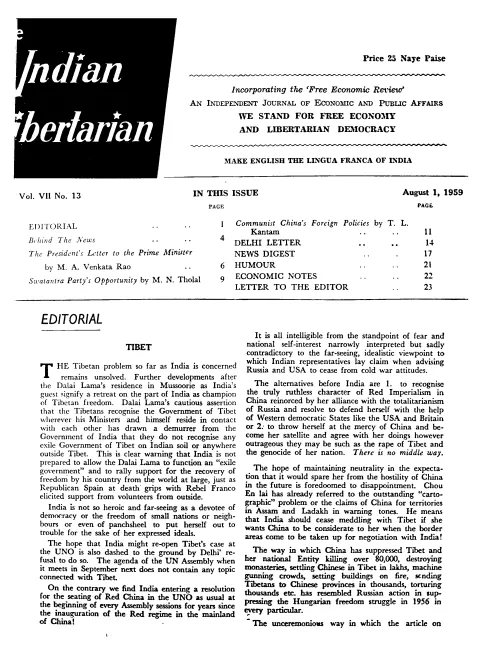
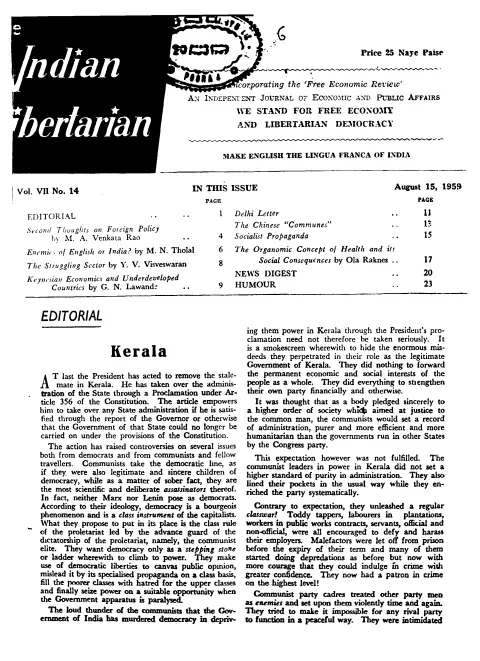
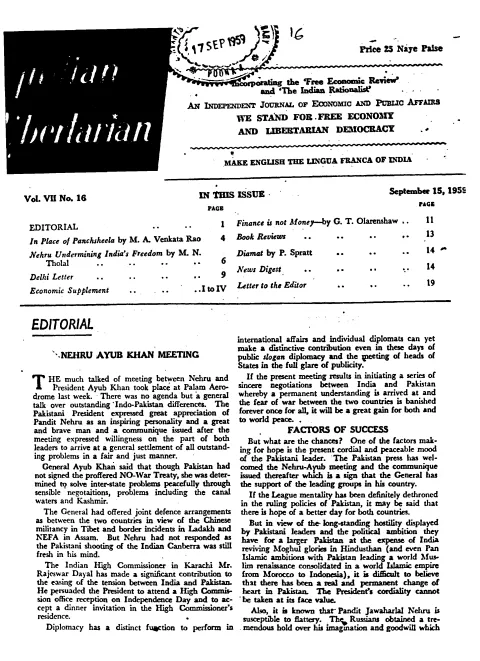
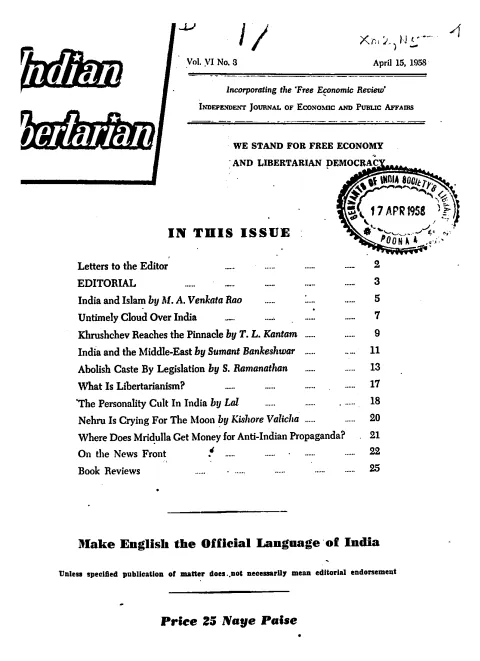
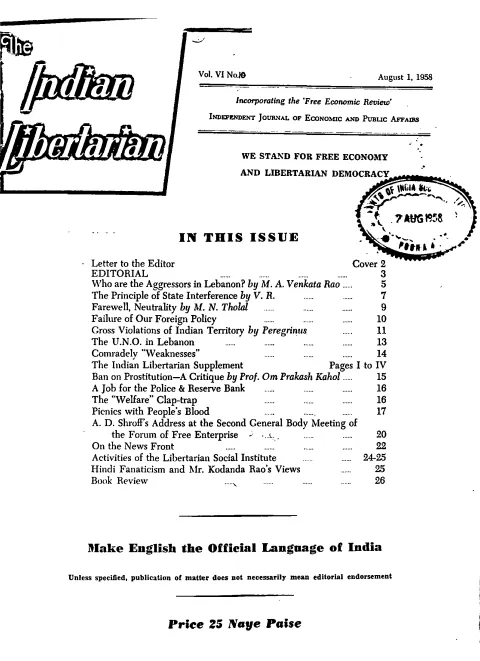
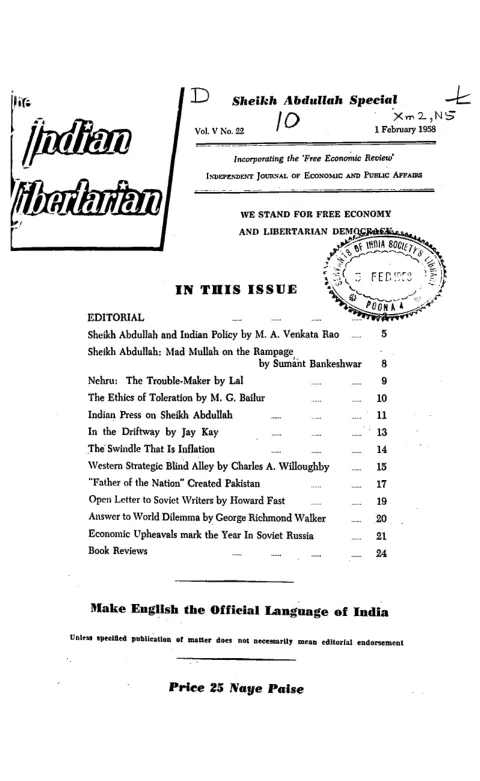
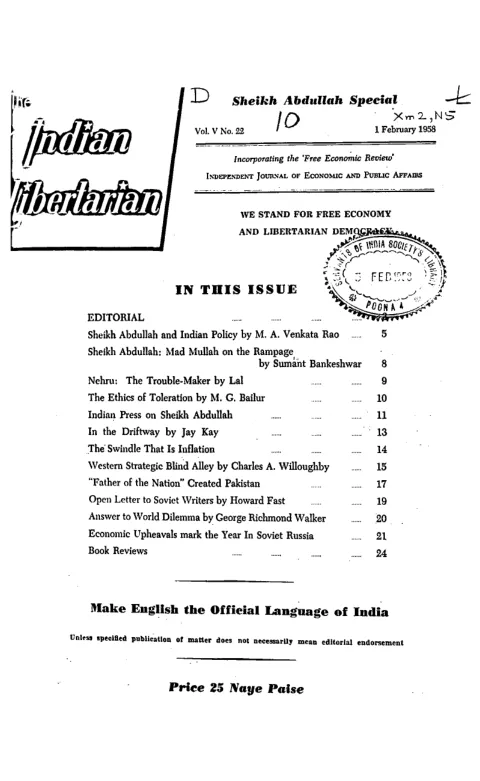
Referenced in 86 other works , including Minoo Shroff on Doing Business in Nehru's India , The Indian Libertarian , and The Indian Libertarian .
In Role of Ideology in India's Liberalisation : Adhia repeatedly invokes the 'Nehruvian consensus' as the ideological framework that shaped pre-liberalization economic policy.
In Jagdish Bhagwati on Milton Friedman : Bhagwati references Nehru's premiership when characterizing the relative mildness of the First Five Year Plan.
In Minoo Masani's Disenchantment with the Soviet Economic Model - In Coversation with Zareer Masani : Mentioned alongside Krishna Menon as a visitor to the Soviet Union who did not perceive the dictatorial features that Minoo Masani identified.
In Minoo Shroff on Doing Business in Nehru's India : Nehru's economic philosophy and policy choices are the central subject of the entire interview.
In Minoo Shroff on His Uncle A D Shroff : Nehru is invoked repeatedly as the figure Shroff admired personally but opposed on policy grounds.
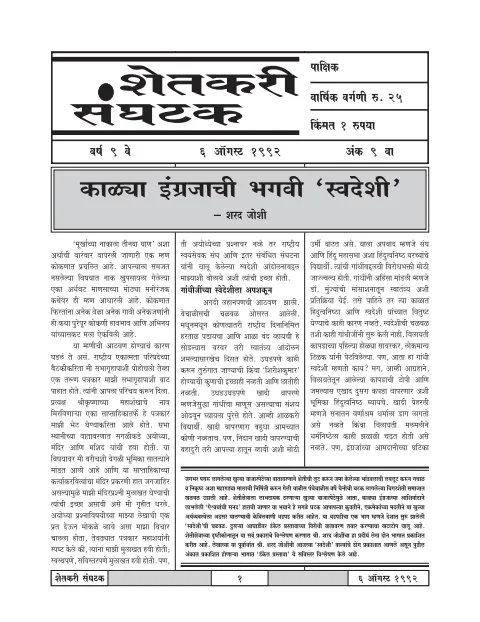
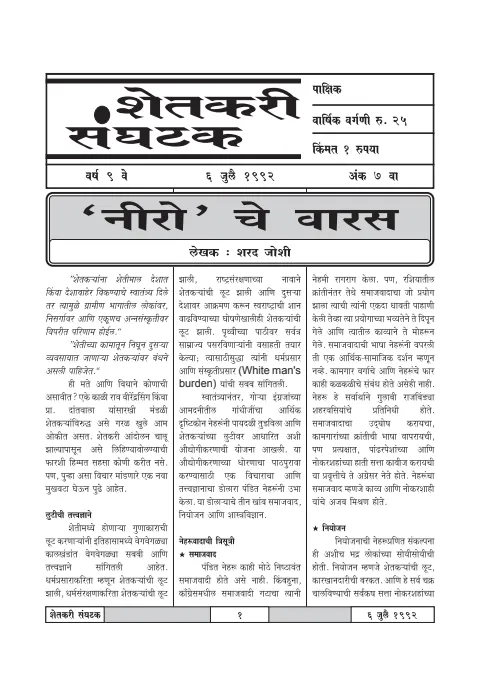
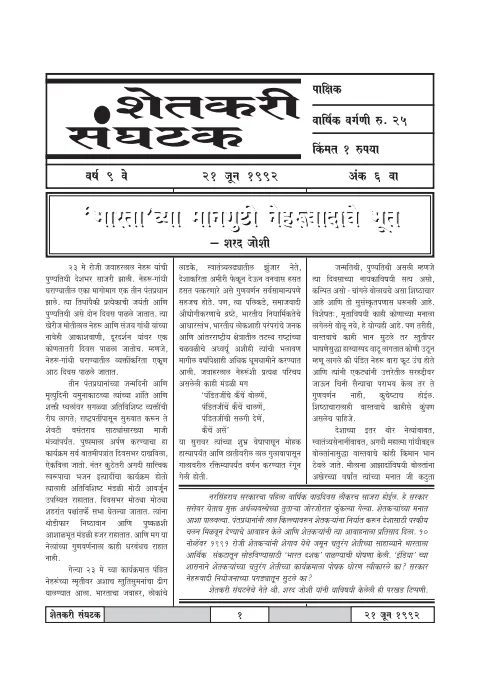
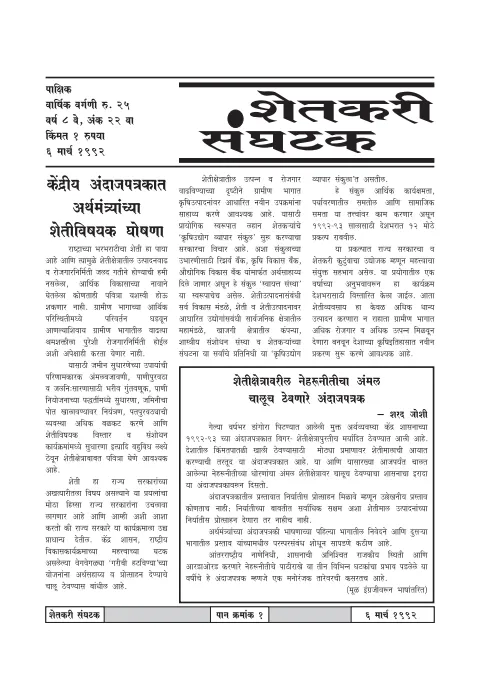
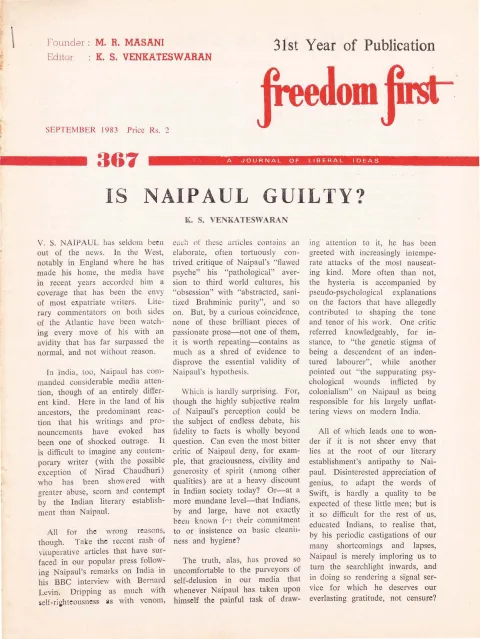
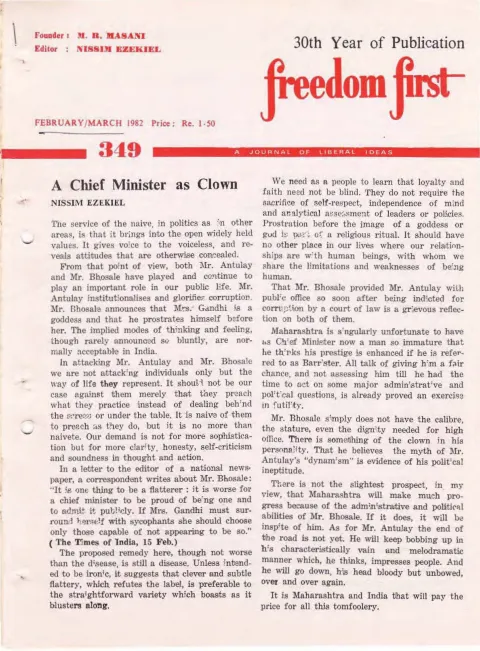
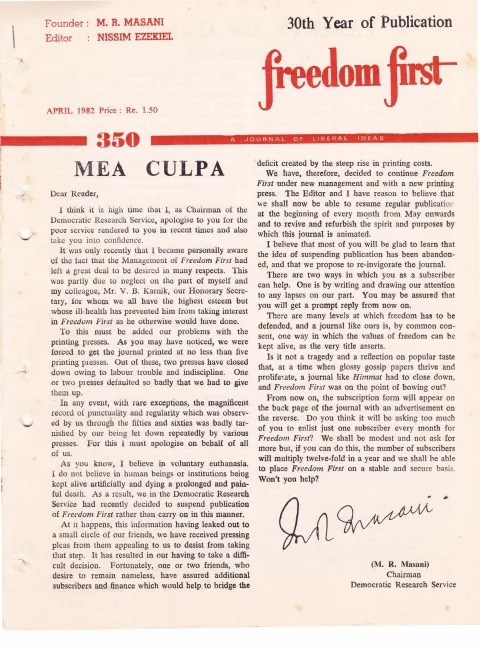
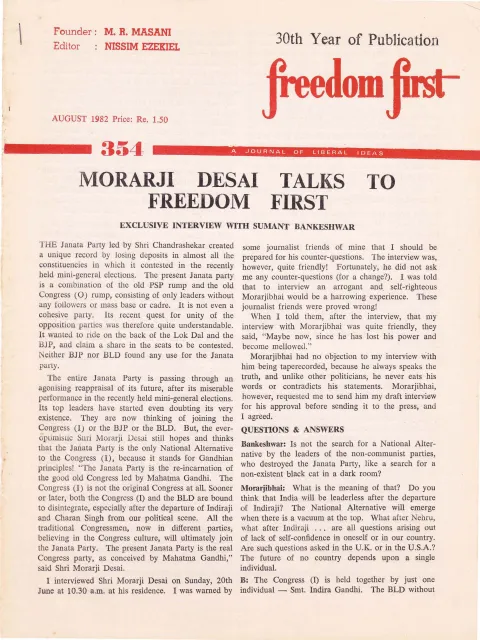
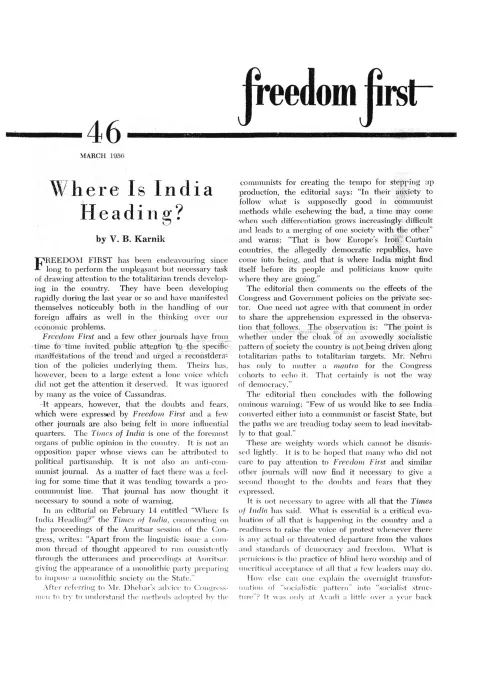
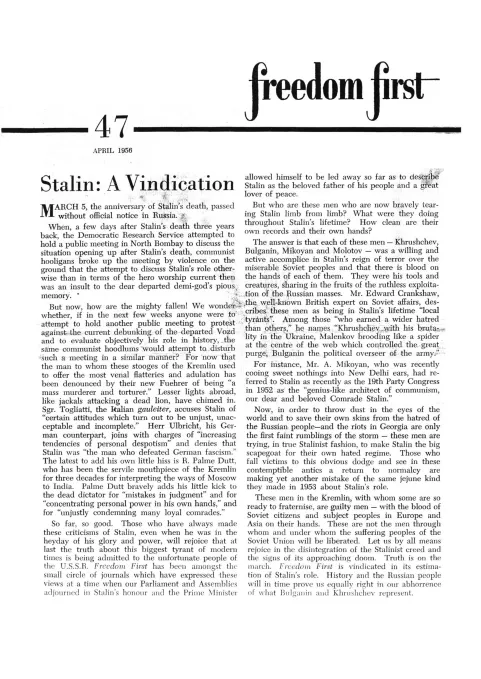
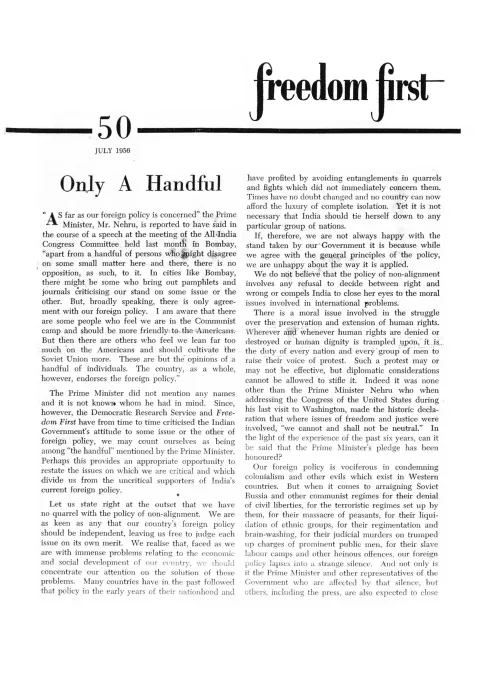
By Jawaharlal Nehru (3)
-
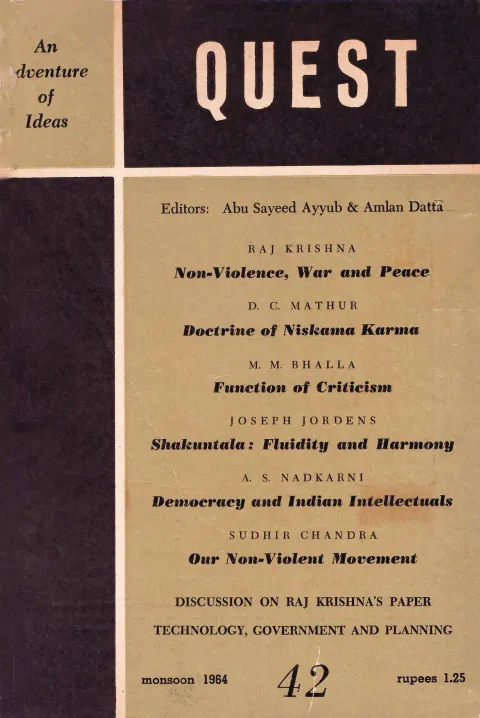
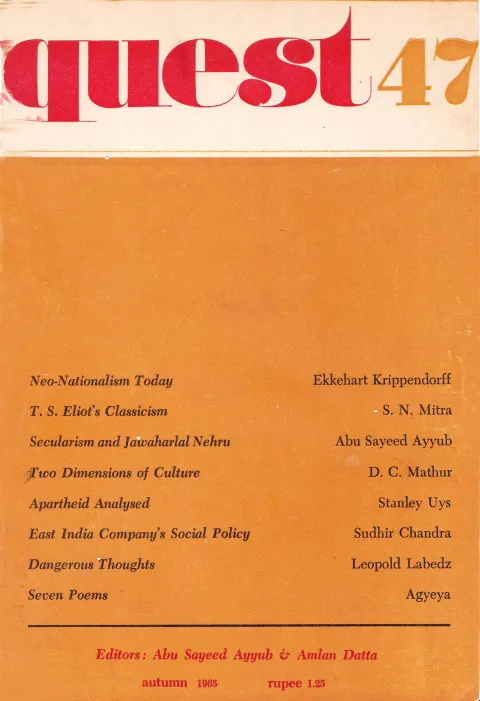
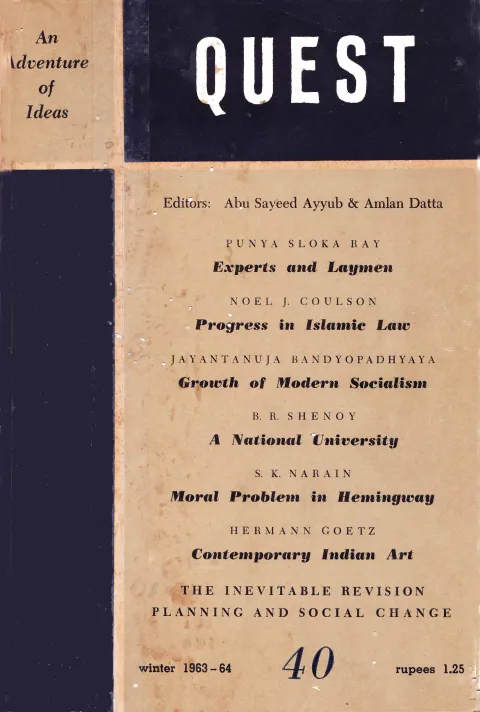
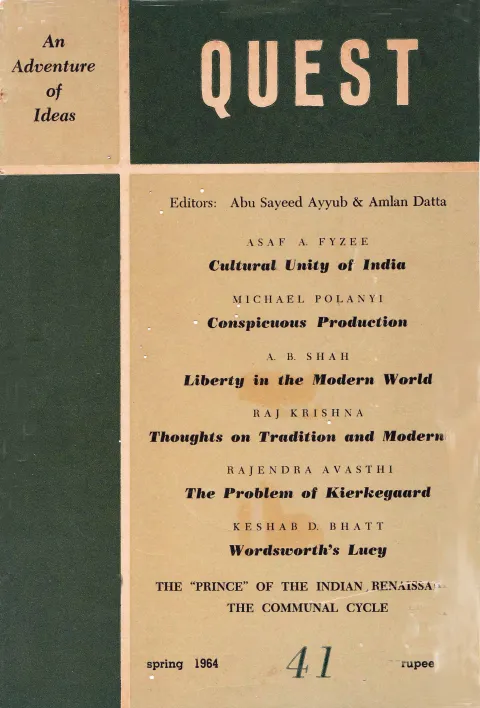
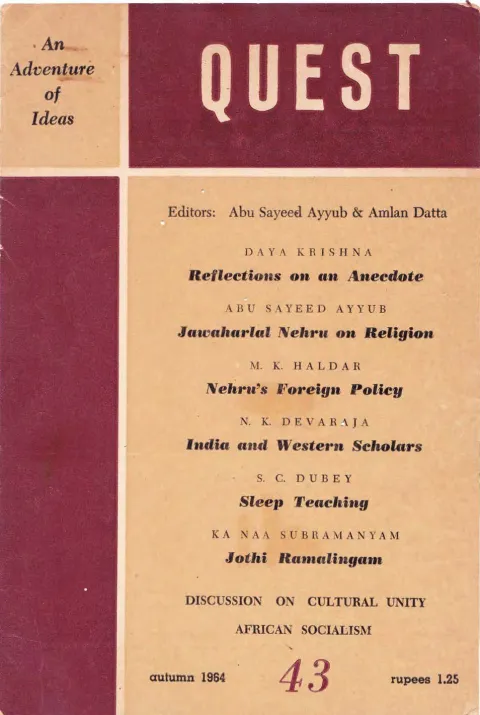
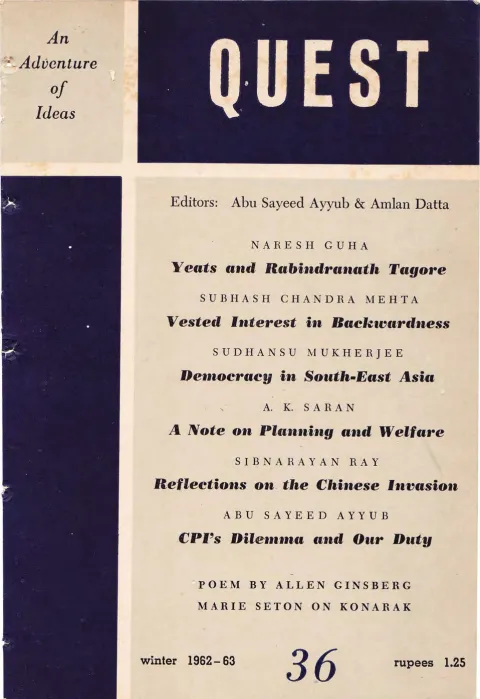
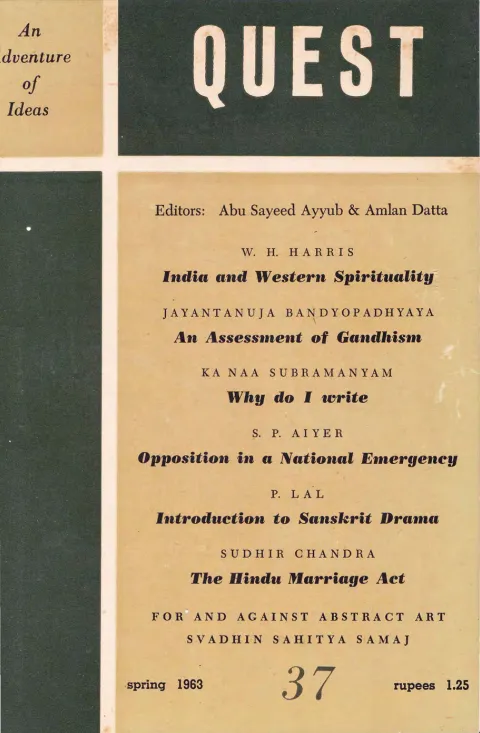
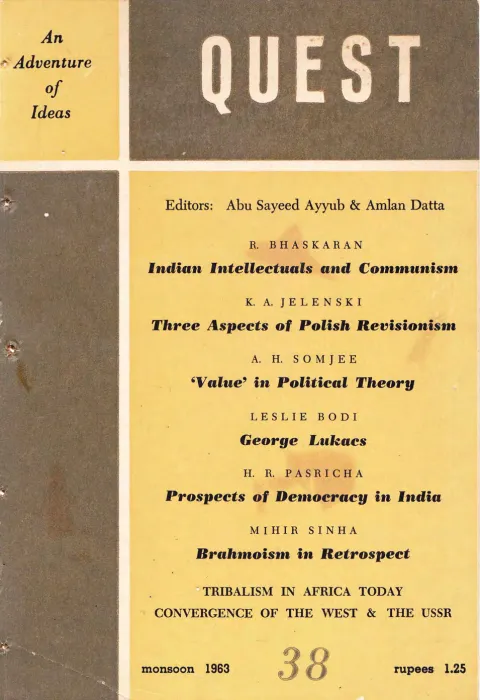
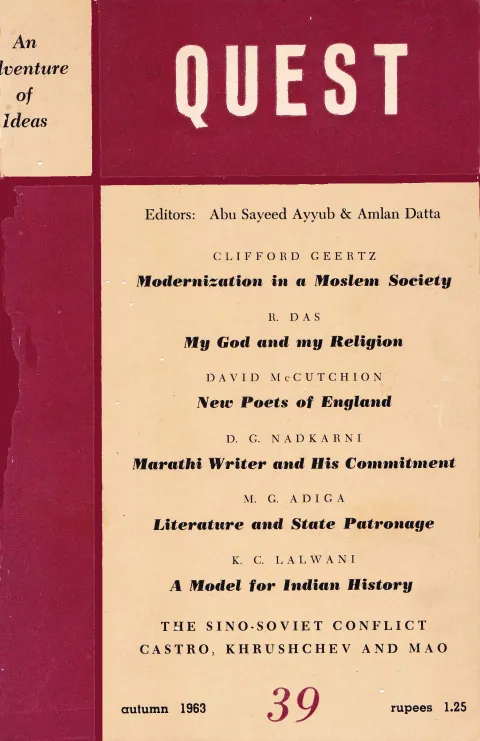
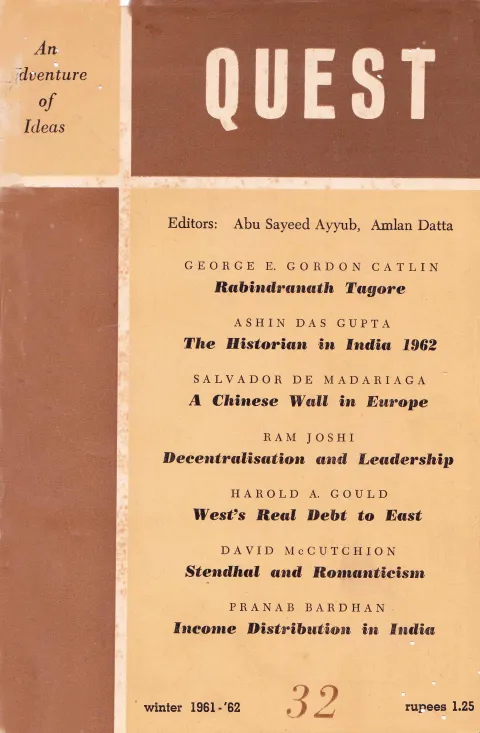
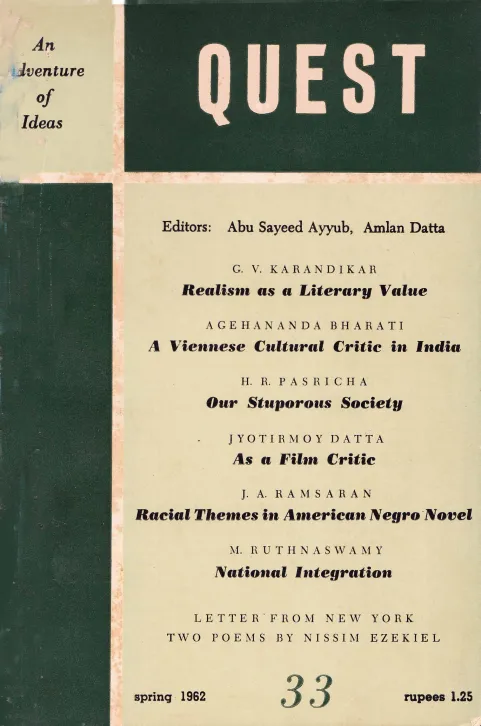
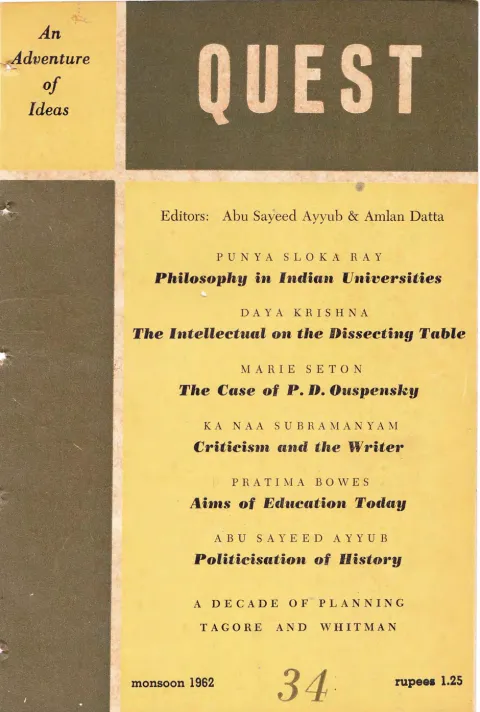
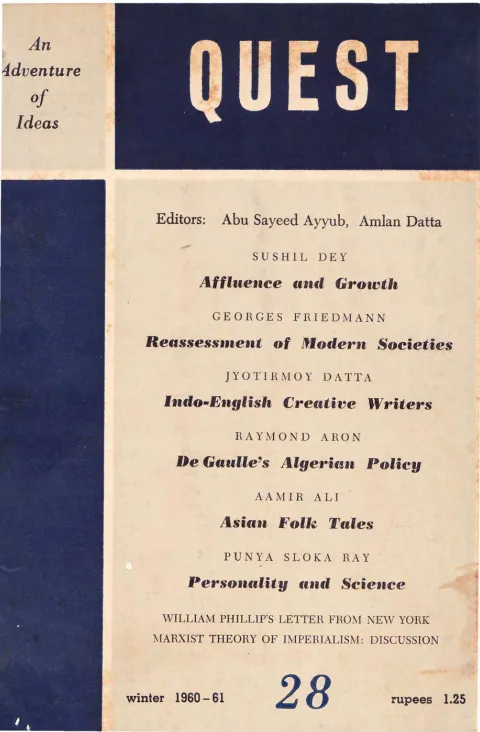
Quest
1964 · periodical issue
-
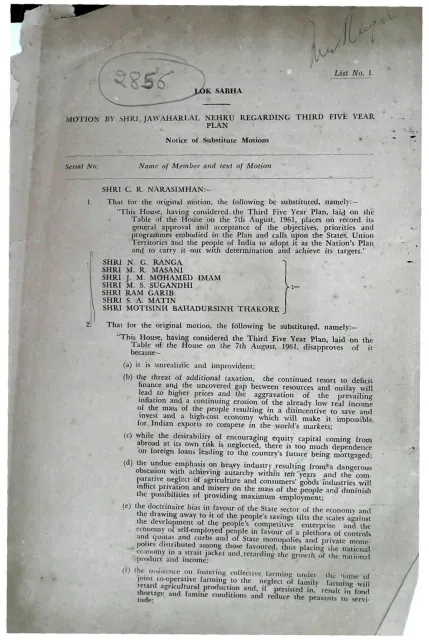
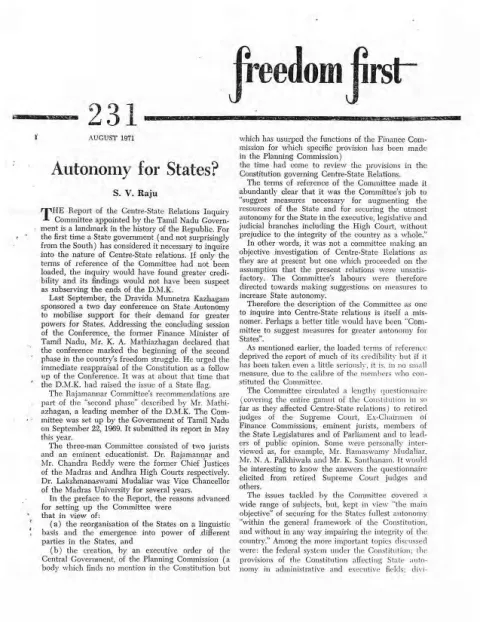
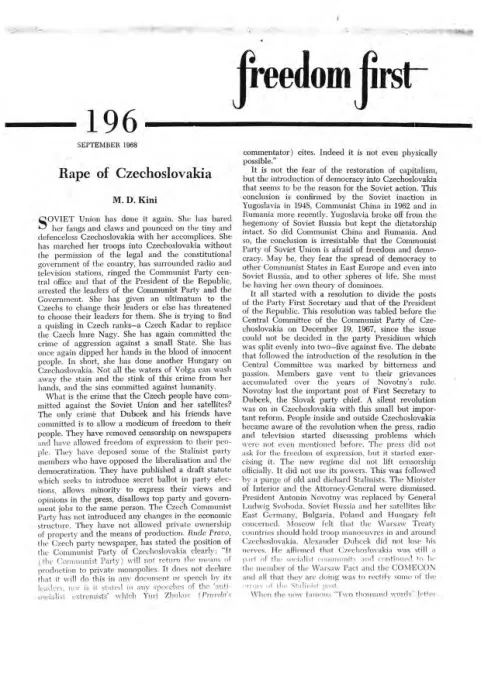
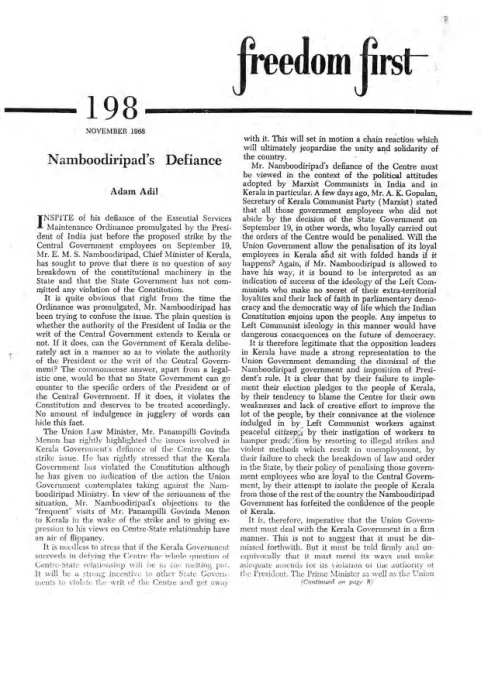
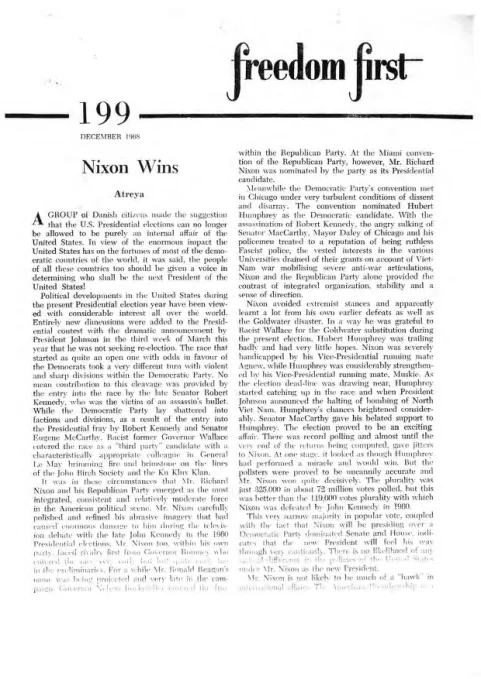
MOTION BY SHRI JAWAHARLAL NEHRU REGARDING THIRD FIVE YEAR PLAN
1961 · notice
-
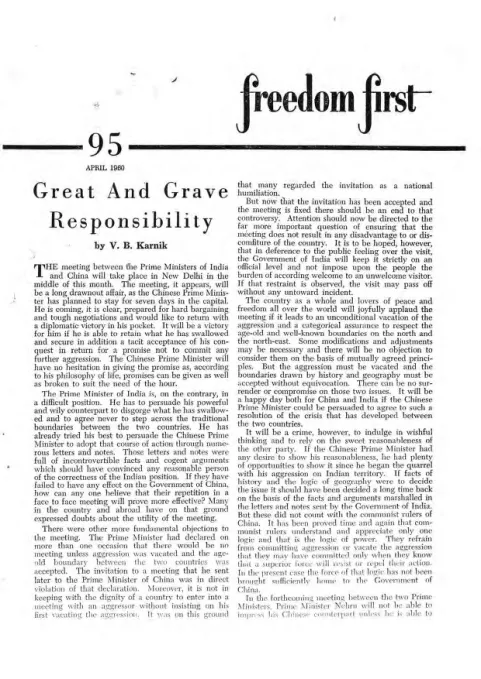
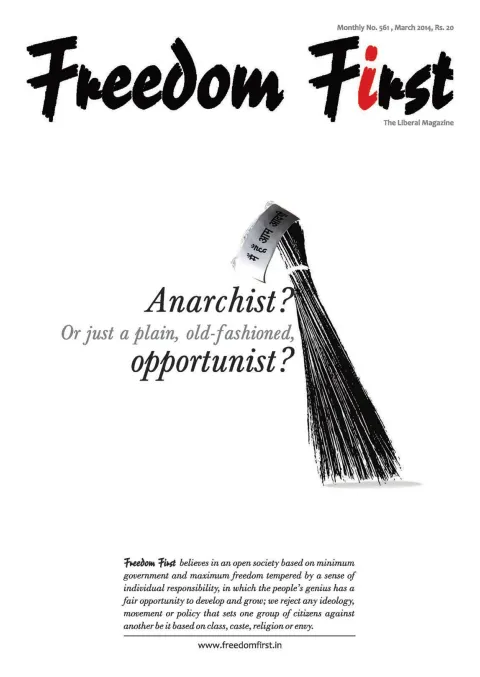
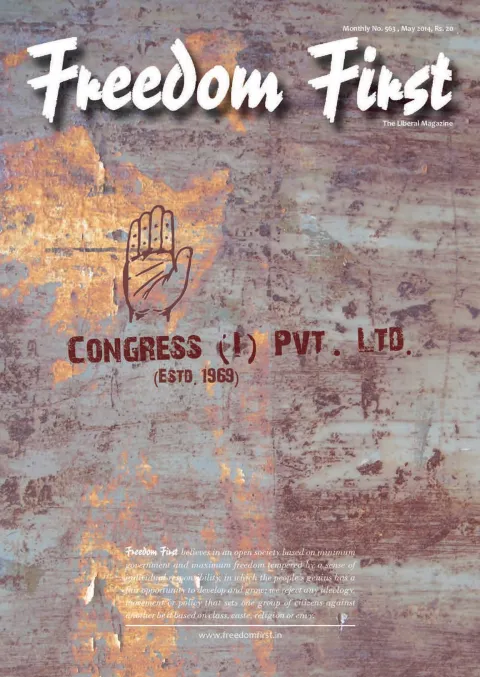
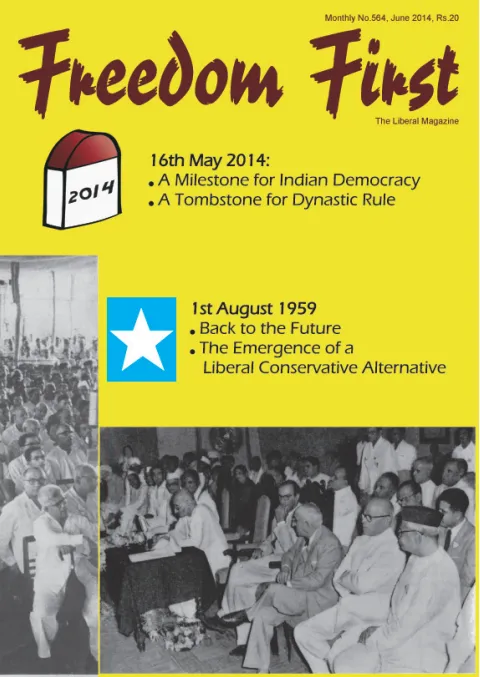
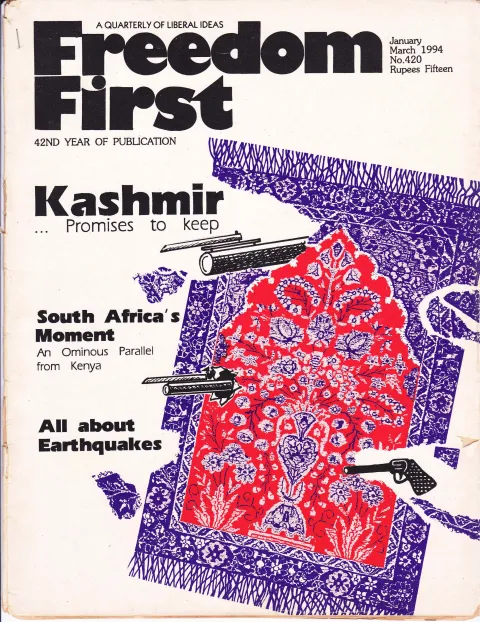
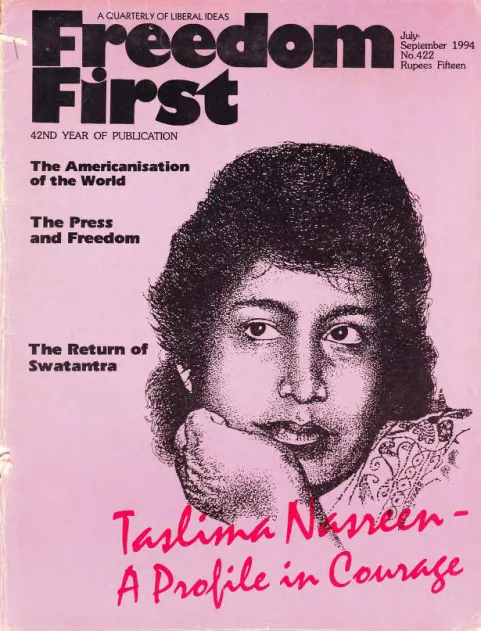
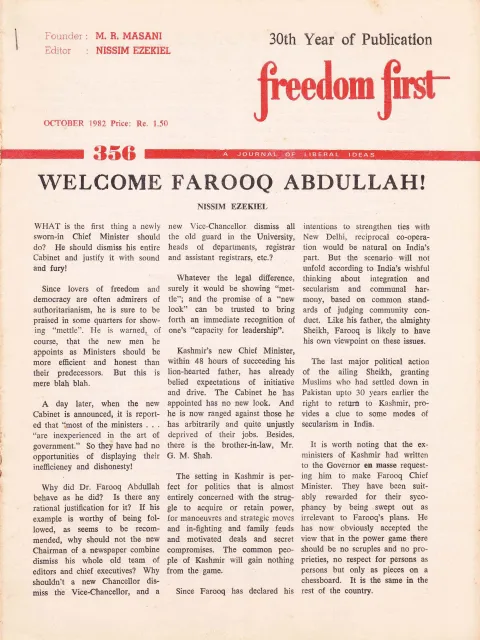
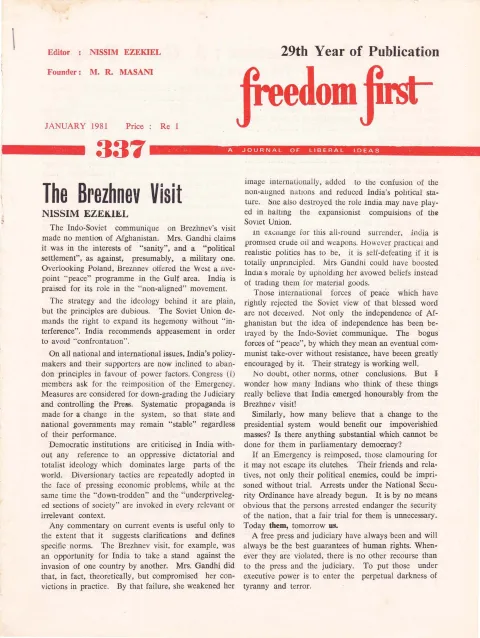
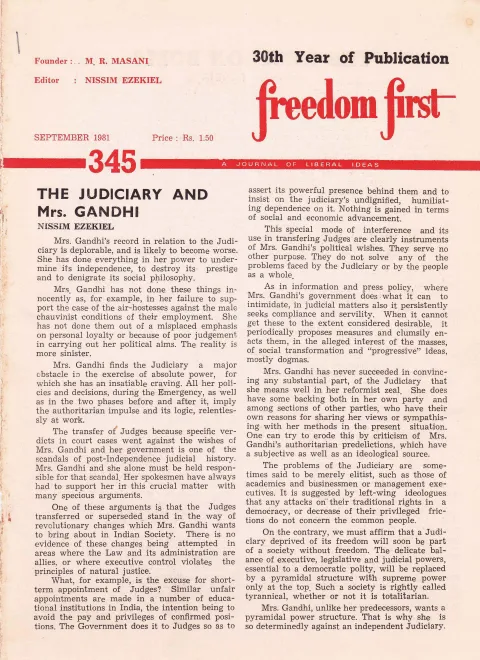
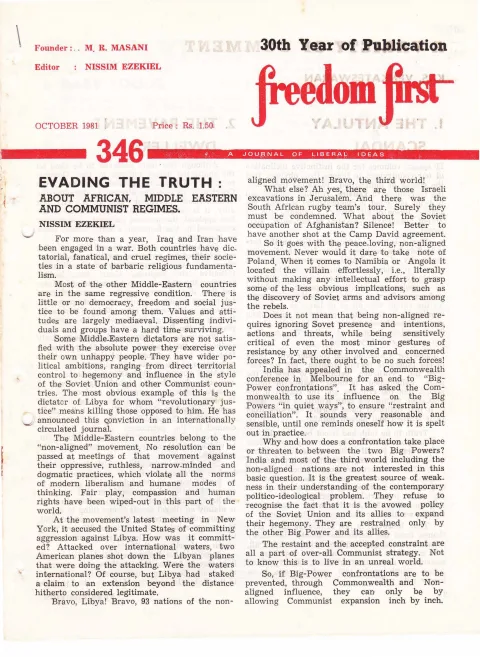
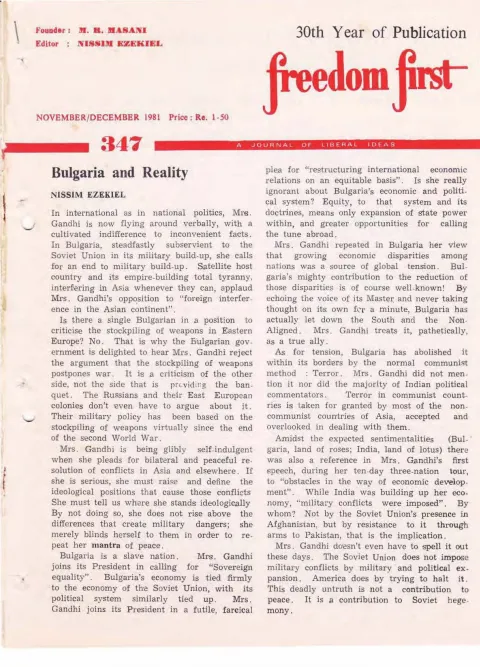
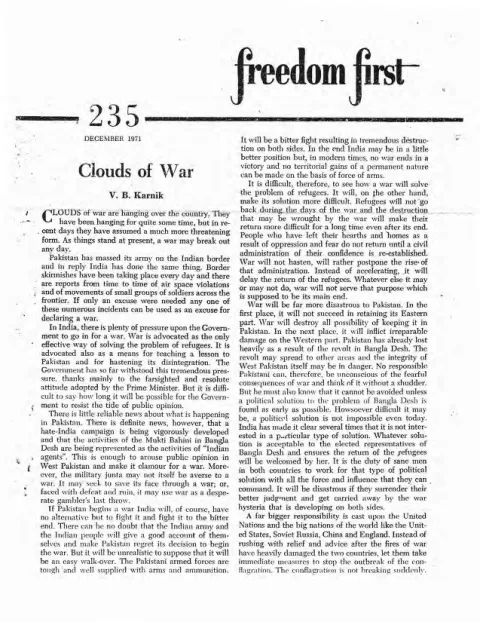
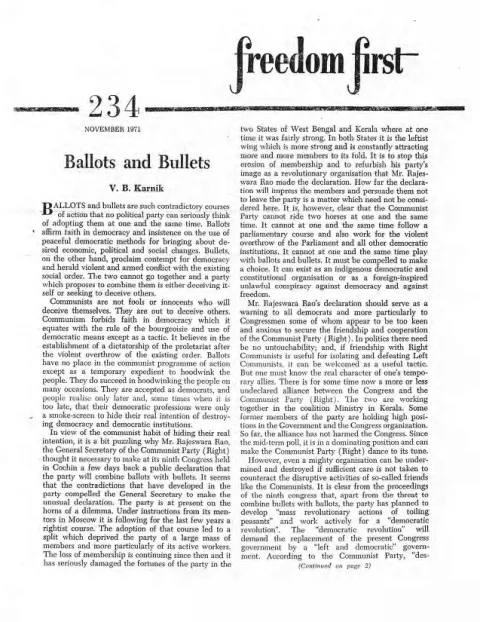
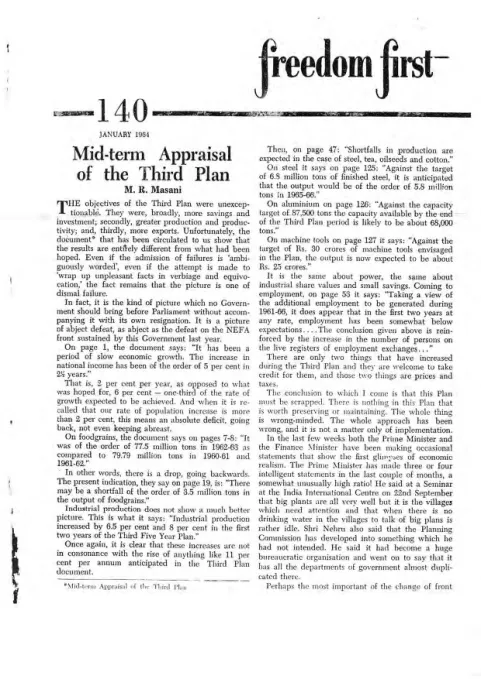
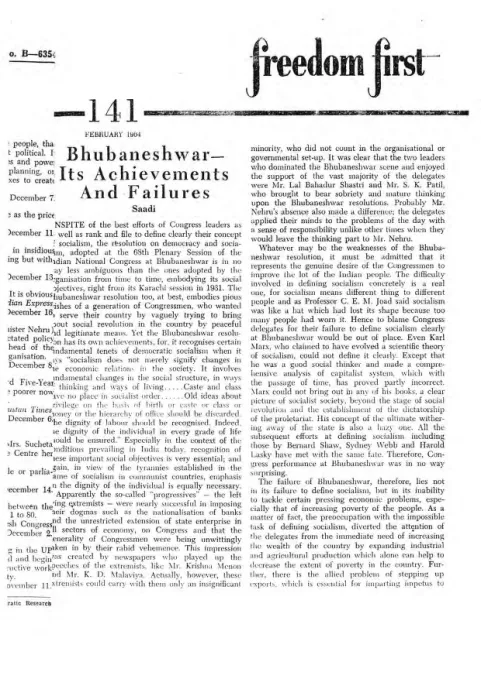
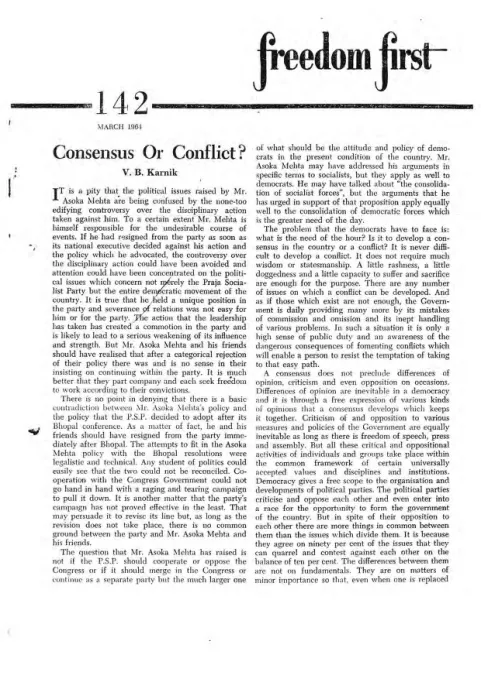
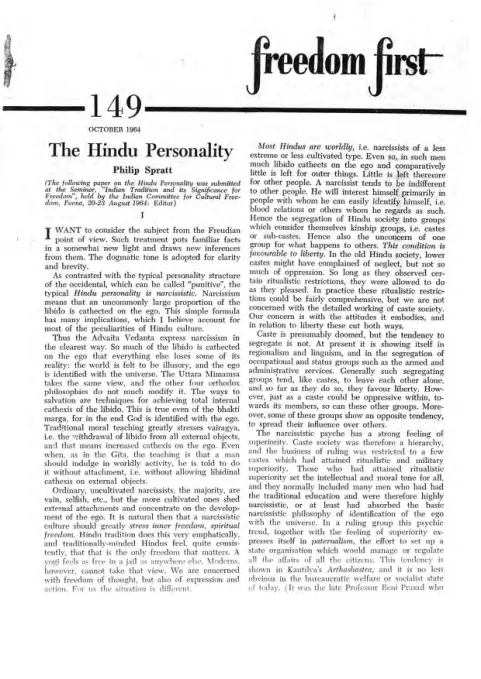
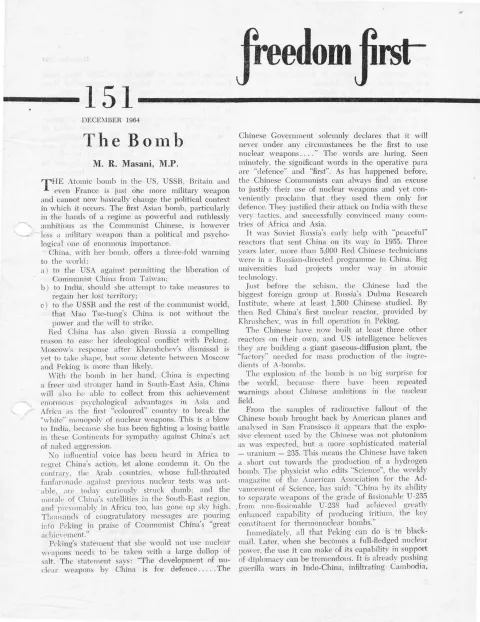
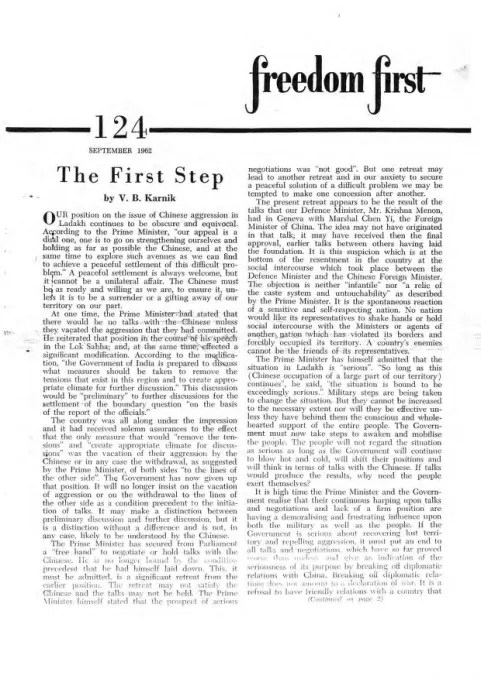
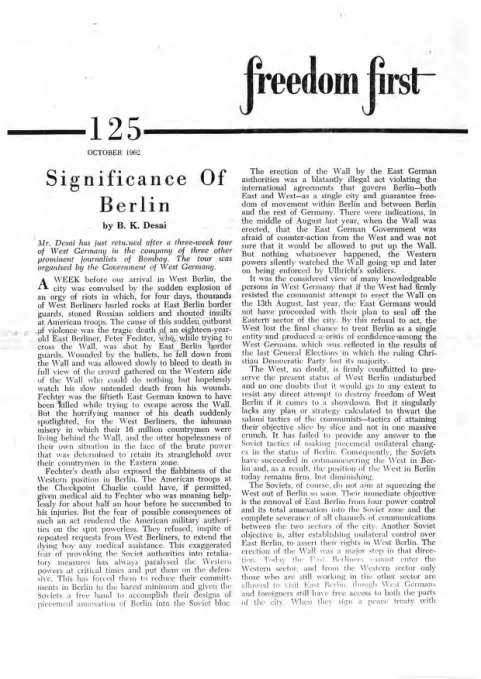
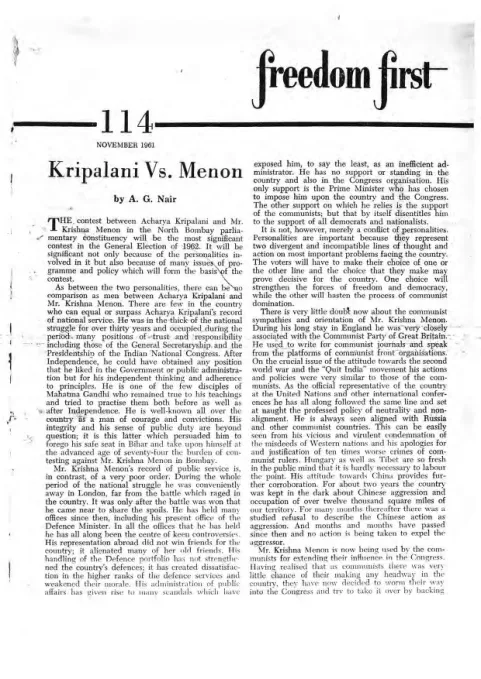
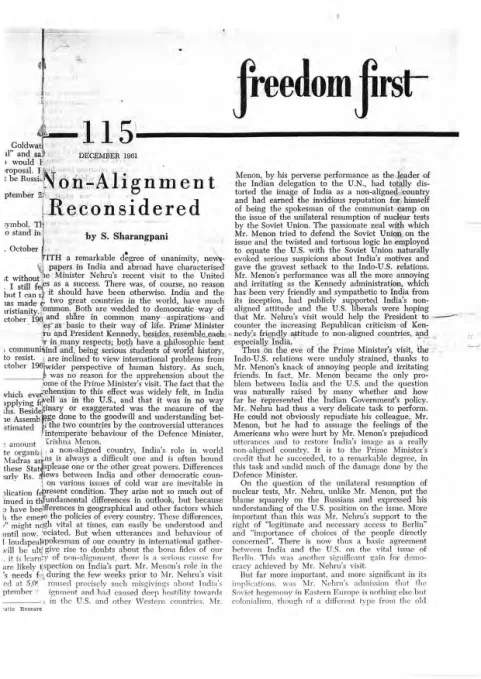
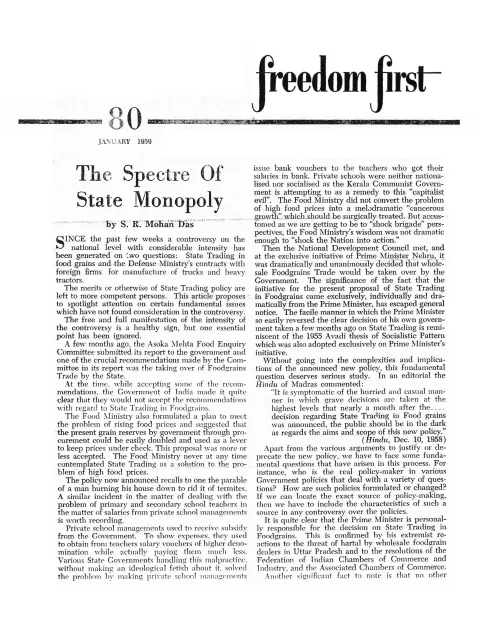
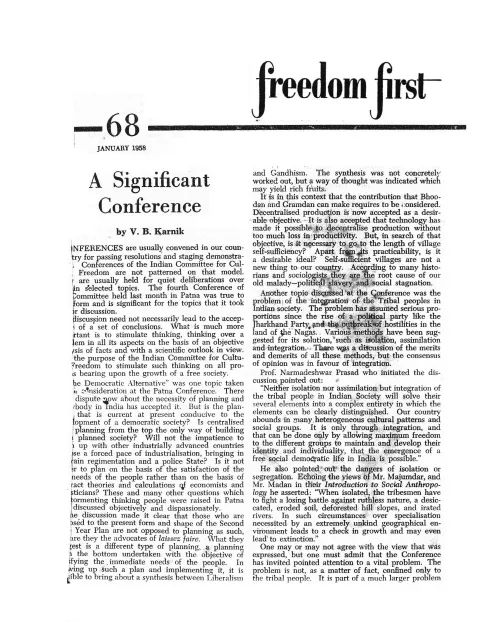
Freedom First
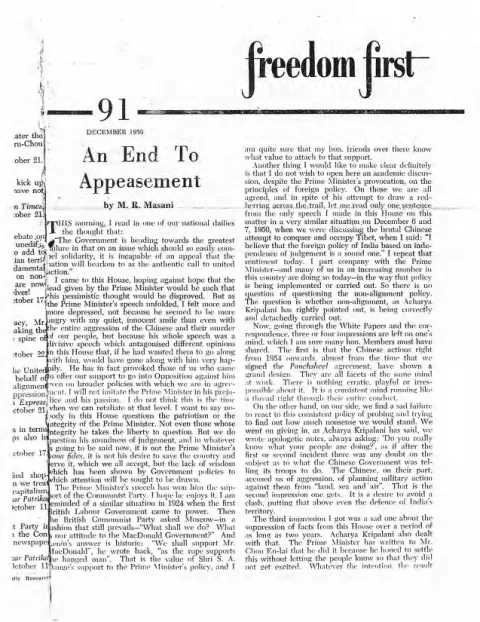
1960 · periodical issue
Nothing here matches. Clear the search or remove some filters.
Matches inside Jawaharlal Nehru's works and pages
Mentioned in (640)
Primary works (589)
- Role of Ideology in India's Liberalisation · 2020
- "The old ideology was what is often called a Nehruvian consensus." · Naming the pre-1991 ideological framework
- "implementing that Nehruvian consensus required sacrifices all around" · Describing the costs of the Nehruvian framework
Show all 589
- Jagdish Bhagwati on Milton Friedman · 2018
- "De facto, the under under Prime Minister Nehru, it was it was sort of not strong socialism of any kind. None. There was not even a licensing system in the first five year plan." · Characterizing the First Five Year Plan under Nehru
- Minoo Masani's Disenchantment with the Soviet Economic Model - In Coversation with Zareer Masani · 2018
- "he noticed all kinds of things which people like Krishna Menon and Nehru didn't when they went" · Comparison of Indian visitors' responses to the Soviet system
- Minoo Shroff on Doing Business in Nehru's India · 2015
- "Nehru was greatly impressed that our country, though huge, but very low growth rate, no development, no long term vision, had been in a few years transformed." · Explaining Nehru's reaction to the Soviet model
- "when he was President of the Indian National Congress in 1936, his philosophy was that he was against private profit motive and against accumulation of capital beyond what was required for immediate needs" · Tracing the ideological roots of Nehru's policies
- Minoo Shroff on His Uncle A D Shroff · 2015
- "He greatly admired Nehru's idealism, his democracy, that he was sincere in what he did. But he thought that he was carried away on the wrong path" · Shroff's view of Nehru
- "I'm not criticizing Nehru as a man criticizing his policy." · Shroff's defence of his criticism
- Sunil Bhandare on Getting Disillusioned With Socialism and His Journey to Become A Liberal · 2015
- "We were under tremendous influence of Nehruvian ideology and that was quite natural because the surroundings in the Reserve Bank of India was typically supportive of that kind of a thought process." · Describing the dominant ideology of his early career
- "we believed in that model only because it it came down from Pandit Jawaharlal Nehru and everybody fancied him so well, so much, and that was his legacy." · Attributing the model's persistence to Nehru's stature
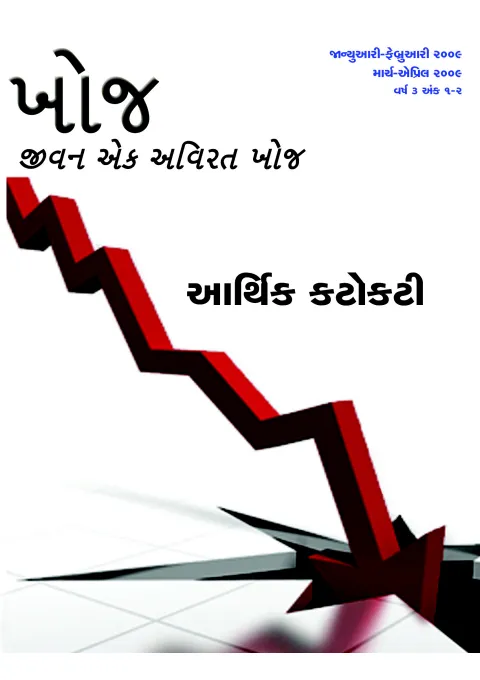
- ખોજ · 2009
- "Karia draws on a tradition of Western and Indian thinkers — Aristotle, Plato, Raphael, Gandhi, Nehru, Tagore, Vivekananda — who oppose coercive moralism" · Nehru cited alongside Gandhi and Tagore as part of the canonical Indian voice against vigilante morality
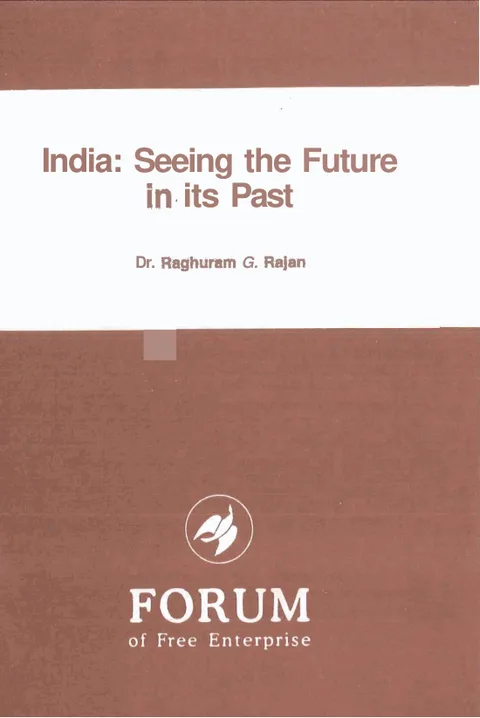
- India: Seeing the Future in its Past · 2006
- "India's silver lining, he notes, was an unintentionally diversified manufacturing base and Nehru's investment in higher education and science, which positioned the country to seize the liberalisation openings under Indira and Rajiv Gandhi and the deeper 1991 reforms." · Nehru is given partial credit for the human-capital base that later reforms could exploit
- "Rajan argues that India's post-1980 growth was unintentionally well-positioned by a diversified manufacturing base and by Nehruvian investments in higher education, science and public-sector technology (Bharat Electronics, CMC, ECIL, State Bank of India)." · key-points restatement of the Nehruvian inheritance
- Report · 2005
- "using the controversy over the President's obligation to act on the advice of the Council of Ministers (from Rajendra Prasad's conflicts with Nehru, through M. C. Setalwad's opinion, to the Supreme Court's eventual endorsement and subsequent constitutional amendment) as a case study in the conversion of unwritten conventions into written rules." · Sathe positions Nehru as the executive pole in the constitutional convention dispute
- The Challenge of Poverty · 2002
- "leaders such as Nehru equated globalisation with 19th-century imperialism, opted for self-sufficiency, socialism and one-party rule, and produced over a hundred weak, aid-dependent states" · Nehru is the named exemplar of the post-colonial error that autarky equates with liberation
- "India's share of world trade fell from 2.5 percent at independence to 0.4 percent by 1985 while Singapore and Taiwan, derided as neo-colonial puppets, grew rich" · the empirical indictment of Nehruvian self-sufficiency
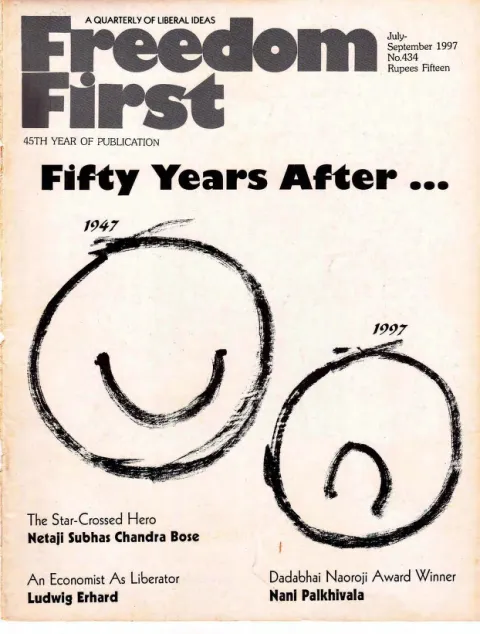
- Fifty Years After ... · 1997
- "He quotes B. K. Nehru on the divergence between the constitutional values of founders like Nehru, Patel, and Rajaji and the values of today's rulers (Laloo, Jayalalitha, Mulayam Singh)." · Nehru invoked as a founding constitutional standard against which today's rulers are measured
- Liberalism in South Asia · 1995
- "He diagnoses the resulting post-independence state as a 'Nehruvian socialist brand of statism' that proved hospitable to bureaucratic rent-seeking and hostile to individual economic freedom." · Joshi identifies Nehru by name as the doctrinal source of the statist regime that displaced liberalism in India
- "The post-independence 'Nehruvian socialist' state, modelled on the USSR, gave power to a bureaucratic class that used regulation and licensing to entrench itself." · key-points summary reprises Nehru's name as the label for the post-1947 statist settlement
- MUTUAL FUNDS AND OFFSHORE FUNDS IN INDIA · 1991
- "Krishnamachari's 1963 pitch to Pandit Jawaharlal Nehru" · Nehru positioned as the prime ministerial decision-maker behind UTI's founding
- ECONOMIC POLICY FOR INDIA IN 1980s · 1983
- "Jawaharlal Nehru's powerful Fabian leanings and admiration for the Soviet Union" · B. K. Nehru's genealogy of the command economy, identifying J. Nehru as a key ideological driver
- "He traces the system's origins to wartime controls, the 1930s fashion for socialism in British universities, Jawaharlal Nehru's Fabian and pro-Soviet leanings, and objective shortages of capital, foreign exchange, industry and entrepreneurs at Independence." · key-points recapitulation of the causal chain B. K. Nehru constructs
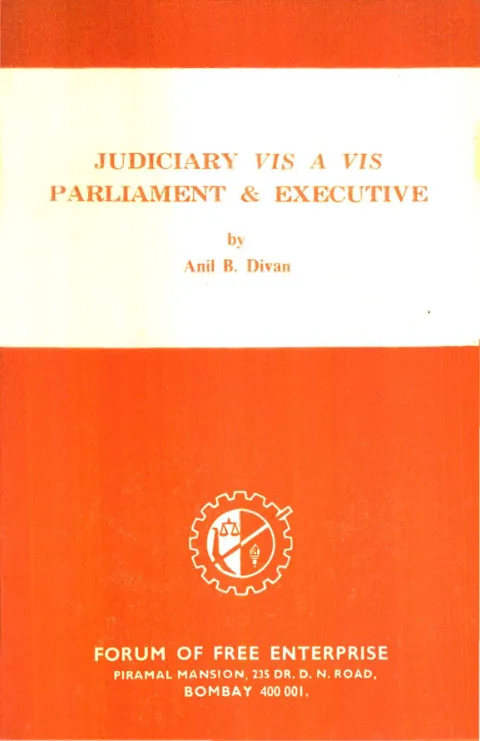
- Judiciary Vis a Vis Parliament & Executive · 1981
- "the Constituent Assembly's intent — quoting Nehru, Ambedkar and B. N. Rau on the need for judges free from party bias" · foundational move; Nehru is invoked as one of three Constituent-Assembly authorities anchoring the post-1950 judicial standard
- MANAGING A BUSINESS IN INDIA · 1980
- "the example of Gandhi and Nehru, who drew on the "liberal West" to free India politically; a similar opening, he argues, is now needed to free it economically" · closing peroration; Nehru framed as a cosmopolitan borrower whose example justifies economic liberalisation
- INDIA'S FOOD PROBLEM · 1973
- "Shenoy closes the rendered portion with a survey of the scope for expanding production — citing the Mysore survey, ICAR's J. S. Kanwar on HYV-plus-fertiliser yield gains, and Nehru's 1948 call for self-sufficiency" · Nehru's 1948 self-sufficiency call is the normative anchor Shenoy quotes for an expansion programme
- Concentration of Economic Power · 1972
- "policy lineage from Prime Minister Jawaharlal Nehru's 1959 decision to commission what became the Mahalanobis study, through the Monopolies Inquiry Commission (1965)" · Nehru is identified as the political originator of India's concentration-of-economic-power obsession
- INTEGRITY IN NATIONAL LIFE · 1971
- "a slide he dates to 'the last days of Jawaharlal Nehru's Prime Ministership.'" · Rao's chronological anchor for the post-Independence decline of public integrity
- "dating the sharpest decline in legislative conduct (floor-crossing, defection, attacks on judges and election officials) to the closing years of Nehru's premiership." · key-points restatement of the Nehru-era inflection
- IS RIGHT TO PROPERTY NOT FUNDAMENTAL? · 1970
- "Daphtary closes by re-reading Nehru's own Constituent Assembly speech of 10 September 1949, in which Nehru insisted the judiciary should come in 'to see if there has been a fraud on the Constitution.'" · Nehru's 1949 speech is mobilised by Daphtary as the framers' own warrant for judicial review of property rights
- "Daphtary cites Nehru's own 1949 Constituent Assembly speech to argue that Article 31 was always meant to be patrolled by the judiciary against 'a fraud on the Constitution'." · key-points line restating Daphtary's use of Nehru
- Economic Democracy · 1969
- "Nehru's preferred extension of this idea into the economic sphere — socialist planning and public-sector expansion — is rejected as both ideologically incoherent and economically destructive" · Nehru's democratic-socialism is the explicit target of Tarlton's reframing of economic democracy as consumer sovereignty
- Industrial Licensing and Economic Growth in India · 1969
- "M. R. Masani's 1947 booklet's influence on Nehru" · Nehru's planning architecture is traced to early Masani influence as part of Mehta's genealogy
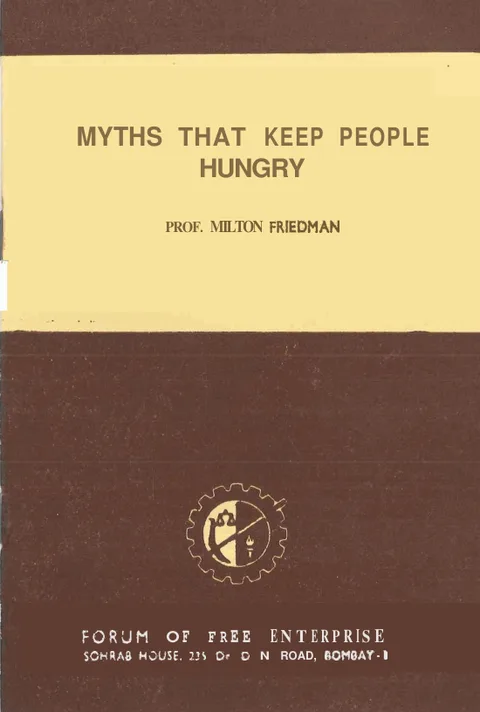
- MYTHS THAT KEEP PEOPLE HUNGRY · 1968
- "mid-twentieth-century collectivism shaped Nehruvian India" · Friedman's closing identification of Nehru with the collectivist ideology that diverged India from Meiji Japan's free-trade path
- Congress Misrule and the Swatantra Alternative · 1966
- "The Introduction argues that Congress is a 'paper tiger' whose highest vote share was 48 per cent under Nehru and had fallen to 44.72 per cent by 1962, making it permanently a minority party in terms of popular votes in the rendered pages." · Nehru's peak vote share is used to delegitimise Congress's parliamentary majority
- Is Socialism Outdated? · 1966
- "citing Nehru's May 1964 reassurance and T. T. Krishnamachari's June 1964 reversal as evidence that 'the Cabinet alone should speak as a body'" · Nehru's reassurance is Palkhivala's evidence of cabinet incoherence on bank nationalisation
- "Quotes Nehru in Kathmandu (1959) conceding that 'Socialism in a poor country can only mean that it will remain permanently poor', and uses it as an indictment of Indian planning." · Masani enlists Nehru's own admission as the booklet's most damning indictment of the planning model
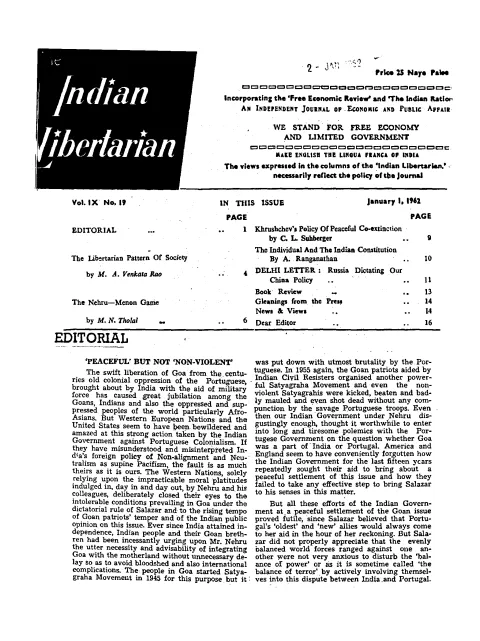
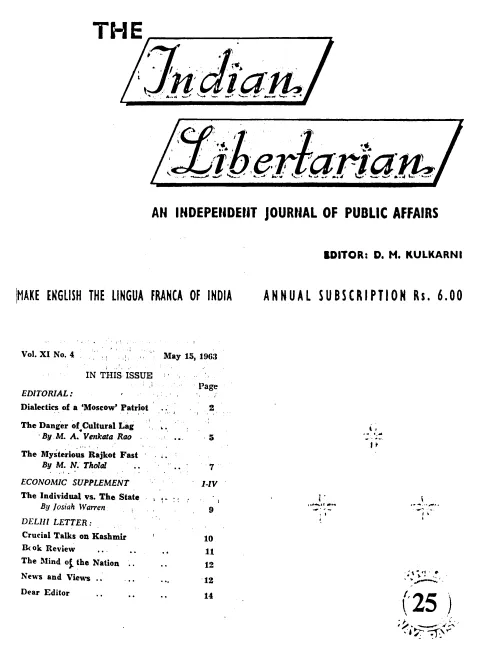
- The Indian Libertarian · 1963
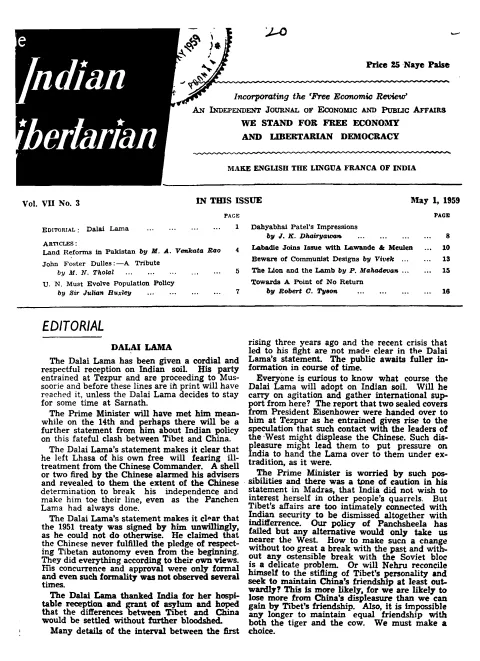
- "This unsigned editorial challenges Prime Minister Nehru's repeated use of the term 'secular state', arguing that the phrase is philosophically confused and politically loaded." · lead editorial positions Nehru's rhetoric as the central misconception the journal sets out to correct
- "Nehru's use of 'secular state' is treated as intellectually borrowed and misapplied — it does not correctly describe Indian constitutional practice." · summarises the editorial's verdict on Nehru's signature constitutional vocabulary
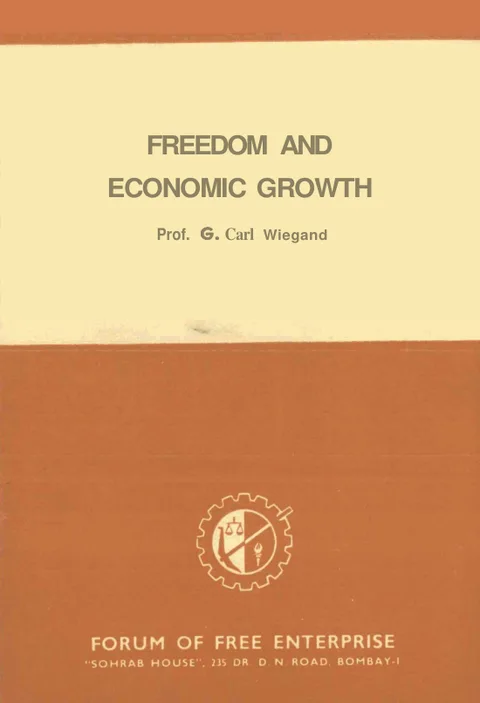
- Freedom and Economic Growth · 1962
- "The pamphlet's central polemic is directed at the conviction, which Wiegand attributes to Jawaharlal Nehru and to "many American economists and politicians," that a totalitarian or socialist state is "a 'people's republic' in which the people have a choice."" · Nehru's premise is the foil against which Wiegand sets the Gandhian critique of the state
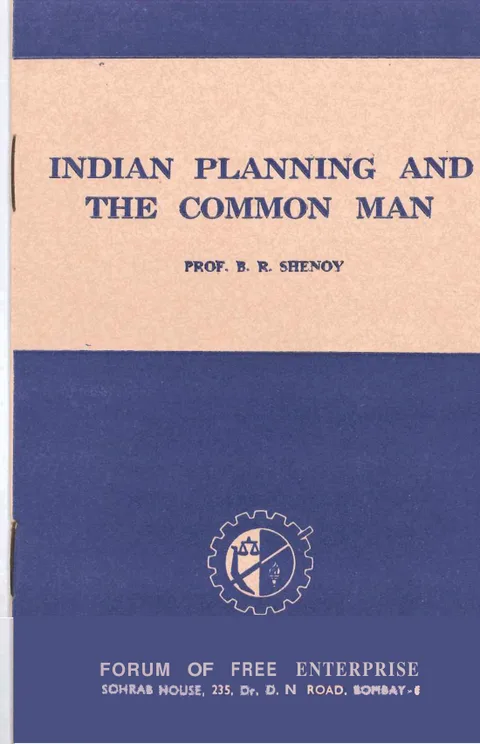
- Indian Planning and the Common Man · 1962
- "Prof. B. R. Shenoy's 1962 Forum of Free Enterprise pamphlet bundles three of his newspaper essays — two from the Indian Express (28 October 1961) and one from the Times of India (23 October 1961) — into a sustained attack on the development model defended by Prime Minister Nehru at the Third Plan debate in the Lok Sabha." · Nehru's Third Plan defence is the explicit polemical target Shenoy is rebutting
- "Shenoy frames the pamphlet as a rebuttal to the Prime Minister's January 1962 Lok Sabha defence of the Third Plan" · key-points restatement: Nehru's speech is the occasion of the pamphlet
- Economic Progress Demands Attention to Private Enterprise and Scientific Management · 1961
- "He closes with a 1956 quotation from Prime Minister Nehru on industrial development making larger demands on the country's technical and managerial personnel, underlining the last two words." · Das deploys Nehru's own language to conclude his case for management education
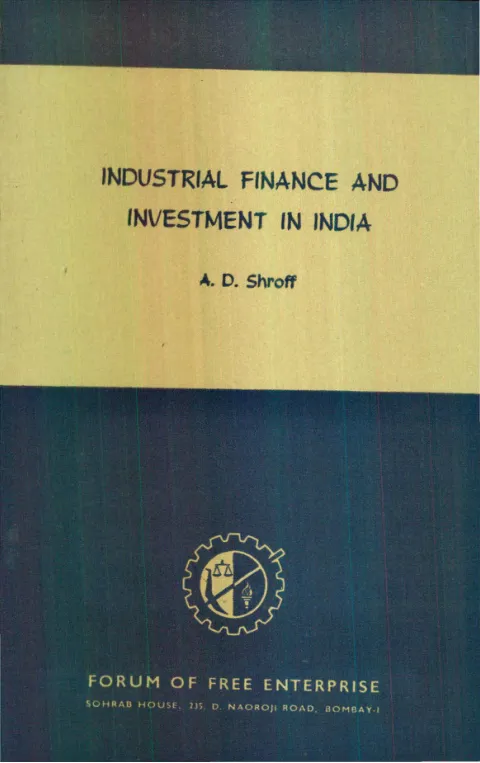
- Industrial Finance and Investment in India · 1961
- "He sharply rebukes the Prime Minister's remark that stock exchanges should be abolished, arguing that in any non-communist economy they remain indispensable for the liquidity and mobility of capital." · Shroff's polemical broadside is aimed at Nehru's anti-stock-exchange remark
- "Shroff defends the stock exchange and rebukes Nehru's remark that exchanges should be abolished, arguing that liquidity of capital is indispensable to a non-communist economy." · key-points restatement that names Nehru explicitly as the rebuked figure
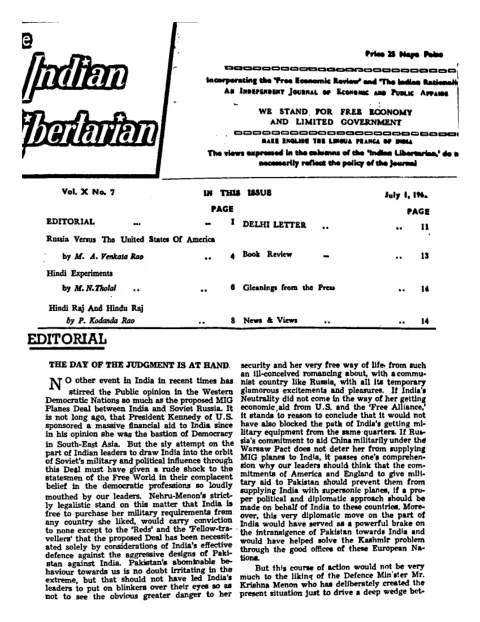
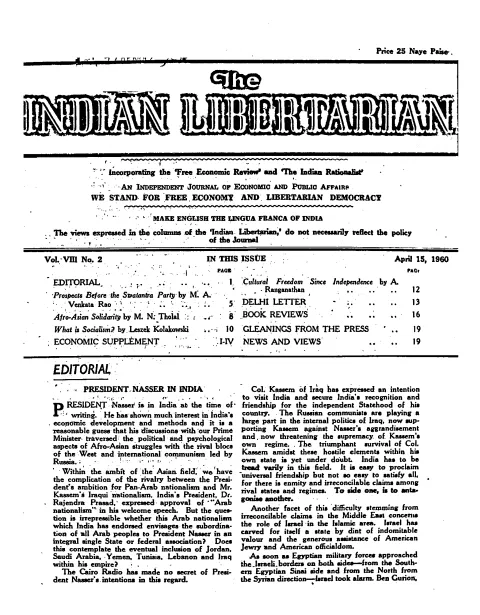
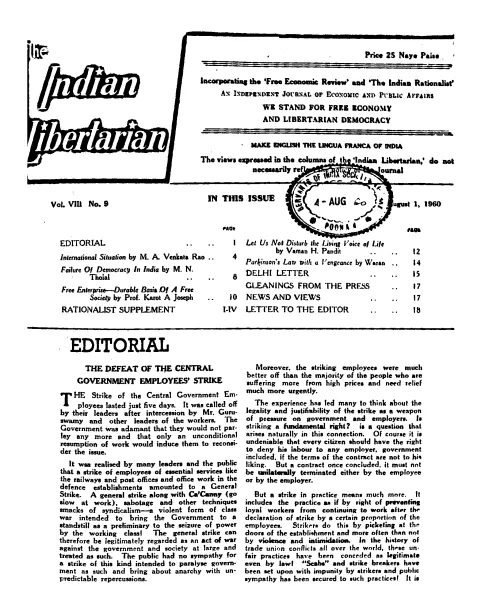
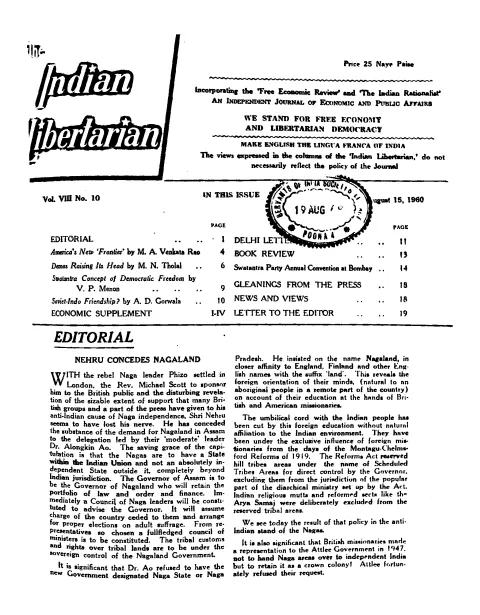
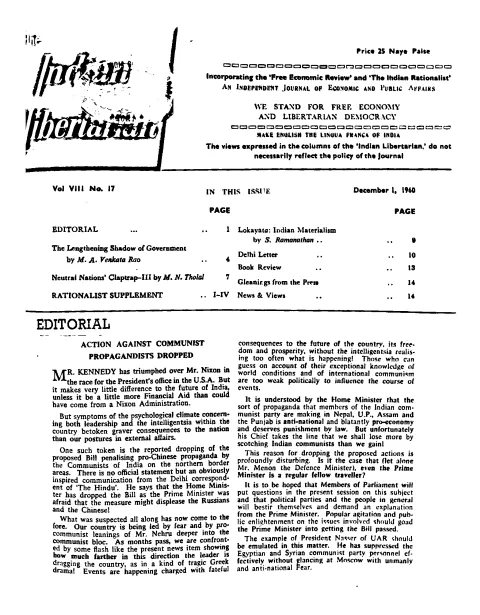
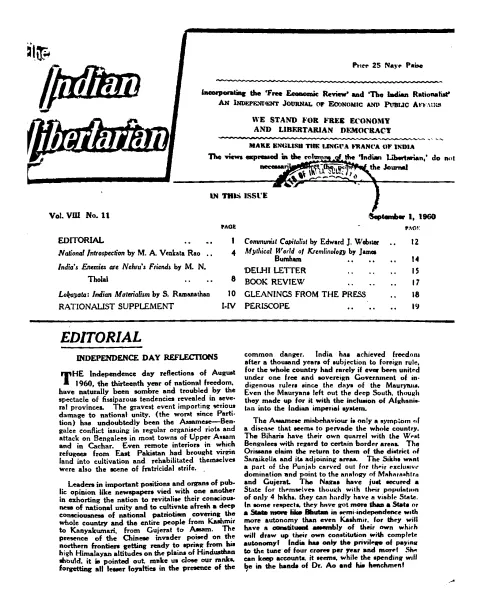
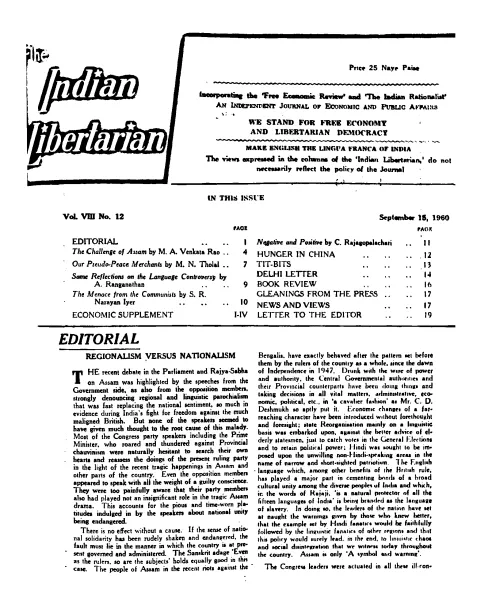
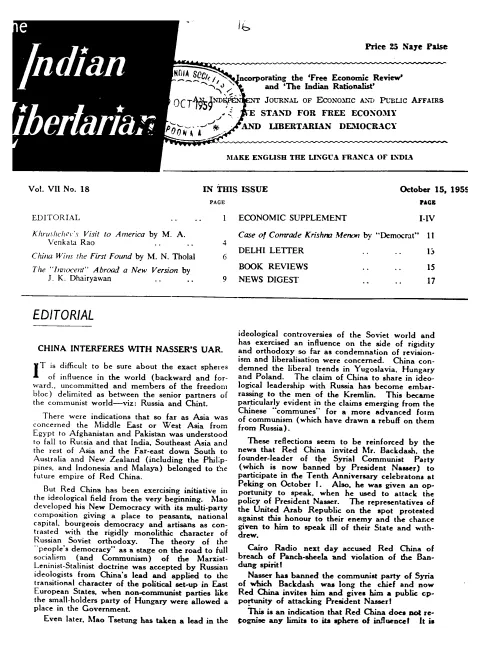
- The Indian Libertarian · 1960
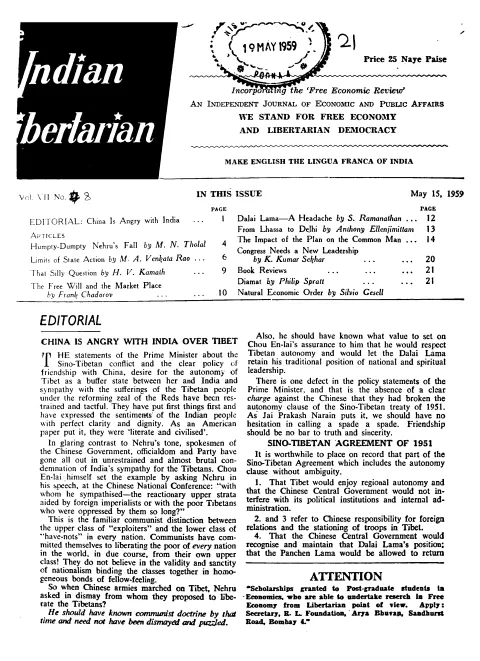
- "Nehru is criticised for advising the Governor and Chief Minister in the Nanavati matter rather than respecting judicial independence" · editorial bullet; charges Nehru with executive overreach into a judicial process
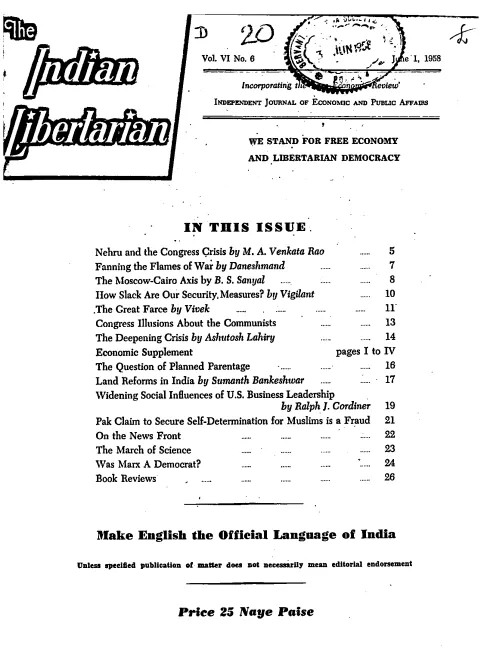
- "Venkata Rao blames Nehru's ideological pro-China bias for India's failure to respond adequately to Chinese aggression on the northern border" · Venkata Rao essay summary; frames Nehru's China policy as ideologically captured
- For Freedom, Farm And Family · 1959
- "the broader Nehru-government policy are pushing India toward Communist dictatorship by destroying peasant proprietorship" · Masani's identification of Nehru-government policy as the primary driver of India's collectivist drift
- INDIAN SHIPPING · 1959
- "M. A. Master's 1959 lecture, delivered under the auspices of the Forum of Free Enterprise in Bombay on 23 July 1959 and published as a booklet, is a polemical history of Indian shipping mounted in direct response to Jawaharlal Nehru's pronouncements that the public sector would be the 'basic, strategic, important and advancing sector' of the economy." · Nehru's commanding-heights doctrine is the explicit polemical target of Master's lecture
- "Frames the lecture as a response to Nehru's 1959 statements that the public sector will be 'the basic, strategic, important and advancing sector,'" · key-points restatement of the Nehru-as-target framing
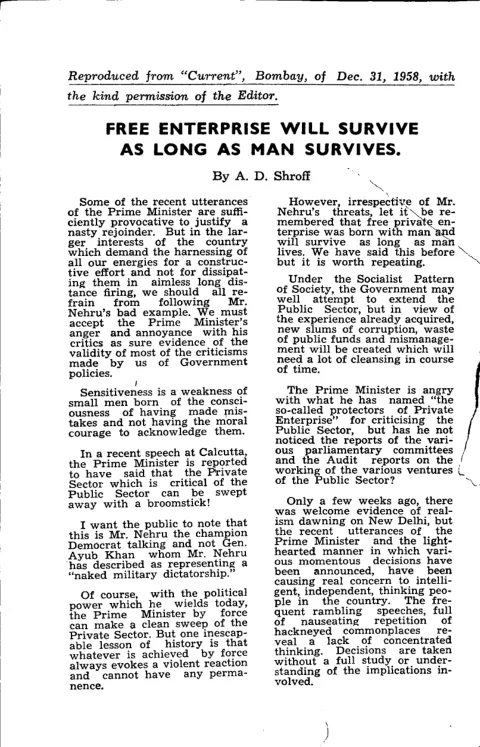
- FREE ENTERPRISE WILL SURVIVE AS LONG AS MAN SURVIVES · 1958
- "A. D. Shroff replies to a recent batch of speeches by Prime Minister Jawaharlal Nehru that attacked the private sector, in particular a Calcutta address in which Nehru reportedly said critics in the Private Sector 'can be swept away with a broomstick.'" · opening summary names Nehru's Calcutta address as the trigger for the entire pamphlet
- "Reads Nehru's sensitiveness as small-man weakness and as inconsistent with his own labelling of Ayub Khan's regime a 'naked military dictatorship.'" · Shroff uses Nehru's own anti-Ayub rhetoric to expose what he sees as a democratic double standard
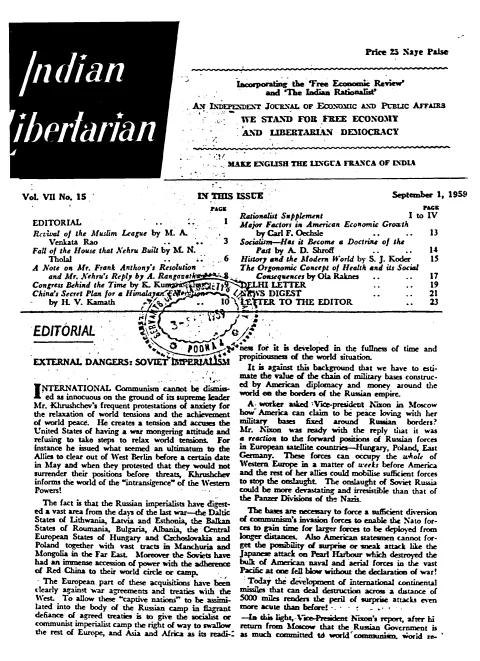
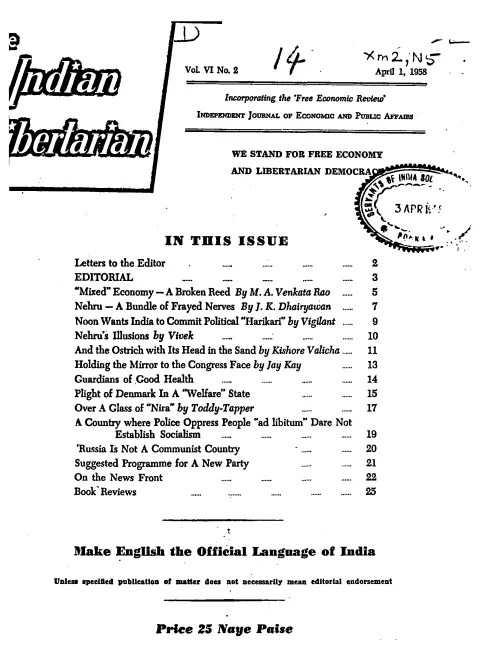
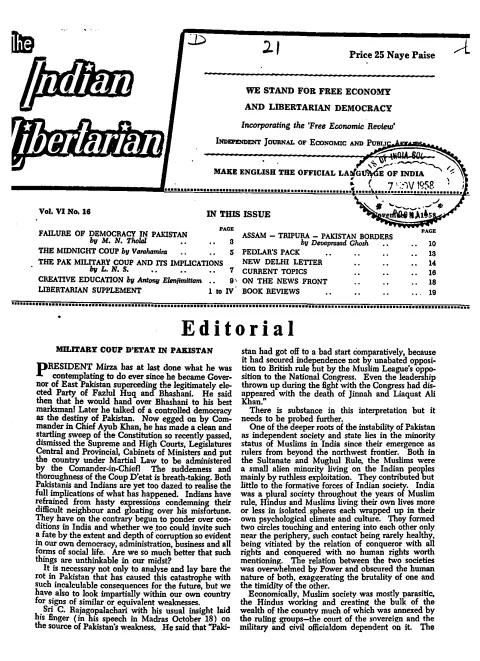
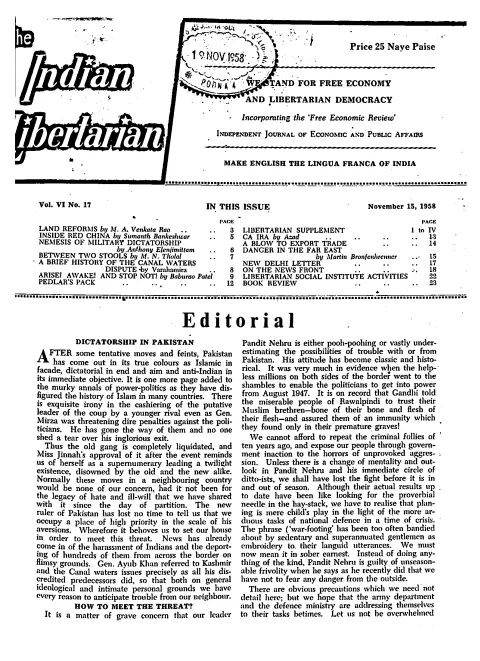
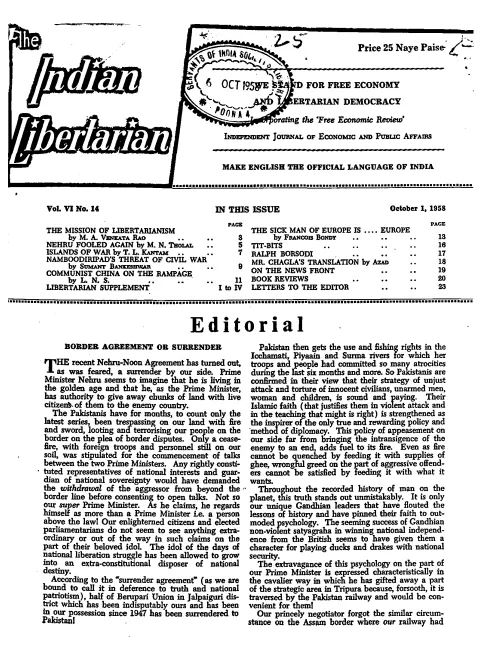
- The Indian Libertarian · 1958
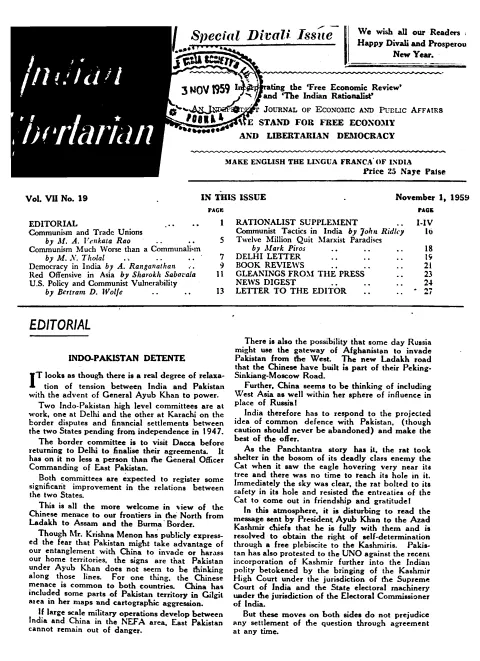
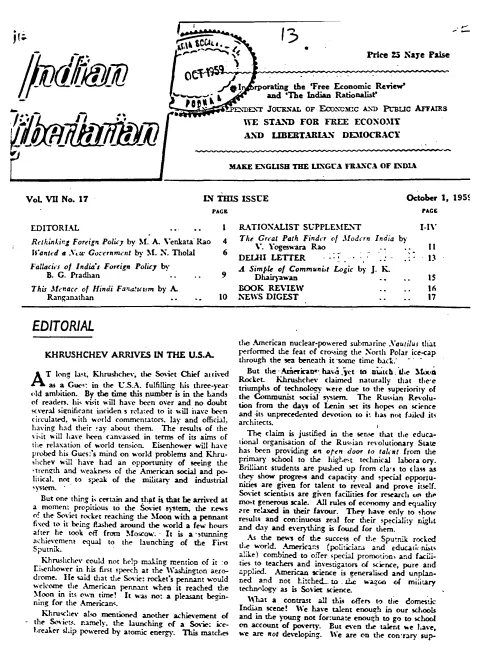
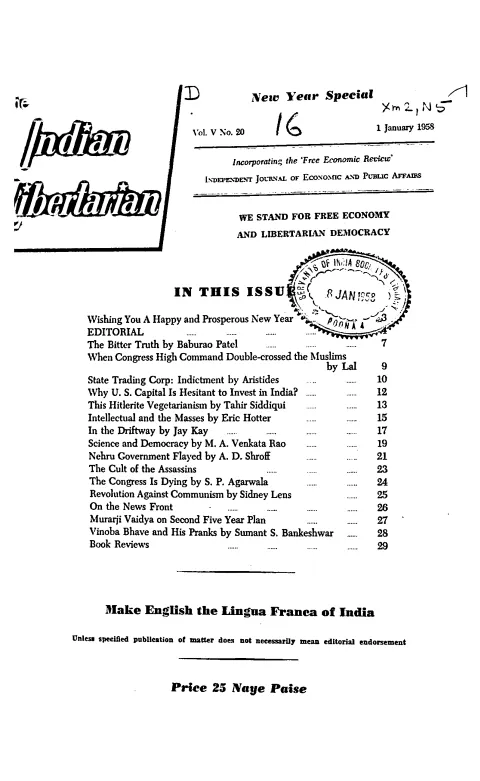
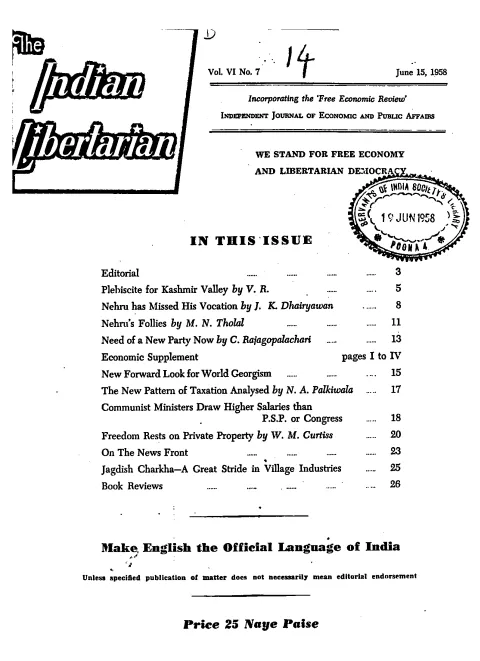
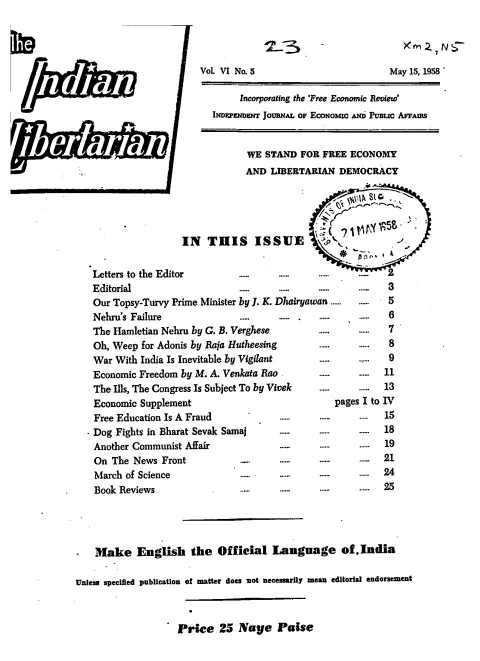
- "a sustained libertarian-classical-liberal critique of Nehru's economic and foreign policies" · editor's framing makes Nehru the issue's chief adversary
- "The article cites Nehru's own diary entries from the Ahmednagar Fort imprisonment period, in which Nehru confessed to having a dictatorial temper." · Dhairyawan's central evidentiary move — turning Nehru's own writings against him
- FREE ENTERPRISE IN A FREE SOCIETY · 1957
- "the broader 'socialistic pattern of society' line emanating from Nehru's government" · Nehru's government named alongside TTK's budget as the ideological provocation for Onlooker's essay
- The Indian Libertarian · 1957
- "whether Prime Minister Nehru's intervention in state elections is appropriate" · Vivek's rhetorical question framing Nehru's campaigning as a misuse of office
- "Nehru's active campaigning in state elections is questioned as an inappropriate use of Prime Ministerial authority." · key-points restatement of the Vivek critique
- FREE ENTERPRISE AND DEMOCRACY · 1956
- "Framed as a direct response to Nehru's Calcutta press-conference claim that democracy and unrestricted private enterprise are incompatible, and to the official 'Socialist pattern of Society' goal." · opening framing of the pamphlet's polemical occasion
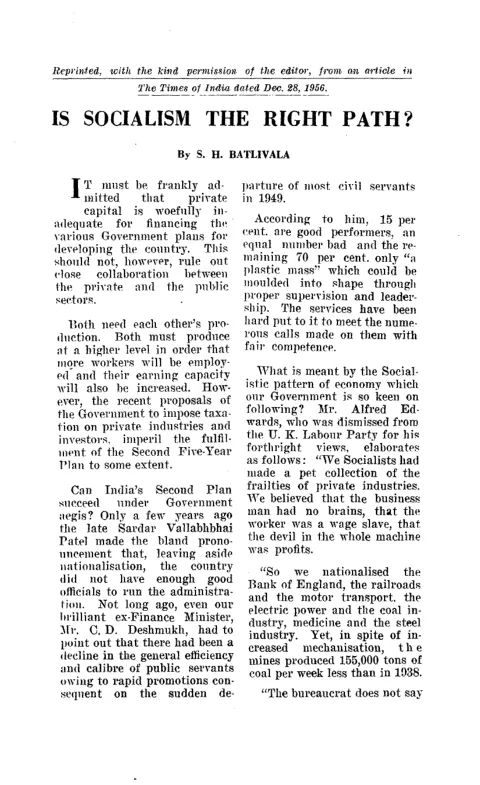
- IS SOCIALISM THE RIGHT PATH? · 1956
- "a back-cover quotation from Jawaharlal Nehru affirming that material progress must not come "at the expense of the spirit of man" — turned, by placement, into an implicit rebuke of the very planning enthusiasm Nehru himself led." · Nehru's own words are enlisted against the planning regime he champions
- "The pamphlet closes with the Forum of Free Enterprise imprint and a Nehru epigraph on the back leaf insisting material progress must not be bought at the expense of "the spirit of man" — positioned to enlist Nehru against the planning regime he himself champions." · key-points restatement of the Nehru back-cover device
- A Review of the Rupee Trade · n.d.
- "Dr. Jayashekar, a Jawaharlal Nehru University faculty member, audits India's two-decade experience under the Rupee Payments Arrangement with the Soviet Union" · opening line of the summary; Nehru's name appears as the university's namesake, anchoring Jayashekar's institutional affiliation
- COMPENSATION OR EXPROPRIATION? · n.d.
- "he reads Prime Minister Jawaharlal Nehru's 10 September 1949 Constituent Assembly speech against later practice — Nehru himself, Cooper notes, accepted that 'full compensation should be paid to small owners'" · Nehru's own words are turned against the constitutional amendments that gutted property rights
- "Cites Nehru's 10 September 1949 Constituent Assembly speech to show that the original constitutional intent included 'just and equitable compensation' even for large properties" · Nehru as a witness against his own government's later expropriation logic
- Forty-Three Years of Independence · n.d.
- "Delivered as the Jawaharlal Nehru Memorial Lecture at Trinity College, Cambridge on 7 November 1990 and published by the Forum of Free Enterprise" · opening sentence locates the lecture under Nehru's commemorative auspices, against whose planning legacy Palkhivala will argue
- "Frames the lecture as Nehru Memorial Lecture (Cambridge, 7 Nov 1990) reviewing forty-three years of Indian independence" · key-points reiteration of the Nehru-memorial framing

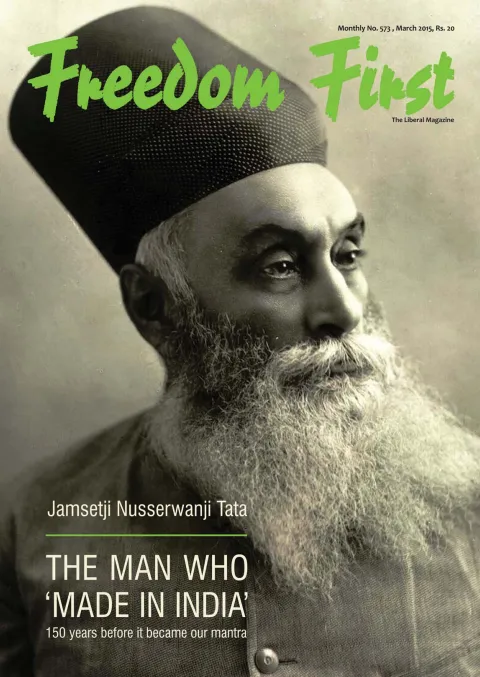

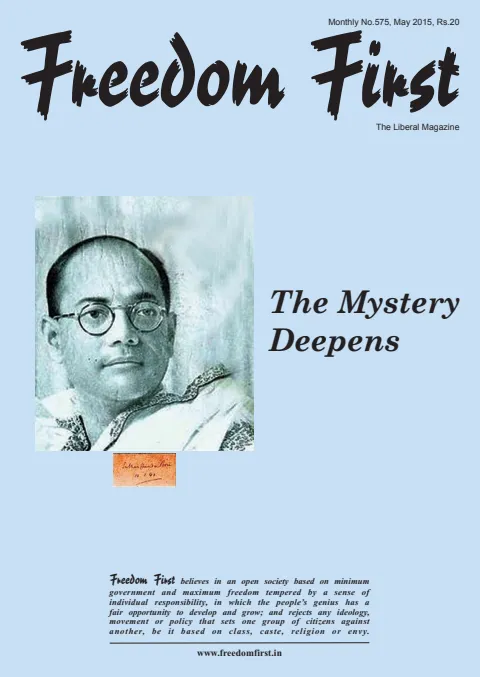













Opinion pieces (11)
- Acharya N G Ranga: The Farmer’s Friend and Swatantra Party Stalwart
- "Nehru's socialist orientation led to enacting policies encompassing central planning, land redistribution and state control over key industries." · Nehru's statist agenda is the foil against which the Swatantra Party's free-market programme is defined
- Freedom First's Resistance to Indira Gandhi's Emergency
- "Indira Gandhi and her sycophants' bid to overturn constitutional provisions was a turn away from the vision of Jawaharlal Nehru, Bhimrao Ambedkar, and Sardar Patel" · Masani's rhetorical deployment of Nehru's constitutional legacy to delegitimise the Emergency amendments
- India's Nuclear Ambitions: Minoo Masani as a Liberal Peacenik
- "PM Nehru was a proponent of nuclear disarmament but also endorsed the peaceful use of nuclear energy for development" · establishing Nehru's dual position as the origin point of India's nuclear trajectory
- Hamid Dalwai and the Muslim Satyashodhak Mandal
- "Jawaharlal Nehru's government introduced and passed the Hindu Code Bill in 1955-56, defying the Hindu orthodoxy; however, his government couldn't reform the unjust laws affecting Muslim women" · identifying Nehru's failure to extend secular reform to Muslim personal law as the gap the Mandal sought to close
- "Nehru clarified his intentions of introducing a uniform civil law applicable to both Hindus and Muslim in the future as soon as the community was amicable to such an idea" · Nehru's stated commitment to uniform civil code deferred by political calculation
- Gurcharan Das: Champion of liberal ideals
- "India's quest for economic equality during the Nehru era severely impacted the economy." · frames the post-independence socialist programme as a Nehru-era project that produced economic damage
- "Nehru's socialistic tendencies hurt India economically." · the bluntest line on Nehru, directly attributing economic stagnation to his ideological inclinations
- Homi Mody’s Liberalism: From Pro-Business to Pro-Market
- "In January 1956, he was part of the delegation of industrialists to the PM Nehru" · Mody's direct engagement with Nehru to register business concerns about the planning regime
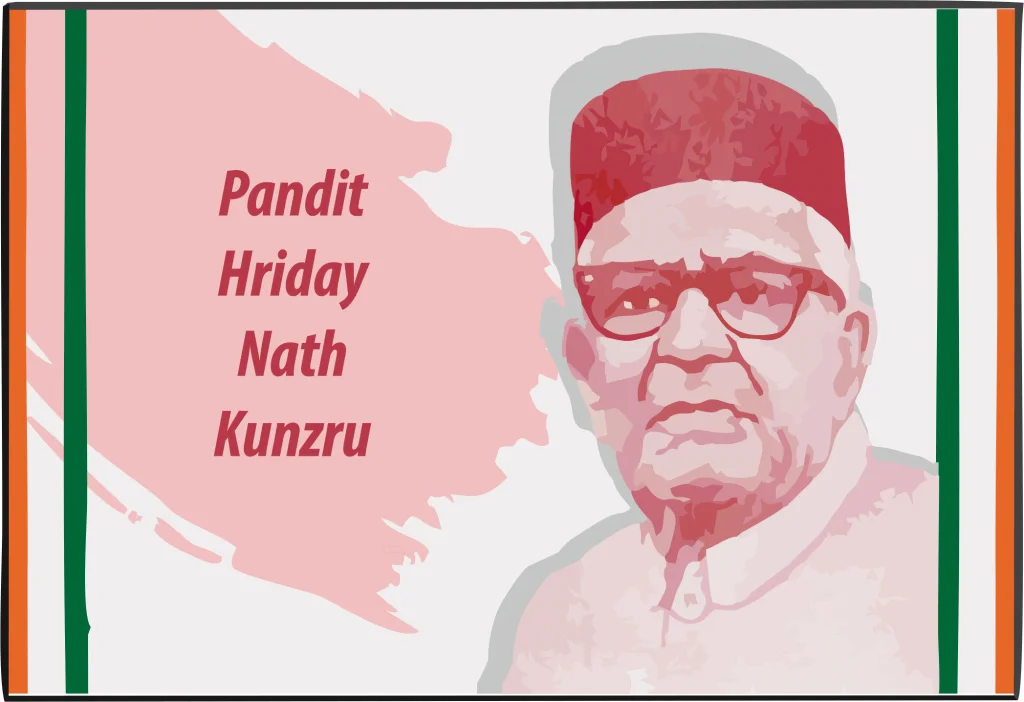
- Hriday Nath Kunzru, The Liberal Institution Builder
- "The project also had the support of Pandit Nehru who sought foreign policy scholars to steer India in international affairs" · Nehru's backing for Kunzru's ISIS project as an area where liberal institution-building and state interest converged
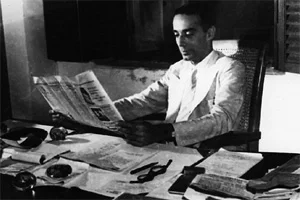
- Minoo Masani : From Socialism to Liberal Swatantra Party
- "he even urged Pandit Nehru to visit the Soviet Union when the two met in London in 1927." · first encounter between the two, showing Masani's early influence on Nehru
Show all 11
- Rajaji's Views on Nuclear Bomb
- "While the internationalist vision of Nehru and his advocacy of non-alignment is well-recognized and deservedly so, the same is not the case with his comrade-turned-opponent C Rajagopalachari" · sets up Nehru's recognized internationalism as a foil for Rajaji's neglected anti-nuclear stance
- Rajkumari Amrit Kaur: Philanthropy and Politics
- "the first woman to hold a Cabinet rank in Nehru’s Cabinet post-Independence" · situates Amrit Kaur's historic ministerial appointment within Nehru's government
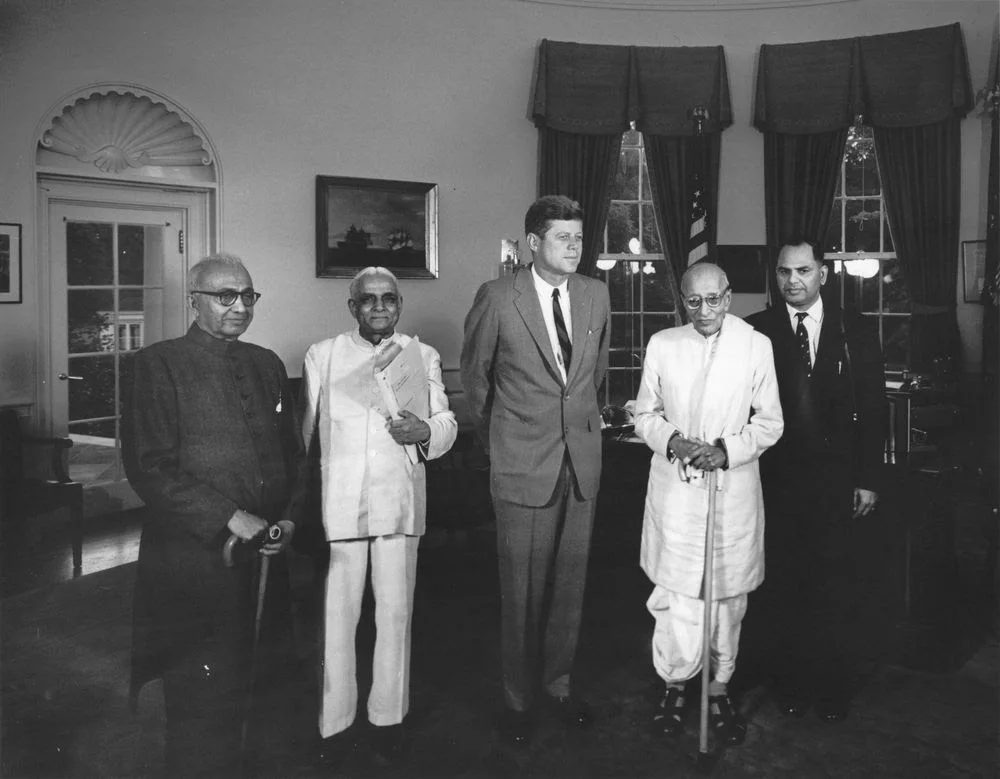
- Swatantra Party : A Big Tent Challenge to Congress Hegemony
- "What enabled this coalition of disparate groups was the Nehruvian Congress' grip over political power which effectively turned India into one-party democracy and a radical left drift in economic policy." · identifies Nehru's policy agenda as the direct catalyst for the Swatantra coalition
Excerpts (33)
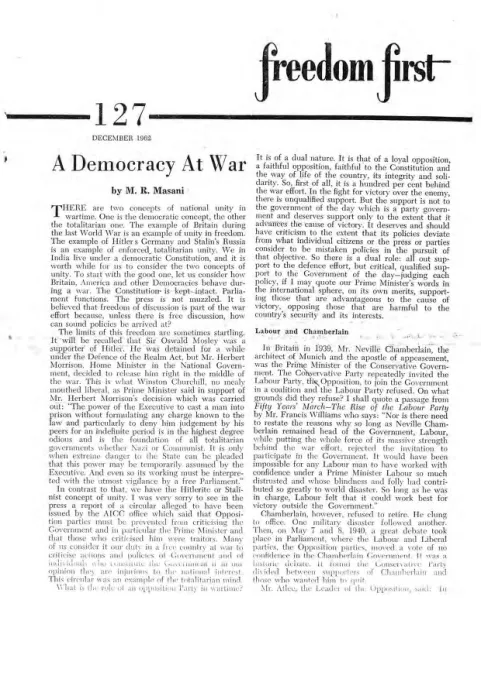
- A Democracy at War
- "as handled by the then Prime Minister Jawaharlal Nehru and Defence Minister VK Krishna Menon. In a democratic polity, it is obvious that matters of national security in times of crisis would warrant public scrutiny of the government's response." · Nehru is named as the political leader whose decade of appeasement policies led to the 1962 defeat
- Agricultural Policy of Swatantra Party
- "The Congress under the lead of Mr Nehru has contented itself with the statement that the subject was decided long ago by Congress resolutions from the days of the Karachi session." · Nehru's Congress is criticised for refusing democratic debate on agricultural policy
- THE APPLICATION OF SCIENCE AND TECHNOLOGY TO SOCIO-ECONOMIC DEVELOPMENT
- "it is salutary to recall that in l958 the late Prime Minister, Mr. Jawaharlal Nehru, enunciated the Scientific Policy Resolution to Parliament, to affirm its faith in the vital role of science and technology in the transformation of our society." · Nehru's policy declaration is invoked to establish the baseline against which subsequent science-policy gaps are measured
- Caste System, Greatest Curse of India
- "In the words of our Prime Minister Nehru – "there can be no equality of status and opportunity within its framework, nor can there be political democracy and much less economic democracy." · Kulkarni mobilises Nehru's authority for the essay's closing demand
- "Between these two conceptions, conflict is inherent. Only one of them can survive" (J. Nehru, 'Discovery of India')." · the Discovery of India citation seals the argument that caste and democracy cannot coexist
- Censorship and the Law of Inexorability
- "That it was banned by the government run by Jawaharlal Nehru, the quintessential liberal, makes the assault on creative freedom even more deplorable." · Nehru's censorship act is used to show that restrictions on artistic freedom are not unique to authoritarian governments — even liberal ones capitulate
- Economic Reforms In India: Where Are We And Where Do We Go?
- "He was associated with Pandit Jawaharlal Nehru as early as 1938 when he served with him in the National Planning Committee." · Nehru is invoked to situate Shroff within the intellectual milieu of Indian economic planning before the two diverged
- The Education of the Electorate
- "His only claim was that he could see Pandit Nehru at any time of the day without a formal engagement for an interview!" · The candidate's boasted access to Nehru is used to satirise the patronage-driven rather than merit-driven selection of political representatives
- For Freedom, Farm and Family
- "we have come to feel that as long as Mr Nehru is there, none of us need worry about anything." · Rajagopalachari's critique of citizen complacency — Nehru's prestige becomes the symptom of lost democratic habit



Show all 33
- Forty-Three Years of Independence
- "Jawaharlal Nehru made his famous speech wherein he referred to India keeping her tryst with destiny" · Palkhivala opens by invoking the founding moment of independence through Nehru's voice
- "I would be dishonouring the memory of Pandit Nehru and of his mentor, Mahatma Gandhi, if I try to be economical with the truth." · Palkhivala pledges fidelity to Nehru's legacy as his warrant for frank criticism
- Fundamental Rights: Our Protection Against Tyranny
- "When Shri Nehru said that he had not made the Constitution 'so rigid', he meant surely that he had made it 'partly rigid'" · Nehru's words are used to establish that the founders never intended unlimited amendability of Fundamental Rights
- The Role of Ideas in Politics
- "Nehru or Gandhi are riding rough-shod over our lives creating havoc and seem to be well-nigh uncontrollable." · Nehru and Gandhi are paired as dominant ideological forces whose misapplied ideas distort Indian political discourse
- India: Seeing the Future in its Past
- "a clear legacy of Pandit Nehru's emphasis on science, higher education, and also leading-edge technologies for the public sector." · Rajan credits Nehru's educational investments as the one Nehruvian policy legacy that genuinely strengthened India's human capital
- Is Socialism Outdated?
- "Prime Minister Nehru assured the public that "there was no immediate question of bank nationalisation."" · Nehru's assurance is the baseline against which Palkhivala measures the subsequent ministerial contradictions
- Is This The Freedom We Fought For?
- "when Pandit Nehru was the Prime Minister, he picked up the telephone and spoke to the Speaker Mr. Mavalankar" · Nehru's respectful treatment of the Speaker's independence is held up as the constitutional ideal that present politicians have abandoned
- Minoo Masani on Citizenship
- "two parties be formed – a radical one under Jawaharlal Nehru, a conservative one under Vallabhbhai Patel. Both sides rejected the advice because both wanted to be in office at the same time" · Gandhi's rejected proposal for post-Independence politics, used to diagnose the decay in Indian democracy
- N. A. Palkhivala's Views on Socialism
- "On May 22, 1964 Prime Minister Nehru assured the public that "there was no immediate question of bank nationalisation."" · Nehru's public assurance is cited to show the inconsistency between different ministers' statements
- National Priorities for 1970
- "It is interesting that Mr Jawaharlal Nehru, while speaking in Kathmandu in the middle fifties, gave the answer to Mr Jagjivan Ram when he said, "Socialism in a poor country means only the distribution of poverty."" · Nehru's own line is turned against the Bombay session's redistribution rhetoric
- "a similar attack was started by Mr Jawaharlal Nehru after the Nagpur Resolution in 1959. That, in fact, was the provocation for the coming into existence of my Party." · Masani identifies the Nagpur Resolution as Swatantra's founding antagonist, making Nehru the original target the new attack revives
- Pitfalls in Our Industrial Policy
- "Prime Minister announced on the 9th November 1954, before the National Development Council, that “the means of production should be socially owned, and controlled for the benefit of society as a whole.”" · Nehru's declaration cited as the germ of the economic revolution that displaced private enterprise
- "Prime Minister remarked in the Lok Sabha- “We cannot progress except by State initiative and by enlarging the public sector and except also by controlling the private sector.”" · further quote establishing Nehru's role as architect of the socialist industrial policy the essay critiques
- Population Causes Prosperity
- "Instead of seeing the future of India in terms of thousands of self-governing and self-sufficient village republics (the Gandhi-Nehru vision), we can see India as an urban civilisation." · the Gandhi-Nehru vision is the ideological foil against which Chakraverti advances his pro-urbanisation thesis
- Rajaji- Man with a Mission
- "Congress had become the largest monolithic party and Nehru its unquestioned leader. There was no one in Congress to criticize him. Even if there was criticism, Nehru resented and silenced the critics." · Nehru's political monopoly is identified as the structural condition that made Rajaji's opposition project necessary
- Sharad Joshi on Liberalism in India
- "Nehru was himself full of social effervescence since his visits to the USSR." · Joshi traces how Nehru's socialism came to dominate over the liberal platform in the independence movement
- "Rajaji, who had a very high standing among the followers of Gandhi and who became the first Indian Governor General of independent India, had correctly foreseen the disaster that Nehru's license-permit quota Raj would produce." · Nehru's economic legacy identified as the failure that Rajaji's Swatantra Party sought to reverse
- Sikkim – Through Other Eyes
- "The most influential and eloquent proponents of this variant of Indian exceptionalism included Pandit Nehru, VK Krishna Menon, Indira Gandhi, KM Panikkar." · Nehru named as a leading advocate of non-alignment and anti-colonial foreign policy rhetoric
- Soviet Dissidents, Detente and Liberty
- "conflict between two strong versions of nationalism (Jawaharlal Nehru)." · Nehru's interpretation of the Cold War cited as an alternative framing to the dominant liberal-vs-communist explanation
- The Education of the Electorate
- "His only claim was that he could see Pandit Nehru at any time of the day without a formal engagement for an interview!" · Nehru used as an index of political patronage, access to Nehru stood in place of merit for candidacy
- The Essence of Democracy
- "control of the dominating heights of the economy, as Jawaharlal Nehru grandiloquently described it, through giant industrial units" · Masani critiques Nehru's statist economic language as intellectual cover for authoritarian economic policy
- The Individual and Indian Constitution
- "Pandit Nehru has violently opposed the idea of the Supreme Court being the final arbiter on the quantum of compensation on the plea that the Supreme Court ought not to make itself a third chamber of legislature." · Nehru's opposition to judicial oversight used as an example of executive overreach threatening constitutional balance
- The Light of the Constitution
- "Pandit Jawaharlal Nehru said: "A fundamental right should be looked upon, not from the point of view of any particular difficulty of the moment, but as something that you want to make permanent in the Constitution."" · Nehru's own Constituent Assembly words invoked to show the 1976 amendments betray his original intent
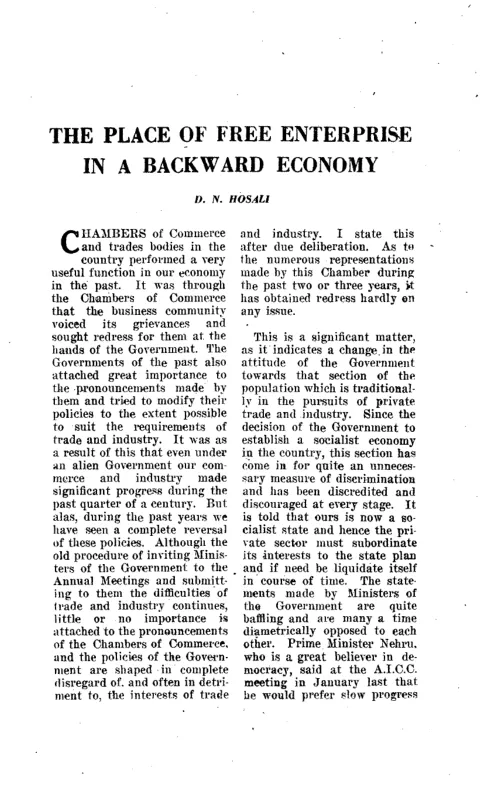
- The Place of Free Enterprise in a Backward Economy
- "Prime Minister Nehru, who is a great believer in democracy, said at the A.I.C.C. meeting in January last that he would prefer slow progress to risking individual independence for rapid progress." · Nehru quoted to expose the contradiction between his democratic rhetoric and his government's economic regimentation
- The Principle of State Interference
- "of which the masterpilot is Jawaharlal Nehru, have been based on European experience and European speculation." · Nehru named as the architect of the imported socialist revolution the author is critiquing
- "The socialistic pattern of society that is being imposed on our people by the "idealism" of Jawaharlal Nehru is in fact the end-result of a distorted reading of Eur-american experience and thought" · Nehru's socialism characterised as a misreading of European history
- Nani Palkhivala: The Task Before A Free People
- "Jawaharlal Nehru's description of the condition of India under British domination must have come home with the atrocities of the Emergency to countless people:" · Palkhivala uses Nehru's own words about colonial oppression to indict the Emergency as a form of indigenous colonialism
- The US-India Alignment in Cold War
- "the foreign policy conduct of India's first Prime Minister Jawaharlal Nehru" · framing of the editorial's central critique
- "Mr Nehru would then be not justified in making a fine metaphysical distinction after the manner of a Vedantin" · direct criticism of Nehru's post-war philosophical rationalisation of Chinese aggression
- To Prosperity through Freedom
- "Today we have a similar situation in the country with Nehru as supreme leader" · comparison of Congress under Gandhi and Nehru as examples of uncritical ideological deference
- "Nehru has the vision of socialised society with industrialisation carried to its apogee, full of science and technology" · Nehru's vision contrasted with Gandhi's and with Swatantra's free-market alternative
- What is Fascism? By Minoo Masani
- "as Jawaharlal Nehru once wrote, "Fascism makes of the State a God on whose altar individual freedom and rights must be sacrificed"" · Masani cites Nehru's formulation as the pithy encapsulation of fascism's essential character