interview
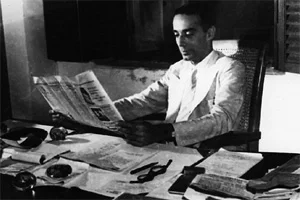
Minoo Masani's Disenchantment with the Soviet Economic Model - In Coversation with Zareer Masani
By Minoo Masani
2018
Summary
Zareer Masani recounts his father Minoo Masani's two visits to the Soviet Union in the 1920s and 1930s. Unlike contemporaries such as Krishna Menon and Jawaharlal Nehru, Minoo Masani saw past the surface of the Soviet experiment, recognizing its dictatorial one-party character and glimpsing the early evidence of Stalin's purges and gulags. He returned to India around 1930 as a committed socialist but firmly anti-communist, later articulating his break with the Soviet model in his book Socialism Reconsidered, which examined the role of communists in India and called for a rethinking of socialism itself.
Key points
- Minoo Masani made two trips to the Soviet Union, one in the 1920s and one in the 1930s.
- He was initially sympathetic to the Russian experiment but observed it being run as a dictatorial one-party state.
- He saw the tip of the iceberg of Stalin's purges and gulags before their full extent was known.
- Krishna Menon and Nehru, on their own visits, did not register these same warning signs.
- Masani returned to India around 1930 as a socialist but explicitly anti-communist.
- He authored Socialism Reconsidered, laying out his disenchantment with the Soviet model.
- The book also addressed the role of communists in India and the need to rethink socialism.
Transcript
Minoo Masani’s Disenchantment with the Soviet Economic Model - In Conversation with Zareer Masani
Source: https://www.youtube.com/watch?v=hLJXAWvmi18 Duration: 117.2s
Zareer Masani (00:05): He made a couple of trips to Russia. I think one in the nineteen twenties and one later in the nineteen thirties. And on both occasions, he traveled quite widely and was sympathetic to the Russian experiment, but noticed all kinds of things which people like Krishna Menon and Nehru didn’t when they went. I mean, he noticed the fact that it was being run as a dictatorship, one party state, that, you know, there was a lot of one didn’t know the full extent then of Stalin’s purges and the gulags and how many people were killed, but he saw the tip of the iceberg and didn’t like what he saw. So he came back to India around 1930 as a socialist but quite an anti-communist socialist. He also wrote a book called Socialism Reconsidered, which was his, you know, reasons for disenchantment with the Soviet model and Stalin’s purges and why what the role of the communists in India and why socialism itself needed to be reconsidered.
Notable passages
"he noticed the fact that it was being run as a dictatorship, one party state"
"one didn't know the full extent then of Stalin's purges and the gulags and how many people were killed, but he saw the tip of the iceberg and didn't like what he saw"
"He also wrote a book called Socialism Reconsidered, which was his, you know, reasons for disenchantment with the Soviet model"
"he noticed all kinds of things which people like Krishna Menon and Nehru didn't when they went"
"he noticed all kinds of things which people like Krishna Menon and Nehru didn't when they went"
"but he saw the tip of the iceberg and didn't like what he saw"
Metadata and summary are AI-extracted from the source PDF and reviewed for editorial accuracy. The original work is available via the Read PDF tab above (where present); paragraph-level citation inside the PDF is deferred to a future engagement.