periodical issue
Freedom First
Women's Reservation: The Liberal Dissent
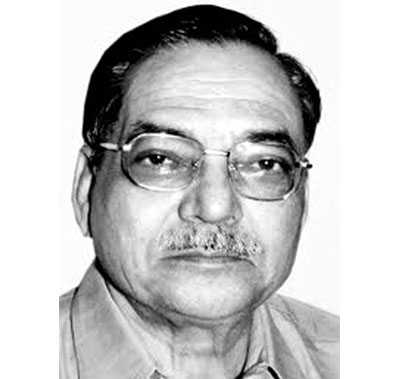
By Sharad Joshi
Publishers: Indian Committee for Cultural Freedom (ICCF), 3rd Floor, Army & Navy Building, 148, Mahatma Gandhi Road, Mumbai 400 001. Phone: +91 (22) 2284 34 16. E-mail: [email protected]. Published by J. R. Patel for the Indian Committee for Cultural Freedom (ICCF) and printed by him at Union Press, 13 Homji Street, Fort, Mumbai 400 001. · Mumbai · 2010
40 pages

Freedom First
Summary
In the rendered pages, the April 2010 issue of Freedom First is dedicated to the memory of Amlan Datta and is organized around a cover-feature dissent from the Women’s Reservation Bill. In the rendered pages, the editorial note and contents frame the issue as a liberal response to well-intentioned but coercive policy: Sharad Joshi and Meera Sanyal both accept the need for more women in public life while rejecting statutory seat reservation as the right instrument.
In the rendered pages, the issue also ranges across literary memorials, Maharashtra’s fiftieth anniversary, classic anti-colonial pamphlets, national security, and anti-communist archival memory. The opening chunk includes Aroon Tikekar’s tribute to Vinda Karandikar, Sharad Joshi’s long critique of Maharashtra’s political and social trajectory after 1960, Sethu Das’s comparison of Gandhi’s Hind Swaraj with Thomas Paine’s Common Sense, Ashok Karnik’s point-counterpoint notes on Pakistan talks, Naxalite violence, and the Peddar Road flyover, and a reprint page linking April 1953 Freedom First material with Amlan Datta’s later critique of the Left Front in West Bengal.
Key points
-
Sharad Joshi’s “The Liberal Dissent” explains his Rajya Sabha opposition to the Women’s Reservation Bill, supporting greater women’s political representation while rejecting its lottery-cum-rotation design and proposing multi-seat constituencies guaranteeing a vote for a woman candidate instead.
-
Meera Sanyal endorses more women MPs and MLAs but argues reservation is the wrong method, drawing on banking-sector gender-diversity practices to propose a voluntary political talent pipeline for women candidates.
-
Aroon Tikekar’s tribute to Marathi poet Vinda Karandikar remembers his frugality, generosity, and role alongside Vasant Bapat and Mangesh Padgaonkar in popularising poetry recitation across Maharashtra, as well as his translations of King Lear and Aristotle’s Poetics.
-
Sharad Joshi’s “Maharashtra at Fifty” argues the state’s golden-jubilee should be judged against the original Samyukta Maharashtra movement’s aspirations, criticising the economic exploitation of Vidarbha and Marathwada, farmer distress, and the decline of genuine trade unionism.
-
Sethu Das compares Gandhi’s Hind Swaraj with Thomas Paine’s Common Sense as anti-colonial pamphlets that challenged imperial power, linking Gandhi’s non-violence to Tibetan exile politics through Samdhong Rinpoche.
-
Ashok Karnik’s “Point Counter Point” weighs the value of talks with Pakistan after 26/11, distinguishes state excesses from planned Naxalite violence, and debates whether local opposition should block the Peddar Road flyover.
-
A reprint section revisits April 1953 Freedom First material on communist news suppression alongside Amlan Datta’s 2004 letter attributing the Left Front’s long rule in West Bengal to Congress’s organisational weakness and ambivalence toward the CPI(M), to whose memory the issue is dedicated.
Essays
Between Ourselves
In the rendered pages, “Between Ourselves” introduces the issue’s central dissent on women’s reservation. The editor argues that Sharad Joshi and Meera Sanyal both recognize women’s under-representation but oppose legal compulsion by political parties, presenting reservations as counter-productive to democratic citizenship.
In the rendered pages, the note also looks ahead to Maharashtra and Gujarat’s fiftieth foundation day, recalls an early seminar on Maharashtra, promises further coverage, and corrects an earlier enumeration error about the publication year.
- Frames the Women’s Reservation Bill as a case where good intentions may produce bad institutional design.
- Presents Sharad Joshi and Meera Sanyal as liberal dissenters, not opponents of women’s representation.
- Rejects legally enforced reservations as injuring the democratic fabric.
- Connects the issue to Maharashtra’s fiftieth anniversary and to earlier Freedom First coverage.
From Our Readers
In the rendered pages, “From Our Readers” gathers letters responding to earlier articles on intelligence accountability, Mayawati, and attacks on Indian students in Australia. The intelligence letters press for accountable collection, collation, and dissemination while warning against either excessive secrecy or careless leakage.
In the rendered pages, other letters criticize the public cost of Mayawati’s statues and rallies, argue about racism and assimilation in Australia, and advertise the Hindi translation of the National Book Trust biography of Minoo Masani.
- Readers debate how India should hold intelligence agencies accountable without compromising operations.
- Several letters invoke the Henderson Brooks Report, Kargil, 26/11, and parliamentary oversight.
- A separate letter attacks Mayawati’s spending on statues and rallies as political self-display.
- Letters on Indian students in Australia dispute whether racism, assimilation, or Indian diplomatic weakness explains the attacks.
Vinda Karandikar - A Personal Tribute
By Aroon Tikekar
In the rendered pages, Aroon Tikekar’s tribute remembers Vinda Karandikar as a respected Marathi poet and litterateur, rationalist, philanthropist, translator, and public performer. Tikekar emphasizes Karandikar’s Konkan frugality, generosity, loyalty to poetry, and role in a trio with Vasant Bapat and Mangesh Padgaonkar that popularized poetry recitation across Maharashtra.
In the rendered pages, the continuation praises Karandikar’s translation craft, especially his work with Shakespeare’s King Lear and Aristotle’s Poetics, and closes by saying Marathi literary life is poorer after his death.
- Presents Karandikar as both literary figure and ethical personality.
- Highlights his donations to social causes and body donation after death.
- Credits the Karandikar-Bapat-Padgaonkar trio with making poetry recitation a major Marathi public form.
- Emphasizes Karandikar’s serious translation work and dramatic performance style.
The Liberal Dissent
By Sharad Joshi
In the rendered pages, Sharad Joshi’s “The Liberal Dissent” explains his Rajya Sabha opposition to the Women’s Reservation Bill. He argues that the goal of women’s political empowerment predates the bill and cites his own organizations’ support for all-women panchayat panels in Maharashtra, but rejects the bill’s lottery-cum-rotation design as dangerous for democracy and destructive of constituency nursing.
In the rendered pages, Joshi proposes a multiple-seat constituency alternative in which voters would have three votes, one for a woman candidate, and women could win either a general seat or a reserved seat. The accompanying SBP manifesto excerpt says reservation is not the answer and prefers proportional representation or party-list mechanisms over first-past-the-post seat reservation.
- Separates support for women’s representation from support for this particular reservation bill.
- Criticizes lottery-cum-rotation as weakening constituency service and democratic continuity.
- Argues the bill reflects lack of imagination and insufficient concern for women’s interests.
- Proposes multi-seat constituencies as an alternative that would guarantee a vote for a woman candidate.
- The SBP excerpt argues reservation has often empowered established elites rather than ordinary women.
Reservation is not the Right Way
By Meera Sanyal
In the rendered pages, Meera Sanyal endorses the desired outcome of more women MPs and MLAs but argues that reservations are the wrong route. She contrasts equality of opportunity with equity of outcomes, praises Sharad Joshi’s parliamentary dissent, and argues that women already in Parliament may inspire more women more effectively than the bill itself.
In the rendered pages, Sanyal draws on banking-sector gender diversity practices to propose a political talent pipeline: parties should induct, train, and promote women candidates voluntarily so that representation is more meaningful and less dependent on imposed quotas.
- Supports the objective of more women legislators while opposing reservation as a method.
- Frames reservations as divisive and merit-undermining.
- Uses banking-sector diversity as an analogy for creating a pipeline of women leaders.
- Argues political parties should take affirmative action voluntarily through recruitment and training.
Maharashtra at Fifty
By Sharad Joshi
In the rendered pages, Sharad Joshi’s “Maharashtra at Fifty” argues that the state’s golden-jubilee review should ask whether the aspirations behind the Samyukta Maharashtra movement were fulfilled and whether Maharashtra, Marathi language, and Marathi people have actually progressed. He warns that official reviews may become rhetoric rather than self-examination.
In the rendered pages, Joshi recounts the Samyukta Maharashtra agitation, the role of poets and workers, the incomplete realization of a larger Maharashtra, and what he sees as the smothering of Vidarbha, the decline of genuine trade unionism, farmer distress, language decay, corruption in education, caste politics, law-and-order deterioration, and the suppression of independent women’s movements. The essay concludes that five decades of statehood have produced broad decay rather than the promised flourishing.
- Calls for Maharashtra’s fiftieth anniversary to be judged against the movement’s original aspirations.
- Criticizes official commemorations as likely to produce empty rhetoric.
- Argues that Vidarbha and Marathwada were economically exploited by western Maharashtra and Mumbai.
- Links cooperative politics, cotton monopoly procurement, and farmer suicides to state failure.
- Says Marathi language, education, labour, women’s movements, and public order all declined after state formation.
Hind Swaraj and Common Sense
By Sethu Das
In the rendered pages, Sethu Das reads Gandhi’s Hind Swaraj and Thomas Paine’s Common Sense as short political pamphlets that changed colonial history and continue to matter. He links Hind Swaraj to Tibetan non-violent struggle through Samdhong Rinpoche and argues that Gandhi’s text offers practical answers on non-violence, justice, freedom, and governance.
In the rendered pages, Das then compares Paine with Gandhi: both wrote against British domination, both challenged monarchy and imperial war, both donated proceeds from their books, and both wrote texts the British banned. The essay closes with Paine’s famous claim that government is at best a necessary evil.
- Treats Hind Swaraj as a forgotten but still practical political text.
- Connects Gandhi’s non-violence to Tibetan exile politics and Samdhong Rinpoche.
- Compares Hind Swaraj and Common Sense as anti-colonial pamphlets against British power.
- Contrasts the posthumous memory of Gandhi and Paine while urging readers to remember their principles.
Point Counter Point
By Ashok Karnik
In the rendered pages, Ashok Karnik’s “Point Counter Point” presents opposing arguments on talks with Pakistan, Naxalite violence, and the Peddar Road flyover. On Pakistan, the page weighs the argument that talks after 26/11 were futile and Pakistan behaved arrogantly against the argument that talking is preferable to war but politically costly.
In the rendered pages, the Naxalite section contrasts concern about government failures and police brutality with the claim that insurgent violence cannot be equated with state action. The flyover section weighs residents’ objections against the citywide cost of blocking infrastructure.
- Frames public issues by giving two sides rather than a single editorial conclusion.
- Questions whether India’s talks with Pakistan after 26/11 could achieve anything.
- Distinguishes between state excesses and planned insurgent violence in the Naxalite debate.
- Asks whether influential local opposition should block Mumbai infrastructure projects.
Freedom First - This month in April 1953
In the rendered pages, “Freedom First - This month in April 1953” reproduces early Freedom First material on communist information suppression, V. K. Krishna Menon’s appointment as visiting professor at Osmania University, and press quotations from 1953. The page is followed by Amlan Datta’s June 2004 letter on the Left Front in West Bengal.
In the rendered pages, Datta argues that the Left Front’s long rule in West Bengal depended less on Marxist achievement than on the Congress party’s divided attitude toward the CP(M), its national calculations, and organizational weakness in the state.
- Reprints April 1953 Freedom First anti-communist commentary on Tibet and communist suppression of news.
- Mocks the choice of V. K. Krishna Menon as a visiting professor at Osmania University.
- Publishes Amlan Datta’s explanation of Left Front durability in West Bengal.
- Datta emphasizes Congress ambivalence toward the CP(M) and organizational weakness as key causes.
Generated by the v1.5 extraction pipeline. Awaiting editorial review.
Metadata and summary are AI-extracted from the source PDF and reviewed for editorial accuracy. The original work is available via the Read PDF tab above (where present); paragraph-level citation inside the PDF is deferred to a future engagement.