social reformer
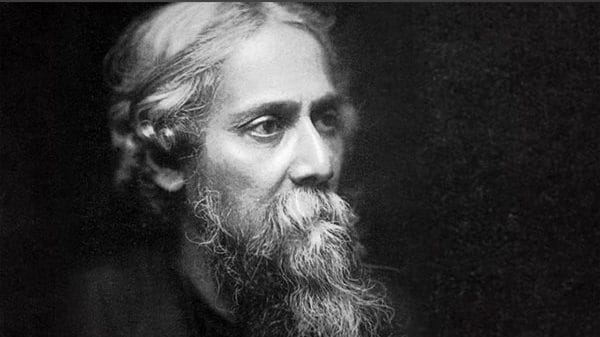
Mahatma Gandhi
Mohandas Karamchand Gandhi
1869–1948
Also known as: Gandhi, Bapu, MK Gandhi, महात्मा गांधी, मोहनदास गांधी, मोहनदास करमचंद गांधी
How Mahatma Gandhi is discussed in this archive
Authored 2 works in the archive.
Referenced in 61 other works , including Satyagraha and the Political System , The Universality of Human Values - M.R. Masani , and The Universality Of Human Values .
In The Case for Liberalism in Indian History : Gandhi is invoked as a source of anarchist/anti-statist ideas within Shah's Indian-liberalism synthesis.
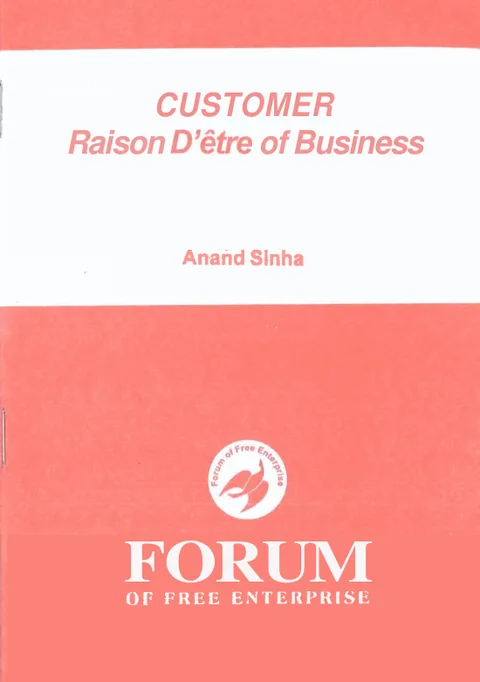
In CUSTOMER : Anand Sinha opens by invoking Mahatma Gandhi's well-known lines on the customer as the speech's foundational text, using Gandhi's moral authority to anchor the argument that the customer is the raison d'être of business.
In ખોજ : Ashvinkumar Karia's critique of moral policing places Gandhi within a combined Western-Indian intellectual tradition — alongside Aristotle, Plato, Nehru and Tagore — that he marshals against coercive moralism.
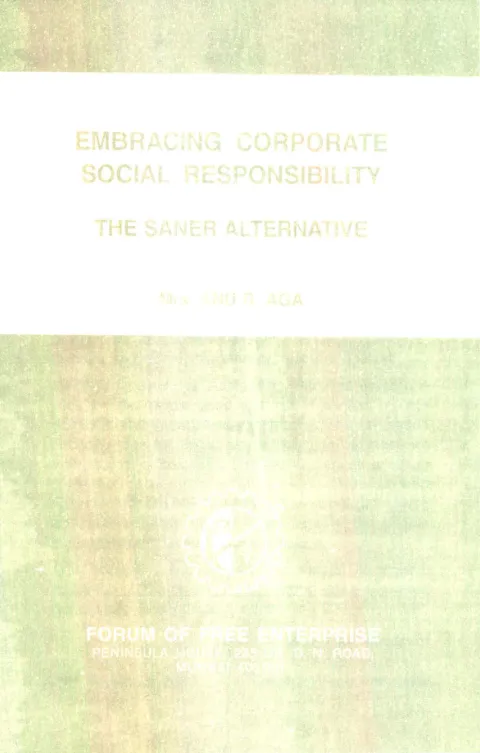
In Embracing Corporate Social Responsibility : Gandhi's trusteeship model is cited alongside Adam Smith as twin pillars of Aga's argument that CSR is grounded in both Western liberal economics and Indian ethical tradition.
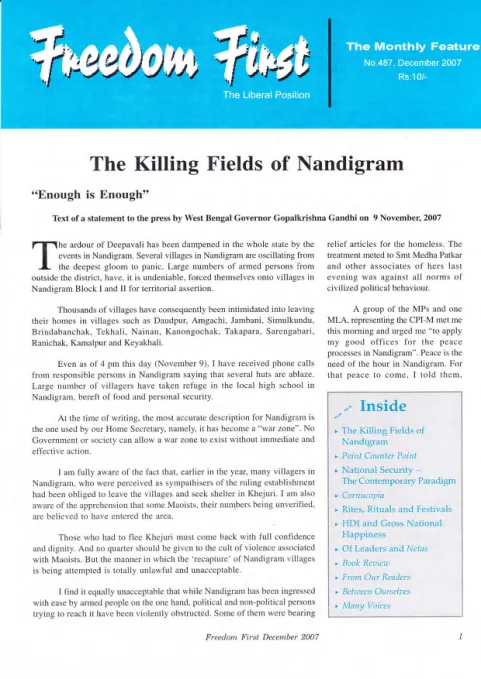
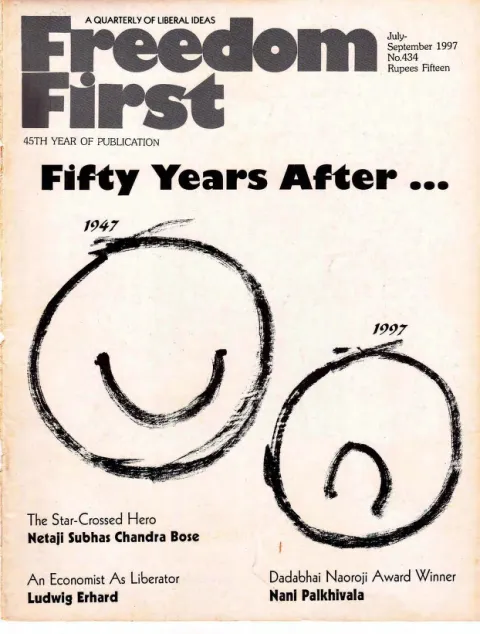
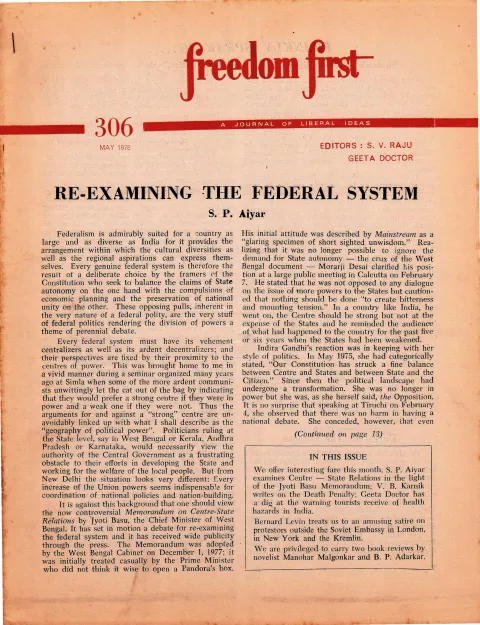
In Fifty Years After ... : Gandhi is cited by E.
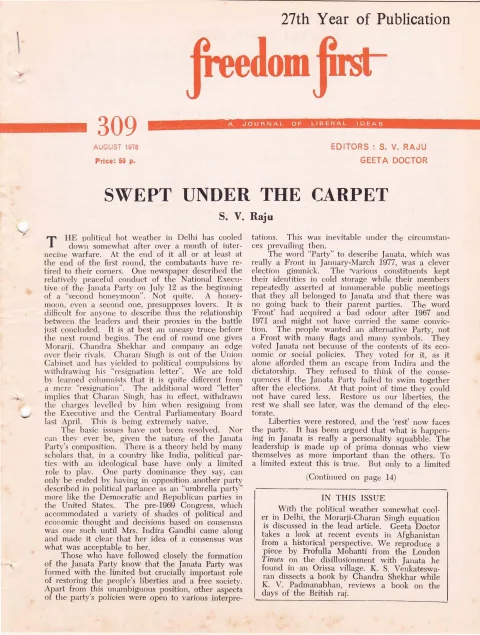
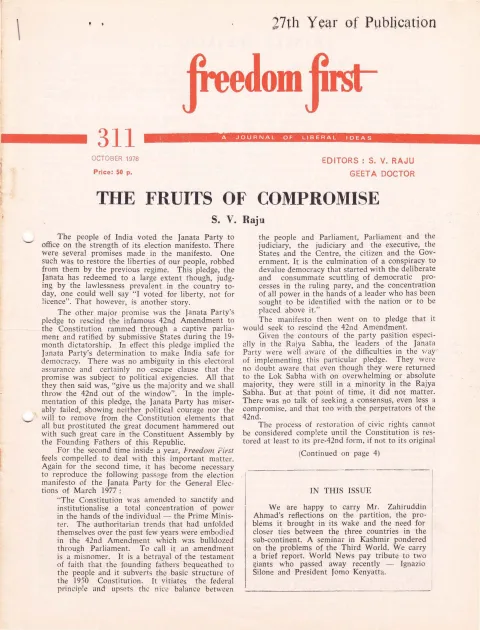
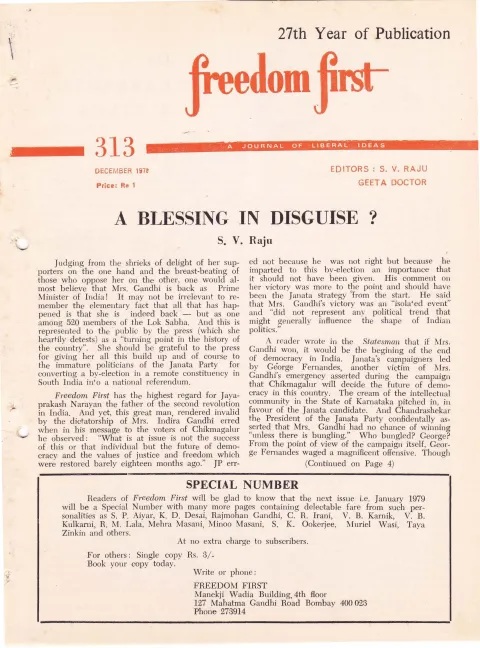
By Mahatma Gandhi (2)
Nothing here matches. Clear the search or remove some filters.
Matches inside Mahatma Gandhi's works and pages
Mentioned in (474)
Primary works (431)
- The Case for Liberalism in Indian History · 2020
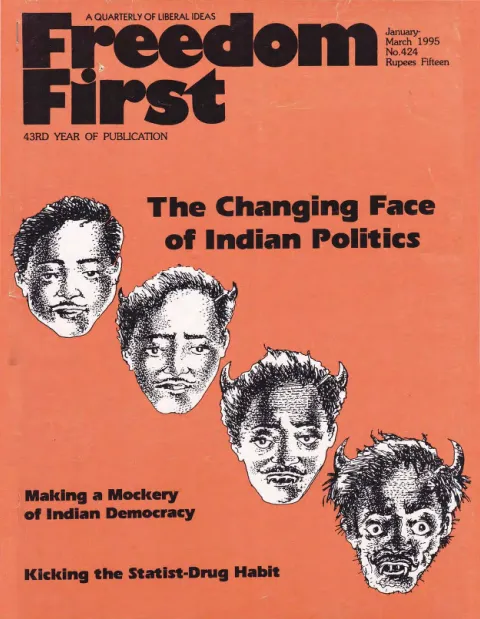
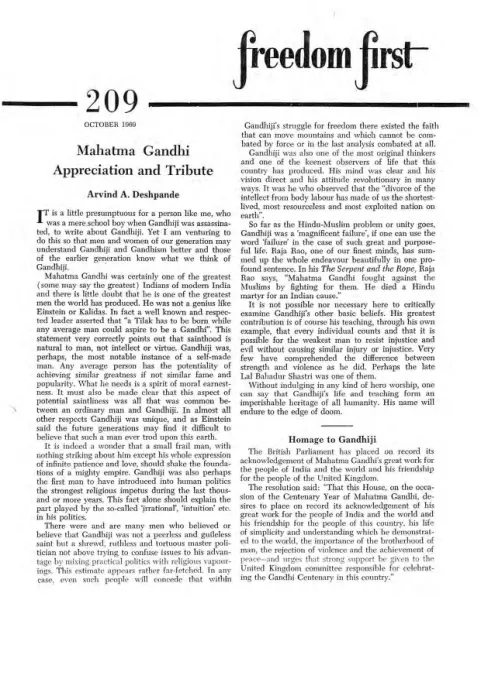
- "So Gandhi's ideas in politics, for example, which are very much anarchist ideas, Gandhi did not believe in the last state. Actually, he did not believe in state at all for that matter." · Shah characterises Gandhi's politics as fundamentally anti-statist.

Show all 431
- CUSTOMER · 2013
- "he leans on Mahatma Gandhi's well-known lines on the customer as the speech's foundational text" · Gandhi's dictum on the customer is the ethical premise from which the entire consumer-protection argument proceeds
- "uses Mahatma Gandhi's lines on the customer as foundational text" · Gandhi is the philosophical authority Sinha deploys to frame customer-centricity as a moral imperative
- ખોજ · 2009
- "Karia draws on a tradition of Western and Indian thinkers — Aristotle, Plato, Raphael, Gandhi, Nehru, Tagore, Vivekananda — who oppose coercive moralism" · Gandhi enlisted within Karia's lineage of thinkers opposed to vigilante religious enforcement
- Embracing Corporate Social Responsibility · 2003
- "She invokes Adam Smith (the author of A Theory of Moral Sentiments as well as The Wealth of Nations) and Gandhi's trusteeship model to argue that ethical conduct and commercial success have always been intertwined" · Gandhi's trusteeship doctrine positioned as the Indian parallel to Smith's moral philosophy
- Fifty Years After ... · 1997
- "citing Gandhi, J.P. Narayan, and M. N. Roy as models." · D'Souza invokes Gandhi as a model of rational, non-sentimental leadership on poverty
- "cites M. C. Chagla's encouraging statement during the Emergency as evidence that institutions can hold" · Mehta's address built on Gandhi's principles of means-ends convertibility
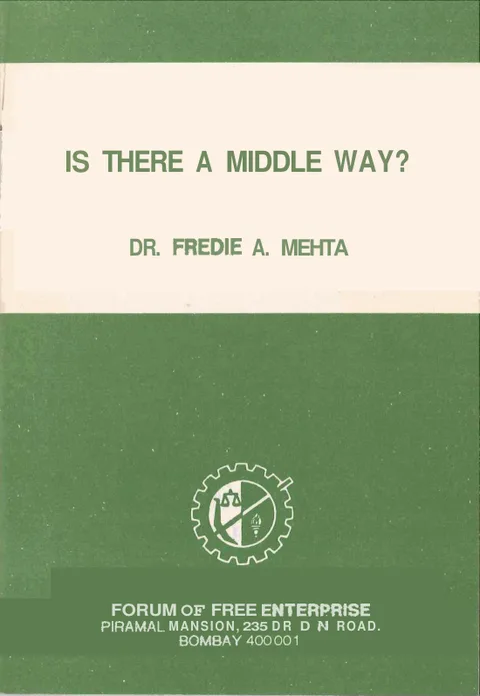
- IS THERE A MIDDLE WAY? · 1995
- "he sketches a seven-plank Trusteeship scheme drawn from Mahatma Gandhi: preferential share allotments to Indian promoters held in a Specified Trust whose dividends flow to anti-poverty applications." · Gandhi's trusteeship doctrine is the source of Mehta's headline anti-poverty design
- "He proposes a seven-plank Trusteeship-Concept scheme, inspired by Mahatma Gandhi, in which Indian promoters receive preferential share allotments held in a Specified Trust whose dividends fund poverty alleviation." · key-points restatement of the Gandhi-derived trusteeship scheme
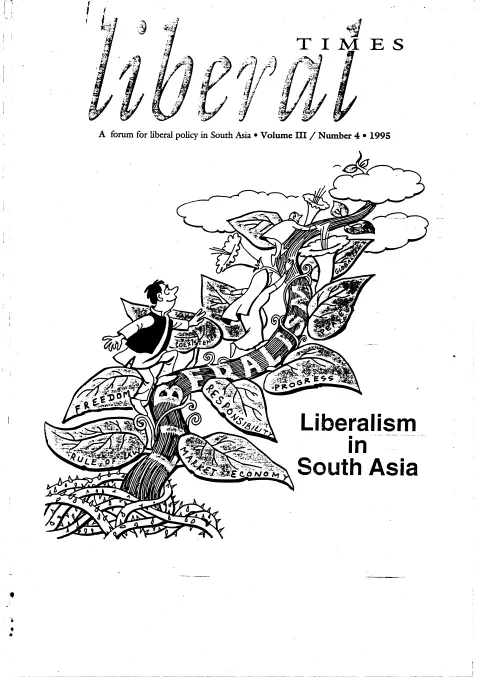
- Liberalism in South Asia · 1995
- "Joshi argues that Gandhi's quasi-anarchist village-economy vision, though spiritually sincere, produced a programme antithetical to liberal modernity, while the Congress socialist tradition actively modelled itself on the USSR." · Joshi indicts Gandhi's village-economy programme as one of the proximate causes of liberalism's failure in India
- "Gandhi's village-economy programme combined genuine ecumenism with an economic vision that was static, anti-growth, and antithetical to liberal modernity." · key-points summary reprises Joshi's hostile reading of Gandhi's economic vision
- MANAGING A BUSINESS IN INDIA · 1980
- "the example of Gandhi and Nehru, who drew on the "liberal West" to free India politically; a similar opening, he argues, is now needed to free it economically" · closing peroration; Gandhi is recruited as a precedent for cosmopolitan borrowing in the cause of national renewal
- NEW INDUSTRIAL POLICY · 1978
- "rejecting both capitalism and communism in favour of a Gandhian framework that decentralises the economic apparatus and lifts agriculture, rural development and cottage and village industry to the centre of planning." · Gandhi identified as the ideological alternative the Janata policy adopts
- "the new statement rejects capitalism and communism and stands 'squarely for Gandhian economic thought and philosophy'." · key-point restatement of the Gandhian framing of the policy
- Agriculture & Economic Growth · 1974
- "invoking a personal interview with Mahatma Gandhi at the end of 1947 in which Gandhi opposed Nehru's procurement, price-control and rationing scheme" · key-points bullet on procurement; Gandhi's anti-procurement position is cited as moral authority against state intervention in foodgrain markets
- A PHILOSOPHY OF BUSINESS · 1972
- "He cites Hayek's Road to Serfdom and Mahatma Gandhi on the dangers of state aggrandisement" · Gandhi's anti-statist counsel is paired with Hayek to show that the critique of big government unites Western liberal thought with the Gandhian tradition
- Economic Democracy · 1969
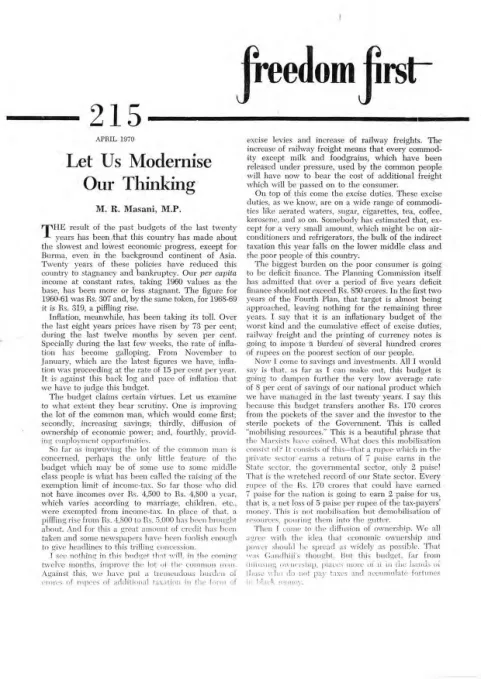
- "Drawing on Adam Smith's argument from self-interest, Mahatma Gandhi's distrust of concentrated power, J. F. Kennedy's defence of the dispersed free market" · Gandhi's warning against power concentration is enlisted in support of economic decentralisation and consumer sovereignty
- Economic Growth · 1969
- "The pamphlet closes with Clark's recollection of a November 1947 interview with Mahatma Gandhi, arranged through Professor Parekunnel Thomas, at G. D. Birla's New Delhi residence." · closing personal reminiscence framing Gandhi's alternative diagnosis of Indian poverty
- "Gandhi diagnosed the Indian condition not as a failure of investment or industrialisation but as a problem of idleness and speculative money-lending; defended village industry, decentralisation and the spiritual life against the rush to urbanise" · Gandhi's distinctive diagnosis placed in contrast with Clark's growth framework
- INDIA REQUIRES INDICATIVE PLANNING · 1967
- "Khatau's frame throughout is Gandhian as well as liberal: he invokes Gandhi's warning that doctrinaire schemes which minimise exploitation can also 'destroy individuality, which lies at the root of all progress'" · Khatau uses Gandhi to argue that anti-exploitation rhetoric becomes anti-individual once doctrinaire
- "Quotes Gandhi on the danger of suppressing individuality 'at the root of all progress'" · key-points restatement of the Gandhian moral anchor
- Is Socialism Outdated? · 1966
- "locates his own liberal turn in the example of Mahatma Gandhi, whom he reads as an enemy of state violence and a tester of every policy by its effect on the poorest" · Gandhi is re-claimed by Masani as the moral source of his liberal turn
- "Reframes Gandhi as a liberal whose test of any system was its impact on 'the poorest and the weakest', not as a socialist." · key-points restatement of Masani's Gandhian framing
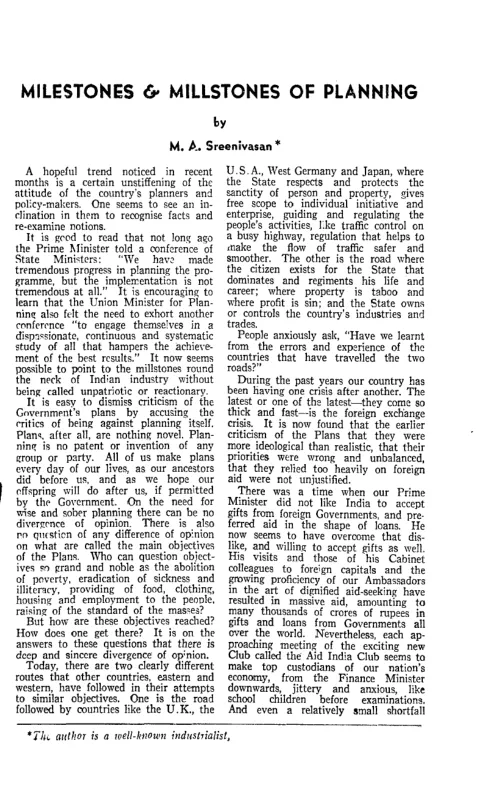
- MILESTONES & MILLSTONES OF PLANNING · 1963
- "Citing Mahatma Gandhi's readiness to admit "a blunder, even if Himalayan," he insists that retracing steps is no failure but a precondition for honest course-correction." · opening rhetorical move; Gandhi's example licenses Sreenivasan's call to admit planning failures
- "uses Gandhi's example of admitting blunders to defend retracing steps as statesmanship rather than weakness" · key-points restatement; Gandhi is the moral authority underwriting honest planning review
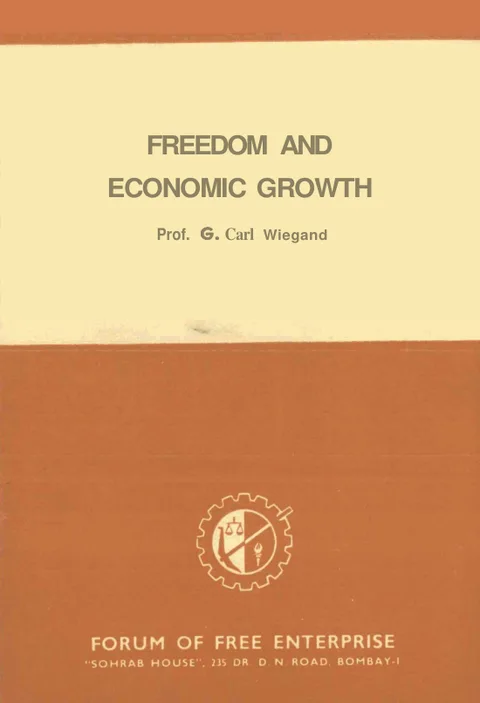
- Freedom and Economic Growth · 1962
- "Gandhi is enlisted as an ally against state planning, via his characterisations of the state as a "soulless machine" and as concentrated violence that "unmans the people and deprives them of initiative."" · Gandhi's specific phrases that Wiegand quotes approvingly
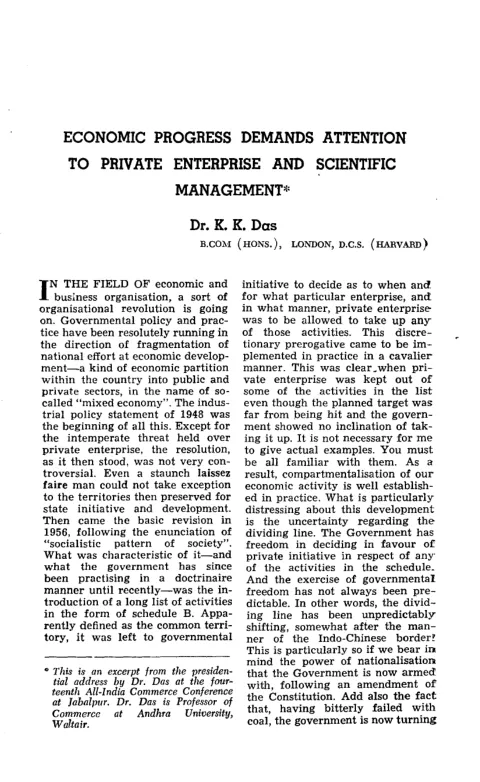
- Economic Progress Demands Attention to Private Enterprise and Scientific Management · 1961
- "He quotes Gandhi on the danger of expanding state power, and notes that, having failed with coal, the government is now turning back to private enterprise to make up the deficit." · Gandhi invoked as Indian moral authority against unchecked state expansion
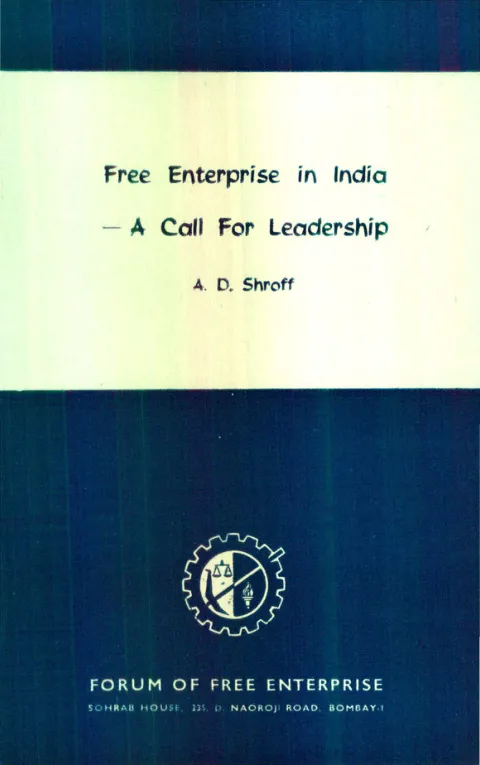
- Free Enterprise in India — A Call For Leadership · 1961
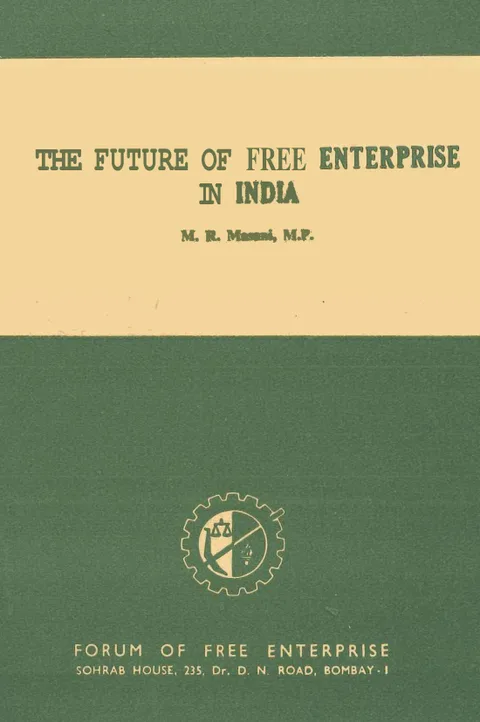
- "Mahatma Gandhi's caution against a government that 'did everything for the people' while people did nothing" · Shroff's closing invocation, pairing Gandhi with Vinoba Bhave as Indian moral authorities for free enterprise
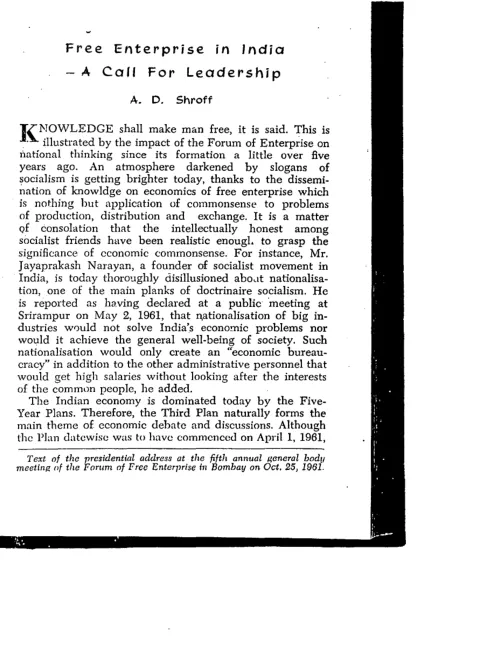
- Free Enterprise in India - A Call For Leadership · 1961
- "Mahatma Gandhi's reminder that a state that does everything for the people is the negation of democracy." · closing citation anchoring Shroff's liberal case in Gandhian inheritance
- CONTROLS AND FREEDOM · 1960
- "Sreenivasan invokes Gandhiji's preference for Swadharma over 'the violence of the State'" · Gandhiji is cited as a moral authority for self-regulation over state coercion
- "Invokes Gandhiji's Swadharma and his warning against 'the violence of the State' to argue that the only fully legitimate controls are self-imposed ones rooted in conscience and Dharma" · Gandhi's ethical framework is used to indict the regime of peacetime bureaucratic controls
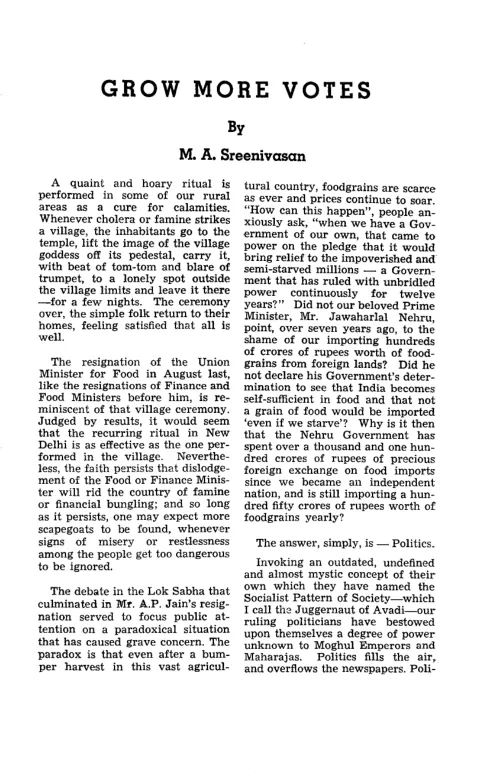
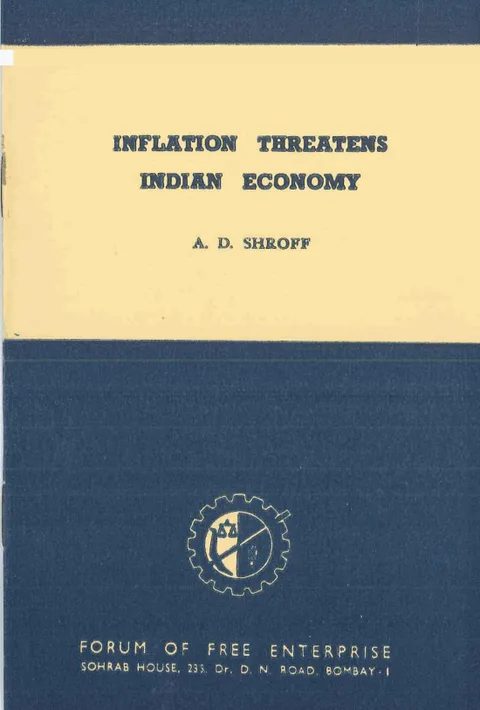
- INFLATION THREATENS INDIAN ECONOMY · 1960
- "faults the Karachi Congress salary cap for being silently discarded against the original spirit advocated by Mahatma Gandhi" · Gandhi's salary norm is mobilised as the moral benchmark Shroff says has been abandoned
- "Faults the abandonment of the Karachi Congress ministerial salary norm advocated by Mahatma Gandhi as evidence that planning has eroded the rupee while ministers compensate themselves for the depreciation." · key-points restatement of the Gandhi-anchored critique
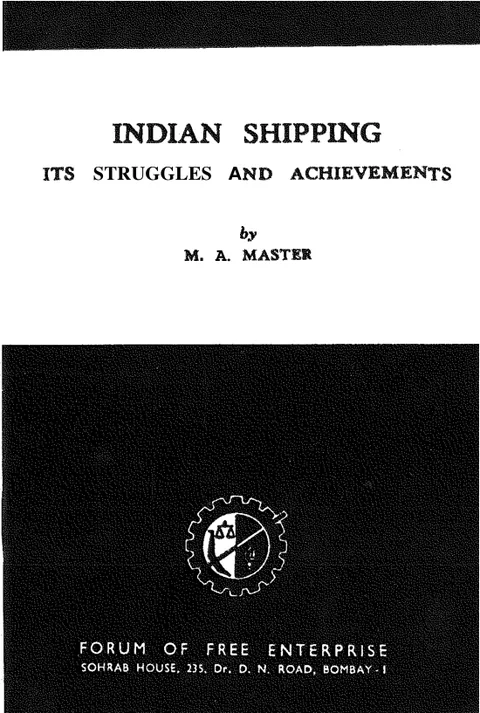
- INDIAN SHIPPING · 1959
- "the expansion of the State Trading Corporation and the proposed decentralisation of private enterprise are a betrayal of Mahatma Gandhi's teaching that economic and political power must not concentrate in the hands of the State" · Gandhi is invoked as the anti-statist authority against Nehruvian planning
- "quotes Gandhi: 'Indian shipping had to perish so that British shipping might flourish.'" · Gandhi's terse summary of British colonial shipping policy is the historical hammer Master deploys
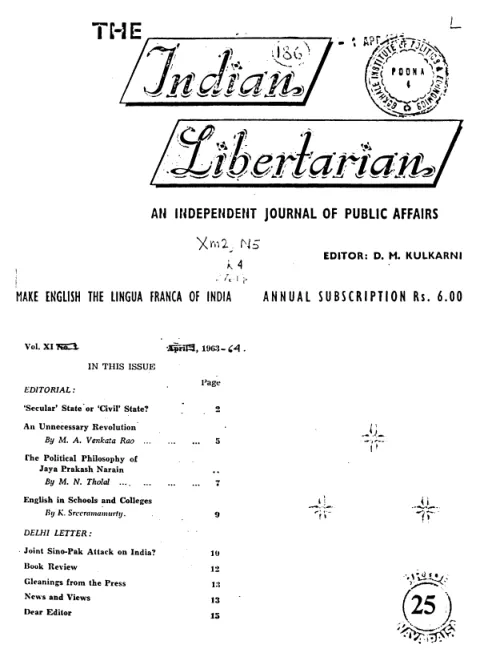
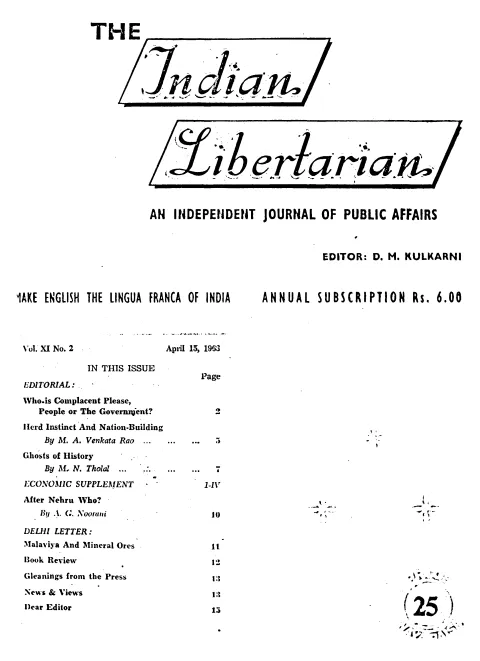
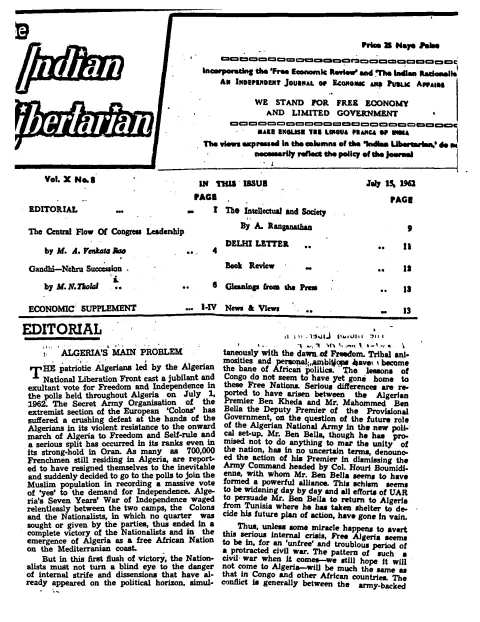
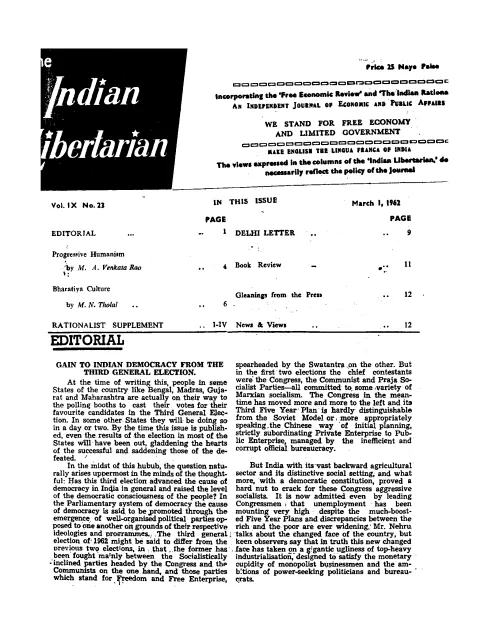
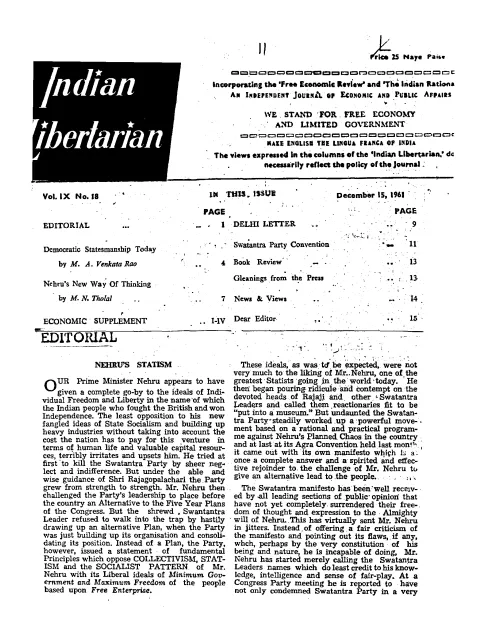
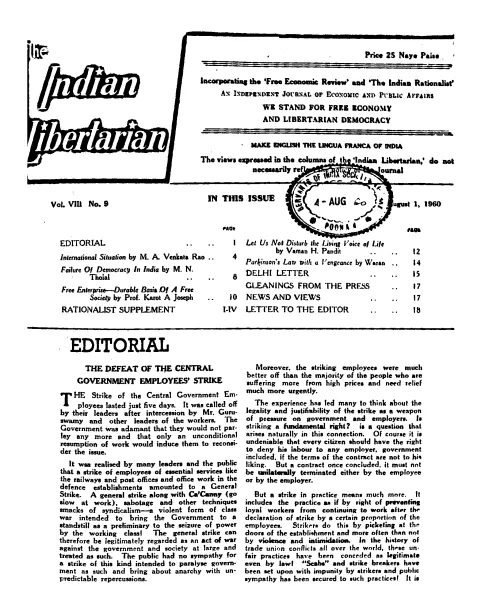
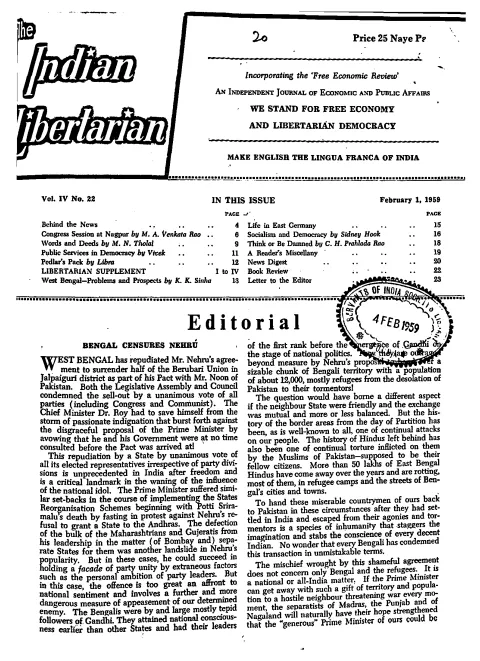
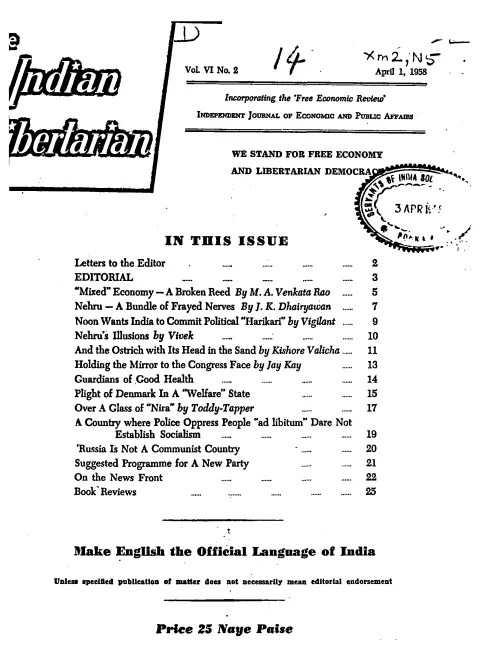
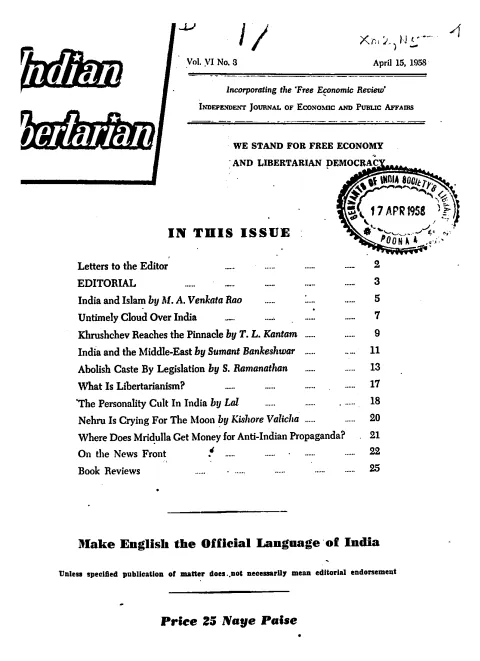
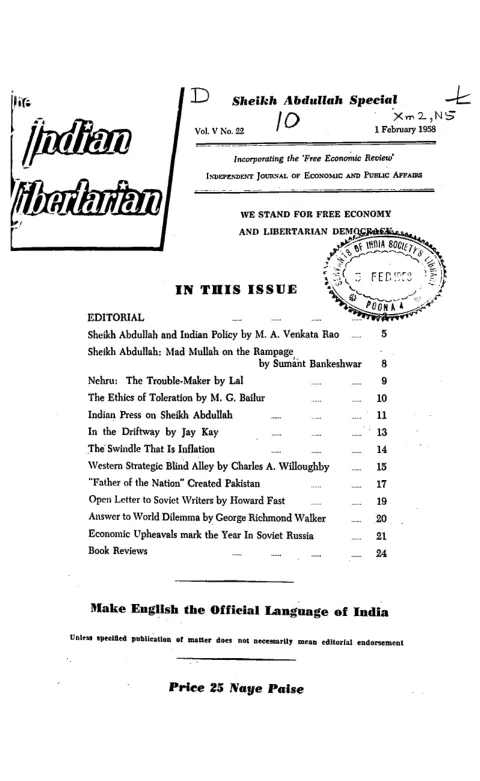
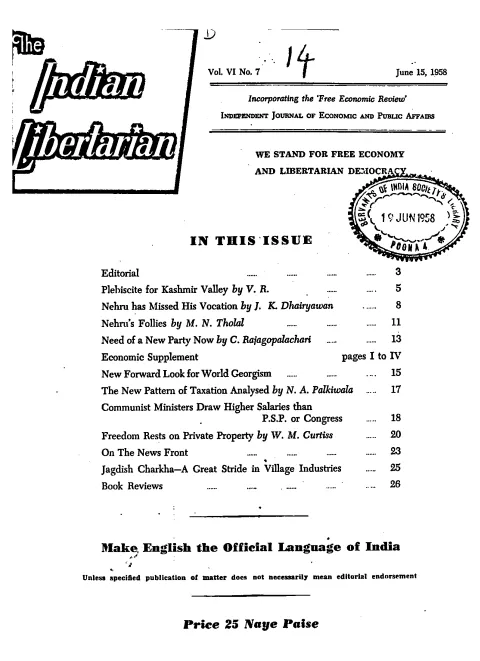
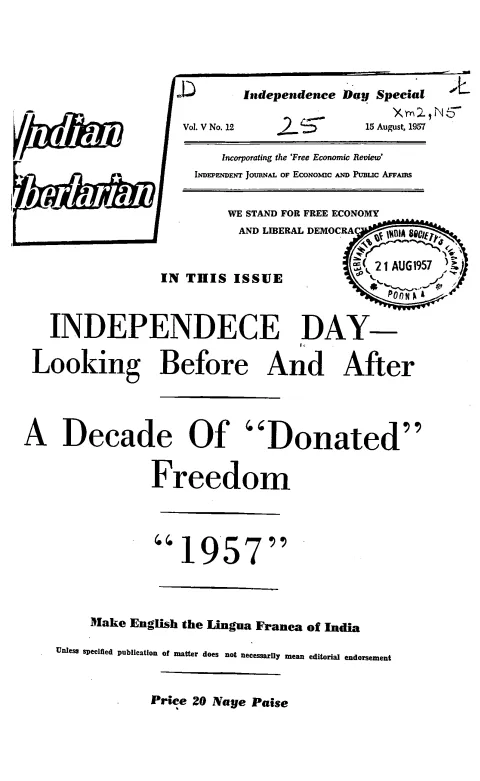
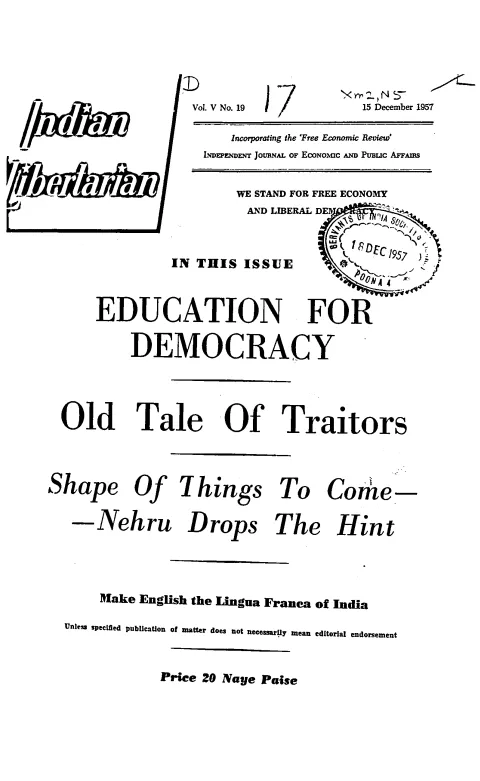
- The Indian Libertarian · 1958
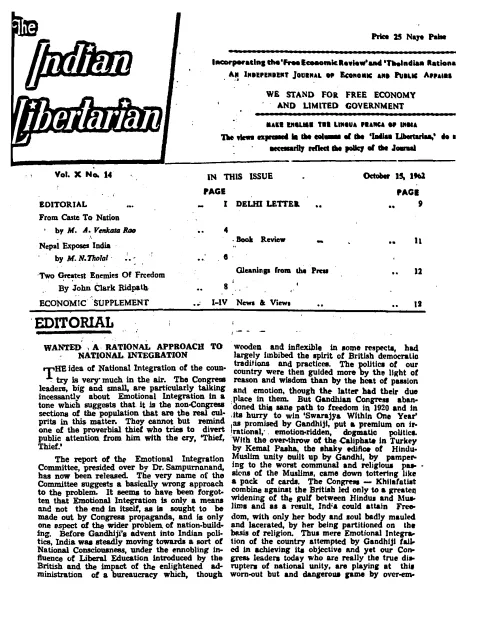
- "wearing it has lost all connection to the idealism Mahatma Gandhi associated with it" · Toddy-Tapper uses Gandhi-the-original as the implied yardstick exposing the Gandhi cap's emptiness
- "The Gandhi cap is satirised as a costume for political opportunists rather than a genuine symbol of Gandhian values." · key-points summary of the column's central rhetorical move
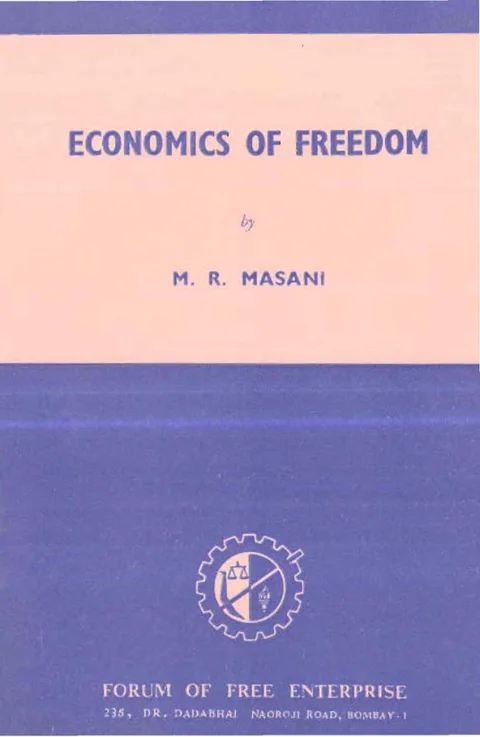
- ECONOMICS OF FREEDOM · n.d.
- "Gandhi's fear of an expanded State that destroys individuality" · Gandhi cited as an Indian liberal authority against state monopoly of economic power
- "Closes with Gandhi's dictum that an increase in the power of the State, however well-meaning, destroys the individuality that lies at the root of all progress." · Gandhi's closing dictum used as the moral capstone of Masani's argument
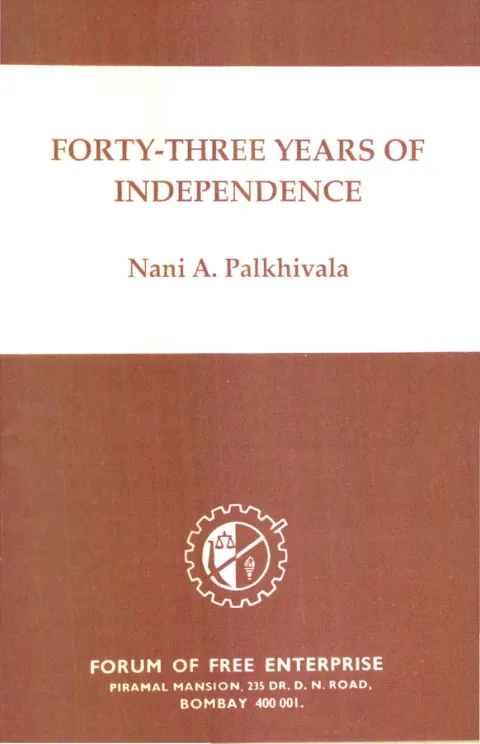
- Forty-Three Years of Independence · n.d.
- "invoking Mahatma Gandhi as the exemplar who 'made us realize the profound truth that single-minded pursuit of money impoverishes the mind, shrivels the imagination, and desiccates the heart.'" · closing movement; Gandhi is held up as the moral resource against which India's post-Independence drift is measured
























Opinion pieces (10)
- A Resilient Soul: Ramadevi Chowdhuri
- "Her childhood was influenced by freedom fighters and thinkers like Mahatma Gandhi, Vinoba Bhave, Sri Aurobindo, and JP Narayan." · Names Gandhi as one of the ideational influences on Chowdhuri's entry into the independence movement
- B.R. Ambedkar on Justice Ranade, Social Reform and Failure of Indian Liberalism
- "Ambedkar's embittered take on both Gandhi and Jinnah as a sideway reference in the speech opened him to criticism in the Indian press" · contextualising the controversial aspect of Ambedkar's speech that attracted press attention
- Dr B R Ambedkar on Village Panchayats
- "Ambedkar's views on Panchayati Raj in India differed from that of other leaders like Mahatma Gandhi in terms of the practicality of its implementation." · Gandhi's advocacy for village panchayats is named as the dominant view that Ambedkar's speech challenges
- Diversity, Democracy, and Dissent
- "we see Mahatma Gandhi, the "arch dissenter of the twentieth century" winning India its freedom in 1947" · Gandhi invoked as the supreme historical example of constructive dissent in the Indian tradition
- Dr Muthulakshmi Reddi: Beacon of Women's Liberty
- "Mahatma Gandhi's inspiring leadership profoundly impacted her. Under his influence, she actively engaged in the freedom struggle, coordinated efforts with other leaders, and played a crucial role in the movement." · Gandhi is identified as the pivotal figure who channelled Reddi's social energy into the national independence cause
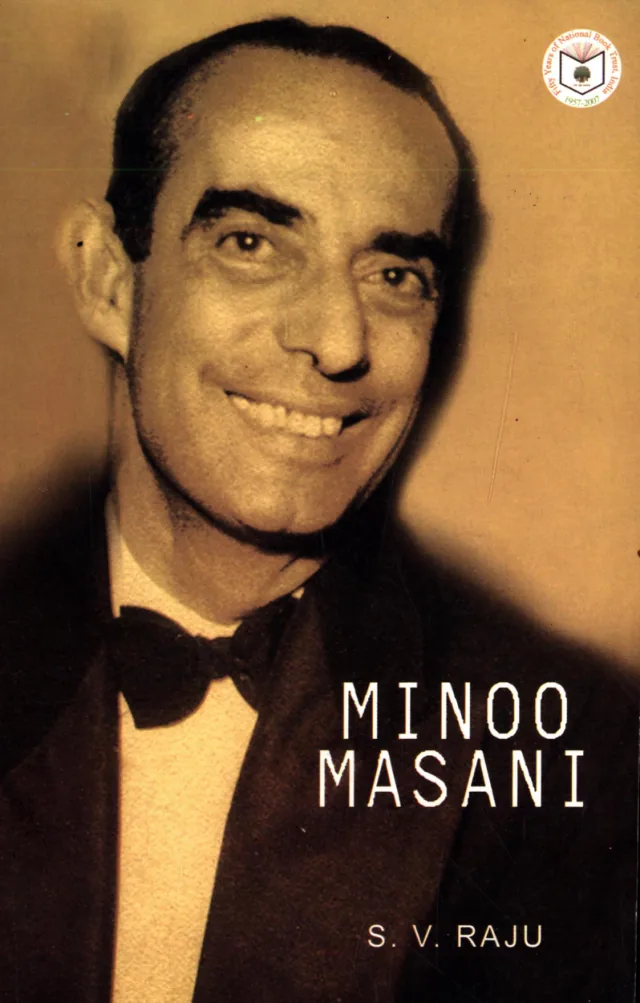
- Minoo Masani : From Socialism to Liberal Swatantra Party
- "In response to Minoo Masani's socialist agenda, he wrote, "the progressive nationalisation of all the instruments of production, distribution and exchange" was "too sweeping to be admissible. Rabindranath Tagore is an instrument of marvellous production. I do not know that he will submit to be nationalised."" · Gandhi's famous riposte to Masani's nationalisation proposals
- "Gandhi's dictum that the end doesn't justify the means translated into a repudiation of communist insurrections." · identifies Gandhi as the ethical anchor of Masani's anti-communist turn
- Rajaji's Views on Nuclear Bomb
- "A trusted lieutenant of Gandhi in days of anti-colonial struggle, he reinvented himself as an anti-nuclear weapons activist as the Cold war picked pace." · establishes Gandhi as the political anchor of Rajaji's pre-Cold War career
- Rajkumari Amrit Kaur: Philanthropy and Politics
- "Deeply inspired by Mahatma Gandhi’s commitment to the nation’s freedom and development, she joined Gandhi’s Sewagram Ashram and worked as his secretary for 16 years." · establishes Gandhi as the defining personal and political influence in Amrit Kaur's public life

Show all 10
- Tanguturi Prakasam Panthulu: A Visionary Leader and pioneer of Press Freedom
- "Inspired by Mahatma Gandhi, he renounced his profession as an advocate and got wholly involved in politics." · Gandhi's influence identified as the turning point in Prakasam's career
- V S Srinivasa Sastri: Diplomat, Politician, Liberal
- "Gandhi called his elder brother, V S Srinivasa Sastri" · establishes the Gandhi-Sastri relationship
- "Though an admirer of Gandhi, Sastri's principled opposition to non-cooperation was based on his faith in the rule of law." · frames Sastri's disagreement with Gandhi as a principled liberal position
Excerpts (25)
- Caste System, Greatest Curse of India
- "The same writer further says in his book "What Gandhi and Congress have done for the untouchables"" · Gandhi enters the essay implicitly as the named subject of the Ambedkar text Kulkarni quotes
- Censorship and the Law of Inexorability
- "showed Nathuram Godse's political and psychological motivation for killing Gandhi. The movie was based on a book by celebrated historian Stanley Wolpert" · Gandhi's assassination is the subject matter that made the film politically sensitive and triggered the censorship
- Controls and Freedom
- "Gandhiji, as is well known, was firmly against controls and their continuance." · Gandhi's anti-controls stance is cited to show that economic freedom is not a merely Western liberal idea but is embedded in the Indian independence tradition
- Dr B R Ambedkar on Village Panchayats
- "Ambedkar's views on Panchayati Raj in India differed from that of other leaders like Mahatma Gandhi in terms of the practicality of its implementation." · Gandhi's advocacy for village panchayats is named as the dominant view that Ambedkar's speech challenges
- Forty-Three Years of Independence
- "I would be dishonouring the memory of Pandit Nehru and of his mentor, Mahatma Gandhi, if I try to be economical with the truth." · Gandhi's legacy is paired with Nehru's as a joint moral warrant for the lecture's frank assessment
- Have We Lost Our Will To Be Free?
- "Gandhiji used to call it slave mentality. He fought hard to eliminate it. But the reaction was just anti-Britishism, not, as we now regretfully realize, the positive love of freedom" · Gandhi's slave-mentality diagnosis is turned by Rajagopalachari into a critique of the independence movement's incomplete liberation
- Any Hope for Indian Liberals?
- "even Gandhi's anarchism proved to be little more than a scoring point with them" · Joshi situates Gandhi's anarchism within the broader statist consensus of the independence movement to explain why Indian liberalism has remained marginalised
- The Role of Ideas in Politics
- "Nehru or Gandhi are riding rough-shod over our lives creating havoc and seem to be well-nigh uncontrollable." · Gandhi and Nehru are invoked together as dominant but distorted ideological forces in Indian political life
Show all 25
- Is There A Middle Way? - Dr F. A. Mehta
- "totally unacceptable to a country committed to the doctrines of Mahatma Gandhi" · Gandhi's doctrine of the dignity of labour is invoked to explain the political impossibility of mass redundancies in Indian economic restructuring
- Is This The Freedom We Fought For?
- "When Gandhiji gave the "Do or Die" call, many like me responded. We had dreams of what we would do after freedom." · Gandhi's 1942 call frames the author's personal vision of independence and the standard against which subsequent political failure is measured
- Corruption of Thought
- "During the life of Gandhi, older ideas of life's values were predominant" · Rao locates the intellectual rupture at Gandhi's death — older Indian value-thinking gave way to imported leftist policy
- Minoo Masani on Liberalism
- "Gandhiji's attitude to religion was much more liberal than that of those who call themselv" · Gandhi is invoked as a model of the liberal religious attitude Masani is defining
- Minoo Masani: Old Liberalism & New Liberalism
- "It was killed by Mahatma Gandhi. When Gandhiji came on the scene as a dynamic nationalist following Tilak and Lajpatrai, he had no use for the old Liberalism" · Gandhi as the agent who ended the old liberal tradition
- "This I learnt from Mahatma Gandhi with whom I used to argue as a young socialist. He kept on saying that by doubtful methods, you can't gel a good end." · Gandhi as a source of the ends-means ethic that informs the new liberalism
- My Idea of A Welfare State - B.R. Shenoy
- "What has Gandhi to say on the subject? He is always a good and safe guide in these matters." · Shenoy appeals to Gandhi as the authoritative voice on Indian philosophy of welfare
- "That state is perfect and non-violent where the people are governed the least" · Gandhi's dictum is the final philosophical anchor for Shenoy's concept of a minimum welfare state
- National Priorities for 1970
- "Our basic creed is free competition, a free market economy, plus Gandhiji's theory of Trusteeship." · Gandhi's Trusteeship doctrine cemented as Swatantra's third leg alongside free competition and free markets
- "We believe in the Gandhian path to social justice, as opposed to that of Karl Marx." · the explicit Gandhi-versus-Marx framing at the heart of Swatantra's self-definition
- Population Causes Prosperity
- "Instead of seeing the future of India in terms of thousands of self-governing and self-sufficient village republics (the Gandhi-Nehru vision), we can see India as an urban civilisation." · the Gandhi-Nehru rural-republic vision is named as the opposing thesis to Chakraverti's urbanisation argument
- Satyagraha and the Political System
- "Both in South Africa and India the system that confronted Gandhi was based on illegitimacy." · establishes satyagraha as a response to illegitimate colonial rule
- "Gandhi, therefore, invented the technique of satyagraha (non-violent direct action) to undo this unequal status of the groups in the former and overthrow the latter." · credits Gandhi with originating satyagraha as a political tool
- Sharad Joshi on Liberalism in India
- "Gandhi represented a platform much truer to Hindu thought that upheld at the same time some sort of ecumenism- the identity of all faiths." · Joshi characterises Gandhi's ideological position within the independence movement
- "Rajaji, who had a very high standing among the followers of Gandhi and who became the first Indian Governor General of independent India, had correctly foreseen the disaster that Nehru's license-permit quota Raj would produce." · Gandhi's legacy invoked as the authority that gave Rajaji standing to found the Swatantra Party
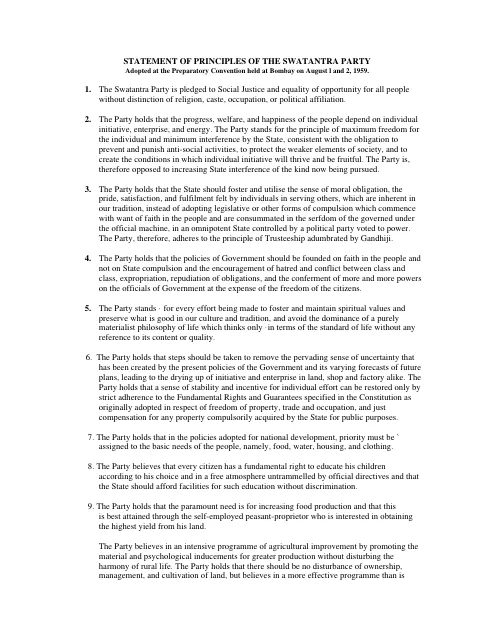
- Statement of the Principles of Swatantra Party
- "The Party, therefore, adheres to the principle of Trusteeship adumbrated by Gandhiji." · Swatantra Party explicitly grounds its economic ethics in Gandhi's Trusteeship doctrine
- "The Party shall, in all matters, keep before itself the cardinal teachings of Gandhiji, maintaining faith in the people and in the efficacy of truth and non-violence." · Gandhi's teachings formally enshrined as a guiding principle of the party
- THE DANGERS OF JOINT CO-OPERATIVE FARMING
- "that is the method that Mahatma Gandhi always urged, the establishment of rural industries, the taking of industry to the countryside with electric power or without. My own emphasis, like Mahatma Gandhi's, would be on decentralised industry" · Masani aligns his anti-cooperative-farming stance with Gandhi's decentralisation philosophy
- The Essence of Democracy
- "Mahatma Gandhi said : "That Government is best which governs the least."" · Gandhi's principle of minimal government cited as a liberal democratic norm
- The Universality of Human Values - M.R. Masani
- "Mahatma Gandhi in a wider context, namely, that each right carries with it a corresponding obligation" · opening passage; Gandhi's axiom invoked to frame the question of human rights and population
- "Gandhi represents the complete antithesis to the Communist and has been recognized as such in the Moscow press and radio over three decades" · central argument contrasting Gandhian values with dialectical materialism
- The Universality Of Human Values
- "Mahatma Gandhi shown that the man who evokes a response in their hearts is the one who talks to them of non-material values like God, Love, Truth, Human Brotherhood" · refuting Crossman's thesis that Asian masses are purely material in their aspirations
- "Gandhi represents the complete antithesis of the Communist and has been recognized as such in the Moscow press and radio for over three decades" · core ideological contrast between Gandhian and communist worldviews
- To Prosperity through Freedom
- "The congress from the days of its founder Mahatma Gandhi has contented itself with practical programmes leaving ideology and refinement of ideals to the supreme leader" · context for why Congress never rigorously debated its socialist orientation
- "Gandhi dreamt of Hind Swaraj. a republic of autonomous villages living an Arcadian life of simplicity close to nature" · Gandhi's vision listed among competing visions that Swatantra opposes with free-economy ideas
- Nani Palkhivala: Education, Leadership, and Vision of Free India
- "just as we do not deserve our sublime Constitution, just as we do not deserve to have great leaders like Mahatma Gandhi, we did not deserve the galaxy of Indians mentioned earlier" · Palkhivala's concluding lamentation on India's failure to honour its liberal and national heritage