
speech
Youth for Agricultural Transformation
Edited by Sunil S. Bhandare
Published by S. S. Bhandare for the Forum of Free Enterprise, Peninsula House, 2nd Floor, 235, Dr. D. N. Road, Mumbai 400001. and Printed by S. V. Limaye at India Printing Works, India Printing House, 32 G. D. Ambekar Marg, Wadala, Mumbai 400 031. · Mumbai · 2011
17 pages
Youth for Agricultural Transformation
By Prof. M. S. Swaminathan
Summary
In this Forum of Free Enterprise booklet, the agricultural scientist Prof. M. S. Swaminathan argues that the future of Indian agriculture — and of India’s demographic dividend — depends on persuading educated youth to take up farming as an intellectually satisfying and economically rewarding profession. Opening with Gandhi’s 1927 declaration of himself as a “Farmer” and Lal Bahadur Shastri’s “Jai Jawan, Jai Kisan,” Swaminathan frames farming as a national vocation, warns that the benefits of the first Green Revolution have tapered off, and calls for a second, knowledge-led agricultural transformation built on the integrated application of science and social wisdom.
The address lays out a concrete, three-pronged programme: raising productivity, enlarging the scope for agro-processing and agri-business, and expanding rural services. Swaminathan stresses the role of women farmers (Mahila Kisans) and young farmers (Yuva Kisans), the establishment of Farm Health Passbooks, Gyan Chaupals / Village Knowledge Centres, gene-seed-grain-water banks, and a Climate Risk Management Research and Extension Centre in each of India’s 127 agro-climatic sub-zones. He devotes substantial attention to climate-resilient farming, citing FAO temperature-rise projections, the need for sea-water farming and halophyte seed banks for “a warming India,” and the revival of nutritious “nuti-cereals” (millets) and Pulses Villages to bridge the food demand-supply gap.
The closing “From Vision to Impact” section draws on 21 years of work by the M. S. Swaminathan Research Foundation (MSSRF) — the Mahila Kisan Sashaktikaran Pariyojana, Pulses Villages in Pudukkottai and Ramanathapuram, and millet revival in Kolli Hills — and on the draft National Food Security Bill. Sunil S. Bhandare’s Editor’s Note situates the booklet against the precipitous decline of agriculture’s share of GDP and the urgency of a Second Green Revolution, and reproduces Swaminathan’s concluding charge to “Remember Your Humanity.”
Key points
-
Swaminathan’s central thesis: the future of Indian agriculture depends on attracting educated youth, women (Mahila Kisans) and young farmers (Yuva Kisans) by making farming intellectually satisfying and economically rewarding.
-
He calls for a Second Green Revolution based on the integrated application of science and social wisdom, after the first Green Revolution’s benefits tapered off.
-
A three-pronged strategy: improve productivity and profitability of small holdings; enlarge agro-processing and agri-business; promote rural service-sector opportunities.
-
Institutional proposals include Farm Health Passbooks, Gyan Chaupals / Village Knowledge Centres, gene-seed-grain-water banks, and a Climate Risk Management Research and Extension Centre in each of India’s 127 agro-climatic sub-zones.
-
Heavy emphasis on climate-resilient farming: FAO warming projections, sea-water farming, halophyte seed banks, a Genetic Garden for Halophytes at Vedaranyam, and training Climate Risk Managers in every Panchayat.
-
Revival of nutritious millets (‘nuti-cereals’) and a national Pulses Villages programme to close the food demand-supply gap and curb hidden hunger.
-
Draws on 21 years of MSSRF work — Mahila Kisan Sashaktikaran Pariyojana, Pulses Villages, Kolli Hills millet revival — and the draft National Food Security Bill.
-
Editor Sunil S. Bhandare frames the booklet against agriculture’s declining GDP share (~15%) versus a still-high labour dependency (~55%).
Generated by the v1.5 extraction pipeline. Awaiting editorial review.
Metadata and summary are AI-extracted from the source PDF and reviewed for editorial accuracy. The original work is available via the Read PDF tab above (where present); paragraph-level citation inside the PDF is deferred to a future engagement.
People in this work
Related across the archive
 Primary workFOOD AND ENVIRONMENT – WALKING THE TIGHTROPE
 Primary workTop Ten Concerns of Indian Agriculture & A Case for Private Sector Rural Banks
 Primary workEnding Hunger Through Sustainable Development
 ExcerptEconomic Reforms In India: Where Are We And Where Do We Go?
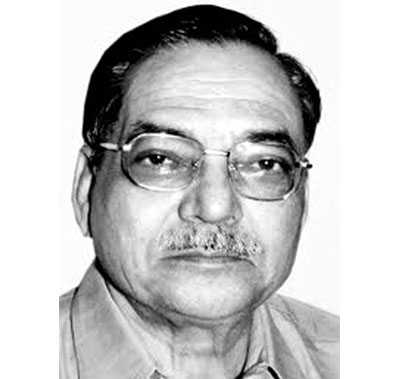 ExcerptSharad Joshi on The Tragedy of Being a Farmer in India