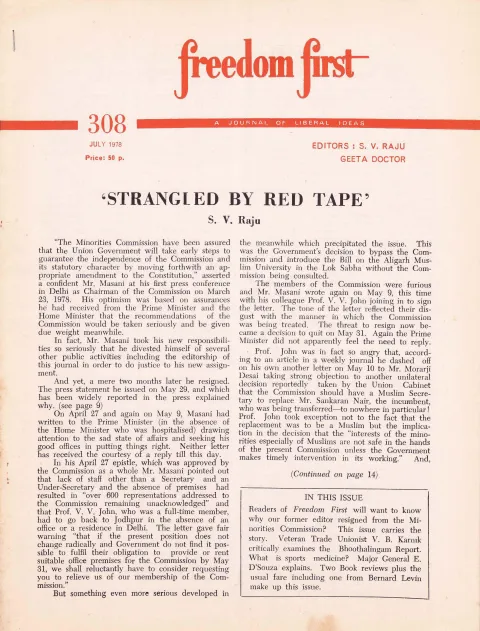
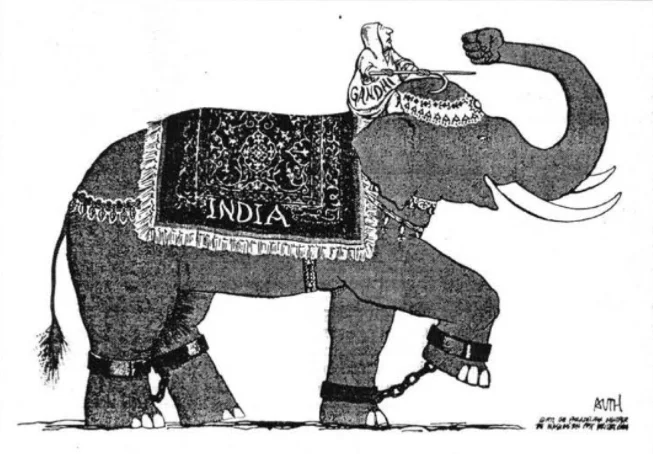
periodical issue
Freedom First
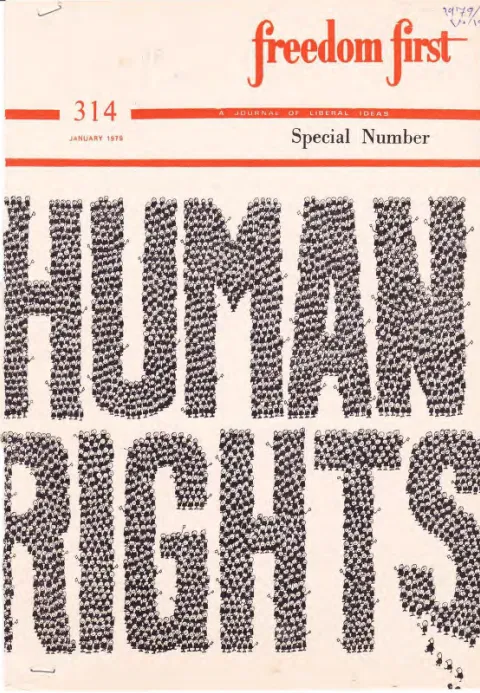
Human Rights (Special Number)
Edited by S. V. Raju
freedom first · Bombay · 1979
80 pages
Freedom First
Summary
Freedom First issue 314 (January 1979) is a special number devoted to Human Rights, marking the 27th year of the journal’s publication under editors S. V. Raju and Geeta Doctor. In the rendered pages the issue opens with the editorial statement “For This We Stand,” reaffirming the journal’s classical-liberal identity and framing the Emergency of 1975-77 as the proof of its commitment to civil liberty, before moving into essays by S. P. Aiyar on the philosophical basis of the urge for freedom, Rajmohan Gandhi on India’s obligation to speak up for human rights violations abroad (including Cambodia under the Khmer Rouge), M. R. Masani on the contemporary relevance of Gandhian thought against both state socialism and the drift of post-Janata politics, and V. B. Karnik on the gap between India’s political rights and its unrealised economic rights. Read together in the rendered pages, the volume’s argumentative centre is the claim that political liberty and economic rights are inseparable, and that both were tested and validated during the Emergency, while the Janata government since elected has, in the contributors’ view, only partly honoured that test.
Key points
-
The unsigned editorial “For This We Stand” reaffirms Freedom First’s identity as a journal of “Liberal ideas” rather than an ideology, framed by the Democratic Research Service’s founding in 1950 with Sardar Patel’s blessing, and explains this Human Rights Special Number as a response to post-Emergency nostalgia for “discipline” and “order”.
-
S. P. Aiyar’s “The Urge for Freedom” rejects the view that civil-political rights are a Western luxury developing countries can defer, praises B. R. Ambedkar for centering individual freedom in the Constitution, and critically engages Peter Berger’s proposal for a religion-grounded universal human-rights consensus.
-
Rajmohan Gandhi’s “The Trampled of the Earth” argues India owes a reciprocal duty to speak up for human rights abroad after benefiting from international pressure during the Emergency, criticising Indian silence on Khmer Rouge Cambodia and Morarji Desai’s view that a nation’s internal affairs are its own business.
-
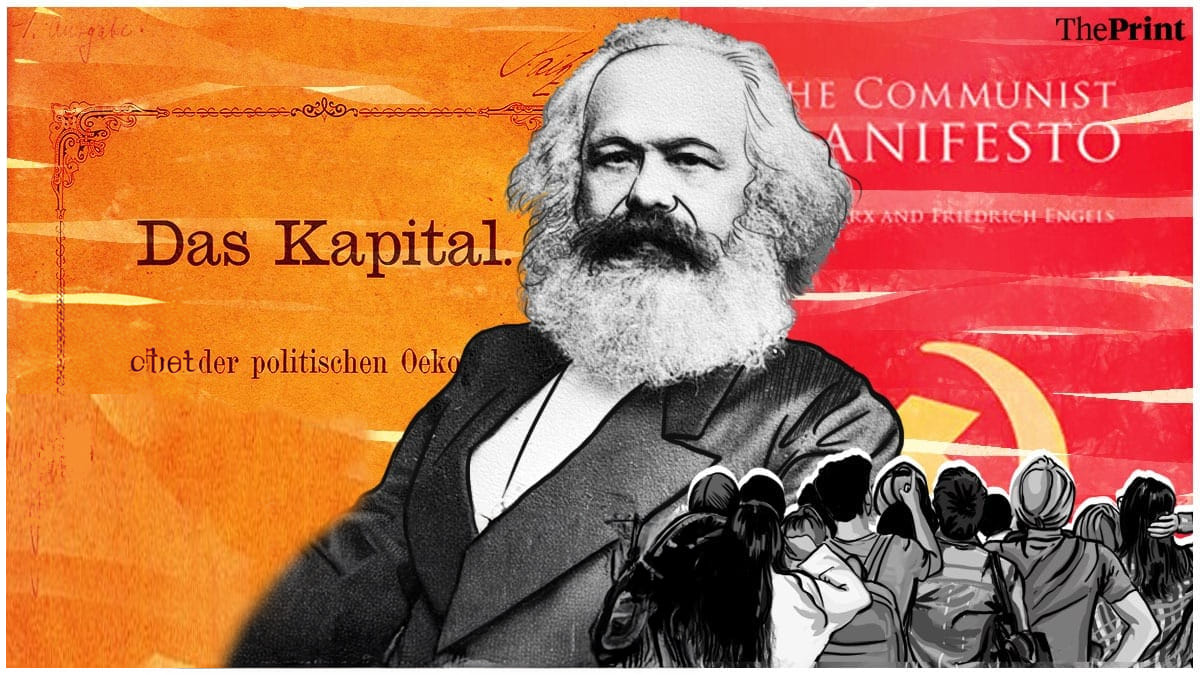
M. R. Masani’s “Relevance of Gandhi” accuses Janata-era leaders like George Fernandes and Chandra Shekhar of invoking Gandhi’s name while actually following Karl Marx, and surveys Gandhi’s rejection of state socialism in favour of trusteeship and village-based decentralisation.
-
V. B. Karnik’s “Political and Economic Rights” argues political rights without economic rights are unstable, citing a Planning Commission estimate that 48% of rural and 41% of urban Indians fell below the poverty line in 1977-78, and recalling Ambedkar’s 1947 warning that the Constitution addressed only political, not economic, structure.
Essays
For This We Stand
The unsigned editorial “For This We Stand,” in the rendered pages, restates the founding mission of the Democratic Research Service (publisher of Freedom First since November 1950, with the blessing of Sardar Vallabhbhai Patel) as a guardian against threats to India’s democracy. It insists the journal is a journal of “Liberal ideas” rather than of any “ism,” defines the Liberal as one who tests all action against individual well-being, and recalls the journal’s resistance to censorship during the 19-month Emergency as validation of its stance. It closes by explaining that the present Special Number on Human Rights responds to nostalgic talk, two years after the Emergency ended, of returning to “discipline” and “order.”
- Freedom First’s parent body, the Democratic Research Service, was founded in November 1950 with Sardar Vallabhbhai Patel’s blessing.
- The editorial frames the journal as devoted to ‘Liberal ideas,’ explicitly distinct from ‘Liberalism’ as an ism.
- It defines the Liberal position as testing all state action against individual well-being.
- It cites the journal’s legal challenge to Emergency-era censorship as proof of its principles.
- The Special Number on Human Rights is explained as a response to nostalgia for the ‘discipline’ of the Emergency two years after its end.
The Urge for Freedom
By S. P. Aiyar
S. P. Aiyar’s “The Urge for Freedom” examines the tension between civil-political rights and economic-social rights in developing countries, starting from the 1948 Universal Declaration of Human Rights. Aiyar rejects the view, common among Asian and African leaders, that rights are a luxury that can be deferred until poverty is solved, arguing this fallacy has historically been used to justify suppressing freedom. He discusses B. R. Ambedkar’s insistence on placing the individual at the centre of India’s constitutional order despite his lifelong service to the scheduled castes, and engages at length with Peter L. Berger’s 1977 Commentary essay “Are Human Rights Universal?,” which proposed grounding a cross-cultural human-rights consensus in the world’s religious traditions. Aiyar finds Berger’s solution practically fraught, since scriptural texts can be reinterpreted to justify inequality, and notes a November 1978 Indian seminar debating the same thesis. He closes (in the visible portion) discussing how modernisation weakens traditional restraints on power without guaranteeing that new institutional checks will protect human rights, warning that bureaucratic and political power can just as easily be turned against the citizen.
- Aiyar argues political and economic rights are ‘inextricably intertwined’ and should not be graded by importance.
- He rejects the claim that rights are a Western luxury inapplicable to poor countries, citing India’s Emergency as proof rights matter to everyone.
- He praises B. R. Ambedkar for centering individual freedom in the Constitution despite representing India’s most oppressed communities.
- He engages critically with Peter L. Berger’s proposal for a religion-grounded universal human-rights consensus, judging it practically unworkable.
- He warns that modernisation, while weakening traditional restraints on power, also concentrates new power in bureaucracies and politicians, posing a fresh threat to freedom.
The Trampled of the Earth
By Rajmohan Gandhi
Rajmohan Gandhi’s “The Trampled of the Earth” reflects on how the 1975-77 Emergency changed Indians’ understanding of oppression, arguing that lived experience of the ‘authoritarian shoe’ taught more than abstract sympathy ever could. He credits international pressure — especially from West Germany, Britain, Scandinavia, Austria and Australia, and from figures across the political spectrum — with helping restore Indian democracy, and argues India owes a reciprocal duty to speak up for human rights elsewhere without ideological bias. He criticises India’s near-total silence on Cambodia under the Khmer Rouge, quoting French priest Francois Ponchaud’s account of the revolution’s brutality, and criticises Prime Minister Morarji Desai’s view that a nation’s internal affairs are its own business. He closes by urging Indian citizens to set an example of concern for the world’s oppressed that the government has failed to set.
- Gandhi argues that living through authoritarian rule (the Emergency) taught Indians what abstract accounts of oppression could not.
- International support during the Emergency came from across the political spectrum — Labourites, Tories, Socialists, Liberals, Christian Democrats — which he treats as a model for non-partisan human-rights solidarity.
- He singles out Cambodia under the Khmer Rouge as the world’s worst human-rights record, citing an estimated one million unnatural deaths since April 1975.
- He criticises Indian civil-society silence on Cambodia despite India’s own recent experience of authoritarian rule.
- He criticises Morarji Desai’s statement that ‘we never asked for help from outside during the emergency’ as evasive of the reciprocal duty to speak out for others.
Relevance of Gandhi
By M. R. Masani
M. R. Masani’s “Relevance of Gandhi,” based on an October 2, 1978 speech, argues Gandhi has been betrayed both by Mrs Gandhi’s ‘State Capitalist monopoly’ and by Janata Party leaders like George Fernandes, Mohan Dharia, Chandra Shekhar and Madhu Limaye, whom Masani accuses of returning to Karl Marx as their ‘real mentor’ despite invoking Gandhi’s name to win the 1977 election. Masani surveys Gandhi’s actual economic thought — his rejection of state socialism and nationalisation in favour of trusteeship, his preference for a decentralised, village-based economy over concentrated state power, and his admiration (per Louis Fischer’s account) for entrusting India’s finances to the villages rather than the state — and credits Jayaprakash Narayan, Aleksandr Solzhenitsyn and Milovan Djilas with ‘turning to Gandhi’ after disillusionment with Marxism and Soviet communism. In the visible portion, Masani then turns to Gandhi’s personal precepts of conduct: the interlinking of ends and means against the Leninist doctrine that the end justifies the means, courage over fear (illustrated through Gandhi’s stance on non-violent resistance and his admiration for Bertrand Russell and George Bernard Shaw’s views on courage), his willingness to bless a couple’s civil-disobedient marriage, his rejection of using law to legislate morality, his ‘Double Rejection’ of lesser-evil reasoning (as elaborated in Louis Fischer’s ‘The Great Challenge’), his practice of turning the searchlight inward, his strict punctuality, and his comfort admitting inconsistency and error.
- Masani accuses Janata-era leaders (Fernandes, Dharia, Chandra Shekhar, Limaye) of invoking Gandhi’s name in 1977 while actually following Karl Marx.
- He argues Gandhi rejected state socialism and nationalisation, preferring a system of trusteeship in which owners and workers hold property for the community’s benefit.
- Gandhi is described as favouring radical decentralisation of economic power to India’s villages rather than concentration in government hands, a position Masani says was validated by Yugoslav market-socialist experiments in the 1950s.
- Jayaprakash Narayan, Solzhenitsyn and Djilas are cited as examples of thinkers who turned from Marxism/communism toward Gandhi.
- The second half of the essay covers Gandhi’s personal-conduct precepts: unity of ends and means, courage over fear, rejecting ‘lesser evil’ reasoning, turning the searchlight inward, punctuality, and comfort with admitted inconsistency.
Political and Economic Rights
By V. B. Karnik
V. B. Karnik’s “Political and Economic Rights,” in the rendered pages, argues that political rights without economic rights are unstable, and that this instability let democracy be ‘subverted in India without much difficulty’ in June 1975. Citing Robert McNamara’s 1975 definition of fundamental human rights as minimum nutrition, health and education, Karnik argues India denies these to large masses of its people, citing a Planning Commission estimate that 48 percent of the rural population and 41 percent of the urban population fell below the poverty line in 1977-78 (some 290 million people), alongside 20.6 million person-years of unemployment estimated for March 1978. He then discusses B. R. Ambedkar’s 1947 memorandum warning the Constituent Assembly that India’s Constitution addressed only the ‘political structure’ of society and left the ‘economic structure’ unaddressed, predicting this contradiction between political and social/economic equality would eventually threaten the whole structure of political democracy. Karnik closes the visible portion arguing that thirty years on, no steps have been taken to resolve this contradiction, and that Nehru’s State Capitalism widened economic inequality rather than narrowing it.
- Karnik argues economic rights are as much a part of human rights as political rights, and that neglecting the former weakens the latter.
- He cites a Planning Commission estimate that 48% of rural and 41% of urban Indians fell below the poverty line in 1977-78, roughly 290 million people.
- He cites an estimated 20.6 million person-years of unemployment in March 1978, calling India’s the largest such figure in the world for which data exists.
- He recounts B. R. Ambedkar’s 1947 warning to the Constituent Assembly that India’s Constitution addressed only political structure, not economic structure, calling this a ‘life of contradictions.’
- He argues Nehru’s State Capitalism resulted in the rich becoming richer and the poor poorer, widening economic inequality.
Generated by the v1.5 extraction pipeline. Awaiting editorial review.
Metadata and summary are AI-extracted from the source PDF and reviewed for editorial accuracy. The original work is available via the Read PDF tab above (where present); paragraph-level citation inside the PDF is deferred to a future engagement.