constitutional liberal
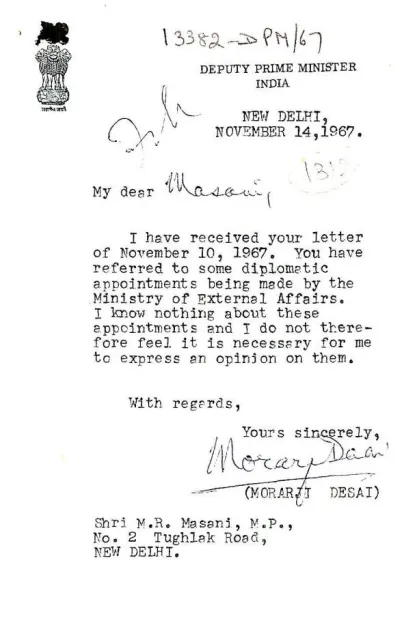
Morarji Desai
1896–1995
How Morarji Desai is discussed in this archive
Authored 1 work in the archive.
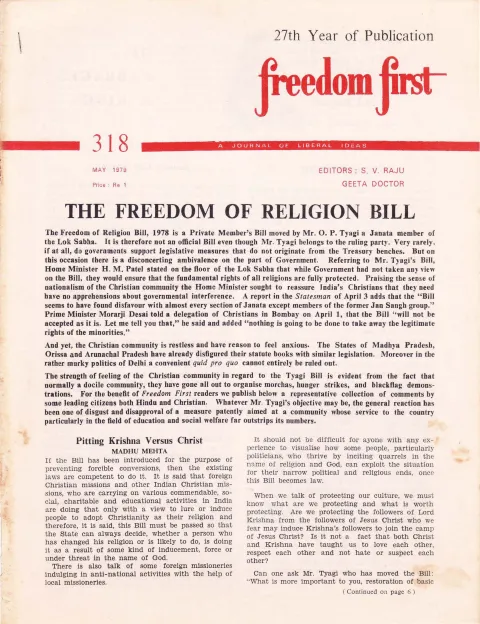
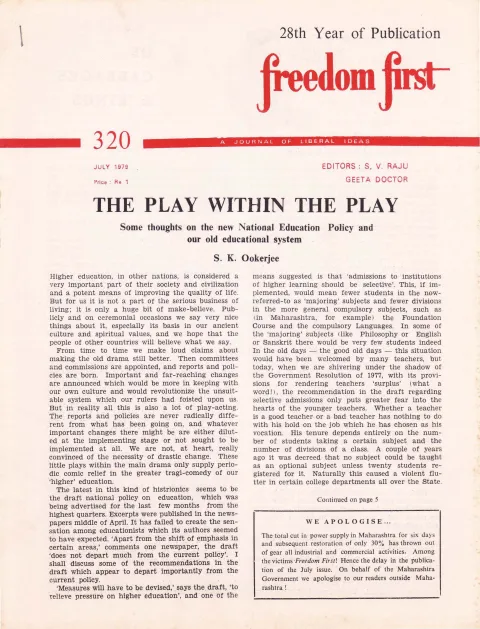
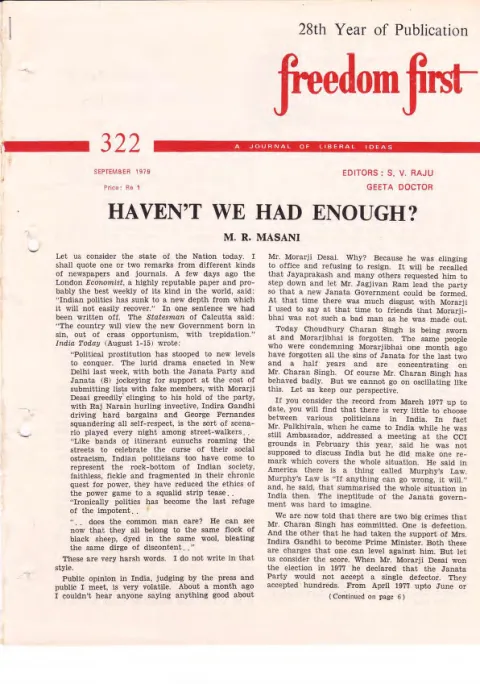
Referenced in 11 other works , including An Inflationary Budget , The Missed Opportunity , and Industrial Relations .
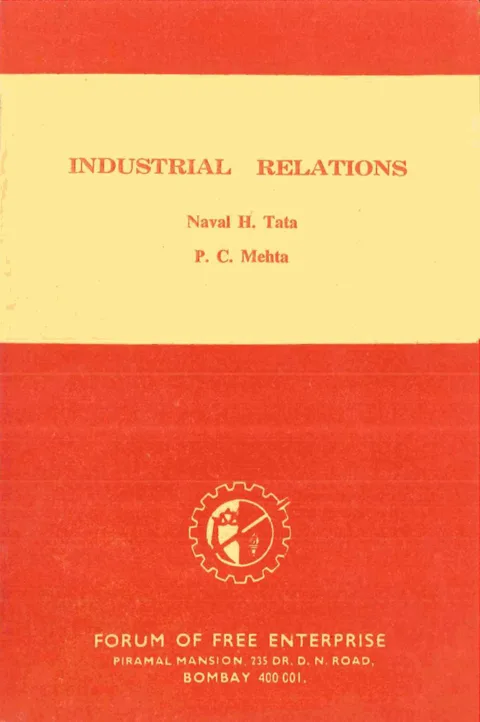
In Industrial Relations : Cited as Prime Minister and addressee of Charan Singh's June 1979 note opposing bonus for railwaymen — positioning Desai's cabinet as the political setting for the Janata-era labour-law and bonus disputes the pamphlet covers.
In Rural Development is Key to Welfare of the Masses : Doshi cites Morarji Desai's Janata government as evidence of the pragmatic, anti-control turn he endorses as a corrective to two decades of mismanagement.
In Discrimination Between the Two Sectors : Master cites Finance Minister Morarji Desai's own admissions in Parliament that public-sector units must earn adequate returns, using the government's own statements to expose the hypocrisy of denying the private sector equal treatment.
In A REVIEW OF THE FINANCE (No. 2) BILL, 1962 : Morarji Desai's abolition of the Expenditure Tax is praised as an act of 'great courage and independent thinking', held up as the positive counterexample to the Finance Bill's unjust capital-gains provisions.
In An Open Letter to L.I.C. : Peregrine traces the LIC's target-chasing culture back to Morarji Desai's 1959 Lok Sabha exhortation to reach Rs.
By Morarji Desai (1)
Nothing here matches. Clear the search or remove some filters.
Matches inside Morarji Desai's works and pages
Mentioned in (69)
Primary works (66)

Show all 66
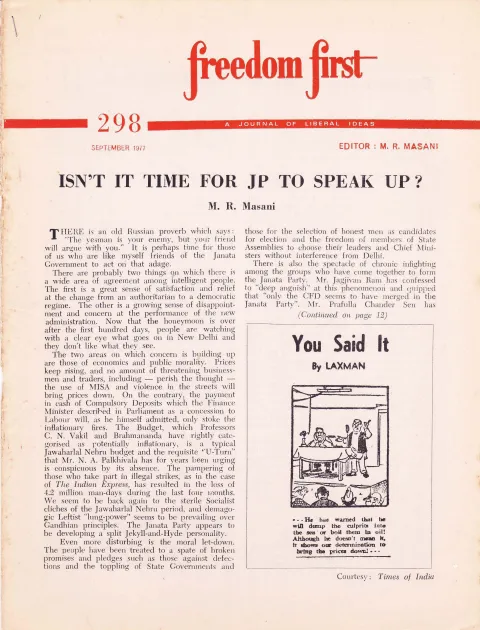
- Industrial Relations · 1979
- "a note from the then Finance Minister and Deputy Prime Minister Mr. Charan Singh, addressed to Prime Minister Morarji Desai, opposing the grant of bonus to railwaymen" · frames the bonus controversy at the apex of the Janata cabinet
- Rural Development is Key to Welfare of the Masses · 1977
- "Doshi welcomes the new "rolling plan" and the Janata government's pragmatic, anti-control turn (citing Morarji Desai)" · constructive section; Morarji Desai is invoked as the political embodiment of the policy turn Doshi supports
- Discrimination Between the Two Sectors · 1966
- "Master cites Finance Ministers Morarji R. Desai (1962-63) and T. T. Krishnamachari (1964-65) to show that even the Government now concedes that public-sector units must earn 'adequate' profits" · Morarji Desai's concessions in Parliament are turned against the government's discriminatory treatment of the private sector
- A REVIEW OF THE FINANCE (No. 2) BILL, 1962 · 1962
- "He praises Morarji Desai's "great courage and independent thinking" in abolishing the Expenditure Tax" · Desai's decisive policy reversal is cited as evidence that the Finance Minister can and should exercise independent judgment to correct unjust taxation
- An Open Letter to L.I.C. · 1962
- "Peregrine traces the LIC's promotional culture back to Morarji Desai's 1959 Lok Sabha exhortation to reach Rs. 1,000 crores of new business as soon as possible" · incentive-analysis section; Desai's parliamentary target is identified as the originating political pressure behind the Corporation's mis-selling culture
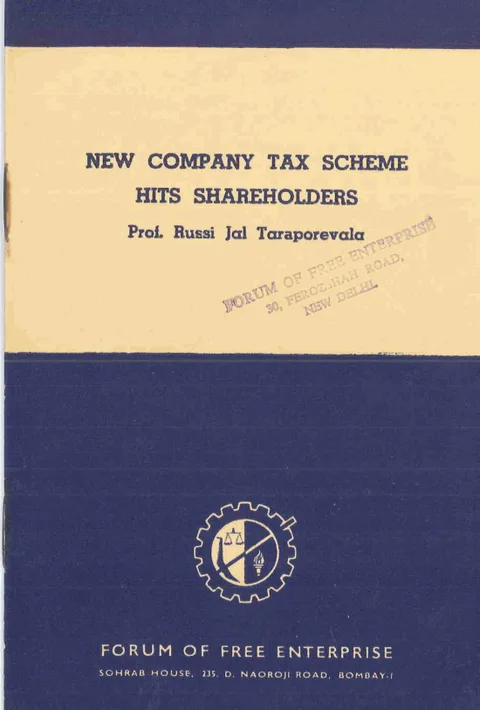
- NEW COMPANY TAX SCHEME HITS SHAREHOLDERS · 1960
- "a goal he hopes Finance Minister Morarji Desai will continue to pursue." · closing address to Desai as the finance minister tasked with carrying the reform forward
- An Inflationary Budget · 1959
- "A. D. Shroff's address dissects the Union Budget for 1959-60 presented by Finance Minister Morarji Desai" · opening identification of the budget's author; Desai is Shroff's primary interlocutor throughout the pamphlet
- "He concedes one welcome reform: Morarji R. Desai's formal abolition of the compulsory deposit scheme that the Forum had earlier denounced." · sole concession in the address; Desai is credited for one reform the Forum had long demanded
- Cotton Policy · 1956
- "Morarji Desai, would bring fairness and rule of law to the trade" · closing note expressing qualified optimism that Desai's appointment as Commerce Minister would reverse the arbitrary government interventions described throughout the pamphlet

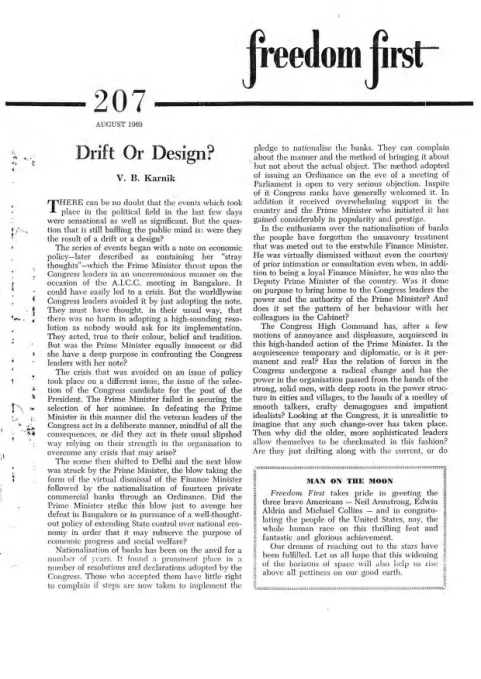
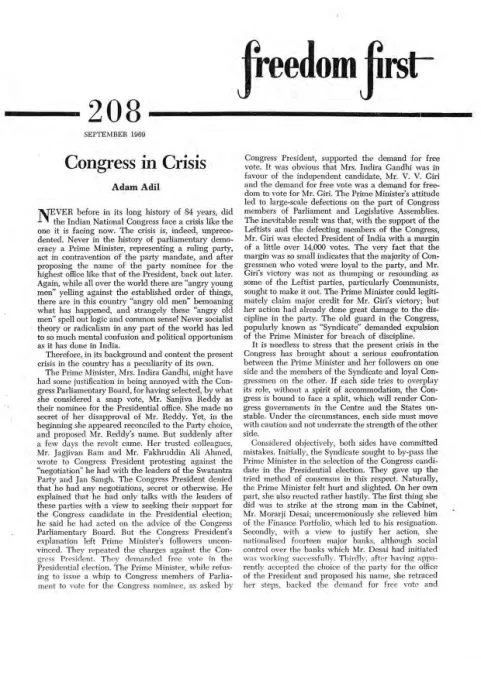
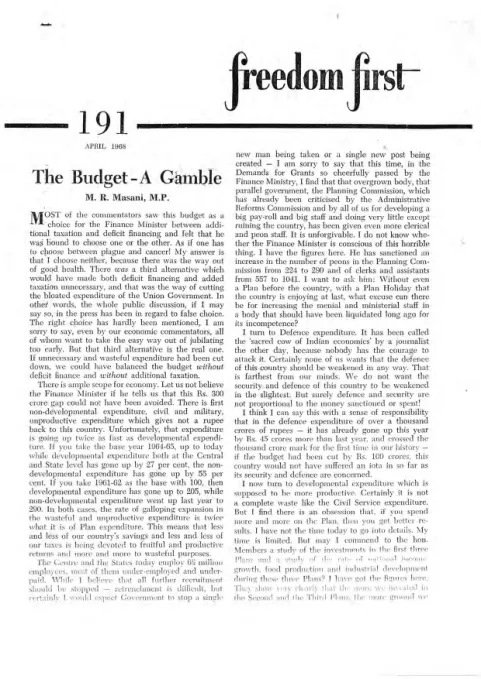
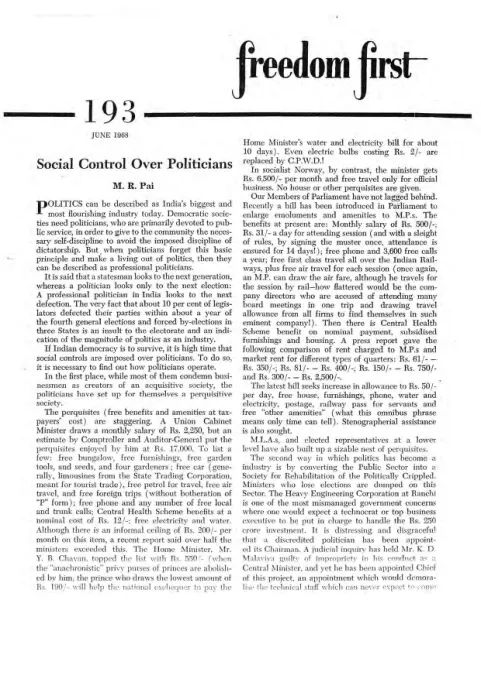
Excerpts (3)
- National Priorities for 1970
- "I am very glad, therefore, that a strong opponent of coalitions like Mr Morarji Desai has now veered around to the view that coalitions are now inevitable." · Desai's reversal supplies the political evidence for Masani's coalitions-thesis
- Sikkim – Through Other Eyes
- "I was glad when Mr. Morarji Desai, Prime Minister of India some years later, admitted that he could not justify the taking over of Sikkim." · Desai's admission used to validate Masani's earlier objection to the annexation
- The Missed Opportunity
- "Even Sri Morarji Desai did not wish to join the Cabinet till he was offered the incentive of a Deputy Prime Ministership." · Desai cited to illustrate the universal human need for incentives, applying the principle even to senior politicians
- "Mr Morarji Desai says that he would like to rehabilitate his confidence, but he has not taken any steps for it." · Desai criticised for rhetorical acknowledgement of the inflation problem without substantive policy action