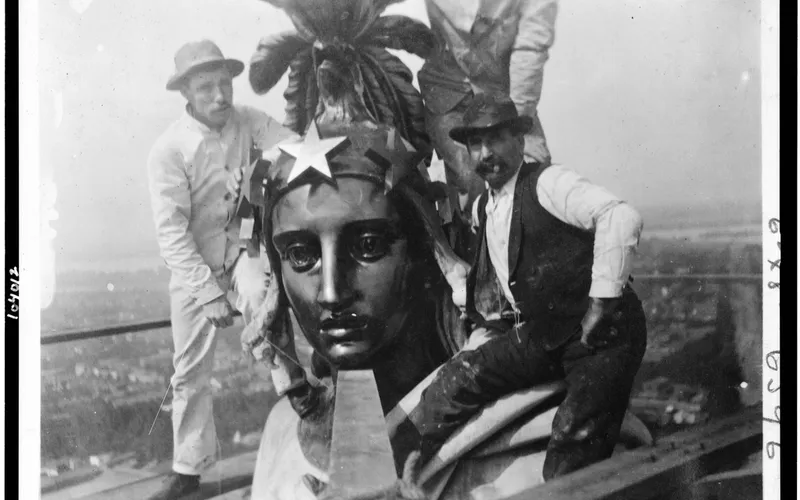
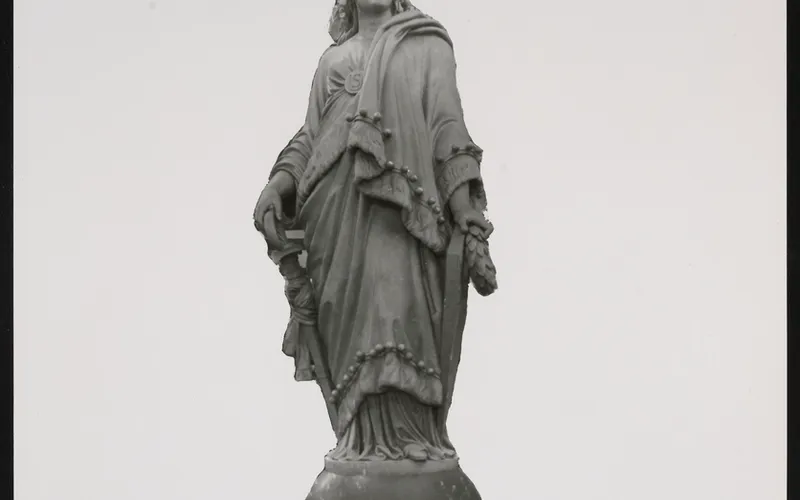
periodical issue
Freedom First
A Journal of Liberal Ideas
By M. R. Masani, Sqn. Ldr. S. K. Bain (Retd.), S. I. Clerk, Nitin G. Raut, R. V. Murthy, S. I. Clerk
Published for the Democratic Research Service by J. R. Patel, Associate Editor, Freedom First at 127, Mahatma Gandhi Road, Bombay 400 023 (Phone: 273914) and Printed by him at The Popular Press (Bom.) Pvt. Ltd., 35C Tardeo Road, Bombay 400 034 · Bombay · 1983
16 pages
Freedom First
Summary
This is issue No. 369 of Freedom First (November 1983, Rs. 2, 31st Year of Publication), the Bombay-based liberal monthly founded by M. R. Masani and edited by K. S. Venkateswaran, published for the Democratic Research Service. The issue opens with the editor’s own cover essay condemning Robert Mugabe’s Zimbabwean government for re-arresting acquitted Air Force officers and undermining judicial independence, continues with Minoo Masani’s regular “As I See It” column arguing for replacing hanging with lethal injection while retaining capital punishment for the worst crimes, carries a polemical piece defending South Korea and attacking the Soviet Union over the KAL 007 shootdown, a “Cultural Roundabout” arts column, an essay on the crisis of credibility facing the Non-Aligned Movement and Indira Gandhi’s handling of it, two book reviews (on Gandhian economics and on the political history of Sikkim’s merger with India), and a closing page of “With Many Voices” press quotations. In the rendered pages the volume’s argumentative centre is a defence of liberal-constitutionalist and anti-Soviet/anti-authoritarian positions across very different registers — African decolonisation, criminal justice, Cold War propaganda, and non-alignment.
Key points
-
K. S. Venkateswaran’s cover editorial “Human Rights in Zimbabwe” condemns Robert Mugabe for re-arresting six white Air Force officers immediately after their acquittal, despite judicial findings that their confessions were extracted through torture.
-
Minoo Masani’s “As I See It” argues the Supreme Court underestimated how often hanging fails to kill instantly, and proposes replacing it with pentothal lethal injection, citing the 1982 U.S. execution of Charlie Brooks Jr. as precedent.
-
Sqn. Ldr. S. K. Bain’s “The Lies Behind KAL 007” argues the Soviet shootdown of Korean Air Lines Flight 007 violated ICAO conventions the USSR itself had endorsed after Israel’s 1973 downing of a Libyan airliner, and dismisses the Soviet “spy plane” theory as implausible.
-
S. I. Clerk’s “Cultural Roundabout” surveys Bombay’s arts scene, including the Jehangir Art Gallery’s Monsoon Show, Alyque Padamsee’s lavish production of Evita, and a John Huston film retrospective at the American Center.
-
Nitin G. Raut’s “The NAM Crisis” argues the Non-Aligned Movement applies double standards, condemning the U.S. over Diego Garcia and Israel while soft-pedalling Soviet-backed aggression, and criticises Indira Gandhi’s private correspondence with Andropov and Brezhnev.
-
R. V. Murthy reviews J. S. Mathur’s “Industrial Civilisation & Gandhian Economics,” clarifying that Gandhi favoured village self-sufficiency and opposed only automation that displaced workers while enriching manufacturers, not machinery as such.
-
S. I. Clerk reviews B. S. Das’s “The Sikkim Saga,” an insider account of Sikkim’s 1975 merger into India, which calls Indira Gandhi the “main actor” whose “ruthlessness was unmatched.”
Essays
Human Rights in Zimbabwe
By K. S. Venkateswaran
K. S. Venkateswaran’s cover editorial condemns Zimbabwean Prime Minister Robert Mugabe for re-arresting six white Air Force officers immediately after their acquittal by the Harare High Court on charges of sabotage, despite judicial findings that their ‘confessions’ had been extracted through torture. The piece frames the episode as exposing the hollowness of Mugabe’s democratic credentials, contrasts it with the independence shown by judges such as Mr. Justice Dumbutshena, and widens the argument into scepticism about whether newly decolonised states are equipped to sustain democratic rule.
- Joshua Nkomo’s return to Harare from exile was used by Mugabe’s regime for propaganda purposes.
- Six white Air Force officers, acquitted of sabotage and complicity with South Africa after prolonged detention and alleged torture, were re-arrested by Mugabe’s order immediately after acquittal.
- The presiding judge who upheld the officers’ torture complaint was himself a prominent black African who had backed Zimbabwe’s independence struggle.
- Mugabe dismissed the British evidentiary rule against confessions obtained under torture as a ‘stupid ass’ colonial relic.
- The episode drew resignations in the Zimbabwean Air Force and international press criticism, including from The Times (London).
- The essay argues the episode raises broader questions about the wisdom of granting self-rule to states not equipped to sustain democratic polity.
- Judicial independence, exemplified by Mr. Justice Dumbutshena’s ruling, is presented as the one redeeming feature of the episode.
As I See It
By Minoo Masani
Minoo Masani’s “As I See It” column responds to the Indian Supreme Court’s September 1983 ruling upholding execution by hanging. Masani says he is not opposed to capital punishment for the most heinous crimes (citing the Pune murder of Sanskrit scholar Mr. Abhyankar and his family) but argues the Court underestimated how often hanging fails to kill instantly, causing slow strangulation, botched drops, or suffocation. He proposes replacing hanging with pentothal lethal injection as a more humane method, citing the 1982 U.S. execution of Charlie Brooks Jr. as the sole precedent, and calls on Amnesty International’s Mrs. Malti Singh to campaign not for abolition but for a more humane method of execution and a right to opt for immediate execution over life imprisonment.
- The Indian Supreme Court ruled on 23 September that execution by hanging should continue, as only Parliament can abolish capital punishment.
- Masani supports capital punishment for particularly heinous murders but distinguishes this from believing all life is sacred.
- He argues the Supreme Court underestimated the frequency of botched or prolonged hangings, citing a criminologist’s estimate of 5-10% misadministration.
- He cites Dr. Hiranandani’s 1976 advocacy of pentothal injection and his own graphic account of witnessing a hanging.
- Pentothal lethal injection, used on Charlie Brooks Jr. in Texas in December 1982, is presented as a painless alternative already used on animals.
- Masani credits the ‘Hangman’s Handbook’ by Duff and his friends Arthur Koestler and David Astor with helping abolish capital punishment in Britain.
- He calls for Amnesty International to campaign for humane execution methods and a prisoner’s right to opt for immediate execution rather than abolition per se.
The Lies Behind KAL 007
By Sqn. Ldr. S. K. Bain (Retd.)
Sqn. Ldr. S. K. Bain (Retd.) argues that the Soviet Union’s 1 September 1983 shootdown of Korean Air Lines Flight 007 violated multiple ICAO conventions and international norms, drawing an explicit parallel to the Soviet delegate’s own condemnation of Israel’s 1973 shootdown of a Libyan airliner. The essay lays out ICAO rules requiring identification of unidentified aircraft before force is used, argues the published flight path shows KAL 007 only marginally strayed into Soviet airspace, and dismisses the Soviet claim that the airliner was on an espionage mission as technically implausible given the risk of exposure and the availability of superior U.S. reconnaissance aircraft (SR-71, U-2R).
- The Soviet Union itself joined a unanimous 1973 ICAO resolution condemning Israel’s shootdown of a Libyan civilian airliner and had paid compensation for it.
- ICAO, with 151 of 156 UN member-nations as signatories, requires identification and non-lethal interception of straying aircraft before resorting to force.
- KAL 007 killed 269 people from 14 countries, including India, and was shot down after the Soviets allegedly tracked it off-course for two and a half hours without redirecting it.
- The published flight path shows the wreckage falling in open sea far from Sakhalin, undercutting Soviet claims the plane penetrated 500 miles into Soviet airspace.
- The Soviet Union refused to submit flight recordings or allow independent investigation of the incident.
- The essay dismisses the Soviet ‘spy plane’ theory as implausible given superior U.S. reconnaissance capability (SR-71, U-2R) and the technical difficulty of concealing espionage modifications from ground technicians.
- The 1978 Soviet shootdown of another Korean airliner is cited as the precedent that led to the 1981 expansion of ICAO’s Annexe conventions.
Cultural Roundabout
By S. I. Clerk
S. I. Clerk’s “Cultural Roundabout” column surveys Bombay’s cultural scene between May and September 1983: the Jehangir Art Gallery’s annual Monsoon Show spotlighting young J. J. School of Art talent alongside established artists Ram Kumar and Husain; an Alliance Francaise exhibition of woodcuts by sculptor Amarnath Sehgal; a Prince of Wales Museum exhibition of Krishna-themed art timed to Janmashtami; Alyque Padamsee’s lavish, high-priced production of Evita; and the American Center’s John Huston film retrospective (nine films including The African Queen, The Misfits, and Treasure of the Sierra Madre), with commentary on Huston’s directing career and prior USIS retrospectives.
- The Jehangir Art Gallery’s sixth annual Monsoon Show featured roughly 70 works by 13 young artists including photographers, a ceramist, and two sculptors, alongside works by established artists Ram Kumar and Husain.
- Alliance Francaise exhibited woodcuts by Indian sculptor Amarnath Sehgal, accompanied by his own short poems.
- The Prince of Wales Museum and Museum Society of Bombay co-sponsored a Janmashtami exhibition of Krishna-themed miniatures, pichhwais, and artifacts from Kangra, Nathdwara, Nepal, and South India at Coomaraswamy Hall.
- Alyque Padamsee’s production of Evita is described as visually lavish, with a Rs. 100 top ticket price described as a new record for local theatre.
- The American Center (USIS) ran a John Huston film festival from 10-27 September with five daily shows of nine classic films.
- The column praises Huston’s naturalistic directing style and highlights his Oscar-winning supporting role in Treasure of the Sierra Madre alongside his son Walter Huston.
The NAM Crisis
By Nitin G. Raut
Nitin G. Raut argues that the Non-Aligned Movement (NAM) has degenerated into a facade that no longer reflects genuine non-alignment, taking President Reagan’s UN speech about NAM states as disguised Soviet client-states as its starting point. The essay accuses NAM of applying double standards — condemning the U.S. over Diego Garcia and Israel while soft-pedaling Soviet-backed aggressions (Afghanistan, Libya’s invasion of Chad, the Syrian occupation of Lebanon, Vietnam’s invasion of Cambodia, Cuban interventions in Africa) — and criticises Indira Gandhi, as NAM chairperson, both for contradictory rhetoric on disarmament and for a private approach to Soviet leaders (Andropov, Brezhnev) seeking help restraining the Communist Party of India’s domestic opposition, which the author frames as itself an invitation to foreign interference. It closes by noting the poor turnout at Mrs. Gandhi’s UN summit as evidence of NAM’s declining credibility.
- President Reagan told the UN General Assembly that many non-aligned states are Soviet client-governments practising ‘pseudo non-alignment’.
- NAM is accused of consistently condemning US-linked issues (Diego Garcia, Israel) while downplaying Soviet-aligned interventions in Afghanistan, Chad, Lebanon, Cambodia, and Africa.
- Indira Gandhi’s UN speech on disarmament is called contradictory given that NAM states are themselves major arms recipients from the superpowers.
- Gandhi’s private correspondence with Andropov and her complaints to Brezhnev about domestic Left-party opposition are cited as ironic given her public criticism of superpower interference.
- Gandhi’s global summit in New York drew a lukewarm, disparate turnout dominated by Soviet client-states, which the essay reads as evidence of NAM’s declining credibility.
- The essay concludes both superpowers benefit from keeping NAM weak and divided as a testing ground for their own influence.
Book Reviews: Industrial Civilisation & Gandhian Economics by J. S. Mathur
By R. V. Murthy
R. V. Murthy reviews “Industrial Civilisation & Gandhian Economics” by J. S. Mathur (1971, Pustakayan, Pp. 175, Rs. 13), praising the author for marshalling Mahatma Gandhi’s economic observations alongside supportive views from figures like Bertrand Russell, while cautioning readers to distinguish what Gandhi actually said from later interpretations of “Gandhian Economics.” The review explains Gandhi was not a formal economist but was concerned more with limiting individual wants than with wealth per se, favoured village self-sufficiency and export only after domestic needs were met, supported the theory of trusteeship as a step beyond G. D. H. Cole’s social-economic order, and was not opposed to machinery as such but only to automation that displaced workers while enriching manufacturers.
- The book, though published in 1971, is presented as newly relevant given India’s post-Independence economic experience and the fading memory of Gandhi’s theories.
- The reviewer distinguishes Gandhi’s actual statements from later interpretations packaged as ‘Gandhian Economics’.
- Gandhi rejected economics as merely ‘the science of wants’ and prioritised reducing wants over increasing production.
- Gandhi advocated village self-sufficiency and industries catering first to local needs, permitting exports only once internal demand was met.
- Gandhi’s theory of trusteeship is described as going a step beyond G. D. H. Cole’s concept of a social economic order, aiming at ‘equal distribution’ rather than equal possession of goods.
- The review clarifies Gandhi was not opposed to all machinery, only to automation that displaced human labour while enriching manufacturers and concentrating economic power.
- A 1935 Harijan quote by Gandhi on village revival and a further quote opposing ‘the madness of thinking that machinery saves labour’ are cited at length.
Book Reviews: From The Horse’s Mouth — The Sikkim Saga by B. S. Das
By S. I. Clerk
S. I. Clerk reviews “The Sikkim Saga” by B. S. Das (Vikas, New Delhi; Pp. 166; Rs. 75.00), a first-hand account by the last Chief Executive of Sikkim (1973-74) of the process by which Sikkim became India’s 22nd state via the 38th Constitutional Amendment in April 1975. The review traces the book’s historical background from 1641 through the 1950 treaty preserving Sikkim’s protectorate status, the Chogyal’s conflict with Delhi and the anti-Chogyal parties, the 1973 agreement effectively subordinating Sikkim to India, and personality sketches including the Chogyal, his American wife Sarah Lawrence (Hope Cooke), and Indira Gandhi, whom Das describes as the ‘main actor’ in the Sikkim saga.
- Das was appointed Chief Executive of Sikkim in April 1973 and headed the administration until its 1974 associate-state status and 1975 full merger into India.
- The book traces Sikkim’s history from 1641, its 1861 protectorate status under the East India Company, and a 1950 treaty retaining protectorate status despite Sardar Patel’s contrary pragmatic views against Nehru’s idealism.
- Das describes the ‘grim’ situation on assuming charge and the events leading to the 8 May 1973 Agreement between the Chogyal, Sikkimese political parties, and the Government of India.
- Das admits his own role was essentially as an instrument converting a protectorate into an Indian state, while expressing personal affection for the Chogyal.
- The book profiles women involved, including Sarah Lawrence (the Chogyal’s American wife, nee Hope Cooke), Cocoola, and Elisa Maria Kazini, plus Rani Bhuvaneshwari Devi.
- Das calls Indira Gandhi the ‘main actor’ in the Sikkim saga, saying she ‘had all the cards up her sleeve and her ruthlessness was unmatched’.
- The review notes ongoing consequences, including the Gorkha League of Darjeeling’s demand for a Gorkhaland incorporating Darjeeling.
Generated by the v1.5 extraction pipeline. Awaiting editorial review.
Metadata and summary are AI-extracted from the source PDF and reviewed for editorial accuracy. The original work is available via the Read PDF tab above (where present); paragraph-level citation inside the PDF is deferred to a future engagement.