periodical issue
Freedom First
A Journal of Liberal Ideas
By M. R. Masani, Don Mac-Gillis, Joseph Pereira, Jai Nimbkar, A Journalist, S. P. Aiyar, P. N. Driver, Bejan Daruwalla, Manjula Padmanabhan
Published for the Democratic Research Service by J. R. Patel, Associate Editor, Freedom First at 127, M. Gandhi Road, Bombay 1 (Phone: 254341) and printed by him at Inland Printers, 55 Gamdevi Road, Bombay 7. · Bombay · 1974
16 pages
Freedom First
Summary
Freedom First no. 266 (July 1974), edited by M. R. Masani for the Democratic Research Service, opens with Masani’s editorial ‘The Big Bang,’ a survey of worldwide and Indian press reaction condemning the Pokhran nuclear test as a misallocation of resources amid poverty. The ‘Between You & Me and The Lamp Post’ notes column comments on Giscard d’Estaing’s French election win, Willy Brandt’s fall and Helmut Schmidt’s succession in West Germany, and a corruption scandal involving Soviet Culture Minister Ekaterina Furtseva. A travel letter by American journalist Don Mac-Gillis, ‘India: The Tender Trap,’ recounts the bureaucratic and social frustrations of budget tourism in Kashmir, Delhi and Agra. Joseph Pereira’s ‘Danger of Coup in Sri Lanka’ analyses the radicalisation of Sirimavo Bandaranaike’s United Front government and the resulting risk of military intervention. Jai Nimbkar’s ‘A Nation of Children’ argues that Indian social organisation (family, caste, the paternalist ‘maybap sarkar’ idea of government) breeds a dependent, anti-individualist mindset that threatens to tip the country toward totalitarianism. A substantial Reviews section covers M. Chalapathi Rau’s The Press, M. Ruthnaswamy’s Legislation, Principles and Practices, and S. E. Ayling’s Portraits of Power, followed by a theatre review of Alyque Padamsee’s Jesus Christ Superstar production, a poem by Bejan Daruwalla, and a closing page of quotations (‘With Many Voices’).
Key points
-
M. R. Masani’s “The Big Bang” editorial catalogues international and Indian press condemnation of the Pokhran nuclear test as a misallocation of resources amid poverty, citing Rs. 880 crores already spent on atomic energy and rejecting Indira Gandhi’s comparison of the bomb to steel-mill investment.
-
An unsigned notes column welcomes Giscard d’Estaing’s French election win and Helmut Schmidt’s succession as West German Chancellor as favourable to NATO, and reports Soviet Culture Minister Ekaterina Furtseva’s reprimand for misusing office to obtain dacha building materials.
-
Don Mac-Gillis’s travel letter “India: The Tender Trap” recounts a budget tourist’s frustrations with Kashmiri touts, Delhi bureaucracy over booking flights and rail tickets, and an unsettling harassment incident in a Delhi bazaar, ending on a positive note about Fatehpur Sikri and the Taj Mahal.
-
Joseph Pereira’s “Danger of Coup in Sri Lanka” traces Sirimavo Bandaranaike’s United Front government’s radical land ceilings, nationalisations, and near-total state control of the press, arguing the propertied classes dominating the officer corps are the only real check on the increasingly radicalised government.
-
Jai Nimbkar’s “A Nation of Children” draws on fieldwork among Koyna dam evacuees to argue Indian family, caste, and “maybap sarkar” habits of dependence on authority risk tipping the country toward totalitarianism absent deliberate cultivation of individual initiative.
-
An unsigned review of M. Chalapathi Rau’s The Press faults the book for omitting the Hindustan Times and Indian Express, relying uncritically on Margarita Barnes’s earlier history, and treating the Press Commission report as an unchanging authority.
-
Two book reviews cover M. Ruthnaswamy’s Legislation, Principles and Practices, praised for its freedom from partisan bias and its finding that ceiling legislation covers only 22% of India’s irrigated area, and S. E. Ayling’s Portraits of Power, whose thesis that unchecked power corrupts democrats and dictators alike is endorsed via the instability of post-war French governments.
-
An unsigned theatre review finds Alyque Padamsee’s Bombay production of Jesus Christ Superstar musically faithful but directorially misjudged, treating the show’s irreverent tone with unsuited “reverence and Christian piety.”
-
Bejan Daruwalla’s poem “For a Fallen Student” elegises a young man killed in political violence, its sterile imagery contrasting his senseless death with the indifferent continuation of everyday city life; the closing “With Many Voices” page quotes The Economist on Indira Gandhi’s nuclear “hypocrisy” and Karl Marx on history repeating as tragedy and farce.
Essays
The Big Bang
By M. R. Masani
M. R. Masani’s editorial catalogues the overwhelmingly critical domestic and international press reaction to India’s May 1974 nuclear test at Pokhran, Rajasthan. He assembles quotations from the Statesman, Economic and Political Weekly, Chicago Tribune, Richmond Times Dispatch, and Indian officials to argue that the test was an act of ‘plain conceit’ that diverted enormous resources from basic needs like drinking water, food and irrigation while the government professed poverty. Masani rejects Indira Gandhi’s defence of the programme (comparing it to steel-mill investment) and closes by pressing the government for an accounting of what the money could otherwise have achieved, and noting the damage to India-Pakistan detente and foreign aid confidence.
- American press claims that Indians universally took pride in the blast are dismissed as false; many Indians, including the editor, felt embarrassed.
- The Statesman called the test ‘Total Irresponsibility’ and traced it to ‘plain conceit’.
- Left-leaning Economic and Political Weekly was equally critical, mocking the test as a distraction from inflation and the railway strike.
- Official figures show enormous cumulative and planned spending on atomic energy (Rs. 880 crores over 25 years already spent; Rs. 733 crores more planned for 1974-79) despite widespread lack of clean drinking water.
- Indira Gandhi’s comparison of the bomb project to earlier steel-mill investments is presented as a misguided justification.
- The test is framed as damaging India’s credibility with foreign aid donors and setting back India-Pakistan detente.
India: The Tender Trap
By Don Mac-Gillis
This unsigned notes column opens by welcoming Valéry Giscard d’Estaing’s election as French President over the Socialist-Communist candidate Mitterrand, and Helmut Schmidt’s succession to Willy Brandt as West German Chancellor, framing both as favourable to NATO and Western cohesion. It then turns to a Soviet corruption scandal in which Culture Minister Ekaterina Furtseva was reprimanded by the Party for misusing her position to obtain cut-price building materials for a private dacha, contrasting the lack of a free press in the USSR with the West’s ability to expose such misdeeds. The column closes noting the reappearance of the underground Russian samizdat journal ‘Chronicle of Current Events’ after a 19-month gap.
- Giscard d’Estaing’s win over Mitterrand is welcomed as a ‘change without adventure’ that keeps France from Communist-backed government.
- Helmut Schmidt’s accession as West German Chancellor is called a good omen for NATO, correcting the Gaullist/Ostpolitik drift of prior years.
- Soviet Culture Minister Ekaterina Furtseva is reported reprimanded for misusing her office to obtain building materials for a private dacha.
- The column argues the absence of a free press means such Soviet misdeeds are rarely surfaced to the public.
- The underground samizdat ‘Chronicle of Current Events’ resumed publication after a 19-month suppression gap despite a contributor already serving a five-year sentence.
Danger of Coup in Sri Lanka
By Joseph Pereira
Excerpted from a letter by freelance American journalist Don Mac-Gillis to the magazine’s Associate Editor, this piece recounts a budget tourist’s difficult passage through Kashmir, Delhi and Agra. It describes disappointing weather and unpleasant, insistent Kashmiri merchants and houseboat touts in Srinagar and Gulmarg, a bureaucratic ordeal booking an early charter flight home and reserving a third-class rail ticket to Agra, an act of spontaneous hospitality from a fellow train passenger, and an unsettling incident of harassment experienced by his female companion Ingrid in a Delhi bazaar. The letter closes on a positive note about a well-guided day trip to Fatehpur Sikri, Agra Fort and the Taj Mahal.
- Kashmir’s houseboat and pony-trek tourism is described as pestered by insistent touts and sled-pullers despite scenic mountain travel.
- Booking a changed Air India charter flight in Delhi required four visits and considerable patience with bureaucracy, but no bribe was needed.
- Reserving a third-class rail ticket to Agra took 45 minutes in a queue dominated by professional ‘runners’ for travel agencies.
- A fellow rail passenger’s unprompted gift of a blanket is cited as a notable act of hospitality experienced during the third-class overnight journey.
- An episode in a Delhi bazaar saw the author’s companion Ingrid harassed and groped by local boys and young men, which the writer says permanently coloured their view of Delhi.
- The guided visit to Fatehpur Sikri, Agra Fort and the Taj Mahal is praised as one of the most enjoyable parts of the trip.
A Nation of Children
By Jai Nimbkar
Joseph Pereira examines Sri Lanka’s political trajectory nine months after the Chilean coup, arguing that a military takeover is increasingly plausible despite the armed forces’ restraint so far. He traces Sri Lanka’s history from Solomon Bandaranaike’s 1956 nationalist government through his assassination, his widow Sirimavo Bandaranaike’s return to power, the 1962 attempted coup, and the 1971 United Front’s radical turn: land ceilings, nationalisation of foreign petroleum, insurance, tea and rubber-related industries, and near-total state control over the press (Lake House, Sun and Times groups). Pereira argues these reforms have alarmed both Western economic interests, who control 60% of Sri Lanka’s tea export earnings, and local propertied classes, whose sons dominate the officer corps and who now represent the only meaningful check on the increasingly powerful, radicalised United Front government.
- Sri Lanka’s United Front government, led by Mrs. Sirimavo Bandaranaike, commands 115 of 150 parliamentary seats and includes Trotskyite, Moscow-line and pro-Peking factions.
- British firms own 250,000 acres of Sri Lanka’s best tea and rubber land, and control of the tea industry (60% of export earnings) has become a crucial national issue.
- Land reform imposes ceilings of 50 acres (non-paddy) and 25 acres (paddy), plus ceilings on house ownership and income, alongside a capital levy and compulsory savings scheme.
- The Business Acquisition Act empowers the government to nationalise any firm; graphite mines and the British Ceylon Company’s cocoanut oil monopoly have already been taken over.
- All three major newspaper groups (Lake House, Sun, Times) have been brought under state ownership or control, giving the Front near-total command of the media alongside state radio and cinema news.
- Sri Lanka’s military, drawn from the disgruntled propertied classes and lacking the nationalist consciousness that (per the author) India’s armed forces developed through frequent wars, is described as the only real countervailing force against the Front.
Reviews (Editors and Editors; A Commendable Effort; Powerful Portraits)
By A Journalist; S. P. Aiyar; P. N. Driver
Jai Nimbkar draws on fieldwork among villagers displaced by the Koyna dam to argue that Indians widely exhibit a ‘child-response’ to authority: a habit of demanding the government solve problems (a blocked well, uncultivated resettlement land, broken irrigation pumps) rather than acting collectively themselves, even when self-help would be straightforward. He traces this to the country’s family, clan and caste structures, in which one authority figure makes all decisions in exchange for guaranteed security, a pattern he says has simply been transferred onto the state as ‘maybap sarkar’ (parent-government). Nimbkar contends that even mass protest movements reproduce this dependency, since protestors act as conformist followers of a few leaders rather than as autonomous individuals, and that the education system’s guru-based, examination-oriented pedagogy reinforces the same non-questioning mindset. He warns that if this collective refusal of individual initiative and freedom persists, India risks drifting into totalitarianism, arguing that Indian freedom and democracy have survived so far more by accident (population diversity, weak communications, absence of a single group capable of total power) than by conscious cultivation.
- Displaced Koyna dam villagers refused to dig a second well themselves, insisting the government owed it to them despite having already received compensation.
- Villagers given fallow resettlement land let it lie uncultivated for six years waiting for promised government bulldozers rather than clearing it manually.
- Nimbkar traces the attitude to family/caste structures where one authority figure decides everything in exchange for guaranteed food, clothing and shelter.
- Government is now cast in the same paternal role, described in Marathi as ‘maybap sarkar’ expected to protect and provide for citizens.
- Even protests, gheraos and strikes are framed as group phenomena led by a few leaders and followed sheeplike by disciples, not expressions of individual dissent.
- The ‘guru’ system of education, with rote absorption and no encouragement to question, is blamed for perpetuating the same non-individualist mindset.
- Nimbkar warns India’s freedom has persisted due to accidental safety factors (diversity, weak media, no single group with total power) rather than deliberate cultivation, risking a slide toward totalitarianism.
For a Fallen Student (poem)
By Bejan Daruwalla
A book review, signed ‘A Journalist’, of M. Chalapathi Rau’s The Press (National Book Trust). The reviewer faults the 200-page book for omitting the Hindustan Times and Indian Express entirely, relying heavily and uncritically on Margarita Barnes’ The Indian Press for its earlier chapters, and containing factual errors of names, places and journal histories — including a detailed correction of Rau’s claim that Bharata Devi was an organ of the non-Brahmin movement, and of his account of the founding of the Searchlight newspaper in Bihar. The review also criticises Rau’s treatment of the Press Commission report as an unchanging ‘Bible’ despite twenty years of change in the industry, and challenges Rau’s failure to address the practical constraints editorial freedom faces from proprietors, committed editors and government pressure alike.
- The reviewer says The Press omits the Hindustan Times and Indian Express, calling this a significant and non-accidental gap.
- Rau is said to rely entirely on Margarita Barnes’ ‘monumental’ Indian Press for the book’s earlier sections, confusing some names and places in the process.
- A detailed factual correction is offered regarding Bharata Devi (a Tamil weekly/daily linked to Sadanand and S.V. Swami), which the reviewer says was never an organ of the non-Brahmin movement as Rau claims.
- Rau’s account of the Searchlight’s founding is corrected: Sachchidananda Sinha was one of several founders, not the sole founder as the book implies.
- The review argues Rau treats the Press Commission report as timelessly authoritative despite twenty years of industry change, and offers no real solution to the problem of editorial freedom under proprietors, committed editors, or government pressure.
Jesus Christ Understudy (Theatre: review of Jesus Christ Superstar)
By Manjula Padmanabhan
S. P. Aiyar reviews M. Ruthnaswamy’s Legislation, Principles and Practices (D. K. Publishing House, 1974), calling it a commendable historical survey of the nature and absurdities of legislation despite the author’s near-ninety years of age. The review praises Ruthnaswamy’s anecdotal, historically grounded style and his freedom from partisan bias, while noting serious flaws: repetitive and unchronological early chapters, numerous errors in names, book titles and dates (e.g., Helvetius’s, Edmund Burke’s and David Ricardo’s birth years, Leibnitz’s death year, and the date of the Corn Laws’ repeal), and inadequate citation practice. The book is praised particularly for its discussion of income-tax legislation as bred of distrust, and its argument that ceiling legislation covers only 22% of India’s irrigated area, making it largely ‘token’ in effect.
- Ruthnaswamy’s book is praised as free from partisan bias despite his association with an opposition political party.
- The review highlights the book’s argument that income-tax laws are ‘based on distrust and therefore breed deceit’ rather than aiming to help the poor become rich.
- Ruthnaswamy’s claim that ceiling legislation affects no more than 22% of India’s total irrigated area is cited as evidence the reform is largely ‘token legislation’.
- The reviewer lists multiple factual errors: Helvetius’s birth year, Edmund Burke’s birth year, David Ricardo’s birth year, Leibnitz’s death year, and the date of the Corn Laws’ repeal.
- Citation practice is criticised as inconsistent, with footnotes often lacking page numbers and overuse of ‘op. cit.‘
With Many Voices (quotes column)
P. N. Driver reviews S. E. Ayling’s Portraits of Power (George G. Harrap & Co, 5th edition, 1971), a study of seventeen twentieth-century political figures including ten dictators alongside democrats like Nehru, Gandhi, Churchill, De Gaulle, Nasser and Roosevelt. Driver praises Ayling’s engaging style, his impartiality (neither flattering nor condemning his subjects), and his central argument that unchecked power corrupts democrats and dictators alike, illustrated through the instability of post-war French governments under De Gaulle. The review highlights Ayling’s dry humour on Egyptian, Italian and other national character, and closes by endorsing the book’s broader thesis that liberty must be checked by law, quoting Pope’s dictum that ‘whatever is best administered is best.’
- The book profiles seventeen twentieth-century political figures, ten of them dictators, including Marshal Tito, Mussolini, Nasser and others alongside democrats.
- Ayling’s central thesis is that power corrupts democratic politicians no less than a normal dictator, illustrated by post-war France’s twelve ministries in five years and twenty in a decade.
- The review cites Ayling’s argument that American aid was crucial to saving France and Egypt from crisis despite public anti-American sentiment in both countries.
- Ayling’s treatment of Marshal Tito is singled out as showing him standing ‘head and shoulders above all others’ among the dictators profiled.
- The review closes by endorsing the view that liberty requires a legal safeguard against its own excesses, quoting Pope that ‘whatever is best administered is best.‘
Essay 9
An unsigned theatre review of Alyque Padamsee’s Bombay production of Jesus Christ Superstar, likening it to ‘watching a foreign film which has been badly dubbed.’ The reviewer finds the musical elements faithful to the Broadway original and effective, particularly the Judas and Herod performances by Conal Almeida and Keith Stevenson, but judges the theatrical direction a failure, faulting Padamsee for opening with a mismatched hymn-singing prologue, casting a weak lead and Mary Magdalene, filling the stage with amateur ‘Pradeep People,’ and fundamentally misunderstanding the show’s irreverent tone by treating it with ‘reverence and Christian piety’ more suited to the smaller, gentler Godspell (staged in Bombay the previous year).
- The production is described as splitting into two planes: a faithful, well-executed musical side and a failed theatrical/directorial side.
- Conal Almeida (Caiaphas) and Keith Stevenson (Herod) are singled out as the standout performers, appreciably older and more professional than the rest of the cast.
- The Christ figure and Mary Magdalene are criticised as unconvincing, with the lead giving a ‘juvenile pop-singer’ impersonation and Mary Magdalene looking ‘unbearably like an overdressed schoolgirl.’
- The review contrasts this production unfavourably with Godspell, staged in Bombay the prior year, arguing Superstar required strength and inspiration rather than the casual spontaneity suited to Godspell.
- Padamsee is faulted for adding a community hymn-singing prologue and slides of Christ (including one of Gandhi), seen as revealing a misunderstanding of the show’s intended irreverence.
Essay 10
A short poem by Bejan Daruwalla, ‘For a Fallen Student,’ mourning a young man killed in political violence (‘breast to bullet’), depicting his death amid slogans and crowds as senseless and irrecoverable (‘no rose, no grass, no ripening corn grows there’), while ordinary urban life — mothers, scampering children, the guilty — continues around the site of his death.
- The poem elegises an unnamed student killed by a bullet during a political demonstration.
- Imagery emphasises the futility and sterility of the death: no rose, grass, or corn grows at the spot.
- The poem contrasts the fallen student’s fate with the indifferent continuation of everyday urban life around him.
Essay 11
The closing page, ‘With Many Voices,’ is a compilation of quotations drawn from the international press (chiefly The Economist) and other sources, touching on Indira Gandhi’s nuclear hypocrisy, Chancellor Schmidt’s remarks on hair and character, Soviet military-bureaucratic self-interest, inflation and trade unions in Britain, Mitterrand’s concision, Northern Ireland’s status within the United Kingdom, and a closing Karl Marx quotation on history repeating as tragedy and farce.
- Opens with a quotation accusing Indira Gandhi of hypocrisy for preaching against violence while developing India’s own ‘little A Bomb.’
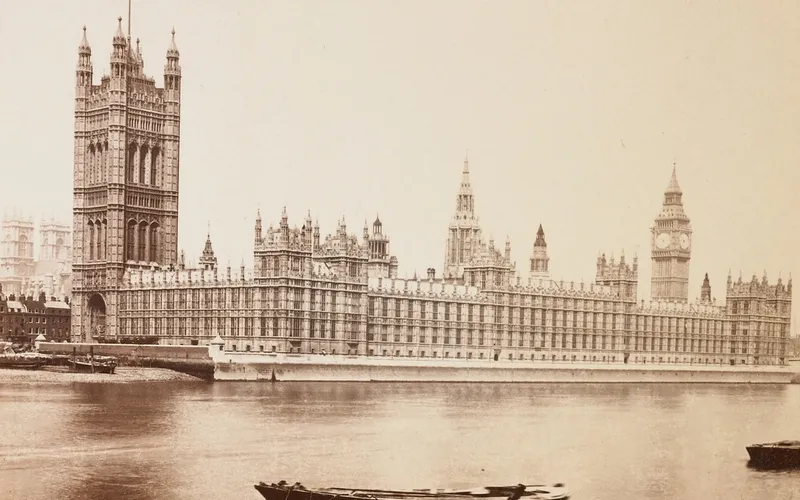
- Includes The Economist’s characterisation of the contemporary British Parliament as ‘chiefly a House of Humbug.’
- Cites Louis Fischer on how the Soviet military and bureaucracy derive political and social nourishment from empire, guaranteeing the dictatorship’s tenure.
- Includes an Economist quotation arguing that inflation’s injustice lies in transferring wealth to those who control trade unions.
- Closes with a Karl Marx quotation, cited via The Economist, that great historical facts and personages occur twice: first as tragedy, second as farce.
Generated by the v1.5 extraction pipeline. Awaiting editorial review.
Metadata and summary are AI-extracted from the source PDF and reviewed for editorial accuracy. The original work is available via the Read PDF tab above (where present); paragraph-level citation inside the PDF is deferred to a future engagement.