
speech · memorial lecture
The Reform of the Judiciary
FORUM OF FREE ENTERPRISE, PIRAMAL MANSION, 235 DR. D. N. ROAD, BOMBAY 400 001. · Bombay · 1980
28 pages
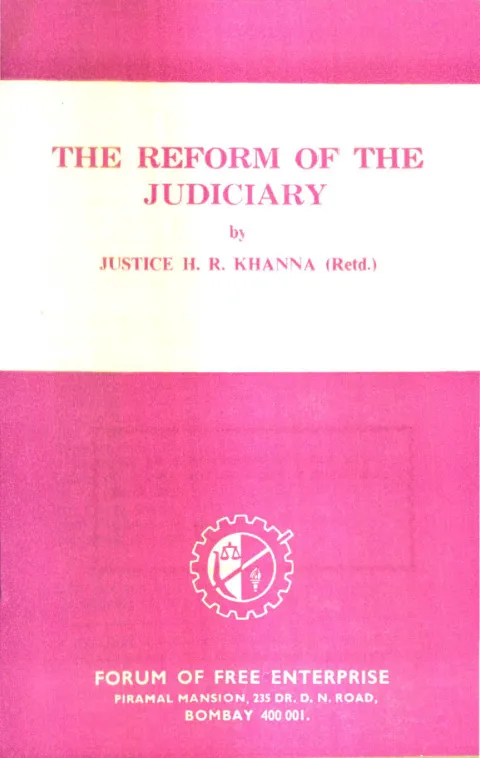
The Reform of the Judiciary
By JUSTICE H. R. KHANNA (Retd.)
Summary
Delivered as the annual A. D. Shroff Memorial Lecture under the auspices of the Forum of Free Enterprise in Bombay on 13th October 1980, Justice H. R. Khanna’s address opens by linking the freedom of enterprise to the wider freedoms of a free society and arguing that restraint and freedom are not inherently in conflict: only restraint that cramps the individual’s spiritual and personal development is an evil, whereas restraint that secures the conditions for free development is legitimate. From this foundation he turns to the courts and judges as the historical ‘sentinels of human freedom and guardians of basic rights,’ contending that the capacity of courts to provide redress is the true index of whether the rule of law prevails over the rule of men.
Khanna stresses that the judiciary, though the weakest of the three organs of the State, holding ‘neither the power of the purse nor the power of the sword,’ commands public respect through its moral authority and its readiness to do justice between rich and poor, mighty and weak, State and citizen, without fear or favour. He warns that the liberties of citizens face real danger from well-meaning but rule-of-law-deficient zeal in the modern welfare State, and that totalitarian regimes characteristically prefer a subservient judiciary that lends a legal veneer to power.
The later rendered pages move to concrete reform proposals. Khanna clarifies that his title should not imply something is basically wrong with the judiciary, which in India has by and large maintained high standards, but that certain infirmities call for attention. He discusses the transfer of judges as a legitimate remedy short of impeachment provided it is not abused, endorsing the Law Commission’s suggestion that no judge be transferred without consent unless a panel of the Chief Justice of India and his four senior-most colleagues finds sufficient cause. To counter complaints of favouritism in appointments, he supports the Law Commission proposal that a High Court Chief Justice consult his two senior-most colleagues before recommending an appointee. Across the rendered pages the consistent argument is that the strongest weapon of the judiciary is its unsullied image, esteem, and public confidence.
Key points
-
The lecture is the 1980 A. D. Shroff Memorial Lecture given to the Forum of Free Enterprise, Bombay.
-
Khanna frames freedom of enterprise within the broader freedoms of a free society and argues freedom and restraint are not inherently opposed.
-
Courts and judges are cast as historical sentinels of human freedom; their capacity to give redress is the real index of the rule of law.
-
The judiciary is the weakest organ of the State, lacking purse and sword, but draws strength from moral authority and public confidence.
-
Totalitarian and dictatorial regimes seek a subservient judiciary to give power a legal veneer.
-
The title is not a charge that the judiciary is broken; Indian courts have largely maintained high standards but show some infirmities.
-
Reform proposals discussed: transfer of judges as a remedy short of impeachment, safeguarded by a CJI-plus-four-seniors panel and consent.
-
To curb favouritism in appointments, a High Court Chief Justice should consult his two senior-most colleagues, per the Law Commission.
Generated by the v1.5 extraction pipeline. Awaiting editorial review.
Metadata and summary are AI-extracted from the source PDF and reviewed for editorial accuracy. The original work is available via the Read PDF tab above (where present); paragraph-level citation inside the PDF is deferred to a future engagement.
People in this work
Related across the archive
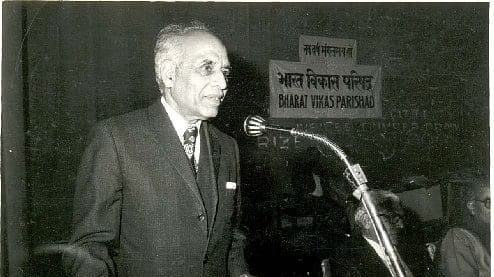 ThePrintNothing suits dictatorship more than a subservient judiciary: Justice HR Khanna
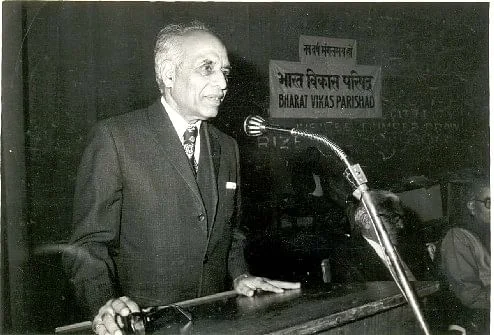 OpinionJustice H.R. Khanna and the Art of Speaking Truth to Power
 ExcerptThe Role of Judiciary in Parliamentary Democracy by Justice M.C. Chagla
 Primary workThe Role of Judiciary in Parliamentary Democracy
 Primary workThe Role of the Judiciary in Parliamentary Democracy