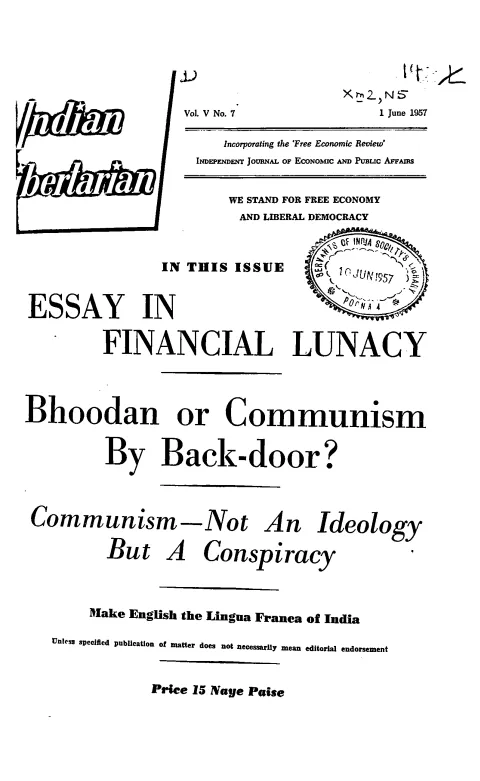
periodical issue
The Indian Libertarian
Independent Journal of Economic and Public Affairs
By MA Venkata Rao, J. K. Dhairyawan
The Indian Libertarian, Arya Bhuvan, Sandhurst Road, Bombay 4 · Bombay · 1957
24 pages
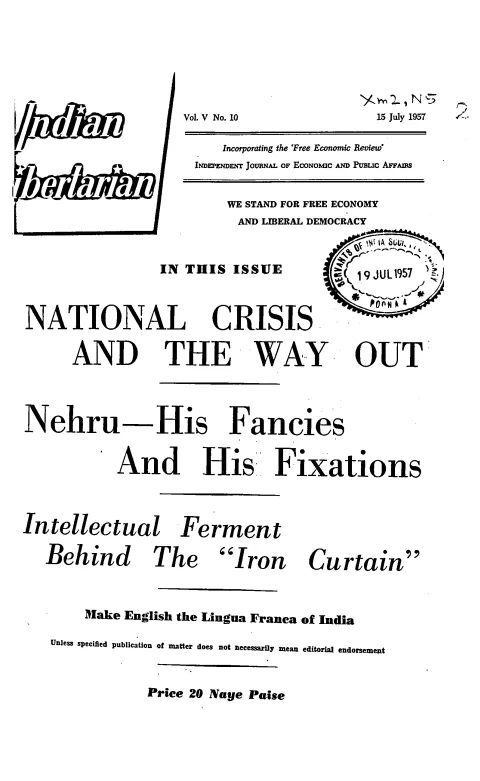
The Indian Libertarian
Summary
This 15 July 1957 issue of The Indian Libertarian (Vol. V No. 10), edited by Kusum Lotwala in Bombay under the slogan ‘We Stand For Free Economy And Liberal Democracy’, is a strongly anti-communist and anti-statist number that pairs a foreign-policy editorial with essays diagnosing India’s drift toward socialism and probing the cracks within the Soviet bloc. In the rendered pages the editorial covers Pakistani propaganda against India, India’s diplomatic posture, and the canal-waters dispute; M. A. Venkata Rao’s lead essay frames a ‘national crisis’ rooted in the Congress leadership’s mistakes and the costs of planning; J. K. Dhairyawan dissects Nehru’s ‘fancies and fixations’ on socialism; and Eugene Lyons (author of ‘Assignment in Utopia’) forecasts a coming revolt within Russia. Further essays — Jay Kay on intellectual ferment behind the Iron Curtain, Sumant S. Bankeshwar on communism as conspiracy rather than ideology, and S. R. Narayan Iyer’s ‘Saint Abroad, Sinner At Home’ — extend the anti-collectivist argument, alongside news departments, book reviews and an R. L. Foundation research supplement.
Key points
-
The editorial’s three connected notes charge Pakistan with a propaganda campaign against India over Kashmir, criticise the inconsistency of India’s diplomatic posture, and survey the dispute over partition of canal waters.
-
M. A. Venkata Rao’s ‘National Crisis and the Way Out’ ties India’s political and economic crisis to the costs of the Second Five Year Plan and a swollen defence budget, faulting Congress leadership’s mistakes.
-
Venkata Rao warns of the combined danger posed by socialism and communism, pointing toward a liberal, free-economy alternative as the country’s way out of the crisis.
-
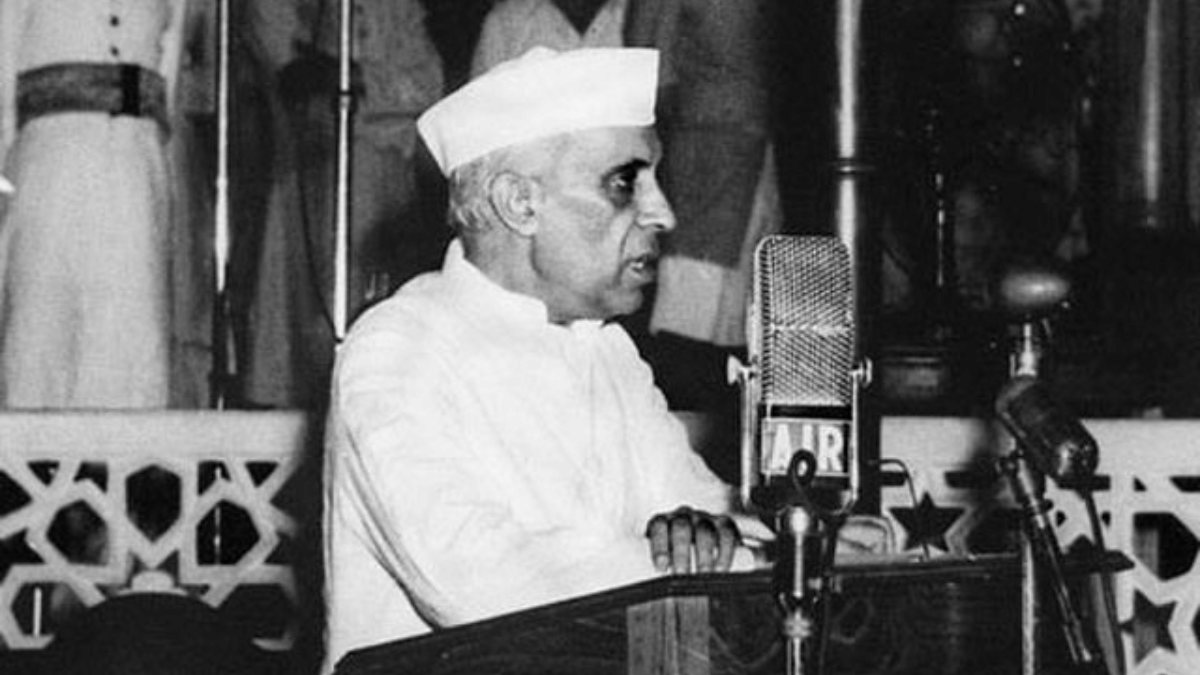
J. K. Dhairyawan’s ‘Nehru—His Fancies and Fixations’ portrays the Prime Minister as a Scandinavian-style social democrat whose fixation on socialism and the public sector, the author argues, misdirects India.
-
Eugene Lyons, author of Assignment in Utopia, predicts in ‘The Coming Revolt in Russia’ a coming revolt against Soviet tyranny paralleling Hungary, describing the ‘double-mind’ of citizens who conform outwardly while dissenting inwardly.
-
Jay Kay’s ‘Intellectual Ferment Behind the Iron Curtain’ surveys stirrings of independent thought among Communist-bloc intellectuals, reading them as a crack in totalitarian control.
-
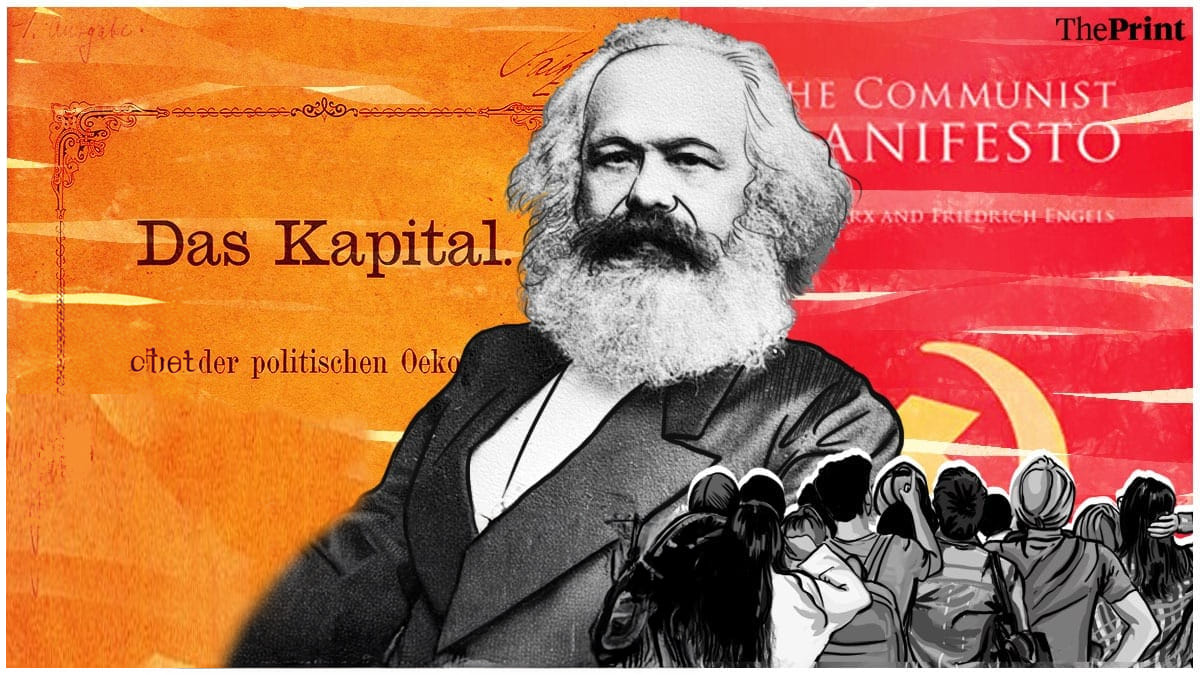
Sumant S. Bankeshwar’s ‘Communism—Not an Ideology but a Conspiracy’ argues communism is best understood as an organised political conspiracy and challenges the Marxian myth of the classless society, citing George Woodcock.
Essays
Editorial
The editorial runs three connected notes — ‘Pakistan Propaganda Against India’, ‘Our Pugnacity Fails Again’, and ‘The Canal Waters Dispute’. In the rendered pages it charges Pakistan with a propaganda offensive against India over Kashmir, criticises the weakness and inconsistency of India’s own diplomacy, and surveys the dispute over the partition of canal waters between the two states.
- Charges Pakistan with a propaganda campaign against India over Kashmir.
- Criticises the inconsistency of India’s diplomatic posture.
- Surveys the India-Pakistan canal-waters dispute.
National Crisis and the Way Out
By MA Venkata Rao
M. A. Venkata Rao’s lead essay, ‘National Crisis And The Way Out’, diagnoses a deep political and moral crisis in India that, he argues, is constitutional and economic at root. In the rendered pages he ties the crisis to the costs of the Second Five Year Plan and a swollen defence budget, faults the mistakes of the Congress leadership, and warns of a ‘grave danger’ from the combined pull of socialism and communism, pointing toward a liberal, free-economy ‘way out’.
- Diagnoses a constitutional, political and economic ‘national crisis’.
- Ties the crisis to the Second Five Year Plan and a rising defence budget.
- Faults the Congress leadership’s mistakes.
- Warns of the combined danger of socialism and communism.
Nehru—His Fancies and Fixations
By J. K. Dhairyawan
J. K. Dhairyawan’s ‘Nehru—His Fancies And Fixations’ is a critical portrait of the Prime Minister as a Scandinavian-style social democrat whose fixation on socialism and the public sector, the author argues, is steering India wrongly. In the rendered pages it contrasts Nehru’s professed democratic principles with the statist permeation of economic life, weighing his ‘practice and precept’.
- A critical portrait of Nehru as a Scandinavian-style social democrat.
- Argues his fixation on socialism and the public sector misdirects India.
- Contrasts Nehru’s democratic professions with statist practice.
The Coming Revolt in Russia
By Eugene Lyons
Eugene Lyons’s ‘The Coming Revolt In Russia’ — by the author of ‘Assignment in Utopia’ — argues that, like the Hungarians, ordinary Russians are now visibly disaffected, and that a revolt against Soviet tyranny is in the making. In the rendered pages he describes the ‘double-mind’ of citizens forced to outwardly conform while inwardly dissenting, reading the post-Stalin ferment as a sign of the regime’s fragility.
- Predicts a coming revolt within the Soviet Union, paralleling Hungary 1956.
- Describes the ‘double-mind’ of outward conformity and inward dissent.
- Reads post-Stalin ferment as evidence of the regime’s fragility.
Intellectual Ferment Behind the Iron Curtain
By Jay Kay
Jay Kay’s ‘Intellectual Ferment Behind The Iron Curtain’ surveys the stirrings of independent thought among intellectuals in the Communist bloc. In the rendered pages it treats this ferment as a crack in totalitarian control and weighs it against the wider critique of the welfare and planned state.
- Surveys intellectual dissent within the Communist bloc.
- Reads the ferment as a fissure in totalitarian control.
- Connects the discussion to a broader critique of state planning.
Communism—Not an Ideology but a Conspiracy
By Sumant S. Bankeshwar
Sumant S. Bankeshwar’s ‘Communism—Not an Ideology but a Conspiracy’ argues that communism is best understood not as a sincere body of ideas but as an organised political conspiracy. In the rendered pages it challenges the Marxian myth of the classless society — citing George Woodcock — and develops a contrast between the capitalist and collectivist attitudes to poverty.
- Argues communism is a conspiracy, not a genuine ideology.
- Challenges the Marxian myth of the classless society.
- Contrasts the capitalist and collectivist attitudes to poverty.
Generated by the v1.5 extraction pipeline. Awaiting editorial review.
Metadata and summary are AI-extracted from the source PDF and reviewed for editorial accuracy. The original work is available via the Read PDF tab above (where present); paragraph-level citation inside the PDF is deferred to a future engagement.