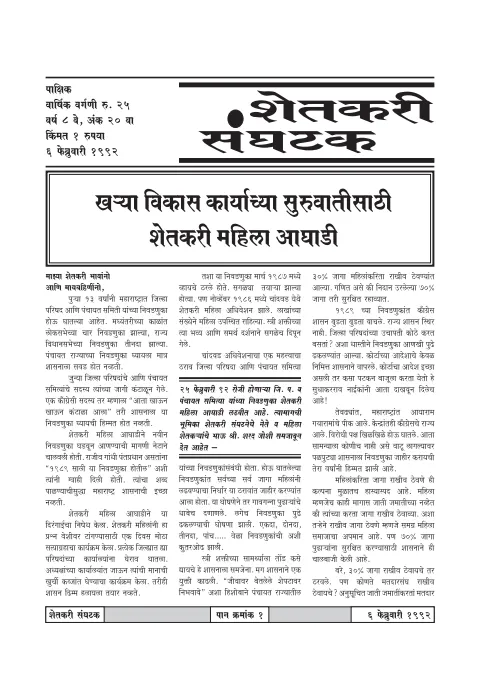
periodical issue
Shetkari Sanghatak
शेतकरी संघटक
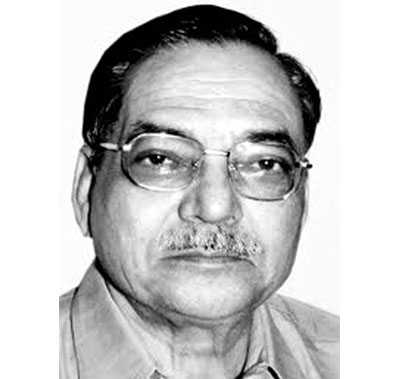
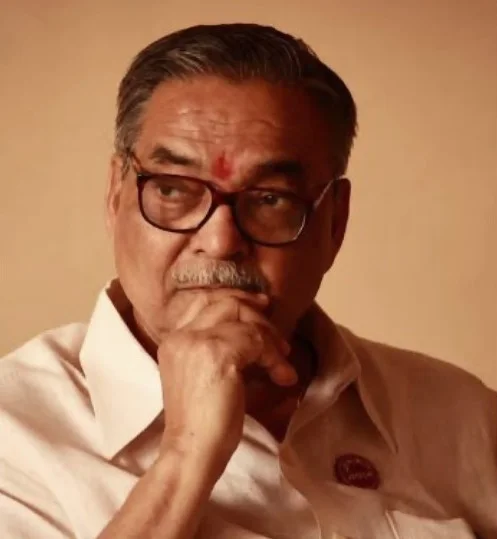
By sharad-joshi, sharad-joshi, पाशा पटेल, अध्यक्ष, शेतकरी संघटना, सौ. सरोज काशीकर, अध्यक्षा, शेतकरी महिला आघाडी
पाक्षिक शेतकरी संघटक · Ambethan, Khed, Pune · 1994
8 pages
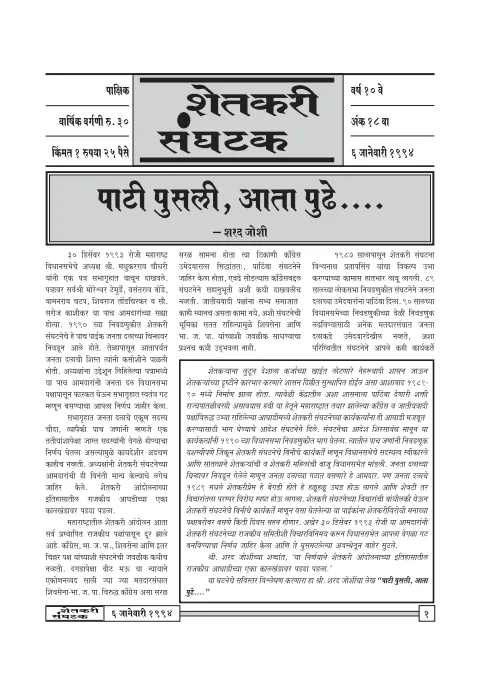
Shetkari Sanghatak
Summary
This issue of Shetkari Sanghatak (Marathi fortnightly, Year 10, Issue 18) — the publication of Sharad Joshi’s Shetkari Sanghatana — is built around two interlocking arguments: the case for the Sanghatana to step out of the Janata Dal umbrella and contest elections in its own right, and the case that the Narasimha Rao government’s economic reforms must be extended to agriculture rather than stop at industry. The lead editorial ‘पाटी पुसली, आता पुढे…’ by Sharad Joshi reports the 30 December 1993 meeting at the Maharashtra Vidhan Bhavan convened by Speaker Madhukarrao Chowdhary with the five Sanghatana-backed Janata Dal MLAs (Moreshwar Tembhe, Vasantrao Bande, Vaman Chatap, Jivraj Tondchirkar and Saroj Kashikar) and announces a fresh political beginning under the Sanghatana’s own banner. A second long piece reproduces Joshi’s 19 December 1993 open letter to the Prime Minister, asking that the GATT/Dunkel-led liberalisation also dismantle the old controls on agriculture (Essential Commodities Act, sugar/cotton/oilseed monopolies, levy rules, MEP and dumping schemes) and offer an exit policy for sick public-sector units. Shorter items cover the Gujarat Khedut Samaj’s 26 January 1994 agitation against the Ankleshwar gas project, a World Bank ranking placing India among the world’s poorest economies, the Maharashtra Chief Minister’s renewed pledge to close liquor shops on women’s resolutions, an organisational order from Pasha Patel mobilising cadres to Ankleshwar, and an appeal from Shetkari Mahila Aghadi chair Saroj Kashikar to back the 26 January 1994 anti-liquor satyagraha.
Key points
-
This Year 10, Issue 18 number of Shetkari Sanghatak reports the 30 December 1993 Vidhan Bhavan meeting, convened by Speaker Madhukarrao Chowdhary, between five Sanghatana-backed Janata Dal MLAs and the organisation’s leadership.
-
Sharad Joshi’s lead editorial, Slate wiped clean, now onward, calls the Sanghatana’s Janata Dal alliance a third failed experiment and announces the movement’s return to independent electoral politics.
-
Joshi cites the 1980 Aurangabad convention as the source of the Sanghatana’s organisational strength and announces a forthcoming 71st convention to formalise the political pivot, alongside Pasha Patel’s elevation as president.
-
A second piece reproduces Joshi’s 19 December 1993 open letter to the Prime Minister, defending India’s accession to the GATT/Dunkel agreement signed at Geneva on 15 December 1993.
-
The letter demands repeal of Essential Commodities Act controls, cooperative monopolies on cotton and sugarcane, and the Minimum Export Price, arguing liberalisation must extend to agriculture as it has to industry.
-
Joshi warns that if farmers are taken for granted and left inside old controls while industry benefits from reform, the entire liberalisation programme will lose credibility.
-
Shorter items cover the Gujarat Khedut Samaj’s planned 26 January 1994 agitation at Ankleshwar against a gas-pipeline project and a World Bank ranking placing India among the world’s poorest economies.
-
The issue also reports the Maharashtra Chief Minister’s pledge to close liquor shops on women’s resolutions and carries Saroj Kashikar’s appeal, as chair of the Shetkari Mahila Aghadi, backing the anti-liquor satyagraha.
Essays
पाटी पुसली, आता पुढे…
By शरद जोशी
Sharad Joshi’s lead editorial reports the 30 December 1993 meeting at the Maharashtra Vidhan Bhavan, chaired by Speaker Madhukarrao Chowdhary, between five Shetkari Sanghatana-backed MLAs who had won on Janata Dal tickets (Moreshwar Tembhe, Vasantrao Bande, Vaman Chatap, Jivraj Tondchirkar and Saroj Kashikar) and the Sanghatana leadership. Joshi argues that the Sanghatana’s experiment of working through the Janata Dal has run its course: three successive attempts at coalition politics — through the Lok Dal, the V.P. Singh Janata Dal, and its present formation — have all foundered on factionalism and on the Dal’s inability to break with the Nehru-Mahalanobis economic framework that the Sanghatana opposes. The editorial frames the Aurangabad convention of October 1993 and the proposed Saatlasi (71st) convention as the moment to ‘wipe the slate clean’ and launch the Sanghatana as an independent electoral force, alongside organisational changes including Pasha Patel as new president, Saroj Kashikar continuing in the Mahila Aghadi, and Moreshwar Tembhe inducted into the Karyakarini.
- 30 December 1993 Vidhan Bhavan meeting brought five Sanghatana-backed Janata Dal MLAs together with the organisation’s leadership.
- Joshi calls the Sanghatana’s Janata Dal experiment a ‘third failed experiment’ and argues for an independent political identity.
- Critique of the Janata Dal’s inability to break from Nehru-Mahalanobis-era economic assumptions.
- References the 1980 Aurangabad convention as the source of the Sanghatana’s organisational strength.
- Announces a forthcoming Saatlasi (71st) convention to formalise the electoral pivot.
- Sidebar resolution from the convention reaffirms that the Sanghatana cannot stay out of electoral politics.
सटाणा अधिवेशन — राजकारणविषयक ठराव
An open letter from Sharad Joshi (dated 19 December 1993 from Angarmal, Ambethan 410 501) addressed to the Prime Minister, congratulating him on India’s accession to the GATT/Dunkel agreement signed at Geneva on 15 December 1993 and defending it against critics — particularly the Hindutva-leaning opposition and segments of the Kisan Samanvay Samiti. Joshi argues that the Sanghatana publicly supported the agreement against this backlash, and now expects the reform logic to be applied with equal force to agriculture. The letter then enumerates the controls on farmers that must be lifted if liberalisation is to be coherent: levy obligations on sugar, edible oils, cotton, dairy and silk; the cooperative monopolies on cotton, sugarcane and food procurement; the Essential Commodities Act restrictions on private trade and storage; the Minimum Export Price and other export curbs; subsidised dumping by parastatals; and the absence of an exit policy for loss-making public-sector units. Joshi closes by warning that if farmers are ‘taken for granted’ (गृहीत धरून) and excluded from the benefits of reform while remaining bound by old controls, the entire reform programme will lose credibility.
- Open letter to the PM, dated 19 December 1993, defending India’s signing of the GATT/Dunkel agreement at Geneva on 15 December 1993.
- Frames the Sanghatana as having publicly supported the GATT deal against Hindutvavadi and Kisan Samanvay Samiti opposition.
- Demands repeal of Essential Commodities Act controls on sugar, oilseeds, cotton, dairy and silk.
- Demands abolition of cooperative monopsonies on cotton, sugarcane procurement and the FCI/levy system.
- Demands removal of the Minimum Export Price (MEP) and a halt to subsidised dumping by parastatals.
- Demands an exit policy for sick public-sector units and corresponding labour-market reform.
- Warns that reform will fail if its benefits stop at industry and farmers remain inside old controls.
शिवार लिमिटेड — शेअर्ससंबंधी वाढीव सूचना
By वसंतराव बोंडे, प्रमोटर्सकरिता
An unsigned report on the Gujarat Khedut Samaj’s planned 26 January 1994 agitation at Ankleshwar against the gas-pipeline and mining-installation project that the report says is being pushed through on land already under farmer cultivation. The piece dates the planning to a 13 October 1993 convention in Vadodara that brought together the Kisan Mehasooli Sangh and other Gujarat farmer formations and announced the slogan ‘शेतकरी तिकूळ एक एक’ as a coordinating frame with the Shetkari Sanghatana. The Maharashtra Sanghatana is reported to be sending volunteers in solidarity.
- Gujarat Khedut Samaj will hold its 26 January 1994 agitation at Ankleshwar against a gas-pipeline / mining project on farmland.
- Planning traced to a 13 October 1993 Vadodara convention with the Kisan Mehasooli Sangh and other Gujarat groups.
- Co-ordination slogan ‘शेतकरी तिकूळ एक एक’ adopted with the Shetkari Sanghatana.
- Maharashtra Sanghatana cadres to travel to Gujarat in solidarity.
सुधारांच्या योजनांत शेतकऱ्यांना गृहीत धरून वगळू नका (शरद जोशींचे पंतप्रधानांना पत्र)
By शरद जोशी
An unsigned report drawing on a World Bank ranking dated 30 September 1993 (originally carried in Sakal, 31 December 1993) which shows India’s per-capita GDP slipping from $330 in 1991 to $310 in 1992, dropping the country two positions in the global ranking. The piece lists Mozambique, Tanzania, Ethiopia, Uganda, Bhutan, Nepal, Guinea-Bissau, Malawi, Burundi and Bangladesh among the countries the World Bank now places below India and uses the ranking to indict the Nehruvian planned-economy inheritance that the Sanghatana has long criticised.
- World Bank ranking of 30 September 1993 places India among the world’s poorest economies.
- India’s per-capita GDP fell from $330 in 1991 to $310 in 1992 — a two-position drop.
- Lists Mozambique, Tanzania, Ethiopia, Uganda, Bhutan, Nepal, Guinea-Bissau, Malawi, Burundi and Bangladesh as the only countries now poorer.
- Frames the ranking as a verdict on the Nehruvian planning model.
‘गुजरात खेडूत समाज’ चे आंदोलन — २६ जानेवारी १९९४
An unsigned editorial on the Maharashtra Chief Minister Sharad Pawar’s renewed announcement that liquor shops will be closed wherever a village women’s resolution demands it. The piece traces the policy back to a 22 May 1993 Vidhan Sabha statement by the Chief Minister authorising district administrations to act on local women’s resolutions, and to a follow-up pledge at the Aurangabad convention of October 1993. It argues that earlier rounds of such announcements have repeatedly failed to translate into actual closures, and reports that the Shetkari Mahila Aghadi, alongside MLAs Moreshwar Tembhe, Vasantrao Bande, Vaman Chatap, Jivraj Tondchirkar and Saroj Kashikar, has resolved to launch a fresh satyagraha on 26 January 1994.
- Chief Minister Sharad Pawar has renewed his pledge to act on women’s resolutions for closing village liquor shops.
- Original policy statement dated 22 May 1993 in the Vidhan Sabha; reaffirmed at the Aurangabad convention of October 1993.
- Previous rounds have not been honoured at the ground level, the piece argues.
- Shetkari Mahila Aghadi and Sanghatana-backed MLAs will launch a fresh agitation on 26 January 1994.
भारत आणखी ‘गरीब’ झाला
By (सकाळ ३१ डिसेंबर १९९३)
A short organisational order (‘आदेश आदेश आदेश…’) signed by Pasha Patel, president of the Shetkari Sanghatana, mobilising Maharashtra Sanghatana cadres for the Gujarat Khedut Samaj’s Ankleshwar agitation. The order asks volunteers to travel via the Surat–Ankleshwar route, carry their own provisions, register at the central reception, refrain from offering shelter in their home villages until further notice, and join the ‘Nana Patole Brigade’ marching contingent.
- Mobilisation order from Pasha Patel, president of Shetkari Sanghatana.
- Directs Maharashtra Sanghatana cadres to reach Ankleshwar via Surat for the 26 January 1994 agitation.
- Cadres are to carry their own provisions and report to the central reception.
- Local district shelter/halt activity is suspended until the order is lifted.
- Volunteers asked to join the ‘Nana Patole Brigade’ contingent.
दारू दुकान बंदी: मुख्यमंत्र्यांची आणखी एक घोषणा
A letter from Saroj Kashikar, president of the Shetkari Mahila Aghadi, addressed to ‘भावांनो आणि माय-बहिणींनो’ (brothers and mothers/sisters), announcing the Mahila Aghadi’s 26 January 1994 satyagraha for the closure of liquor shops in villages whose women have passed resolutions to that effect. The letter sets out five operational asks: that the Mahila Aghadi resolutions be carried village-by-village; that village conventions of all women and Sanghatana cadres be held; that 100,000 women and well-wishers go on file in support; that the public stance against liquor licensing be recorded with district administrations; and that consciousness-raising programmes be carried up to 26 January.
- Letter from Shetkari Mahila Aghadi president Saroj Kashikar mobilising for the 26 January 1994 anti-liquor satyagraha.
- Calls on village-level women’s resolutions to be carried under the 23 October 1993 Maharashtra government order.
- Asks for village conventions of women and Sanghatana cadres to be convened.
- Sets a target of 100,000 women and supporters publicly backing the Mahila Aghadi’s stand.
- Asks that opposition to liquor licensing be put on record with district administrations until 26 January 1994.
Generated by the v1.5 extraction pipeline. Awaiting editorial review.
Metadata and summary are AI-extracted from the source PDF and reviewed for editorial accuracy. The original work is available via the Read PDF tab above (where present); paragraph-level citation inside the PDF is deferred to a future engagement.