letter
Letter to H M Patel
Bombay · 1972
2 pages
Summary
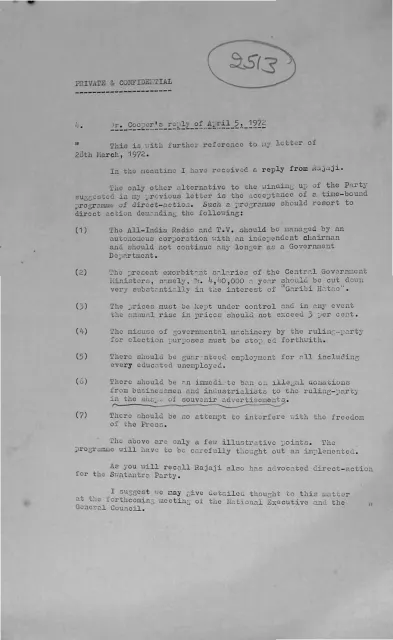
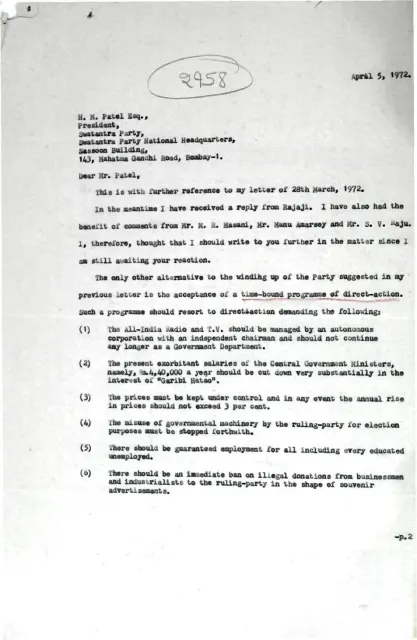
In this letter dated April 5, 1972, R. C. Cooper writes to H. M. Patel about the future of the Swatantra Party. Referring to an earlier letter, and to responses or comments from Rajaji, M. R. Masani, Minoo Amarsay and S. V. Raju, Cooper presents two alternatives: winding up the Party or adopting a time-bound programme of direct action. He notes that Rajaji has also advocated direct action for the Party and proposes that the matter be considered at the forthcoming meeting of the National Executive and General Council.
The proposed programme combines institutional reform with economic and civil-libertarian demands. It calls for All-India Radio and Television to become an autonomous corporation, substantial reductions in ministerial salaries, price controls limiting annual price rises to 3 per cent, an end to the ruling party’s misuse of government machinery for elections, guaranteed employment including for educated unemployed people, a ban on illegal corporate donations to the ruling party, and non-interference with press freedom. The letter says these are illustrative points requiring further development and implementation.
Key points
- Cooper asks the Swatantra Party to consider a time-bound programme of direct action rather than simply winding up the Party.
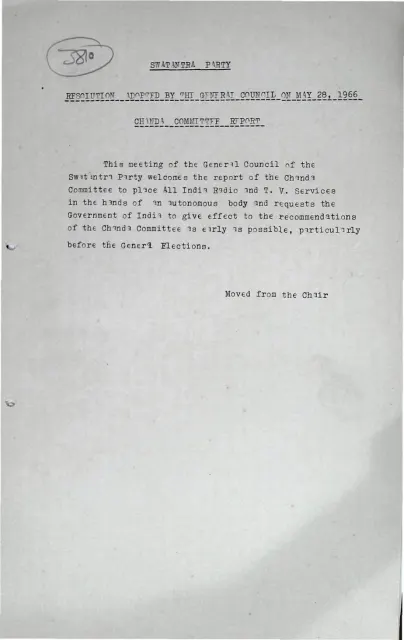
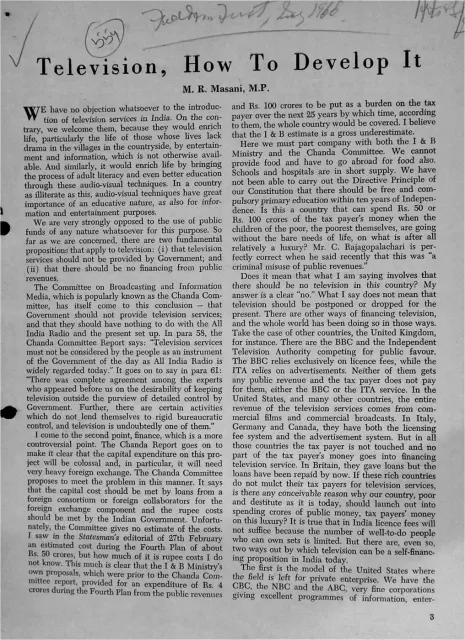
- The programme would make All-India Radio and Television autonomous and remove them from direct government-department status.
- It proposes major reductions in Central Government ministers’ salaries and controls on prices, with annual increases capped at 3 per cent.
- It demands an end to the ruling party’s use of government machinery for election purposes.
- It calls for guaranteed employment, including for educated unemployed people.
- It proposes an immediate ban on illegal donations from businesspeople and industrialists to the ruling party through souvenir advertisements.
- It insists that the programme must not interfere with the freedom of the press and should be discussed by the Party’s National Executive and General Council.
Metadata and summary are AI-extracted from the source PDF and reviewed for editorial accuracy. The original work is available via the Read PDF tab above (where present); paragraph-level citation inside the PDF is deferred to a future engagement.