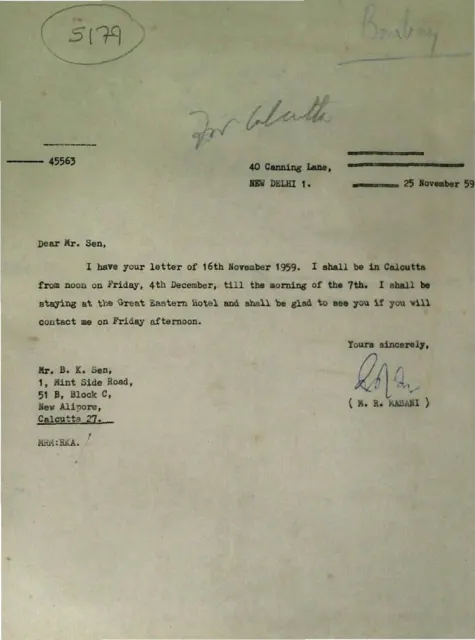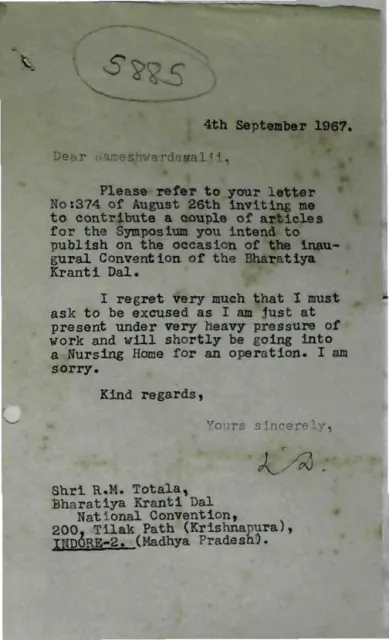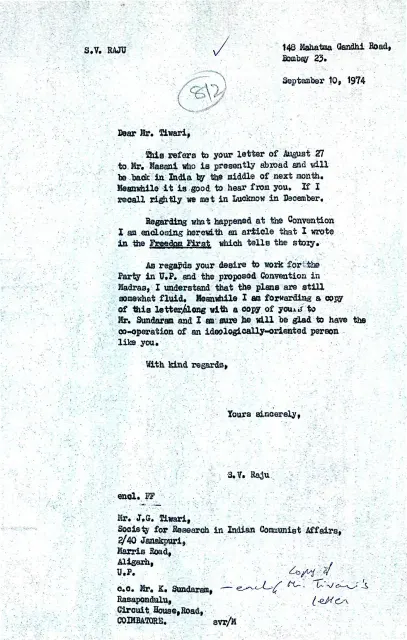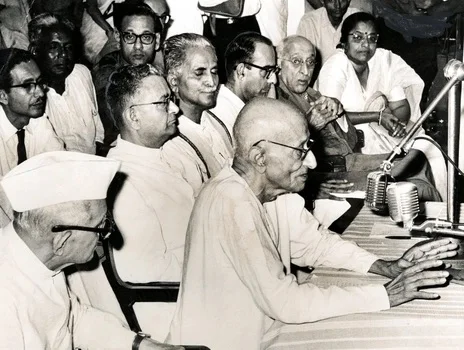
Summary
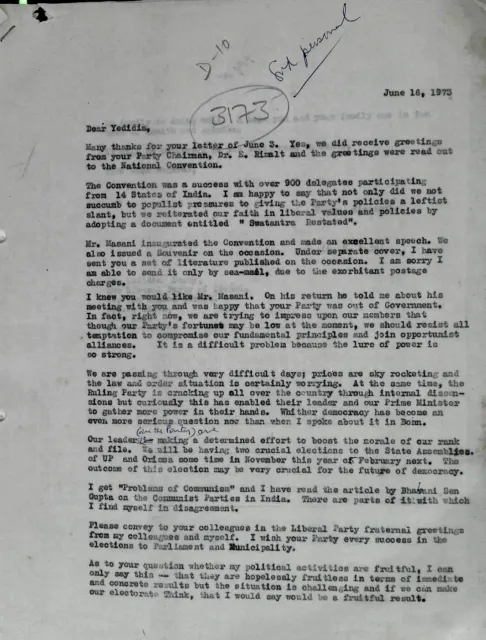
This four-page correspondence file centers on S. V. Raju’s 16 June 1973 letter to Yedidia Berry, written after the Swatantra Party’s national convention. Raju reports that more than 900 delegates from 14 Indian states attended and emphasizes that the party reaffirmed liberal principles rather than yielding to populist pressure, adopting a document titled “Swatantra Restated.” He discusses Minoo Masani’s role at the convention, the party’s effort to resist opportunistic alliances, and the difficult political environment marked by rising prices, deteriorating law and order, and the ruling party’s growing concentration of power.
Raju also looks ahead to crucial state elections in Uttar Pradesh and Orissa, arguing that their results could affect the future of Indian democracy. He mentions reading an article by Sen Gupta on communism in India and says he disagrees with parts of it. The file includes Berry’s enclosed 3 June 1973 reply on Liberal Party of Israel letterhead, which praises Masani, discusses the distinction between the Israeli Liberal Party and the Independent Liberal Party, refers to articles on communism in India, and anticipates parliamentary and municipal elections in Israel.
Key points
- Raju reports that over 900 delegates from 14 Indian states attended the Swatantra Party’s national convention.
- The convention reaffirmed liberal values and adopted a document titled “Swatantra Restated.”
- Raju urges party members to resist opportunistic alliances despite the lure of political power.
- The letter links rising prices, worsening law and order, and the ruling party’s internal divisions to concerns about democratic government.
- Raju identifies forthcoming elections in Uttar Pradesh and Orissa as crucial for the future of democracy.
- The correspondence engages with contemporary writing on communism in India, including an article by Sen Gupta.
- The enclosed reply from Yedidia Berry describes political cooperation and correspondence between the Swatantra Party and the Liberal Party of Israel.
Metadata and summary are AI-extracted from the source PDF and reviewed for editorial accuracy. The original work is available via the Read PDF tab above (where present); paragraph-level citation inside the PDF is deferred to a future engagement.