Summary
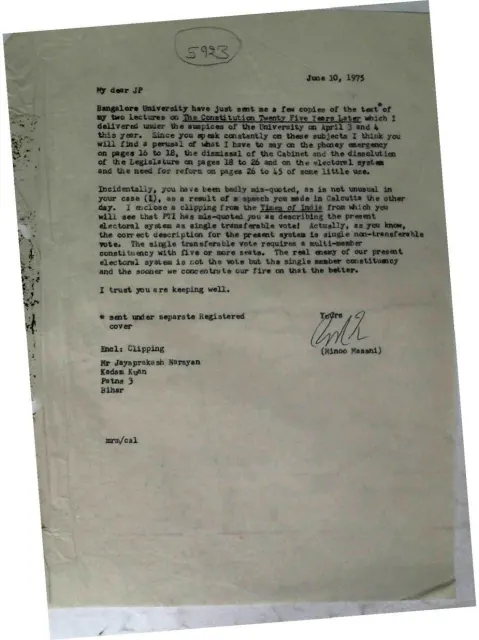
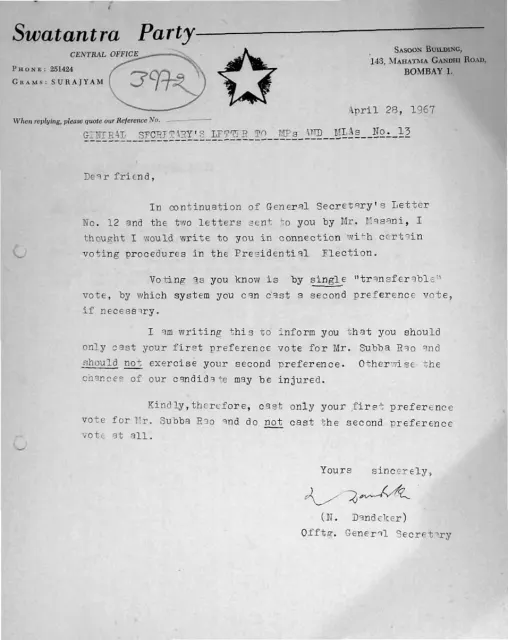
In the rendered pages, M. R. Masani recalls several encounters with C. Rajagopalachari (Rajaji) across more than four decades of Indian political life. He begins with the 1934 Congress Session at Bombay, where Masani and Jayaprakash Narayan sought proportional representation with a single transferable vote to protect socialist and other minorities within Congress bodies. Masani recounts confronting Gandhi over the omission of the clause, its eventual restoration, and Rajaji’s opposition to the amendment. The episode presents politics as a contest over organisational democracy, trust, and procedural safeguards.
In the rendered pages, Masani then describes tensions with Rajaji over the role of Congress organisations, peasant unions, and provincial governments during the late 1930s. He argues that Congress committees must retain democratic control over cabinets rather than become their subordinate limbs, and defends separate peasant organisations against Rajaji’s objections. Later recollections shift to post-Independence food shortages, a cable to United States legislators seeking food aid, and a confrontation with Jawaharlal Nehru over foreign policy. Masani closes by reflecting on his close collaboration with Rajaji in the Swatantra Party from 1959 to 1971, his resignation from the party presidency, and Rajaji’s affectionate criticism of his public career and writing. The supplied sequence omits printed page 9, so that page could not be reviewed.
Key points
- Masani’s earliest recollection concerns the 1934 Congress Session and the proposed use of proportional representation with a single transferable vote.
- Masani and Jayaprakash Narayan confronted Gandhi after a promised electoral clause was absent from the circulated Congress draft constitution.
- The essay links Congress organisational independence to democratic control over provincial cabinets and criticises the idea that Congress committees were merely limbs of government.
- Masani defends peasant unions and socialist organisation against Rajaji’s preference for relying on Congress structures alone.
- A post-Independence episode describes Masani’s campaign for urgent United States food aid during an acute shortage in India.
- Masani recounts challenging Nehru’s foreign policy and arguing that party members should be able to question the Prime Minister’s decisions.
- The closing pages portray Rajaji as both a political collaborator and a candid critic of Masani’s public life and writing.
Metadata and summary are AI-extracted from the source PDF and reviewed for editorial accuracy. The original work is available via the Read PDF tab above (where present); paragraph-level citation inside the PDF is deferred to a future engagement.