
pamphlet
Bank Nationalisation and Jana Sangh
SAMPRADAYIKTA VIRODHI COMMITTEE · New Delhi-5
11 pages

Summary
This pamphlet by Girish Mishra presents an emphatic defence of the 1969 nationalisation of fourteen major private commercial banks and an extended attack on the Jana Sangh’s opposition to the measure. Mishra argues that nationalisation fulfilled a long-standing Congress commitment and was necessary after the failure of “social control” over private banks. He portrays private banking as closely tied to monopolist business houses, which allegedly directed credit toward industry, commerce, speculation, and metropolitan interests while neglecting agriculture, small industry, rural areas, and ordinary depositors. The pamphlet cites figures on deposits, advances, agricultural credit, and bank profits to support this case.
Key points
- The pamphlet supports the July 1969 Banking Companies Ordinance and the takeover of fourteen major commercial banks.
- It argues that bank nationalisation fulfilled earlier Congress promises and responded to the failure of “social control.”
- Private banks are depicted as instruments of monopolist business houses and foreign-capital interests.
- The text claims that private banking neglected small and medium industries, agriculture, rural borrowers, and artisans.
- Nationalisation is presented as a first step toward reducing concentration of wealth and achieving balanced regional development.
- The pamphlet uses statistics on bank deposits, advances, agricultural lending, rural branches, and profits to contest Jana Sangh claims.
- Mishra accuses Jana Sangh leaders of contradicting their own earlier commitments to small industry, agriculture, village branches, and low-interest rural credit.
- The closing pages broaden the attack into a critique of Jana Sangh’s relationship with big business and its communal and gendered rhetoric.
Metadata and summary are AI-extracted from the source PDF and reviewed for editorial accuracy. The original work is available via the Read PDF tab above (where present); paragraph-level citation inside the PDF is deferred to a future engagement.
Related across the archive
 Primary workTHE BANKING COMPANIES (ACQUISITION & TRANSFER OF UNDERTAKINGS) ORDINANCE 1969
 Primary workThe Changing Profile of Indian Banking
 Primary workCOMMERCIAL BANKS IN INDIA—A PERFORMANCE REVIEW
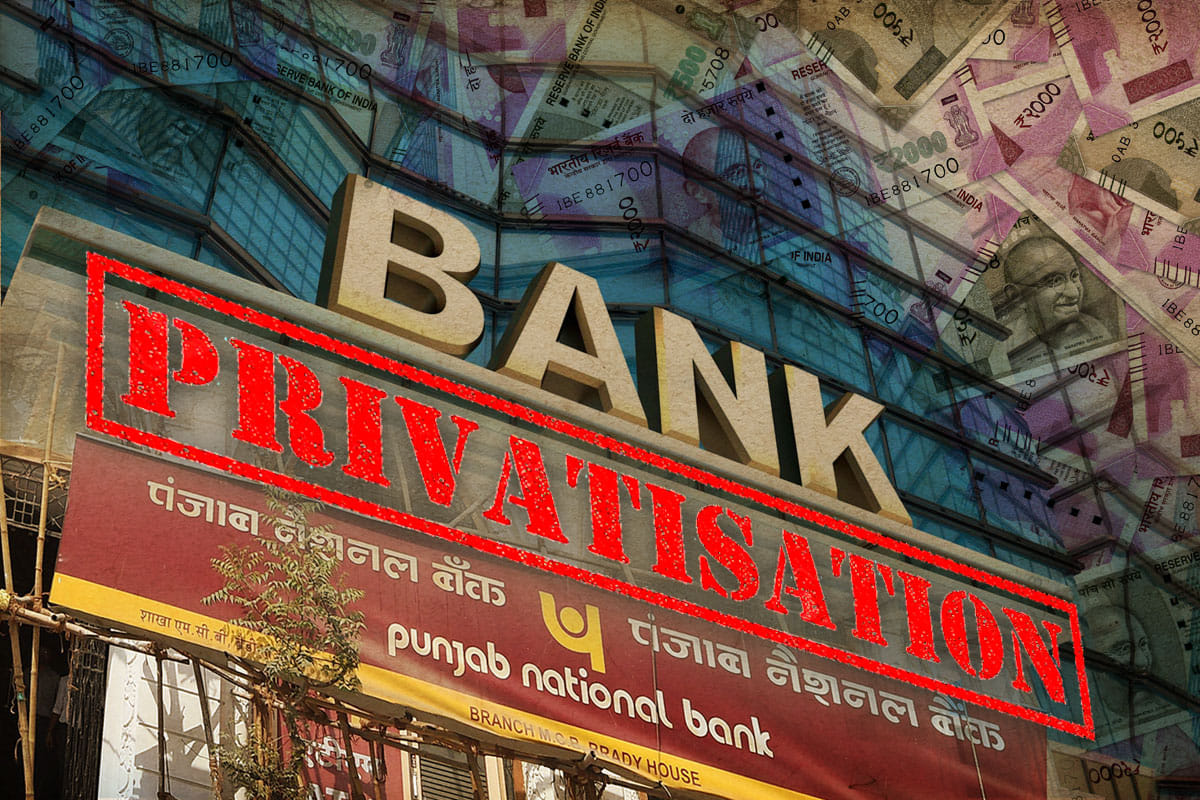 ThePrintBank nationalisation will be a blow to India’s mixed economy, lead to totalitarianism: Phiroze Shroff
 ExcerptN. A. Palkhivala's Views on Socialism