legal filing
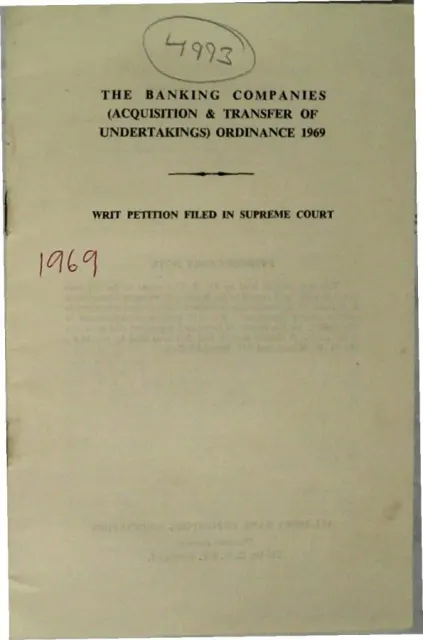
THE BANKING COMPANIES (ACQUISITION & TRANSFER OF UNDERTAKINGS) ORDINANCE 1969
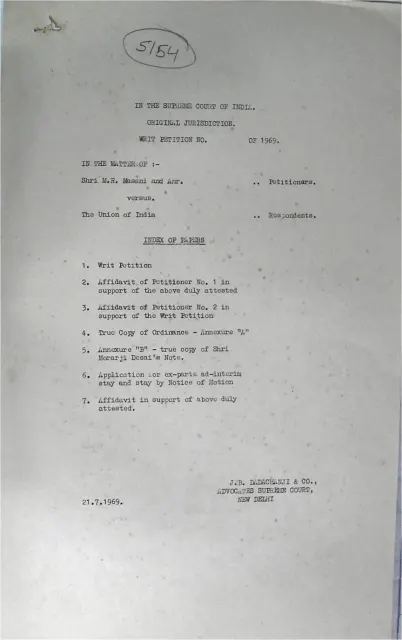
WRIT PETITION FILED IN SUPREME COURT
ALL-INDIA BANK DEPOSITORS ASSOCIATION (Bombay Branch) · Bombay · 1969
22 pages
Summary
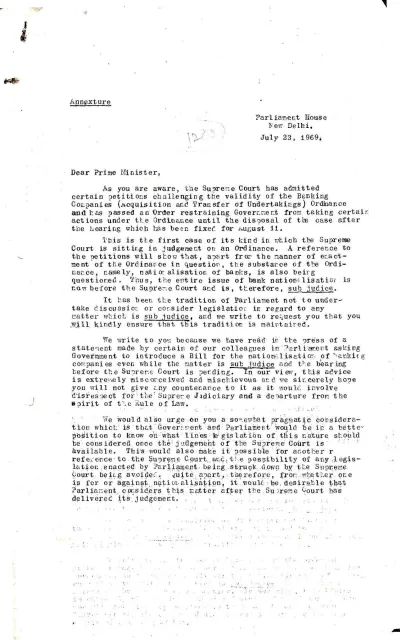
This 1969 booklet reproduces a writ petition filed in the Supreme Court of India by Rustom Curvasjee Cooper challenging the Banking Companies (Acquisition and Transfer of Undertakings) Ordinance, 1969. The introductory note identifies the All-India Bank Depositors Association (Bombay Branch) as the body circulating the petition for depositors and members of the public, and notes similar petitions by M. R. Masani and Balraj Madhok. Cooper presents himself as a chartered accountant, a director and shareholder connected with several banks, and a depositor whose interests were affected by the transfer of bank undertakings to newly constituted banks.
Key points
- The petition challenges the Ordinance that transferred the undertakings, assets, and liabilities of 14 banks to new banks with capital held by the Government of India.
- It argues that the President lacked the constitutional basis under Article 123 to promulgate the Ordinance because Parliament was due to meet within two days and no immediate action was necessary.
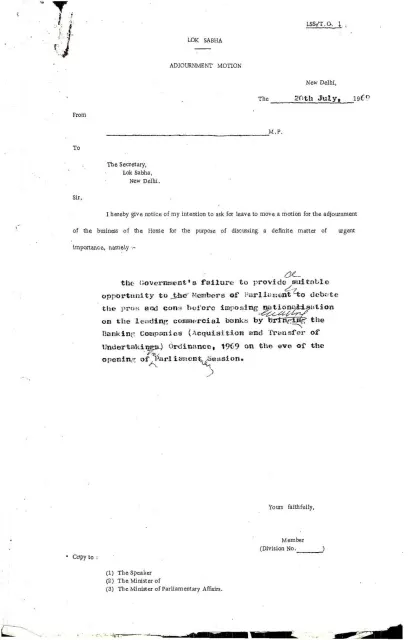
- The petitioner characterises the Ordinance as an attempt to bypass parliamentary debate and present Parliament with the accomplished fact of bank nationalisation.
- The petition alleges violations of Articles 14, 19(1)(f), and 31, particularly regarding equality, property, compensation, and the treatment of shareholders, directors, and depositors.
- It contests the Ordinance’s compensation provisions and argues that the existing Banking Laws (Amendment) Act 1968 already supplied a framework for government intervention in banks.
- Annexure B reproduces a government note defending the working of social control over banking, including directed credit, branch expansion, agricultural and small-industry lending, and organisational reform.
- The reproduced note reports credit targets and institutional measures while arguing that socialisation of credit need not require nationalisation of banks.
Metadata and summary are AI-extracted from the source PDF and reviewed for editorial accuracy. The original work is available via the Read PDF tab above (where present); paragraph-level citation inside the PDF is deferred to a future engagement.