Summary
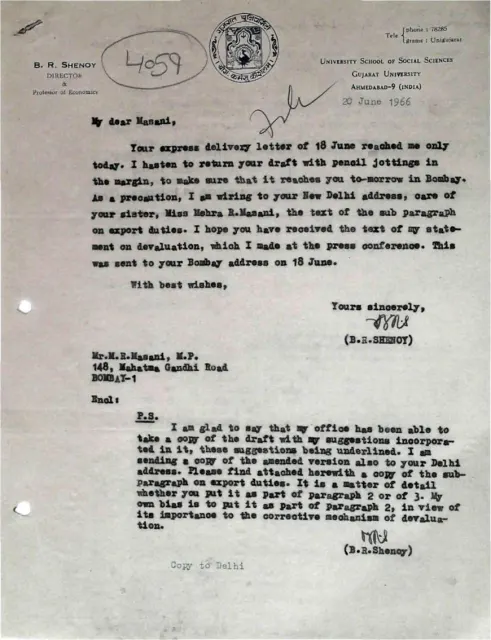
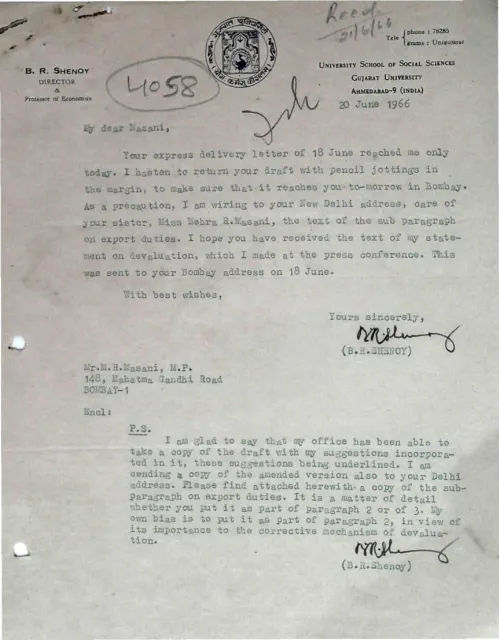
This 20 June 1966 letter from B. R. Shenoy to M. R. Masani accompanies and comments on a draft concerning export duties and the effects of India’s devaluation. Shenoy argues that the nominal 57.5 per cent devaluation produced only an estimated 10–15 per cent effective devaluation because export duties and export-promotion arrangements neutralised much of its benefit, and he urges the immediate abolition of export duties introduced alongside devaluation.
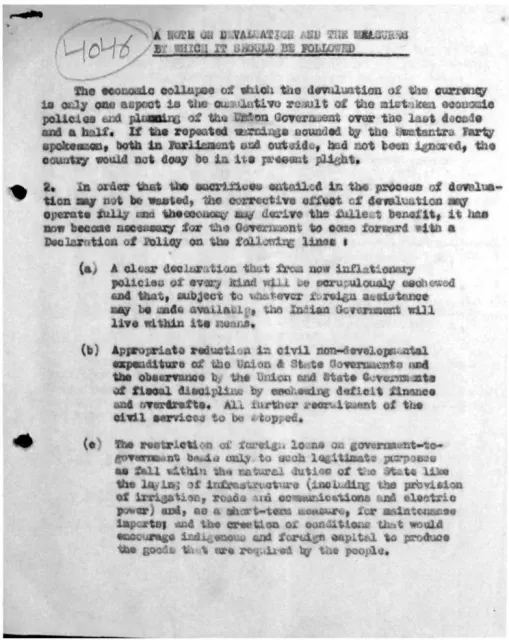
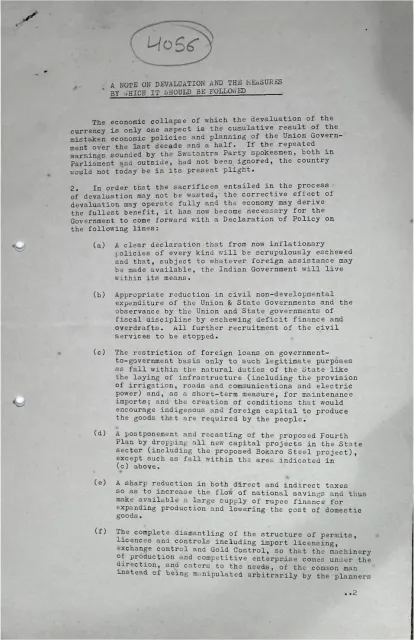
The attached policy text attributes India’s economic collapse to mistaken economic policies and Union Government planning over the preceding decade and a half. To ensure that devaluation produces its intended effects, Shenoy proposes monetary and fiscal restraint, reduced non-developmental expenditure, limits on foreign borrowing, postponement of wasteful Fourth Plan projects, lower taxation, dismantling of permits and controls, and negotiations to reduce foreign-debt servicing costs. Transitional measures include supplies of imported raw materials for exporters, assistance to stranded industrial projects, and abolition of duties on imported inputs. Pages 5–6 reproduce an annotated draft, showing editorial changes and marginal notes; they do not add a separate argument.
Key points
- Shenoy presents devaluation as insufficient when export duties neutralise its effect.
- He distinguishes the 57.5 per cent de jure devaluation from an estimated 10–15 per cent de facto devaluation.
- He links the economic crisis to cumulative policy and planning failures over the previous decade and a half.
- He calls for anti-inflationary policies, fiscal discipline, and sharp reductions in civil non-developmental expenditure.
- He recommends postponing or recasting the Fourth Plan and dropping costly state-sector projects, including the Bokaro Steel project.
- He advocates dismantling permits, licences, import licensing, exchange controls, and Gold Control to expand competitive enterprise.
- He proposes transitional relief for exporters and distressed industrial projects, alongside abolition of duties on imported raw materials, fuel, and spare parts.
Metadata and summary are AI-extracted from the source PDF and reviewed for editorial accuracy. The original work is available via the Read PDF tab above (where present); paragraph-level citation inside the PDF is deferred to a future engagement.