Summary
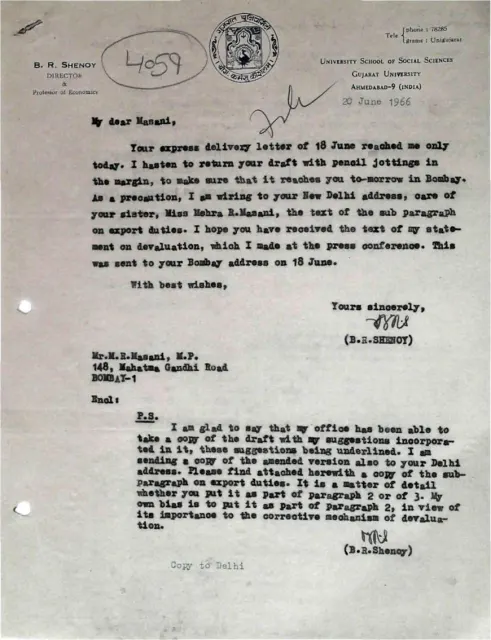
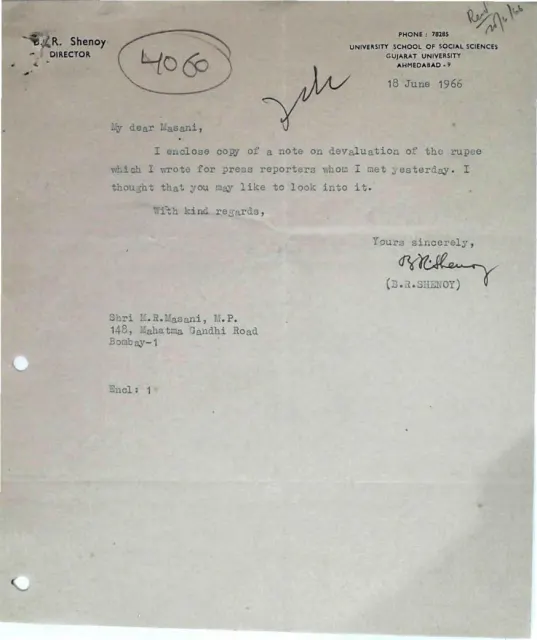
This 18 June 1966 letter from B. R. Shenoy to M. R. Masani encloses a note titled “DEVALUATION OF THE RUPEE,” written for press reporters met the previous day. The letter itself is brief; its substantive content is the two-page enclosure, which welcomes devaluation as preferable to continued overvaluation but argues that the chosen rate does not go far enough and that new export duties will reduce its benefits.
In the enclosed note, Shenoy defines three objectives of devaluation: eliminating the black market in foreign exchange, restoring exporters’ full rupee earnings, and shifting production from the domestic market toward exports. He links India’s balance-of-payments crisis to inflation, import-substitution policies, and the resulting movement of resources away from export industries. He criticizes export duties as obstructing the necessary production shift, disputes claims that devaluation itself will cause a broad rise in consumer prices, and defends the World Bank’s role in pressing India to devalue. The document ends by warning that without a substantial increase in exports, India’s external-debt difficulties will persist.
Key points
- The letter, dated 18 June 1966, sends M. R. Masani an enclosed note on rupee devaluation.
- Shenoy regards devaluation as welcome but argues that floating the rupee would have been preferable.
- He identifies eliminating the foreign-exchange black market, restoring exporters’ rupee earnings, and shifting production toward exports as devaluation’s three objectives.
- The note explains the balance-of-payments deficit through inflation, import substitution, and the overvaluation of the rupee.
- Shenoy argues that export duties on important commodities will reduce the gains from devaluation and impede export growth.
- He rejects the claim that devaluation necessarily produces a general rise in consumer prices.
- He argues that the World Bank’s pressure reflected India’s inability to service external debt without increased exports.
Metadata and summary are AI-extracted from the source PDF and reviewed for editorial accuracy. The original work is available via the Read PDF tab above (where present); paragraph-level citation inside the PDF is deferred to a future engagement.