Summary
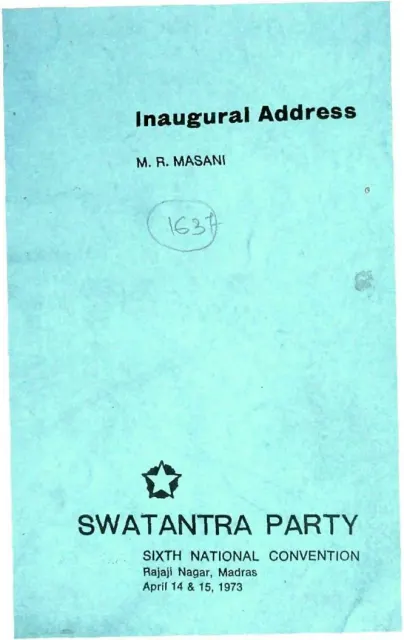
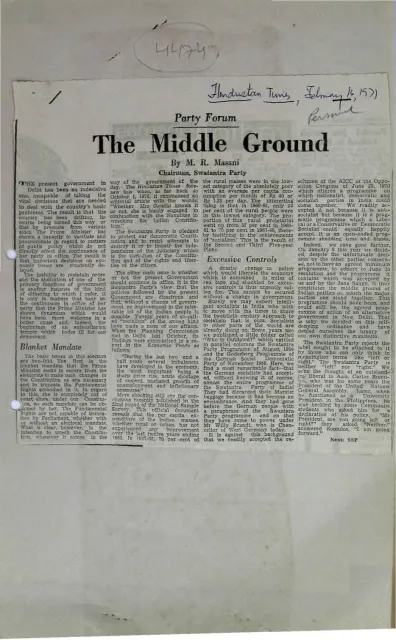
In the rendered page, M. R. Masani argues that the Delhi government has been indecisive and unable to take necessary decisions on the country’s basic economic problems. He presents the 1971 election mandate as too “blanket” to establish a clear programme for constitutional change, and warns that attempts to weaken fundamental rights would threaten democracy. The article criticises the government’s continuation of policies associated with planning, controls, nationalisation, unemployment and inflation, using rural income and employment figures to argue that these policies have failed to deliver broad prosperity.
In the rendered page, Masani positions the Swatantra Party as a constitutional and economic “middle ground” between Congress-style interventionism and more radical socialist or communist alternatives. He calls for the removal of excessive controls, protection of individual rights and liberties, and a minimum programme capable of bringing opposition parties together without erasing their ideological differences. The article closes by defending the party’s liberal position against charges of being outdated or reactionary, invoking Carlos Romulo’s claim that Swatantra was “the only outstanding liberal in Asia.”
Key points
- Masani describes the Delhi government as indecisive and argues that essential economic decisions have been postponed.
- He interprets the election result as a blanket mandate rather than a clear authorisation for constitutional amendments.
- The article warns that weakening fundamental rights would undermine democracy.
- It criticises planning, nationalisation and excessive economic controls, linking them to unemployment, inflation and inadequate rural incomes.
- Masani presents the Swatantra Party as a middle ground between Congress interventionism and socialist or communist programmes.
- He advocates a minimum opposition programme centred on constitutional liberties, economic freedom and reduced controls.
- The article rejects the charge that liberalism is outdated or reactionary.
Metadata and summary are AI-extracted from the source PDF and reviewed for editorial accuracy. The original work is available via the Read PDF tab above (where present); paragraph-level citation inside the PDF is deferred to a future engagement.