report · report
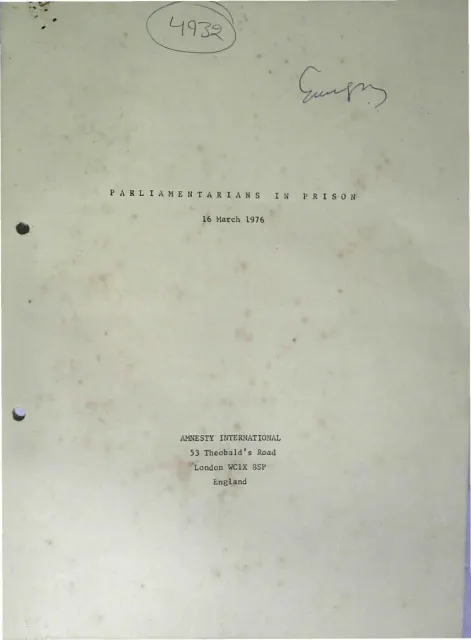
PARLIAMENTARIANS IN PRISON
AMNESTY INTERNATIONAL · London · 1976
23 pages
Summary
PARLIAMENTARIANS IN PRISON is an Amnesty International report dated 16 March 1976. Its introduction states that it records 111 parliamentarians in 14 countries who had been imprisoned or had “disappeared” without trace. The report presents these cases as violations of the United Nations Universal Declaration of Human Rights: most detainees had not been charged or tried, and some had reportedly been tortured. Amnesty stresses that the list is not comprehensive, since it includes only cases taken up for adoption or investigation by the organisation.
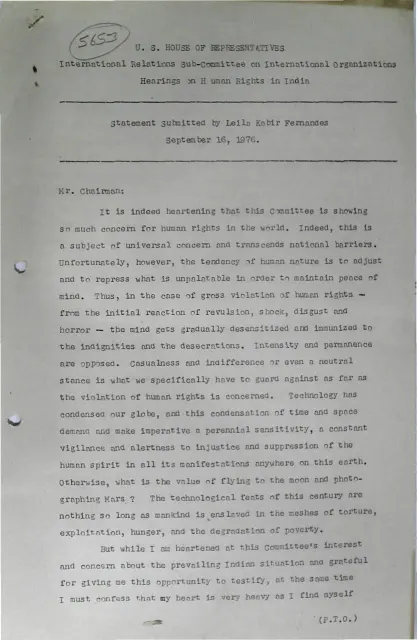
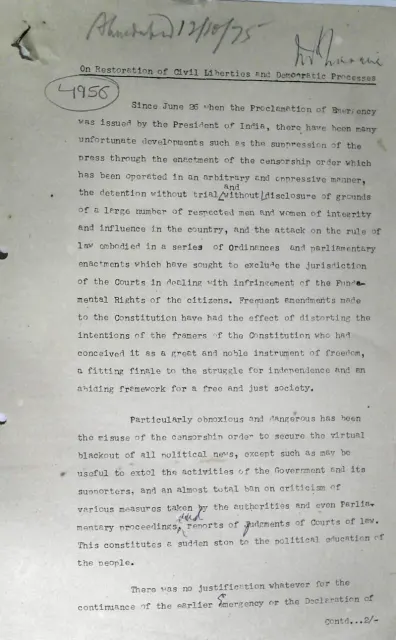
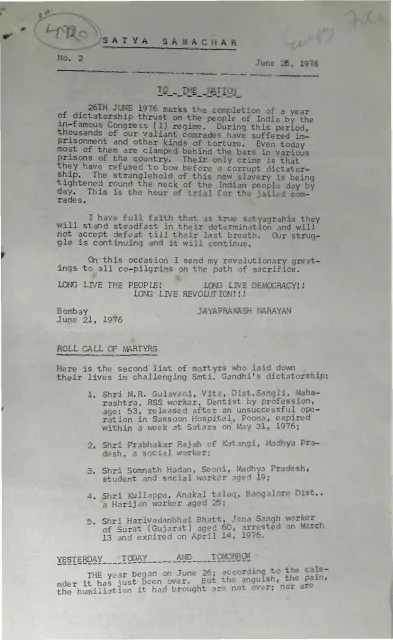
The rendered pages describe cases across Latin America, Africa, India, Indonesia, Kenya, and Pakistan. The India section documents 59 legislators arrested during or after the state of emergency declared in June 1975, including members of opposition parties and dissenting members of the ruling Congress; it describes press censorship, the suspension of fundamental rights, and the operation of preventive detention under the Maintenance of Internal Security Act. The Indonesia section describes parliamentarians held for years after the attempted coup of 1965, while the Kenya and Pakistan sections focus on detention without charge or trial and the suppression of political opposition. Amnesty says the purpose of compiling the list is to draw attention to imprisoned parliamentarians and mobilise support for their release.
Key points
- The report lists 111 imprisoned or disappeared parliamentarians in 14 countries as at 16 March 1976.
- It frames the cases as violations of rights protected by the United Nations Universal Declaration of Human Rights.
- The introduction warns that the list is not comprehensive because it records only cases taken up by Amnesty International.
- The India section links the detention of 59 parliamentarians to the June 1975 state of emergency, press censorship, and suspended constitutional safeguards.
- Indian detainees were held under the Maintenance of Internal Security Act, often without being informed of the grounds for arrest or given access to ordinary judicial remedies.
- The Indonesia section describes prolonged detention after the attempted 1965 coup, especially of parliamentarians associated with organisations later proscribed by the government.
- The Kenya and Pakistan sections present detention without charge or trial as a means of suppressing parliamentary criticism and regional opposition.
- Amnesty states that the report aims to publicise the cases and mobilise support for the prisoners’ release.
Metadata and summary are AI-extracted from the source PDF and reviewed for editorial accuracy. The original work is available via the Read PDF tab above (where present); paragraph-level citation inside the PDF is deferred to a future engagement.