pamphlet
Extracts from the book, "After Nehru, who?"
12 pages
Summary
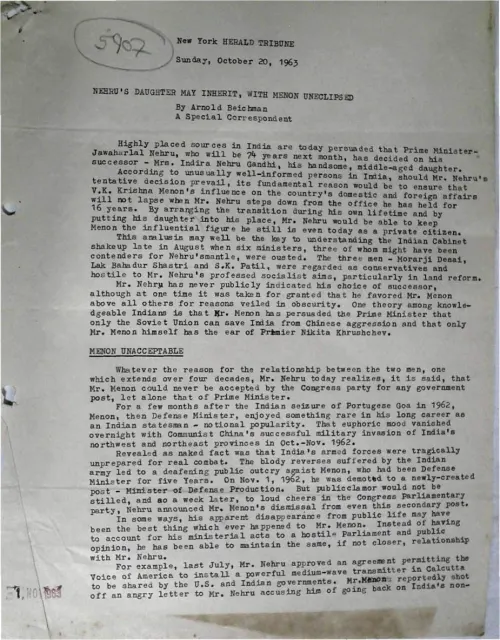
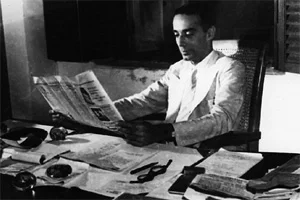
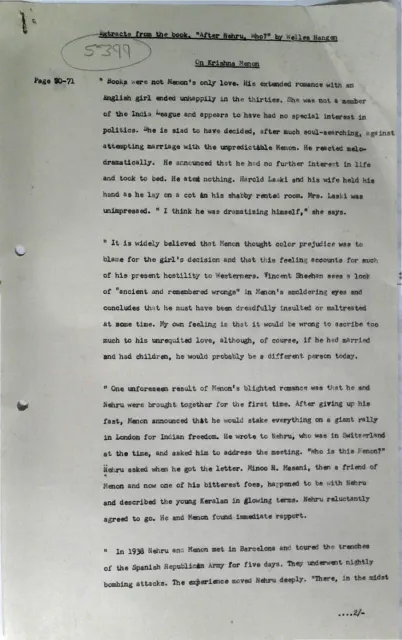
This extract from Welles Hangen’s “After Nehru, who?” presents biographical and political sketches of Krishna Menon, Indira Gandhi, and Jayaprakash Narayan. The Menon passages connect his unsuccessful romance in the 1930s with his hostility toward Westerners, then trace his political activity in London, his relationship with Jawaharlal Nehru, his contacts with Communists, and his disputed status within the Communist movement. His political style is portrayed as unconventional and iconoclastic: he twice failed to secure Labour candidacies and continued to describe the Second World War as an imperialist conflict until Germany attacked Russia.
Key points
- Krishna Menon’s failed romance is presented as one possible source of his later hostility toward Westerners, though the extract cautions against reducing his politics to unrequited love.
- Menon and Jawaharlal Nehru first met through a London rally for Indian freedom and quickly developed a close rapport.
- Menon’s political activity in Britain included Labour Party involvement, Communist associations, and support for the anti-imperialist interpretation of the war before June 1941.
- Indira Gandhi is described as a student volunteer for Menon’s India League work who joined the British Labour Party while studying in England.
- The extract portrays Menon as an important influence on Indira Gandhi’s political formation and suggests that she shared more of his ideological commitments than many other Congress leaders.
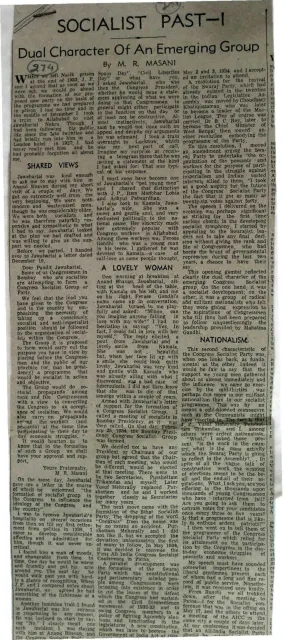
- Jayaprakash Narayan’s break with Communist influence is linked to disillusionment with Stalin’s Soviet Union and the collapse of Communist influence within the Congress Socialist Party.
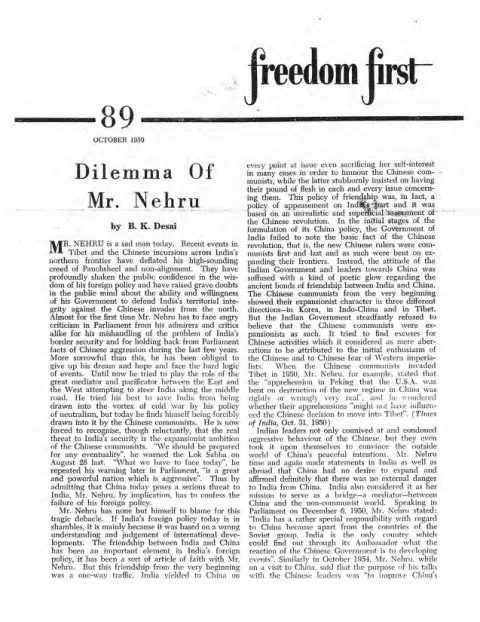
- Narayan is presented as a forceful critic of Nehru’s foreign-policy positions on Hungary and Tibet, especially what he regarded as India’s double standards toward imperialism.
Metadata and summary are AI-extracted from the source PDF and reviewed for editorial accuracy. The original work is available via the Read PDF tab above (where present); paragraph-level citation inside the PDF is deferred to a future engagement.