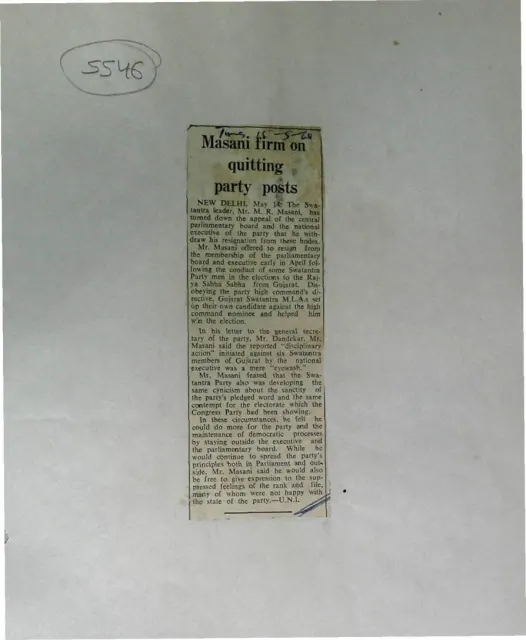
press clipping
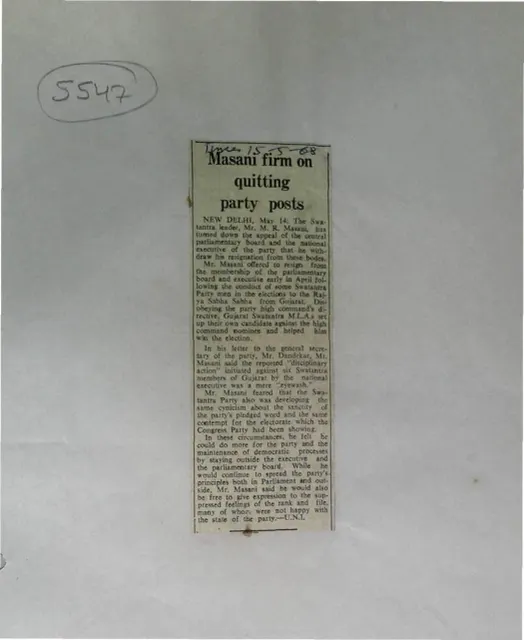
Masani firm on quitting party posts
New Delhi · 1968
1 pages
Summary
This one-page English newspaper clipping reports that M. R. Masani had rejected appeals from the Swatantra Party’s central parliamentary board and national executive to withdraw his resignation from those bodies. He had offered to resign in early April after objecting to the conduct of some party members during the Rajya Sabha election in Gujarat: despite the party high command’s directive, Gujarat Swatantra MLAs reportedly fielded and supported a rival candidate who won.
In a letter to the party’s general secretary, N. Dandekar, Masani described the national executive’s proposed disciplinary action against six Gujarat members as “eyewash.” He argued that the party was developing the same cynicism toward its pledged word and the same contempt for the electorate that he associated with the Congress. Masani said he could better serve the party and democratic process from outside its executive and parliamentary board while continuing to advocate its principles in Parliament and beyond. The clipping is credited to U.N.I.; the source publication and year are not visible.
Key points
- M. R. Masani declined requests to withdraw his resignation from the Swatantra Party’s central parliamentary board and national executive.
- His resignation followed a dispute over the conduct of Swatantra Party members during a Rajya Sabha election in Gujarat.
- Gujarat Swatantra MLAs reportedly defied the party high command, supported a rival candidate, and helped him win.
- Masani called the disciplinary action proposed against six Gujarat members “eyewash.”
- He warned that the party was becoming cynical about its pledged word and contemptuous of the electorate.
- Masani said he could do more for the party and democratic process by remaining outside its executive and parliamentary board.
- He intended to continue spreading Swatantra principles in Parliament and outside it while voicing the dissatisfaction of party members.
Metadata and summary are AI-extracted from the source PDF and reviewed for editorial accuracy. The original work is available via the Read PDF tab above (where present); paragraph-level citation inside the PDF is deferred to a future engagement.