
essay · position paper
WALK FOR HUMAN RIGHTS Indians FOR DEMOCRACY
1976
12 pages
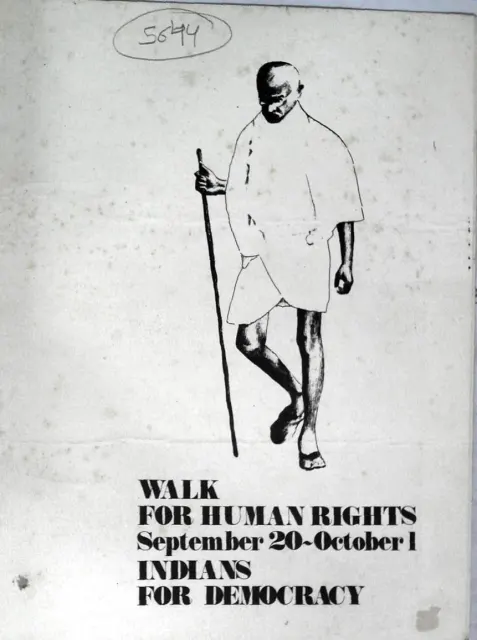
Summary
This 1976 position paper, issued in the name of Indians for Democracy (IFD), condemns the Indian Emergency as an assault on conscience, constitutional government, and basic human rights. It links the revocation of an Indian student’s scholarship, the impounding of passports belonging to Indian citizens in North America, preventive detention, censorship, constitutional amendments, and the postponement of elections to a broader suppression of democratic accountability. The document addresses its memorandum directly to Prime Minister Indira Gandhi and calls for the restoration of passports, civil liberties, judicial independence, press freedom, and the electoral process.
The paper argues that human development cannot be separated from freedom, morality, and ethics, rejecting the claim that economic gains justify political repression. It presents unemployment, poverty, illiteracy, and inadequate rural development as evidence that the Emergency’s economic achievements are temporary or overstated. Its proposed response is explicitly Gandhian: Indians in the United States will begin a 120-mile satyagraha march from Philadelphia’s Independence Hall to the United Nations in New York from September 20 to October 1, ending in a vigil and prayers. The concluding appeal asks Gandhi to release prisoners held without trial, restore democratic processes, and call elections, while warning that continued repression will provoke wider nonviolent resistance.
Key points
- The statement identifies freedom of conscience as a fundamental human right and condemns its suppression.
- It charges the Indian Government with emergency rule, imprisonment without trial, press and judicial assaults, unconstitutional amendments, dismissal of elected state governments, and failure to hold elections.
- It argues that basic freedoms are preconditions for democracy and total human development, not Western luxuries or obstacles to economic progress.
- It documents restrictions on courts, speech, movement, association, property, occupation, and the press under Presidential orders and censorship rules.
- It challenges official claims of economic success by emphasizing unemployment, poverty, illiteracy, underemployment, and weak rural development.
- It frames the proposed Philadelphia-to-New York march as a moral, international, and Gandhian act of satyagraha.
- It calls for the release of political prisoners, restoration of democratic institutions, and national and state elections.
Metadata and summary are AI-extracted from the source PDF and reviewed for editorial accuracy. The original work is available via the Read PDF tab above (where present); paragraph-level citation inside the PDF is deferred to a future engagement.
Related across the archive
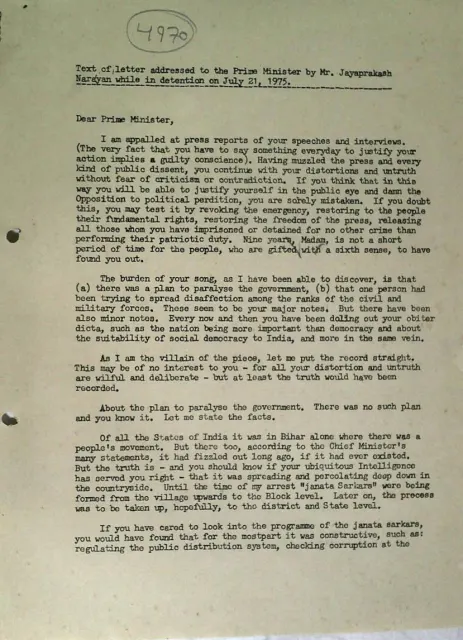 Primary workText of letter addressed to the Prime Minister by Mr. Jayaprakash Narayan while in detention on July 21, 1975.
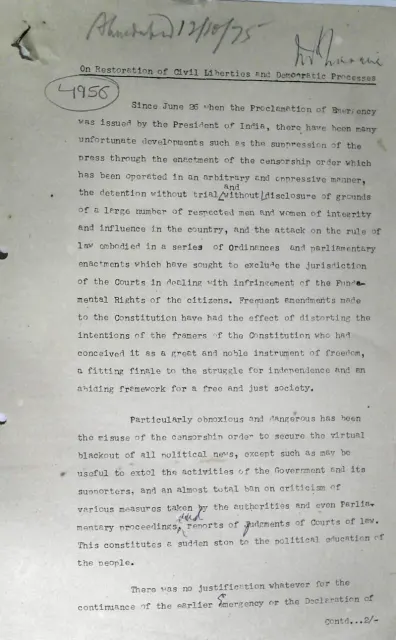 Primary workOn Restoration of Civil Liberties and Democratic Processes
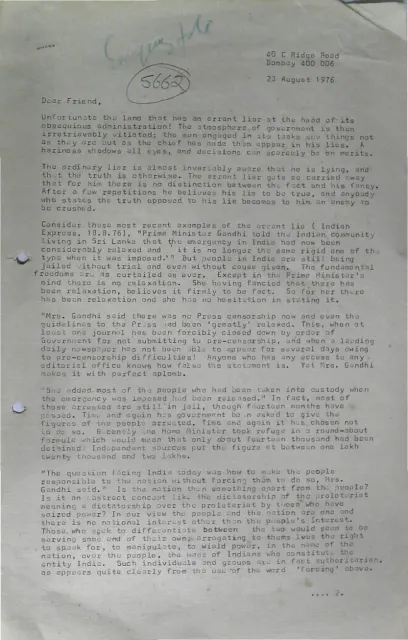 Primary workSwatantra Party Letter
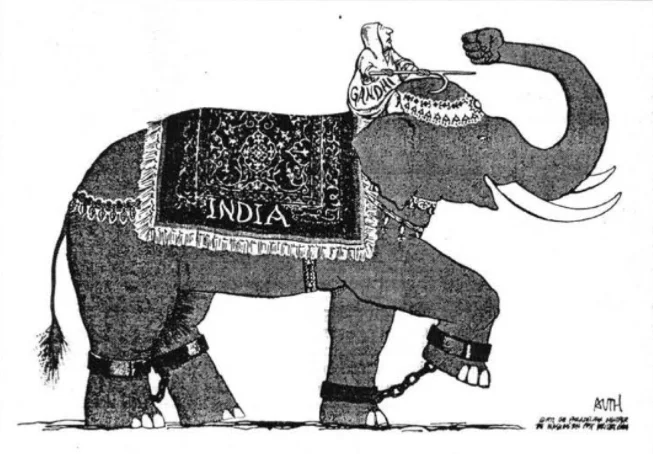 OpinionFreedom First's Resistance to Indira Gandhi's Emergency
 OpinionIndian Liberals, Quest Magazine and India's First Dictatorship