Summary
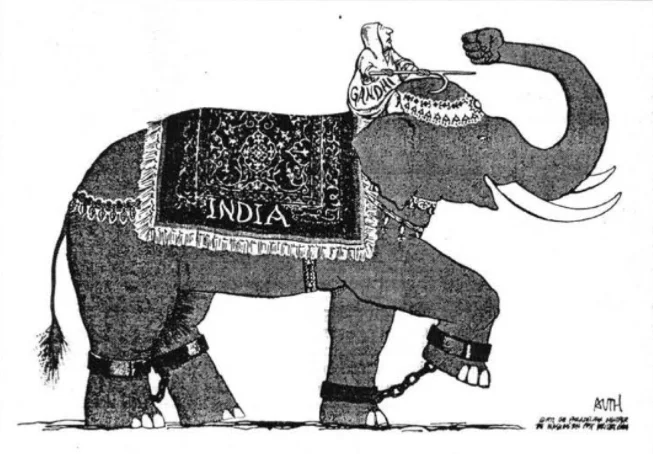
In this letter dated November 3, 1976, Minoo Masani argues that a general election under the Emergency would not necessarily restore freedom or benefit Indira Gandhi. He portrays Gandhi’s government as having concentrated power in the executive, Parliament, the courts, the press, and the administrative machinery, while preparing her son to inherit political authority. The letter describes arrests, censorship, preventive detention under MISA, and the subordination of legal rights to the ruler’s will.
Masani distinguishes the Indian Emergency from more overtly violent dictatorships, arguing that a regime can be authoritarian while retaining the appearance of moderation and legality. He calls on opposition politicians to unite around freedom and on ordinary citizens to maintain scepticism, refuse propaganda, and preserve an inner commitment to liberty. The letter closes by presenting the political choice as stark: continued submission or determined dissent. The document is a two-page personal letter from Bombay, signed by hand as “Masani”; no recipient or printed title is provided.
Key points
- Masani argues that elections held under the Emergency might increase public grief rather than restore freedom or reduce Indira Gandhi’s power.
- The letter condemns the concentration of authority in the Prime Minister and the erosion of judicial and civil protections.
- Arrests, MISA detention, press and cinema censorship, and state propaganda are presented as instruments of authoritarian rule.
- Masani contends that Indian authoritarianism can operate through the appearance of moderation and legality rather than mass terror.
- He urges opposition politicians to form a united party committed to freedom and to frustrate the regime’s attempt to eliminate dissent.
- He asks ordinary citizens to examine official statements critically, avoid participation in the ruler’s activities, and preserve an independent mind.
- The letter frames the political issue in absolute terms as a choice between slavery and freedom.
Metadata and summary are AI-extracted from the source PDF and reviewed for editorial accuracy. The original work is available via the Read PDF tab above (where present); paragraph-level citation inside the PDF is deferred to a future engagement.